Green Tourmaline
What Is Green Tourmaline?
Green Tourmaline is the green version of tourmaline, which is a complex borosilicate mineral group that often grows as long, striated prismatic crystals.
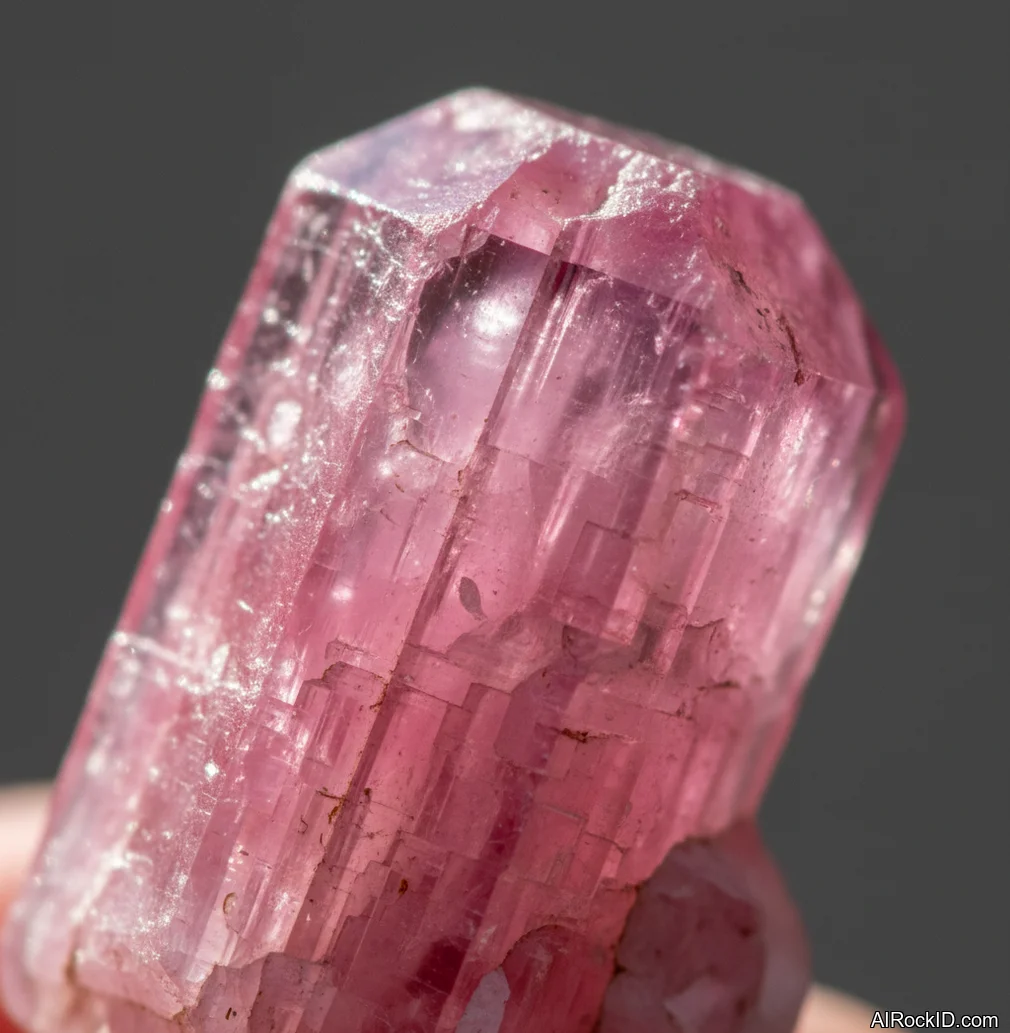
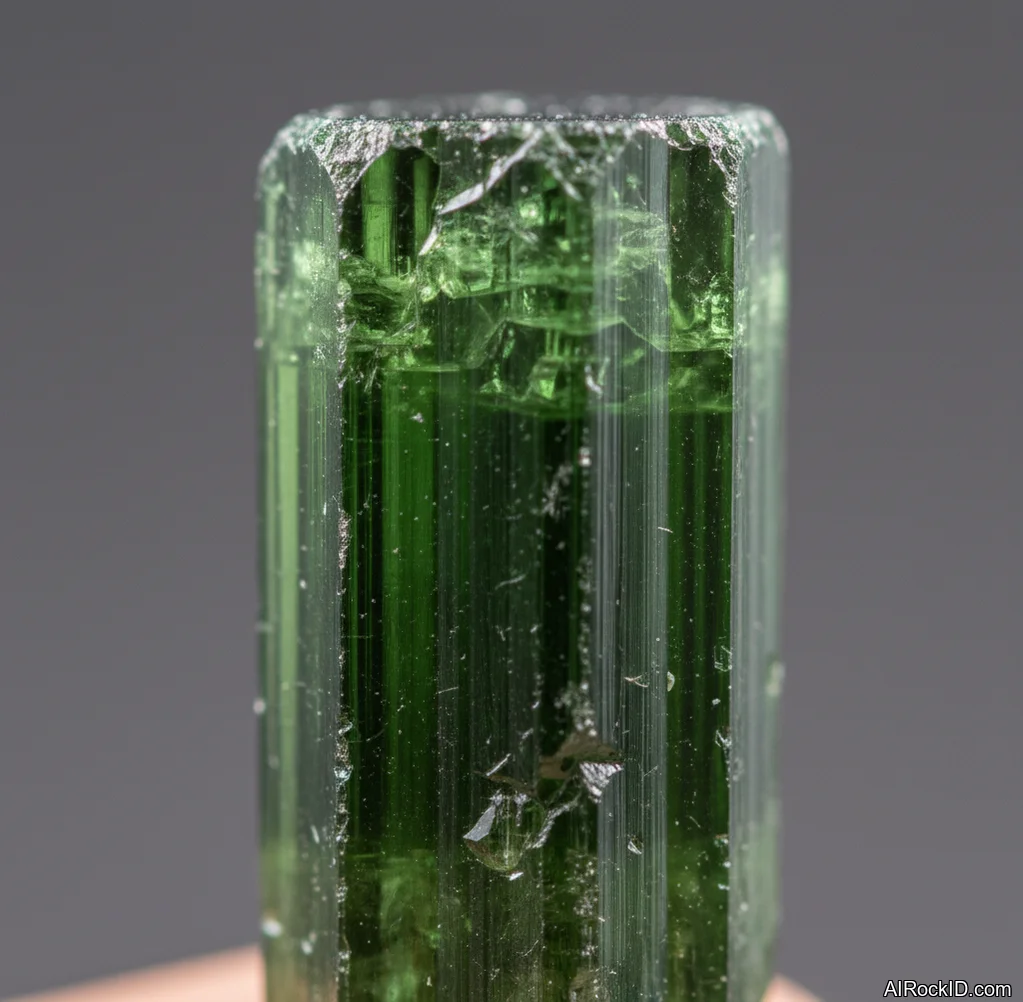
Hold a chunky piece and, honestly, it sits in your palm like a little pillar. The grooves running along the length are absolutely there, and they’re pretty bold. Turn it under a lamp and you’ll see that classic tourmaline thing: one direction goes darker and moodier, while the other brightens up, sometimes sliding into a yellow-green.
People look at it and expect quartz behavior. But it won’t. Tourmaline fractures uneven to conchoidal, and cleavage isn’t something you can rely on here. And the green range is bigger than a lot of listings let on, from a minty “spring green” to a bottle green that can read almost black when the crystal’s thick.
Origin & History
Early “tourmaline” history is kind of a mess, honestly, because for a long time people slapped that name on all sorts of colored stones back when mineral ID wasn’t really a thing. The word traces back to the Sinhalese “turmali” (usually explained as “mixed gems”), and it worked its way into European trade through Sri Lanka.
Tourmaline as an actual mineral species didn’t get pinned down until the 1700s. Work by early mineralogists like Johan Gottschalk Wallerius in 1747 helped standardize the names and the properties so people were talking about the same material. Green tourmaline never got its own separate “species” name since it’s basically just a color within the broader tourmaline group, but collectors and jewelers still lean on trade names like verdelite all the time.
Where Is Green Tourmaline Found?
Green tourmaline shows up in granitic pegmatites and some metamorphic settings worldwide. Brazil and Afghanistan are big sources for gemmy material, and California’s Pala area is classic for collector crystals.
Formation
Most green tourmaline you’ll come across grew in pegmatites, which are basically the last leftovers of a granite melt cooling down painfully slowly, with water and oddball elements getting shoved into the final pockets. That slow pace is why the crystals can shoot up long and surprisingly clean. And it’s also why tourmaline so often shows up stuck in with quartz, feldspar, lepidolite, and, every so often, beryl (the kind you’ll notice as those paler hexagonal chunks nearby).
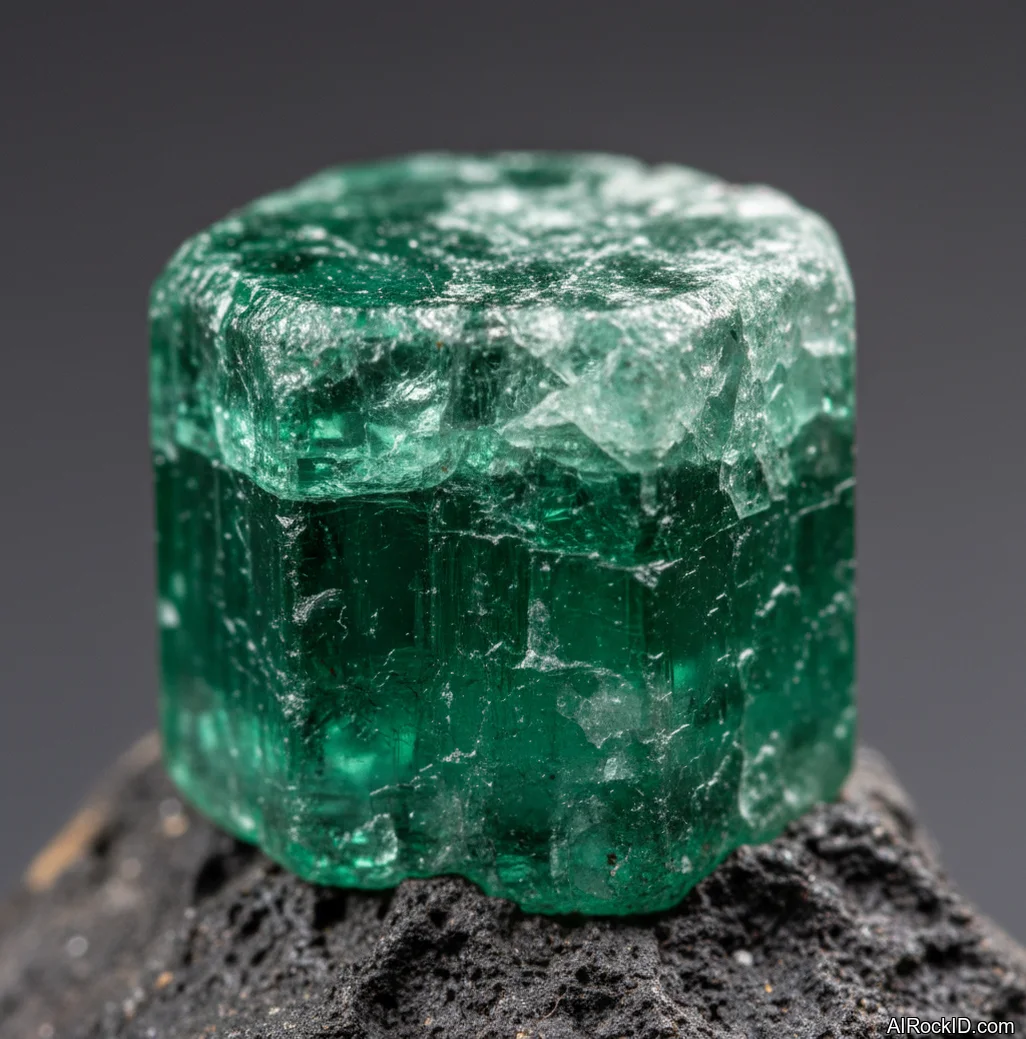
The chemistry is what paints it green. Iron is the usual culprit in elbaite, while chromium and vanadium can kick it into that sharper, more “emerald-like” green dealers label as chrome tourmaline. But thing is, thickness messes with your eyes: a fat crystal can read darker than it “really” is. So a piece that looks almost black-green sitting in a jar can suddenly light up a clean green if you hold it up and backlight it. Ever tried that trick near a window?
How to Identify Green Tourmaline
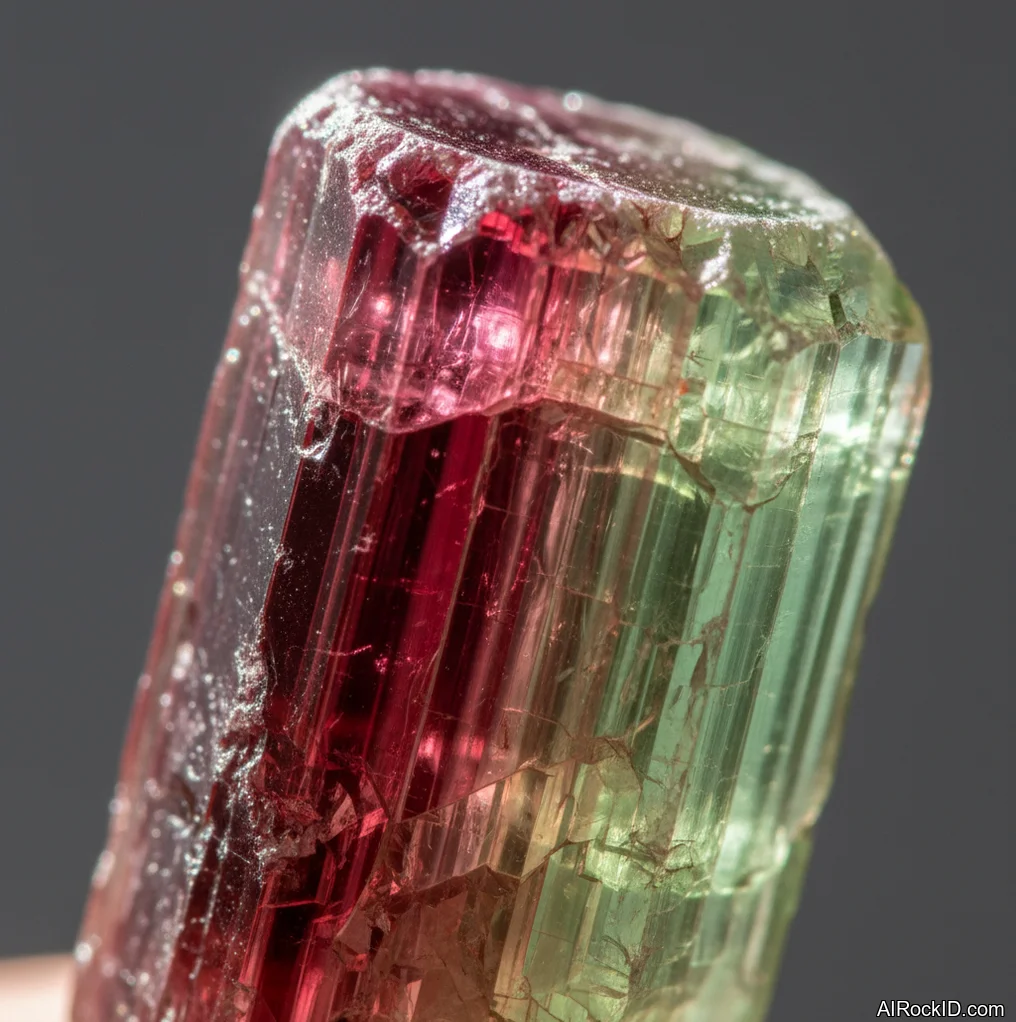
Color: Green ranges from pale mint to deep forest green; many crystals show zoning or a darker core. Pleochroism is common, so the green shifts with viewing direction.
Luster: Vitreous, like clean glass on fresh faces.
Look closely for the lengthwise striations on the prism faces, they’re one of the easiest tells in hand. The real test is to rotate it under a light: one angle goes darker and another angle brightens, and that directional color change is a tourmaline giveaway. Compared to dyed green quartz or glass, tourmaline stays cool to the touch longer and usually has little natural growth textures instead of perfectly smooth surfaces.
Properties of Green Tourmaline
Physical Properties
| Crystal System | Trigonal |
| Hardness (Mohs) | 7-7.5 (Hard (6-7.5)) |
| Density | 3.02-3.26 g/cm3 |
| Luster | Vitreous |
| Diaphaneity | Transparent to translucent |
| Fracture | Uneven |
| Streak | White |
| Magnetism | Non-magnetic |
| Colors | green, yellow-green, blue-green, forest green, mint green |
Chemical Properties
| Classification | Silicates (borosilicate cyclosilicates) |
| Formula | Na(Li,Al)3Al6(BO3)3Si6O18(OH)4 |
| Elements | Na, Li, Al, B, Si, O, H |
| Common Impurities | Fe, Cr, V, Mn, Mg, Ca |
Optical Properties
| Refractive Index | 1.614-1.666 |
| Birefringence | 0.014-0.040 |
| Pleochroism | Strong |
| Optical Character | Uniaxial |
Green Tourmaline Health & Safety
Green tourmaline is usually fine to handle, and a quick rinse or short dip in water won’t hurt it. But if you’re cutting or grinding it, treat it like any other lapidary material: wear eye protection, control the dust, and don’t breathe the grit (that fine powder gets everywhere, even on your sleeves). Standard lapidary precautions still apply.
Safety Tips
If you’re going to polish it or shape it, put on safety glasses and a dust mask. And keep a little water running or spritz it as you work so the dust doesn’t get kicked up into the air.
Green Tourmaline Value & Price
Price Range
Rough/Tumbled: $5 - $150 per piece
Cut/Polished: $30 - $600 per carat
Color, clarity, and size are what everything hangs on, and the clean, bright greens are the ones that really pay. Sharp terminations, no dings on the edges, and that glassy luster you can see when you tilt the crystal under a light? Those pieces cost way more than tumbled stones or the chipped stuff you yank out of a pegmatite pocket.
Durability
Durable — Scratch resistance: Good, Toughness: Good
It’s stable for normal wear, but sharp knocks can chip edges and thin prismatic tips.
How to Care for Green Tourmaline
Use & Storage
Store it in a padded box or wrap it so the crystal points don’t smack into harder stones like quartz or corundum. If it’s a terminated specimen, keep it from rattling around in a drawer.
Cleaning
1) Rinse with lukewarm water and a drop of mild soap. 2) Use a soft toothbrush to get into the striations and any matrix pockets. 3) Rinse well and air dry on a towel.
Cleanse & Charge
If you do energy-style care, a quick rinse and a night on a windowsill that doesn’t get direct harsh sun is plenty. But don’t bake it in full sun for days, some pieces look duller over time.
Placement
On a shelf, angle it so light runs along the length of the crystal and you’ll see the zoning and pleochroism better. For jewelry, protective settings help if the stone has corners or is long and narrow.
Caution
Skip ultrasonic cleaners and harsh chemicals, especially if the stone has fractures or inclusions. And don’t just toss it into a mixed tumble bowl with harder stuff, because those edges will come out with tiny chips (the kind you can feel with a fingernail).
Works Well With
Green Tourmaline Meaning & Healing Properties
Compared to a lot of “green stones,” green tourmaline feels steadier than dreamy. In crystal shop talk, people tie it to the heart, but not in that sugary, love-and-light way. More like: you’re trying to make a choice that’s good for you and still fair, and you want your nervous system to stop yelling long enough to think.
Pick up a polished piece. Rub your thumb down the length of it, especially if there’s any natural face left and you can feel those faint, lengthwise lines (that slightly ridged, grainy drag). It’s grounding in a very physical way. And honestly, that tiny sensory thing is why I see people grab tourmaline when they’re fidgety.
But I’ll say it plain: none of this is medical care. It won’t replace therapy, sleep, or an actual plan. Not even close.
The headache with buying it for “healing” is the market’s packed with random green tumbled stones being labeled as green tourmaline. Real tourmaline usually costs more, and it has that cool-to-the-touch feel plus that directional color shift when you rotate it under a light. If someone’s selling a bag of identical, bright green little pebbles for cheap, that’s… not how tourmaline usually shows up, is it?
Identify Any Crystal Instantly
Snap a photo and get properties, value, care instructions, and healing meanings in seconds.