White Aragonite


Quick answer: White Aragonite is a white to off-white variety of aragonite, a calcium carbonate mineral with a relatively soft Mohs hardness of about 3.5–4. It is commonly seen as clusters, sprays, fibrous masses, or cave-like formations and can be confused with calcite, selenite, or white barite.
AI Rock ID can help compare White Aragonite against visually similar minerals by evaluating crystal habit, color, luster, and surface texture from a photo. RockIdentifier.io provides identification support, but soft white minerals often require simple confirmation checks such as hardness, weight, and reaction to weak acid.
Good fit
- Collectors who like white mineral clusters, sprays, or cave-formed specimens
- Beginners learning the differences between carbonate minerals such as aragonite and calcite
- Display collections kept away from water, abrasion, and high handling
- People interested in traditional crystal meanings without relying on medical claims
Not a good fit
- Jewelry pieces that need high scratch resistance
- Aquarium, fountain, or outdoor use where moisture exposure is frequent
- Collectors who want a mineral that can be cleaned aggressively with water or chemicals
- Situations where exact identification is required without testing or expert review
Most commonly confused with
- White Calcite: Calcite has the same chemical formula but a different crystal structure and typically shows rhombohedral cleavage more clearly.
- Selenite: Selenite is gypsum, much softer at Mohs 2, and can often be scratched easily with a fingernail.
- Barite: Barite is noticeably heavier for its size and is a barium sulfate mineral rather than calcium carbonate.
- Howlite: Howlite is usually more porcelain-like and may show gray veining rather than aragonite’s radiating or clustered crystal habit.
White Aragonite vs Similar White Minerals
| Mineral | Key clue | Hardness | Common difference |
|---|---|---|---|
| White Aragonite | Radiating clusters, sprays, or fibrous masses | 3.5–4 | Carbonate mineral with aragonite crystal structure |
| White Calcite | Rhombohedral cleavage may be visible | 3 | Same chemistry, different crystal structure |
| Selenite | Very soft, silky to pearly appearance | 2 | Gypsum; easily scratched by a fingernail |
| Barite | Heavy feel for its size | 3–3.5 | Barium sulfate, higher specific gravity |
| Howlite | Porcelain-like with possible gray veining | 3.5 | Borate mineral, not a carbonate |
AI identification confidence
AI identification of White Aragonite is usually moderate when the specimen shows clear radiating clusters, fibrous crystals, or cave-like carbonate growth. Confidence is lower for rounded tumbled stones, polished pieces, overexposed white photos, or specimens without scale and texture detail.
When AI gets it wrong
- A white mineral is photographed under bright light, making texture and crystal habit hard to see.
- The specimen is polished, tumbled, or carved, removing the natural crystal shape.
- Calcite, aragonite, and other white carbonates are visually similar and may require acid reaction or crystal structure confirmation.
- A heavy white specimen may be barite rather than aragonite if weight is not considered.
Final recommendation
Choose White Aragonite if you want a soft white carbonate mineral with clustered or radiating crystal forms for display or study. For authenticity, compare crystal habit, hardness, weight, and seller details rather than relying on color alone.
How to Identify White Aragonite Before Buying
Look for natural radiating sprays, branching clusters, fibrous textures, or compact white carbonate masses rather than a perfectly uniform white surface. Ask sellers for photos in natural light, a size reference, and the locality if available. A genuine specimen may show small chips, uneven growth, or minor color variation because aragonite is soft and forms in natural cavities or sedimentary environments.
White Aragonite Authenticity Checks
White Aragonite should not be identified by color alone because many soft minerals are white. A weak acid test performed by a qualified person can support carbonate identification, but it should not be used on valuable, coated, or display-quality pieces because it may damage the surface. Hardness testing on an inconspicuous area may help separate aragonite from softer gypsum, but it cannot always separate aragonite from similar carbonates.
Best Display Settings for White Aragonite
White Aragonite is best displayed in a dry cabinet, specimen tray, or shelf location where it will not be bumped or handled often. Avoid placing it near sinks, humid windows, or high-traffic areas because moisture and abrasion can dull or damage the surface. For fragile clusters, a clear acrylic riser or padded mineral box can reduce breakage risk.
What Is White Aragonite?
White Aragonite is the white variety of the mineral aragonite, a calcium carbonate (CaCO3) polymorph.
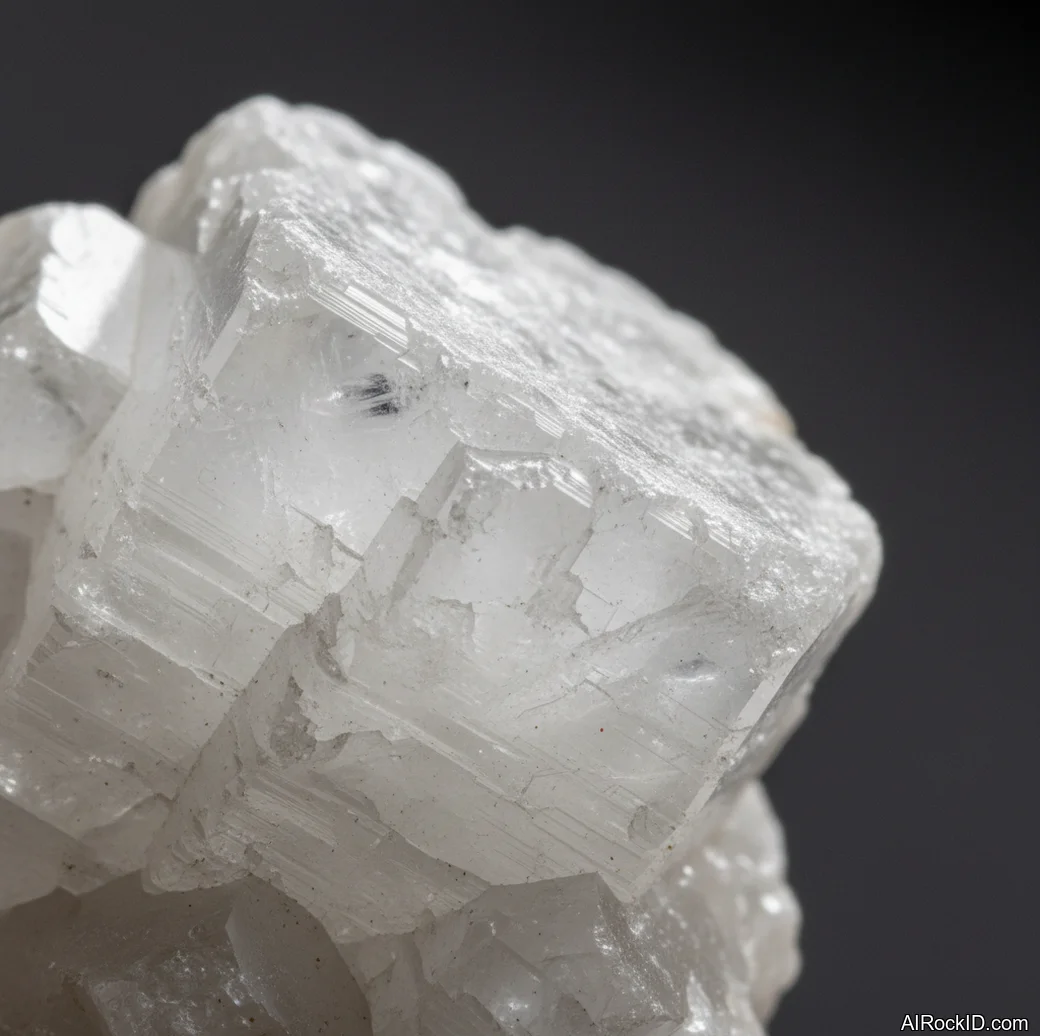
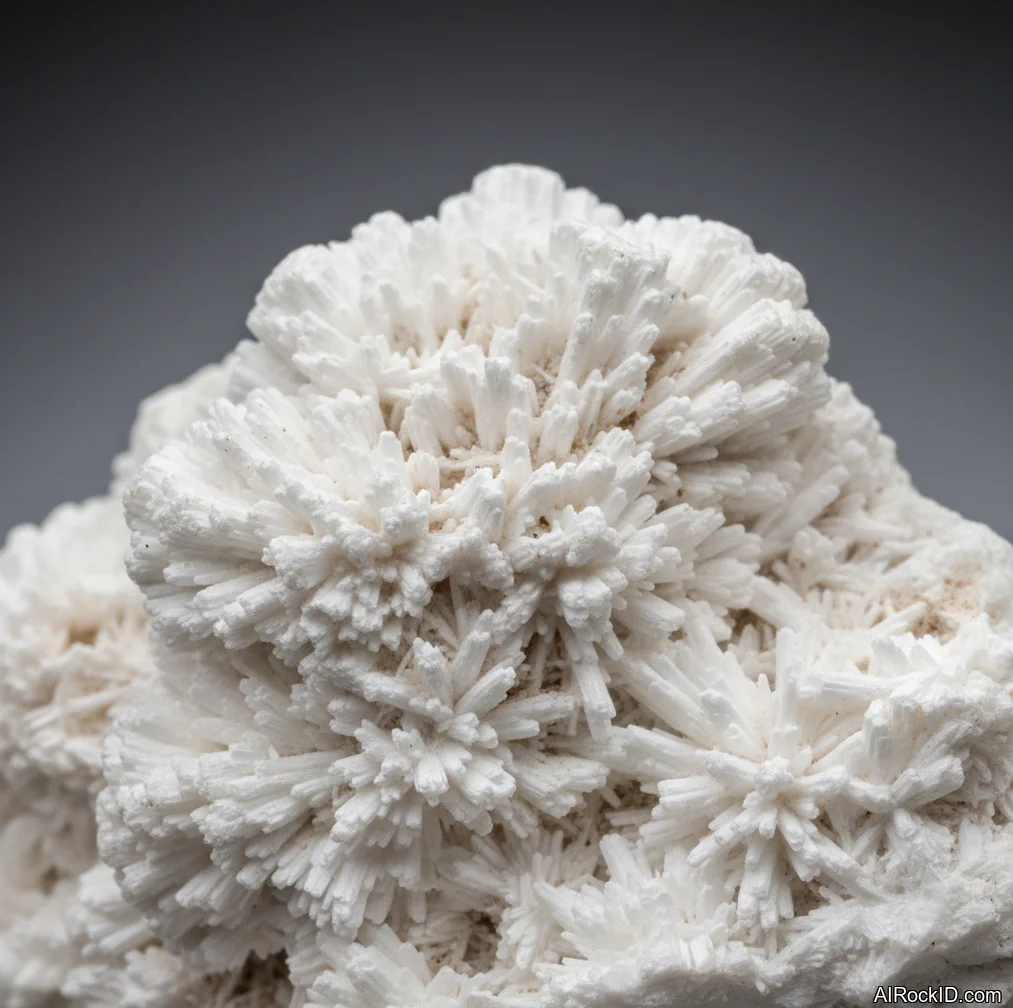
Pick up a chunky piece and two things hit you immediately. It’s cooler than it looks. And it’s heavier than most people expect for something that reads as “chalky white” in photos. A lot of the white stuff on the market shows up as tight clusters, little spiky sprays, or those rounded “popcorn” growths where the individual crystals sort of melt together, until you tilt it under a lamp and the faces start winking back at you (especially along the sharper edges).
At first glance, people confuse it with white calcite or even plain limestone. But aragonite has a slightly sharper, more angular feel to the crystal shapes when it’s not tumbled. It’s fussier, too. Treat it gently and it’ll stay looking good, but toss it around like quartz in a pocket and what happens? Bruised edges, plus a light dusting of tiny chips sitting in the bottom of the bag.
Origin & History
Aragonite gets its name from Aragón, Spain, since the classic specimens were described from Molina de Aragón. It was formally described in 1797 by Abraham Gottlob Werner, and it pretty quickly became the go-to example for how the same chemistry, calcium carbonate, can show up as totally different minerals.
Most collectors run into aragonite early on because it’s a real cabinet staple at shows. Dealers love using it as a teaching piece for crystal systems too, usually while it’s sitting in a little perky flat with that chalky dust you sometimes see on the label (and your fingers if you’re not careful). Orthorhombic aragonite can look nothing like trigonal calcite, even though they’re chemical twins, and that one detail has sparked plenty of weekend parking lot debates after gem shows. Who hasn’t heard one of those?
Where Is White Aragonite Found?
Aragonite forms in caves, hydrothermal veins, and marine settings worldwide; white material shows up in many carbonate districts and cave deposits.
Formation
Look at where aragonite actually turns up and you start seeing the same theme. It grows when calcium carbonate drops out of solution fast, or when the conditions tip the scales toward aragonite instead of calcite: higher pressure, certain Mg-rich waters, or warm marine settings. You’ll run into it as those cave “flowers,” as crusty coatings around hot springs, and tucked into vugs where carbonate-rich fluids had enough open space to throw up sprays and tight little clusters.
But there’s a catch. Aragonite’s metastable at Earth’s surface, so given geologic time it can flip over to calcite. That doesn’t mean your sample’s going to morph on the shelf next week. It’s more of a slow drift, especially if the piece has seen heat, been altered, or sat through a lot of weathering. I’ve had older chunks in hand where the outside starts to look a bit dull and sugary, not that fresh, crisp look you get off clean crystal faces. Why? The change is subtle, and it takes its time.
How to Identify White Aragonite
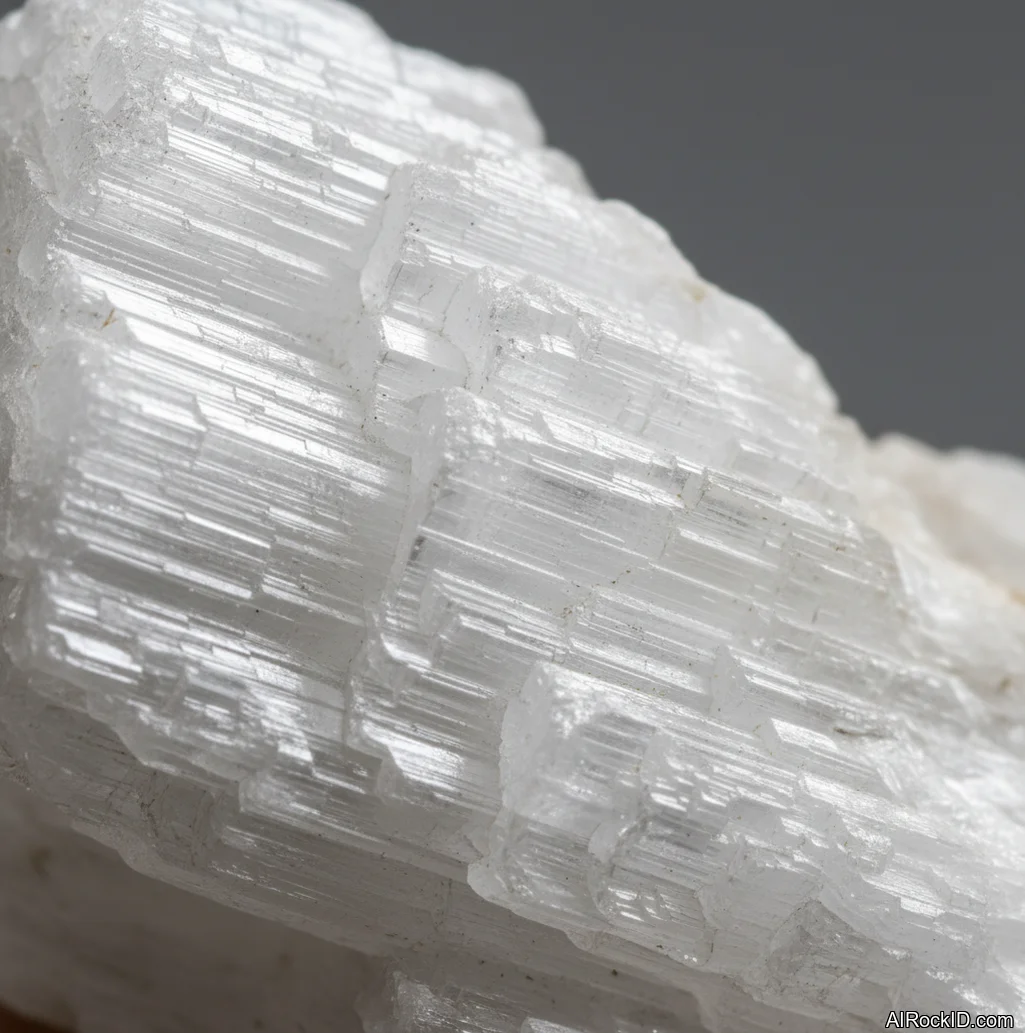
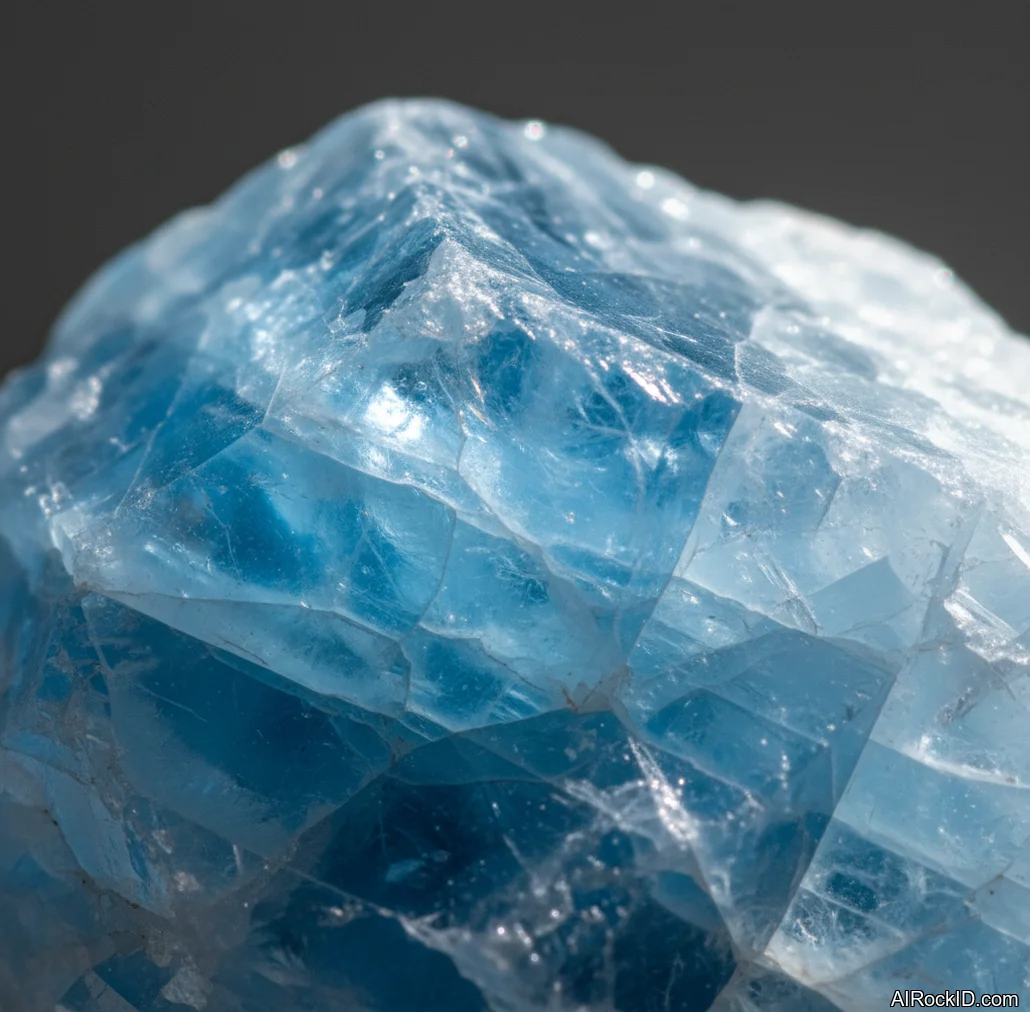
Color: White aragonite ranges from bright snow-white to creamy off-white, sometimes with faint tan or gray tones from tiny inclusions. Some pieces look almost translucent at thin edges, especially on needle clusters.
Luster: Luster is vitreous to pearly, often stronger on fresh cleavage or crystal faces.
If you scratch it with a copper penny, it’ll usually mark, but it won’t feel as buttery-soft as gypsum. The real test is heft plus habit: those radiating sprays and tight, spiky clusters are a dead giveaway when you’ve handled a few. And if you’ve got a hand lens, watch for repeated twinning and that slightly “toothy” sparkle on the tiny crystal tips instead of the smoother look you get from many calcites.
Common Look-Alikes
White Aragonite is sometimes confused with these materials:
- White calcite (especially massive or sugary-looking pieces sold as “white aragonite clusters”)
- Gypsum / satin spar (white fibrous chunks and sprays that look similar in photos)
- Magnesite or howlite (white, often sold tumbled; sometimes passed off when aragonite is scarce)
- White quartz or chalcedony (milky, waxy pieces that get mislabeled as aragonite “popcorn”)
- Dyed aragonite sold as “white” (bleached base with dye residue that settles into pits and cracks)
- Resin or glass “crystal clusters” (cast spiky forms with a too-even surface and wrong heft/temperature feel)
Market Cautions & Treatments
When AI Can Get This Wrong
At first glance, AI loves to call white aragonite “calcite” or “gypsum” because all three show up as pale clusters and sprays in listing photos. The real test is a quick hardness check: aragonite (3.5-4) should scratch gypsum easily, but it won’t scratch quartz, and it doesn’t have the super-soft, fingernail-scratch feel that satin spar often does. Look closely at the habit too: aragonite popcorn and tight sprays have a slightly granular, fused look, while cast fakes tend to repeat the same spike shape with suspicious symmetry.
Properties of White Aragonite
Physical Properties
| Crystal System | Orthorhombic |
| Hardness (Mohs) | 3.5-4 (Soft (2-4)) |
| Density | 2.94-2.96 g/cm3 |
| Luster | Vitreous |
| Diaphaneity | Translucent to opaque |
| Fracture | Uneven |
| Streak | White |
| Magnetism | Non-magnetic |
| Colors | White, Cream, Off-white, Pale gray |
Chemical Properties
| Classification | Carbonates |
| Formula | CaCO3 |
| Elements | Ca, C, O |
| Common Impurities | Sr, Mg, Fe, Mn |
Optical Properties
| Refractive Index | 1.530-1.686 |
| Birefringence | 0.156 |
| Pleochroism | None |
| Optical Character | Biaxial |
White Aragonite Health & Safety
White aragonite is non-toxic, so it’s generally safe to handle. But keep it away from acids, because it’ll fizz and start etching, the same way other calcium carbonates do.
Safety Tips
If you’re trimming matrix or kicking up dust, put on eye protection and a respirator. And when you’re done, don’t sweep the dry powder around, it just floats back up. Grab a damp wipe (the kind that leaves your fingers a little gritty afterward) and clean it up that way.
White Aragonite Value & Price
Price Range
Rough/Tumbled: $5 - $60 per piece
Price really comes down to crystal habit and condition. Sharp, sparkly sprays and clean clusters with no chips or knocked-off points will run higher than those chalky, lumpier masses or bruised pieces that crumble if you so much as tap them on the table. And sure, a locality label helps, but most people care more about how it looks in the hand and whether it feels stable (or like it’s going to shed grit in the box).
Durability
Nondurable — Scratch resistance: Fair, Toughness: Poor
Aragonite can chip and cleave easily and should be kept away from acids and rough handling.
How to Care for White Aragonite
Use & Storage
Store it in a padded box or on a stable shelf where it won’t get knocked over. If it’s a spiky cluster, give it space so nothing rubs the tips.
Cleaning
1) Dust with a soft makeup brush or camera lens brush. 2) If needed, rinse quickly with plain water and pat dry right away. 3) Skip acids, vinegar, and most “stone cleaners,” and don’t soak it for long.
Cleanse & Charge
For a non-water method, use smoke, sound, or a short rest on a dry selenite plate. If you use moonlight, keep it out of dew and away from places where it can fall.
Placement
I like it on a desk or nightstand where you can actually see the texture up close, not buried in a bowl of mixed tumbles. Put it on a little stand if the base is uneven.
Caution
Don’t use an ultrasonic cleaner or a steam cleaner on it. And keep it away from acids or even that clammy, acidic humidity (you know the kind that makes metal smell a little sharp). Also, don’t just drop it into a pocket or bag where it can rub up against harder stones.
Works Well With
White Aragonite Meaning & Healing Properties
Most dealers sell white aragonite as a “grounding” stone, and yeah, I get why that label sticks. It feels heavy for its size. Solid. And that white isn’t shouty at all, it’s more like clean paper under warm shop lights. When I’m sorting flats at a show, I’ll sometimes park a little cluster right on the table near my hands, because it weirdly makes me slow down. Like, okay, don’t rush. Pick things up gently. (Sounds corny, but it works.)
If you’re into meditation, aragonite is a practical pick since it doesn’t yank your attention the way flashy, iridescent pieces do. It just sits there. Quiet. And the texture is the point, that slightly chalky, ridged feel you notice when you roll it between your fingers. But I always give the same warning with carbonates: don’t slide into medical thinking. A mineral can be a focus object, a habit cue, a comfort. It can’t fix your thyroid, your anxiety disorder, or your sleep apnea. That’s not how any of this works, right?
One more real-world thing. White aragonite can look “soft” in a spiritual sense, but physically it’s the opposite of forgiving. I’ve literally watched someone clack it against a quartz tower while setting up a grid, then stare at the aragonite like, why do the tips look sanded now? So if your practice involves carrying stones around, pick something tougher and leave aragonite at home where it can stay intact.
Common mistakes
- Identifying every white carbonate specimen as White Aragonite without checking crystal habit or cleavage.
- Assuming a polished white stone is aragonite when the natural texture has been removed.
- Cleaning White Aragonite with vinegar, acids, or harsh chemicals, which can damage carbonate minerals.
- Using hardness alone to separate aragonite from calcite, since their hardness values are close.
- Buying bright white clusters without checking whether the specimen has been dyed, coated, glued, or heavily repaired.
Identify White Aragonite from a photo
Compare White Aragonite traits, care tips, value clues, and common lookalikes with a clear photo.