Zimbabwe Aventurine
What Is Zimbabwe Aventurine?
Zimbabwe Aventurine is just quartz, but it’s the green kind that gets its color and that sparkly effect from tiny bits of mica, usually chromium-bearing fuchsite.
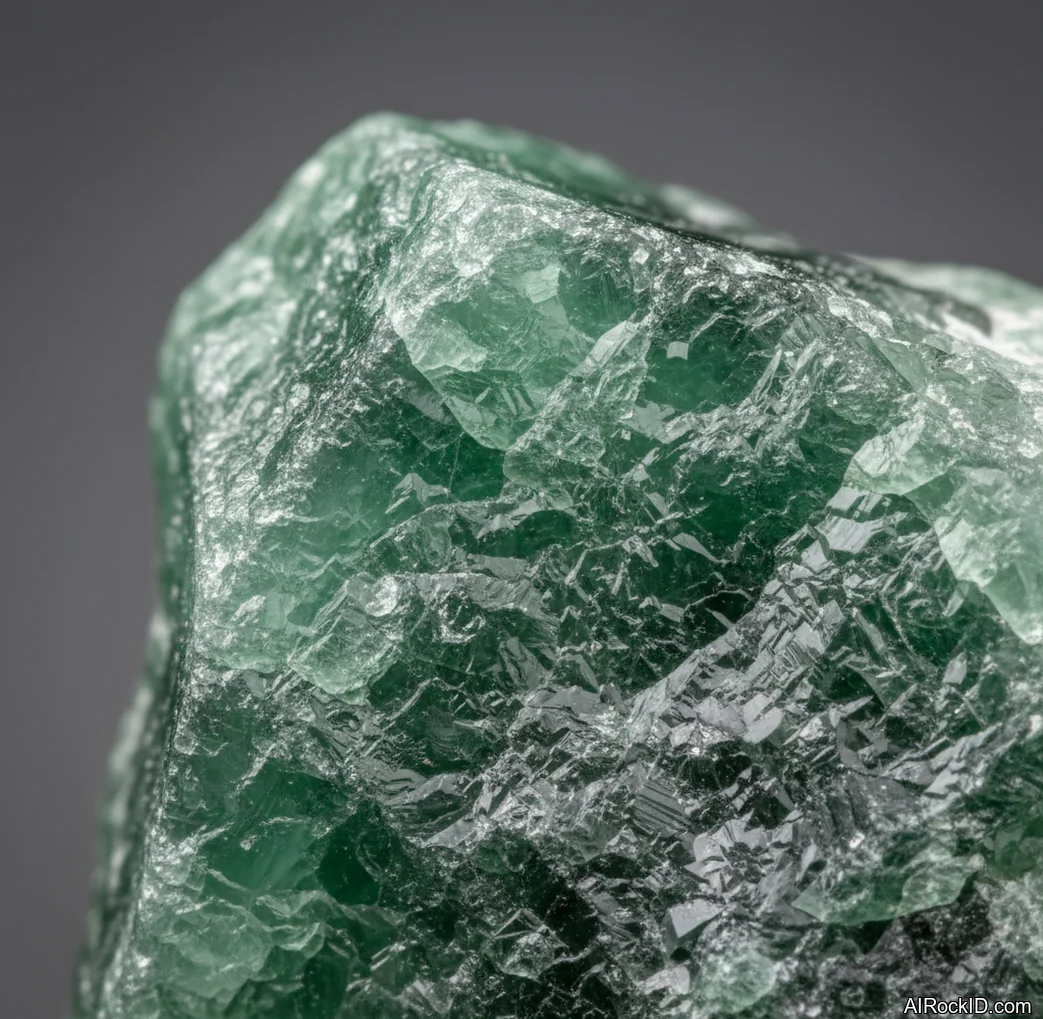
Hold a decent piece from Zimbabwe and you notice the quartz weight immediately. It’s got that solid, cool-in-the-hand feel. But before it’s polished, the outside can look a little soft and “sugary,” like fine grit stuck to the surface (you can almost picture it squeaking a bit if you rubbed two rough bits together). Tip it under one overhead light and that’s when it clicks. Those tiny pinfire flashes slide around as you turn it, like somebody dusted the inside with ridiculously fine glitter. The Zimbabwe material usually sits in that medium to deeper green range, and it reads more earthy and grounded, not that loud neon green you’ll sometimes see in dyed pieces.
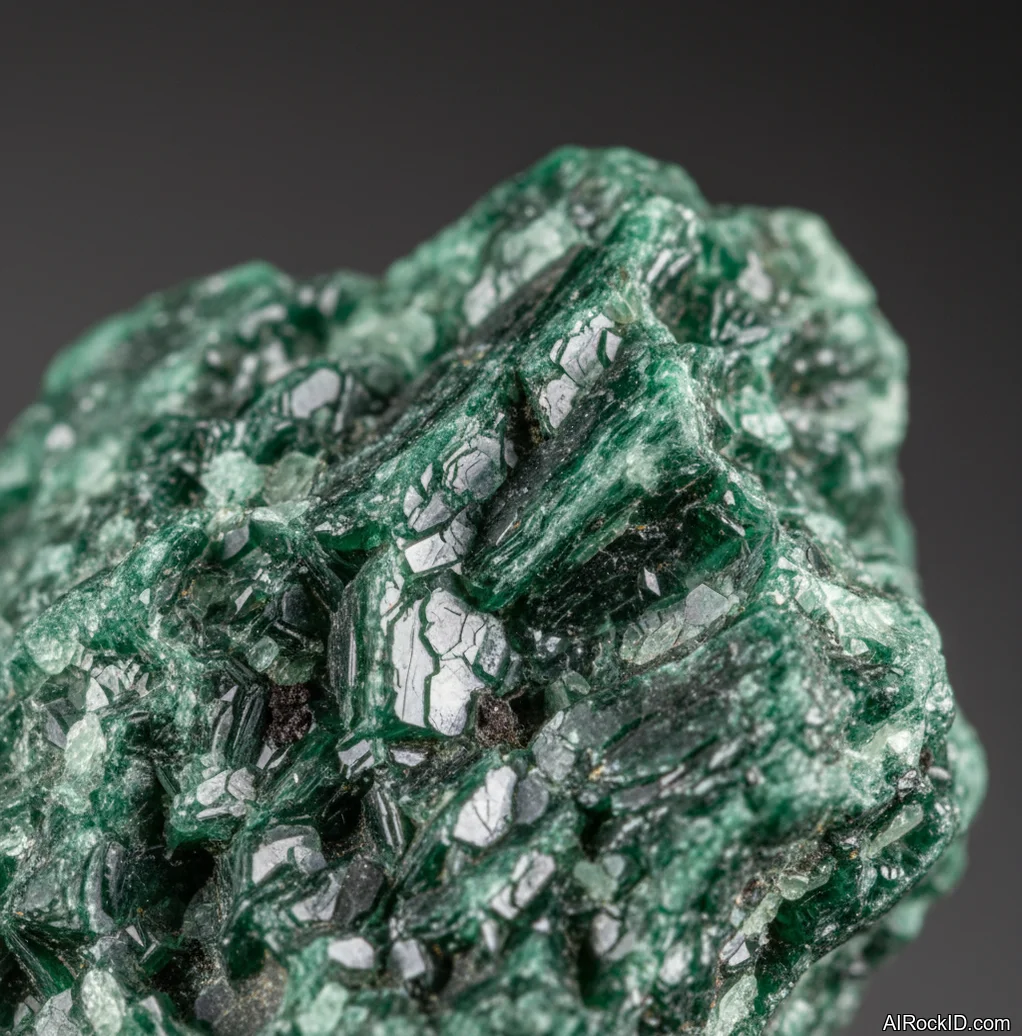
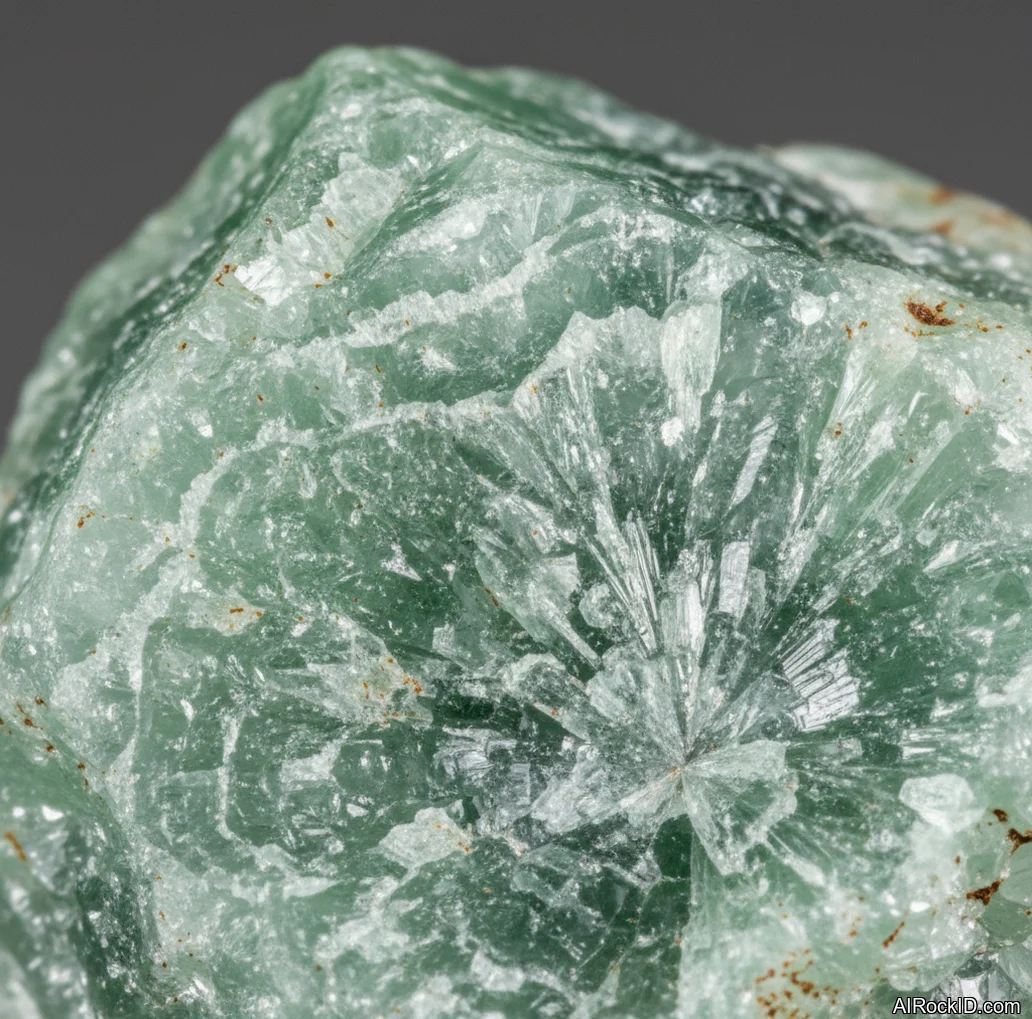
Most of what you’ll come across is tumbled stones, palm stones, plus beads. Raw chunks tell the story faster. You can catch the mica as little reflective flecks, and you’ll often see uneven color zoning where the fuchsite is thicker in one area than another. And yes, it’s still quartz, so it polishes up nicely and wears well. But don’t expect crystal points like you’d get on a clear quartz cluster.
Origin & History
Aventurine, the name, comes from the Italian “a ventura,” which basically means “by chance.” It’s tied to that famous Venice glassmaking screw-up where copper filings slipped into molten glass and, once it cooled, you got this glittery, speckled aventurine glass. So later on, people borrowed the word for the gemstone because it has that same kind of sparkle, even though the stone and the glass aren’t actually the same thing. Different stuff. Same vibe.
Geologically speaking, green aventurine is quartz with mica inclusions. You can usually see the tiny reflective bits when you tilt a piece under a lamp, like little flashes that move as you move it (if you’ve ever handled a tumbled stone, you know what I mean). In the gem trade it’s been sold forever under broad names like “green aventurine” or “aventurine quartz.” And “Zimbabwe Aventurine” is basically a locality-based dealer term used to separate the darker, more natural-looking green material from Zimbabwe from lighter or more uniform-looking material coming from other sources. Why bother? Because buyers notice the difference.
Where Is Zimbabwe Aventurine Found?
Zimbabwe material is typically sold as rough and lapidary/tumble grade from green quartz-rich metamorphic belts. Green aventurine also comes out of India and Brazil in big volume.
Formation
Most green aventurine starts out as quartz-heavy rock that gets shoved and cooked by metamorphism. Silica’s moving through it, mica’s forming right alongside. And when chromium slips into that mica, you end up with fuchsite, which is what kicks the color into a real green instead of that dull gray-green.
Look at the flash and the texture basically gives itself away. The sparkle isn’t “shimmering energy” or anything mystical. It’s thin mica plates catching light at a bunch of angles. In pieces from Zimbabwe I’ve had in my hands, the flecks can be tiny and evenly sprinkled, but you’ll also get areas where the mica bunches up and the stone turns a shade darker in that strip. Totally normal. A perfectly uniform green, edge to edge, is the one that makes me squint at a listing photo. Why so even?
How to Identify Zimbabwe Aventurine
Color: Medium to deep green, often slightly earthy, with scattered reflective flecks; color can be patchy or banded where mica concentration changes.
Luster: Vitreous to slightly waxy when polished, with a bright spangled flash from mica.
Pick up the stone and roll it under a single point light. Real aventurescence moves in tiny flashes, not a flat metallic sheen. If you scratch it with a steel nail, it usually won’t bite, but it will scratch glass like other quartz. The problem with some “aventurine” listings is dyed quartzite or even green glass, and those tend to look too uniform and feel a little warmer to the touch than a cool, dense quartz pebble.
Properties of Zimbabwe Aventurine
Physical Properties
| Crystal System | Trigonal |
| Hardness (Mohs) | 6.5-7 (Hard (6-7.5)) |
| Density | 2.64-2.65 g/cm3 |
| Luster | Vitreous |
| Diaphaneity | Translucent |
| Fracture | Conchoidal |
| Streak | White |
| Magnetism | Non-magnetic |
| Colors | Green, Deep green, Gray-green, Yellow-green |
Chemical Properties
| Classification | Silicates |
| Formula | SiO2 |
| Elements | Si, O |
| Common Impurities | Cr, Al, K, Fe, Mg |
Optical Properties
| Refractive Index | 1.544-1.553 |
| Birefringence | 0.009 |
| Pleochroism | None |
| Optical Character | Uniaxial |
Zimbabwe Aventurine Health & Safety
Solid, quartz-based material is usually fine to pick up, handle, and rinse off under the tap. But if you’re cutting or sanding it, treat it like any other lapidary job. Dust control, eye protection, the usual stuff.
Safety Tips
If you’re going to grind or drill it, handle it the same way you would any silica-bearing rock. Keep it wet with water, make sure you’ve got decent ventilation, and wear a proper respirator so you’re not breathing in the dust.
Zimbabwe Aventurine Value & Price
Price Range
Rough/Tumbled: $4 - $25 per piece
Cut/Polished: $0.50 - $5 per carat
Price mostly comes down to how deep the color looks, how much the aventurescence actually pops when you tilt it under a light, and whether the rough is clean enough to cab without it breaking along a bunch of little fractures.
Durability
Durable — Scratch resistance: Good, Toughness: Good
It’s stable like most quartz, but sharp impacts can chip polished edges because quartz breaks conchoidally.
How to Care for Zimbabwe Aventurine
Use & Storage
Store it like you would any polished quartz. I keep mine in a soft pouch or a divided tray so it doesn’t scuff softer stones like calcite or fluorite.
Cleaning
1) Rinse with lukewarm water and a drop of mild soap. 2) Use a soft toothbrush to get into pits or saw marks on rough. 3) Rinse well and dry with a microfiber cloth.
Cleanse & Charge
If you do energetic cleansing, simple methods are fine: running water, smoke, or leaving it on a shelf overnight. Avoid leaving it baking in direct sun for long stretches just because heat can stress fractures in any quartz.
Placement
On a desk, it reads as calm green with occasional sparkles when the light hits. Under a lamp is better than a dark corner if you want to actually see the aventurescence.
Caution
Don’t hit fractured or heavily included pieces with harsh cleaners, and skip the ultrasonic too, since the vibration can sneak into tiny cracks and make them worse. And don’t just trust the label, either. A lot of green tumbled stones sold as aventurine aren’t actually natural or undyed, even if they look the part at first glance.
Works Well With
Zimbabwe Aventurine Meaning & Healing Properties
Look a little closer and you’ll get why folks grab aventurine when they’re craving a “reset.” It’s green. It catches the light. And it sits in your palm with this calm, steady weight.
When I’m sorting stones at a show table, aventurine is one of the only ones I’ll keep rubbing without thinking. Thumb just goes right to it. The polish feels slick but not glassy, and those tiny mica sparkles give your eyes a place to stick (you know what I mean?).
In modern crystal culture, green aventurine gets linked to calm decision-making, emotional steadiness, plus that whole “growth” idea people slap on anything green. I’m fine with that, as long as it stays in its lane. It’s not medicine. It’s not a stand-in for therapy, sleep, or dealing with what’s actually going on. But as a tactile anchor, it does the job. A palm stone in your pocket can pull your attention back to your hand when your brain starts spiraling.
But here’s the real-world thing. People sometimes buy it expecting a big glitter explosion like goldstone, and that’s usually not what you get. Most pieces are way subtler. Zimbabwe material can be darker and moodier, and the flash can be really fine-grained. So if you want maximum sparkle, you’ve got to shop in person, tip it under the lights, and grab the one that actually throws. Online photos? They love to cheat that.
Identify Any Crystal Instantly
Snap a photo and get properties, value, care instructions, and healing meanings in seconds.