Fuchsite
What Is Fuchsite?
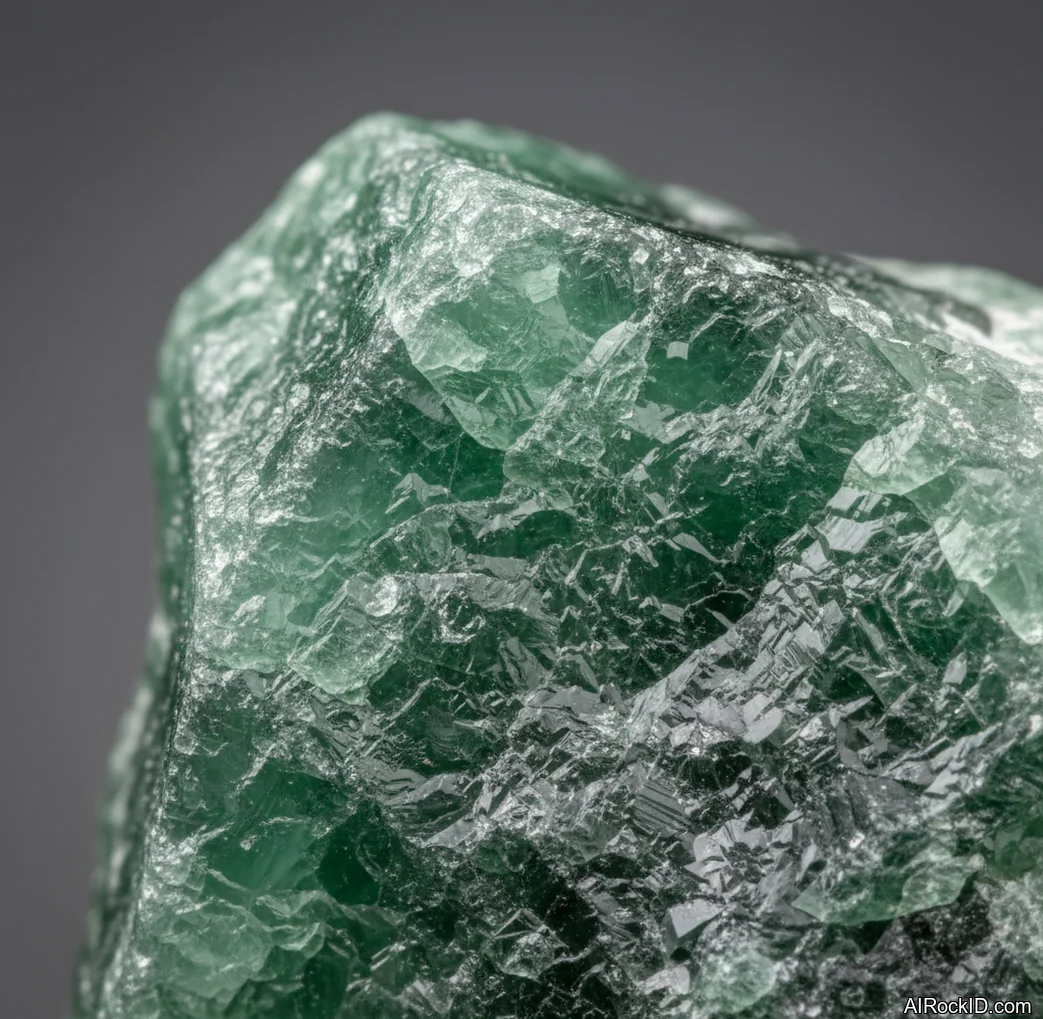
Fuchsite is a chromium-rich green variety of the mica mineral muscovite. It’s basically just muscovite that picked up enough chromium to shift that leafy, glittery mica look into green instead of the usual silvery or pale tan.
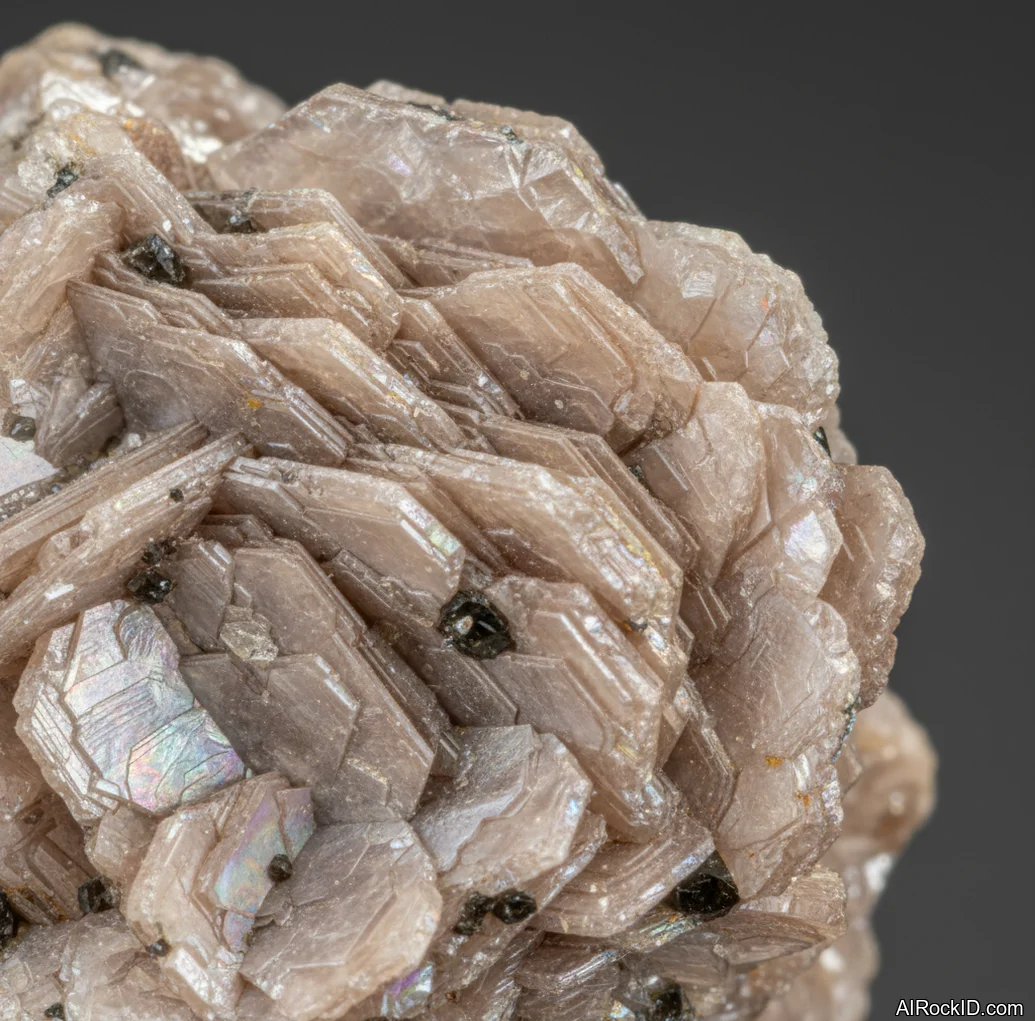
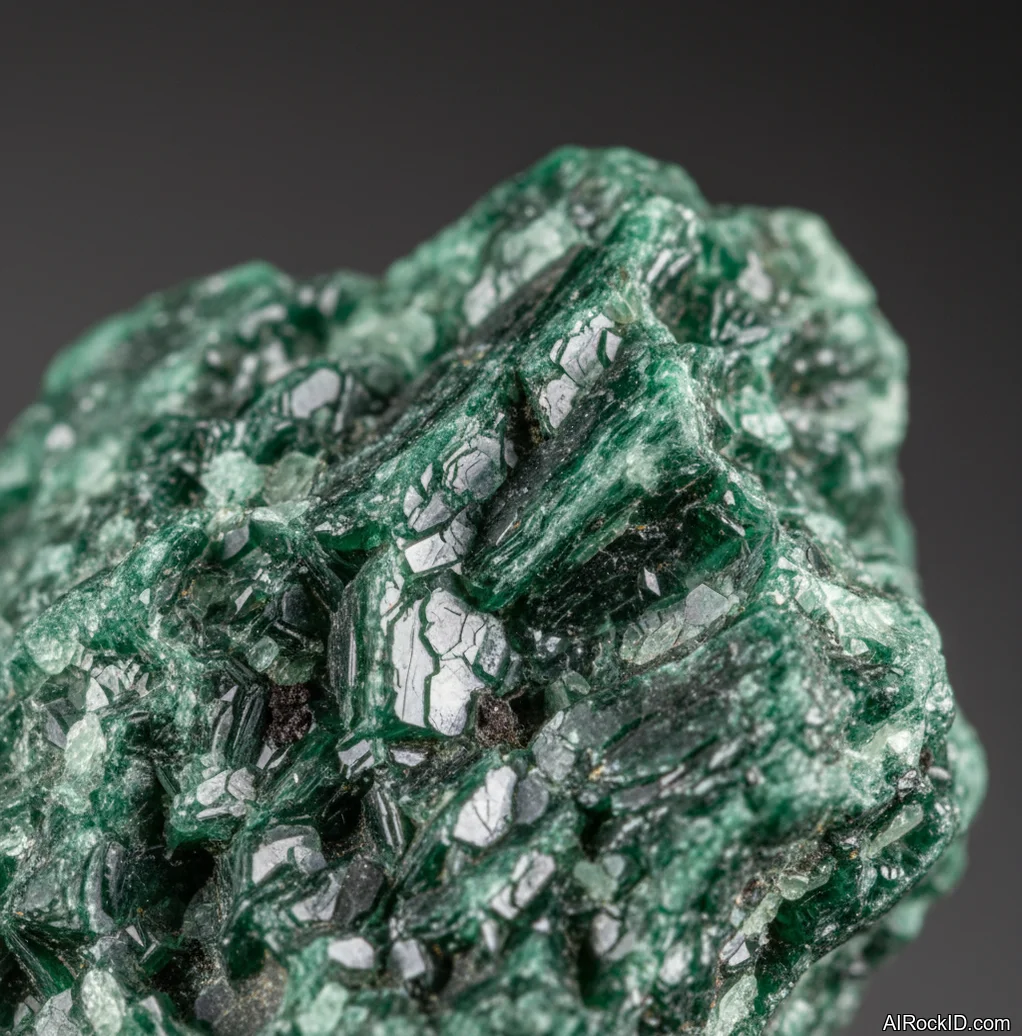
Grab a chunk and the first thing you notice is how light it feels for its size. And if the edges aren’t fully polished, they can feel a little “leafy” or papery, like thin layers want to lift. Tilt it under a lamp and you get that classic mica flash, like a stack of tiny pages catching the light one after the other. Most of what you’ll run into at shows is slabbed, tumbled, or carved, because raw plates can be crumbly, but good rough has this wicked sparkle that photos never quite nail (it’s one of those things you kind of have to see in person).
People mix it up with aventurine quartz all the time at first glance since both can be green and shimmery. But fuchsite is flashing from flat mica sheets, so it reads more like glittery flakes, not that fine, even “sugar sparkle” you get from aventurine. Thing is, if you’ve handled enough of both, the feel gives it away fast. Fuchsite has that soft mica vibe. It doesn’t have the glassy hardness of quartz.
Origin & History
The name fuchsite dates back to the 1800s. It was coined to honor the German chemist Johann Nepomuk von Fuchs, who did mineral chemistry work and helped untangle a bunch of early mineral ID headaches. You might also see it labeled as “chromian muscovite” on more technical tags, which is basically the same thing, just way less friendly.
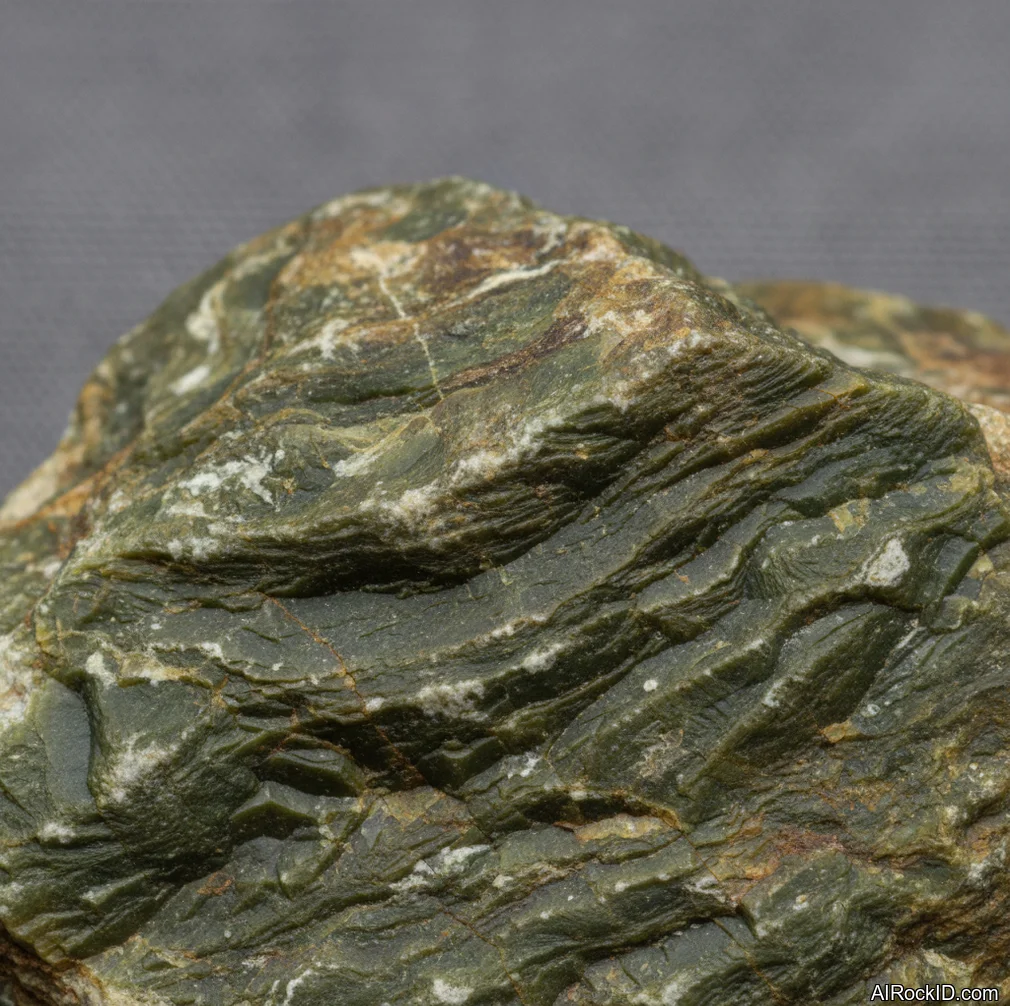
Collectors have been into it forever because it looks flashy without costing much. The green comes from chromium in the mineral itself, not some surface coating. But here’s the annoying part: dealers will slap “fuchsite” on almost anything that’s green and sparkly, even when it’s really just muscovite with chlorite staining, so the name gets thrown around pretty loosely out in the real world.
Where Is Fuchsite Found?
Fuchsite shows up in metamorphic terrains worldwide, especially in schists and quartz-rich rocks where chromium is available. A lot of lapidary-grade material on the market is from Brazil and India.
Formation
Most fuchsite shows up during metamorphism, when older rocks get cooked and squeezed until their chemistry gets shuffled around. Muscovite is a common mica in that kind of setting, and if chromium is hanging around, it can slip into the structure and kick the color over into that apple-to-emerald green range.
Look closer at a typical piece and it’s usually part of a bigger rock story. You’ll see fuchsite mixed with quartz, sometimes with little bits of kyanite, rutile, or even small garnets, depending on the deposit. In quartz-fuchsite rock, the quartz tends to be milky and massive, and the fuchsite sits in seams and patches, like green frosting swirled through white (especially where it fills tiny fractures and you can feel the slick, mica “flake” on your fingertips).
How to Identify Fuchsite
Color: Colors run from pale mint to deep grassy green, usually with a silvery sparkle from the mica plates. Some material has a slightly bluish green cast when it’s thick.
Luster: Pearly to vitreous, with a flashy glitter on cleavage surfaces.
If you scratch it with a copper coin or even a fingernail on thin edges, it’ll often mark or flake because mica is soft and splits into sheets. The real test is the sparkle pattern: fuchsite flashes in flat, platey bits, not the fine, even sparkle of aventurine quartz. And if you’ve got a loupe, you can usually see the platy mica “book” texture instead of quartz grains.
Properties of Fuchsite
Physical Properties
| Crystal System | Monoclinic |
| Hardness (Mohs) | 2-2.5 (Soft (2-4)) |
| Density | 2.76-2.88 g/cm3 |
| Luster | Pearly |
| Diaphaneity | Translucent |
| Fracture | Uneven |
| Streak | White |
| Magnetism | Non-magnetic |
| Colors | Green, Mint green, Apple green, Emerald green, Silvery green |
Chemical Properties
| Classification | Silicates |
| Formula | KAl2(AlSi3O10)(OH)2 (Cr-substituted muscovite) |
| Elements | K, Al, Si, O, H, Cr |
| Common Impurities | Fe, Mg, Mn |
Optical Properties
| Refractive Index | 1.552-1.600 |
| Birefringence | 0.036-0.048 |
| Pleochroism | Moderate |
| Optical Character | Biaxial |
Fuchsite Health & Safety
Fuchsite’s usually fine to pick up, handle, and keep on display. But it’s a mica-heavy rock, so if you’re cutting or grinding it, don’t let it turn into that fine, floaty dust that gets everywhere (you know the stuff that clings to your fingers and hangs in the air).
Safety Tips
If you’re shaping it, keep a little water on it, make sure you’ve got decent ventilation, and wear a proper respirator so you’re not breathing in that fine silica and mica dust.
Fuchsite Value & Price
Price Range
Rough/Tumbled: $3 - $25 per piece
Cut/Polished: $2 - $15 per carat
Price mostly comes down to color, sparkle, and whether the stuff stays intact when you put it on the wheel and start polishing. Clean, bright green material in quartz-fuchsite slabs and cabochons moves fast, but that crumbly, dull schist? It tends to sit around.
Durability
Fragile — Scratch resistance: Poor, Toughness: Fair
It’s stable in normal room conditions, but the mica cleavage means it can chip, flake, and scuff easily if it rides loose in a pocket or pouch.
How to Care for Fuchsite
Use & Storage
Store it away from harder stones because quartz, topaz, and even common feldspar will scuff it up fast. I keep my fuchsite slabs in a soft wrap or a divided tray so the edges don’t start shedding flakes.
Cleaning
1) Rinse briefly with lukewarm water. 2) Use a soft toothbrush and a drop of mild soap to lift grime from the mica plates. 3) Pat dry, then air dry fully before putting it back in a box.
Cleanse & Charge
If you do the metaphysical side, gentle methods are best: smoke, sound, or resting it on a dry bed of rice. Long salt soaks aren’t worth the hassle with a soft, cleavable mica.
Placement
On a shelf, angle it toward a light source so the mica flash shows. But don’t put it where it’ll get bumped, because corners and thin edges can fray.
Caution
Skip ultrasonic cleaners and steam cleaners. And don’t just toss fuchsite into a mixed tumble pile unless you actually want it coming out frosted and scratched.
Works Well With
Fuchsite Meaning & Healing Properties
In the shop, people grab fuchsite when they want something that feels gentle and steady, not like it’s trying to knock their head off. It has that green-with-mica look that a lot of folks read as calming, especially as a palm stone where it’s slick under your thumb but you can still catch that little shifting sparkle when you tilt it under the lights.
Look, I’m not dressing this up as anything medical. This is personal experience and old-school tradition, that’s it. But I’ve watched customers pick up a fuchsite worry stone, rub the surface in slow circles, and their jaw unclenches almost right away. Is it the color? The soft, almost soapy feel? Or just the fact they’ve got a small thing to focus on that isn’t their phone for once?
But here’s the thing. Fuchsite can be so soft that a well-loved piece starts to look kind of worn out, with those tiny scuffs that take the edge off the shine. And some people love that, because it turns into a clearly handled stone with a little history on it (you can see where their thumb always lands). If you like your stuff pristine, keep a display piece and a separate pocket piece, or grab quartz-fuchsite instead, since the quartz gives it a bit more backbone.
Identify Any Crystal Instantly
Snap a photo and get properties, value, care instructions, and healing meanings in seconds.