Atlantisite
What Is Atlantisite?
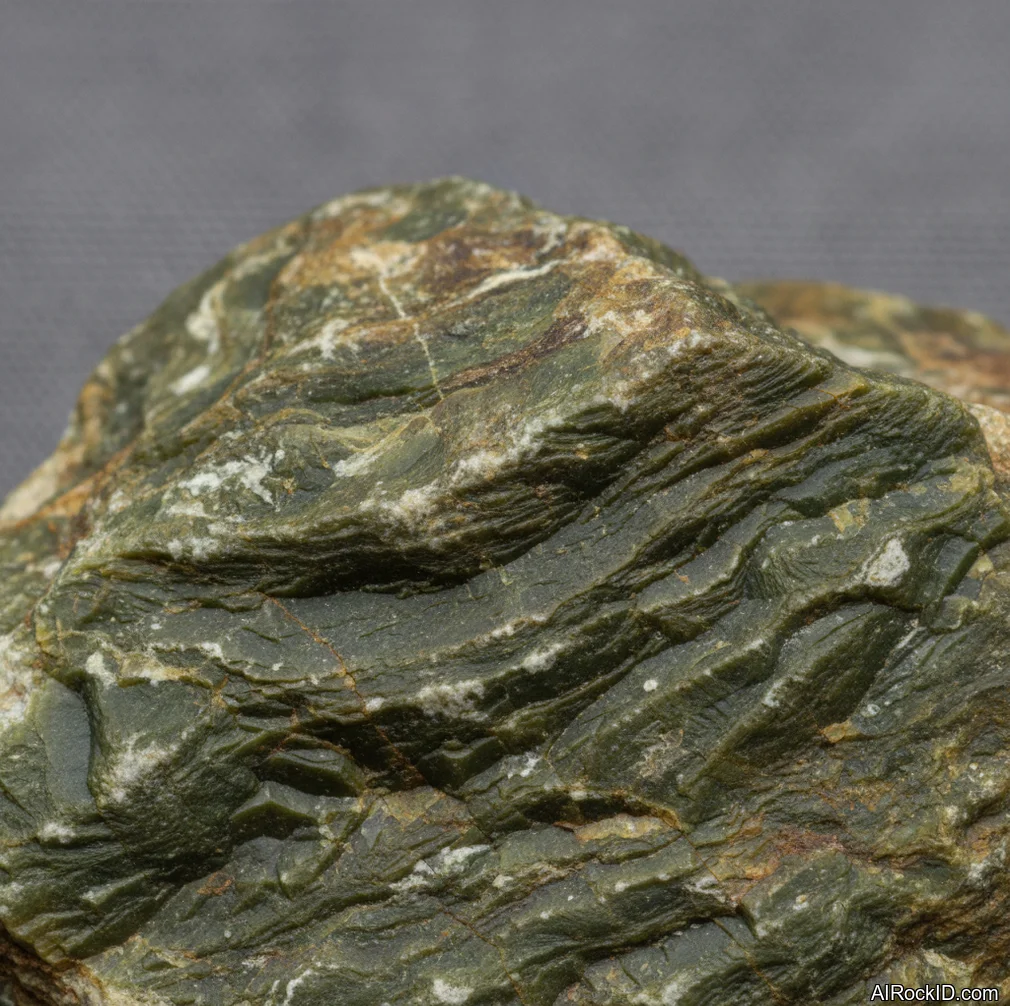
Atlantisite is a lapidary rock made of green serpentine with purple stichtite mottling.
Pick up a palm stone and the first thing you notice is the feel. It’s got that slightly soapy serpentine texture, kind of like a bar of soap that’s been sitting in the shower too long. But the purple stichtite spots usually take a smoother polish than the green, so when you run your thumb across it you can catch tiny little height changes. Subtle. But there.
And yeah, the colors are the main event. You’ll see apple to olive green, then lilac, grape, or even magenta patches that look like somebody dabbed them on with a sponge (or pressed paint into the surface and lifted it back off).
Most pieces for sale are tumbled stones, cabs, or those cut freeform shapes. Raw chunks are out there, but they’re often pretty rough-looking on the outside, and the good pattern doesn’t show until someone slices into it. Thing is, some sellers slap the name “Atlantisite” on any green-and-purple rock. That’s not quite right. Real material is stichtite hosted in serpentine, not just “something purple in something green.”
Origin & History
Stichtite, the purple mineral you see in atlantisite, was first described in 1910 from Tasmania. It was named for Robert Carl Sticht, a mining manager connected to the Mount Lyell district.
“Atlantisite” showed up later as a trade name. And yeah, it was really sold on that green and purple combo (the kind that pops once it’s been cut and polished), with Tasmania treated as the classic source. But it isn’t an official mineral species name. So you’ll hear it used a bit loosely at shows, especially for mixed serpentine that only has a few small purple patches.
Where Is Atlantisite Found?
The best-known Atlantisite comes from western Tasmania, where stichtite occurs in serpentinized ultramafic rocks. Similar stichtite-serpentine material is also reported from places like South Africa.
Formation
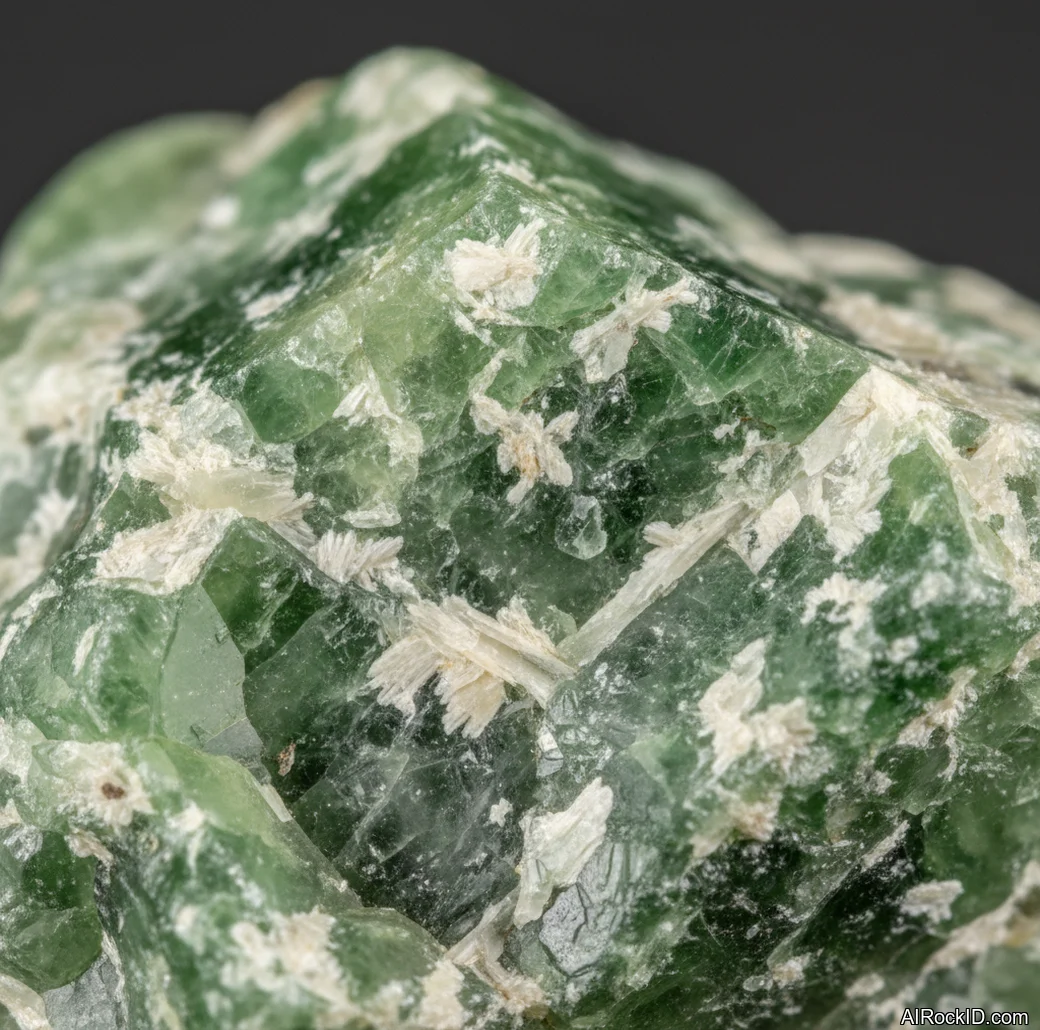
Think “altered ultramafic rock.” You’re starting with magnesium-rich material like peridotite or dunite. Then water muscled its way in during metamorphism and hydrothermal alteration, and that original rock gets converted into serpentine group minerals.
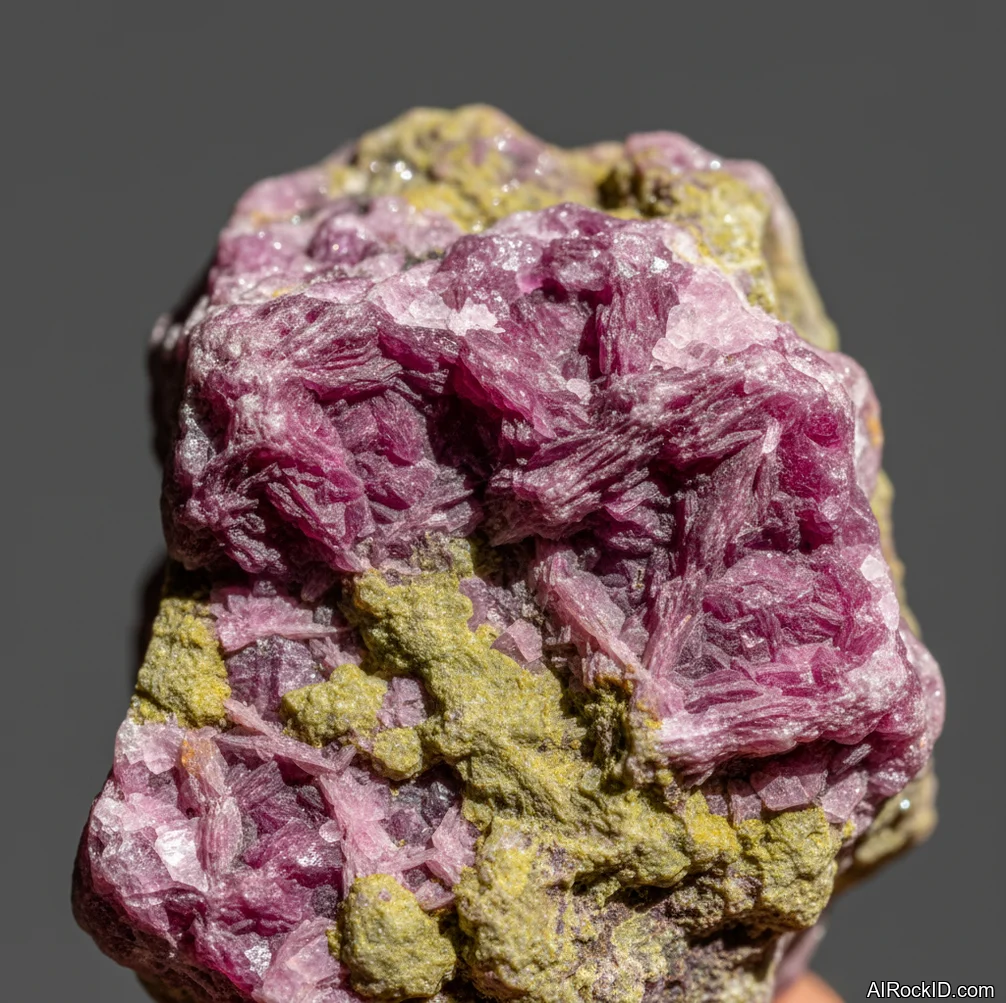
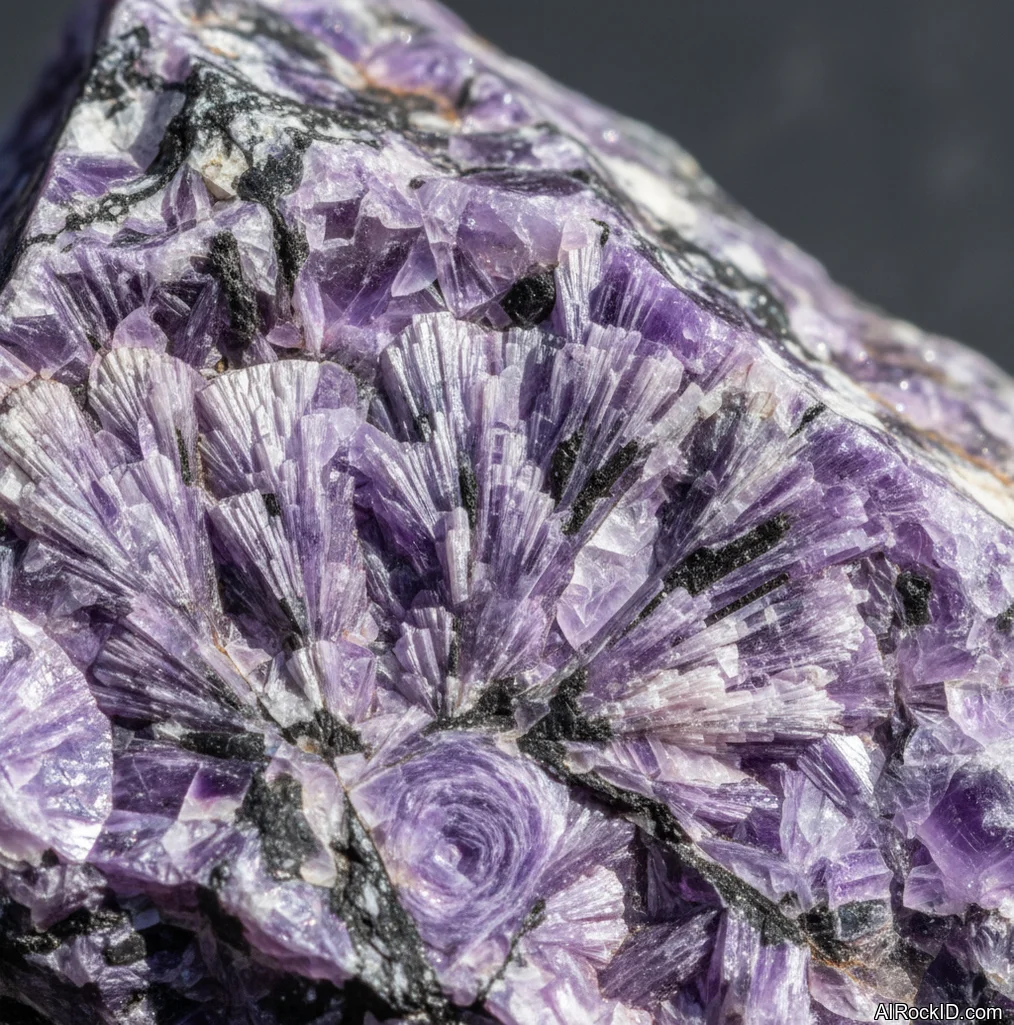
Stichtite comes in later, usually right where chromium-bearing conditions and carbonate fluids overlap. It’s a chromium-rich magnesium carbonate hydroxide, and it typically forms as veins, patches, or replacement zones inside the serpentine. That’s why, in a hand sample, you see those purple little islands sitting in the green instead of tidy, separate crystals you could just pick out with tweezers.
But it’s picky about where it shows up. I’ve sliced rough that looked great on the outside, only to find the inside was mostly plain green serpentine with just a faint purple blush (barely there, honestly). So yeah, buying rough is a gamble unless you can see a fresh face.
How to Identify Atlantisite
Color: Atlantisite shows green serpentine as the base with purple stichtite patches, streaks, or clouds. The purple ranges from pale lilac to deeper magenta depending on concentration and lighting.
Luster: It’s usually waxy to dull on rough surfaces and waxy to slightly vitreous once polished.
Pick up a piece and feel it. Real serpentine tends to feel a little slick or soapy compared to quartz jaspers, and it stays cool in the hand longer than cheap resin fakes. If you scratch it with a steel nail, most Atlantisite will mark or scratch because serpentine is soft, while the purple areas can be a touch different but still not “hard stone” territory. The real test is a loupe and a good light: you’re looking for purple that looks like mineral growth in the rock, not a dyed crack network or a surface stain that pools in pits.
Properties of Atlantisite
Physical Properties
| Crystal System | Monoclinic |
| Hardness (Mohs) | 2.5-4 (Soft (2-4)) |
| Density | 2.50-2.65 |
| Luster | Waxy |
| Diaphaneity | Opaque |
| Fracture | Uneven |
| Streak | White |
| Magnetism | Non-magnetic |
| Colors | green, apple green, olive green, purple, lilac, magenta |
Chemical Properties
| Classification | Silicates and carbonates (rock mixture) |
| Formula | Serpentine group: Mg3Si2O5(OH)4; Stichtite: Mg6Cr2(CO3)(OH)16·4H2O |
| Elements | Mg, Si, O, H, Cr, C |
| Common Impurities | Fe, Ni, Al |
Optical Properties
| Refractive Index | 1.560-1.571 |
| Birefringence | 0.006-0.010 |
| Pleochroism | None |
| Optical Character | Biaxial |
Atlantisite Health & Safety
Handling polished Atlantisite is pretty low risk. The only real worry is the dust you can kick up if you saw it, sand it, or carve it (that fine powder that clings to your fingers and settles on the bench).
Safety Tips
If you have to cut it, do it wet and wear a snug, properly fitted respirator that’s actually rated for fine particulates. And when you’re done, don’t sweep up that dried dust. Keep it wet and wipe up the slurry while it’s still damp (it turns into this gritty gray paste).
Atlantisite Value & Price
Price Range
Rough/Tumbled: $5 - $40 per piece
Cut/Polished: $2 - $10 per carat
Price mostly comes down to color balance and the pattern you can actually see: a strong purple next to a clean green moves fast, but that muddy brown-green stuff or the barely-there lavender? It just sits there on the table. And big, clean rough that’ll cab well costs more, because once you start cutting you keep hitting fractures and those crumbly, chalky zones that blow out at the wheel (ask me how I know).
Durability
Moderate — Scratch resistance: Fair, Toughness: Fair
It’s stable for normal display, but the serpentine base is soft enough that it can pick up scratches and dull spots with rough handling.
How to Care for Atlantisite
Use & Storage
Store it away from harder stones like quartz and topaz, because it’ll pick up scuffs in a shared bowl. A soft pouch or a divided box tray keeps the polish looking good.
Cleaning
1) Rinse briefly with lukewarm water and a drop of mild soap. 2) Gently scrub with a soft toothbrush if there’s grime in pits. 3) Pat dry, then air dry fully before putting it back in a pouch.
Cleanse & Charge
If you do energetic cleansing, stick to gentle methods like smoke, sound, or a short moonlight sit. I avoid salt soaks because they can leave a crust in tiny pores and seams.
Placement
On a desk or bedside table it holds up fine, just don’t toss it in with keys or pocket change. If you display it, a little stand helps keep it from getting rubbed dull on the shelf.
Caution
Skip ultrasonic cleaners and stay away from harsh acids. And don’t handle it like some “forever ring stone,” because the serpentine part is just too soft to take daily wear without getting scuffed up.
Works Well With
Atlantisite Meaning & Healing Properties
In the metaphysical crowd, Atlantisite usually comes up as this mashup of calm (that green serpentine energy) plus heart-first kindness (the purple stichtite side). And yeah, I get the appeal. When you’ve got one of those cool, slightly waxy palm stones in your hand, with those gentle sea-glass colors, your body tends to ease off the gas a little. That’s not magic, it’s touch and temperature doing what they do, and it’s a big reason “comfort stones” end up in people’s pockets for grounding.
Look, if you tilt a polished face under a lamp, the purple isn’t one solid blob. It shows up in little cloudy patches and peppery freckles, like someone tapped a paintbrush over it. That kind of visual noise is weirdly useful for slow, kind of boring breathwork, when you need something to rest your eyes on so your brain doesn’t go sprinting off. I’ve used mine as a worry stone on long drives, thumb rubbing the same spot until it warms up. But it’ll pick up tiny scratches over time, especially if it’s sharing a pocket with keys or loose change. Tradeoff.
Thing is, keep your feet on the ground with anything health-related. Crystals aren’t medical care. If you like Atlantisite for emotional support, I’d treat it like a routine tool: hold it while you journal, set it next to your tea mug, tuck it where you’ll see it when you’re starting to clench your jaw. Small stuff. Repeatable stuff. That’s where it actually helps, right?
Identify Any Crystal Instantly
Snap a photo and get properties, value, care instructions, and healing meanings in seconds.