Stichtite
What Is Stichtite?
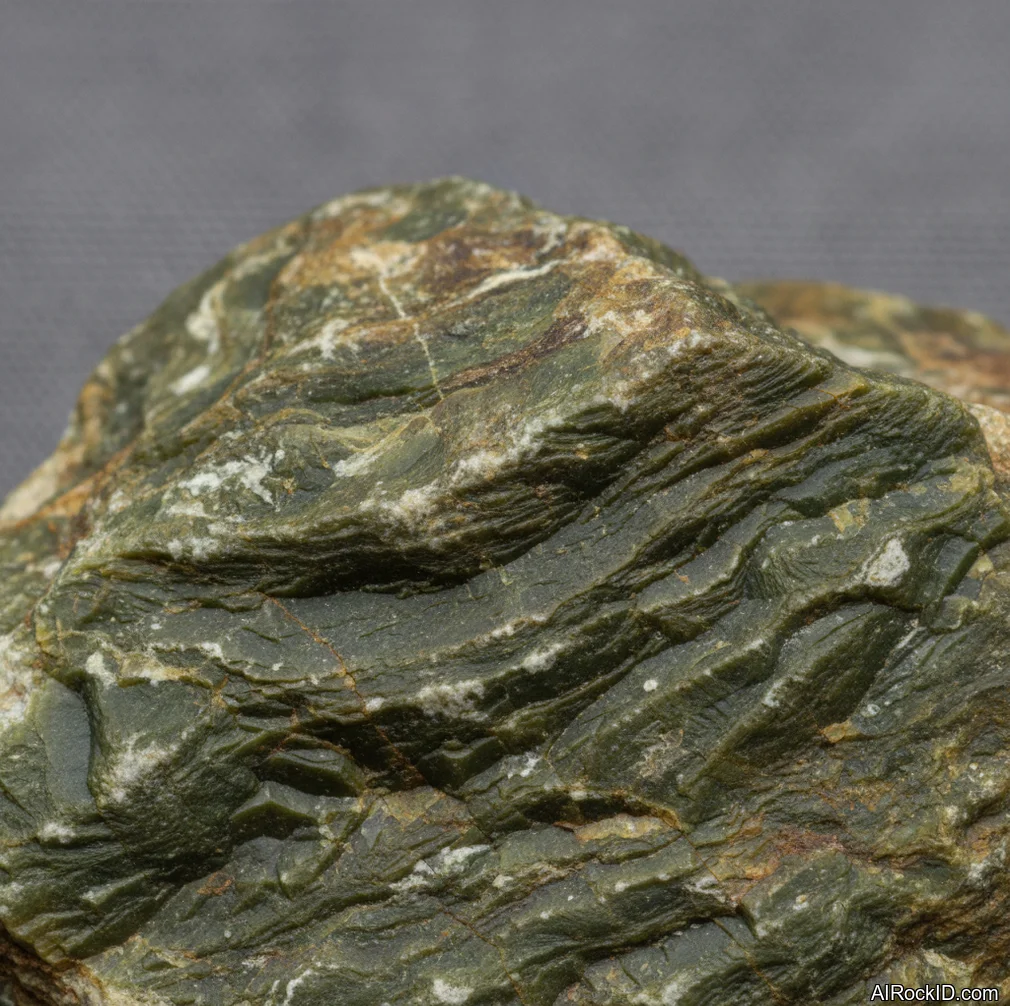
Stichtite is a purple magnesium chromium carbonate hydroxide mineral in the hydrotalcite supergroup. Most of the time, it shows up as lilac-to-grape-purple patches smeared through green serpentine, and that exact purple-on-green combo is what a lot of dealers slap the name “atlantisite” on.
Pick up a polished slice and you’ll notice right away it doesn’t have that cold, glassy quartz feel. It’s got the slightly waxy, almost soapy hand feel serpentine has, and the purple reads more like paint daubs or foggy clouds than crisp crystal faces. I’ve handled plenty of tumbled pieces where the purple pops but the green looks kind of dead, and the best ones do the opposite: clean, apple-green serpentine with tight, saturated purple blobs (the kind that look like they’re sitting just under the polish).
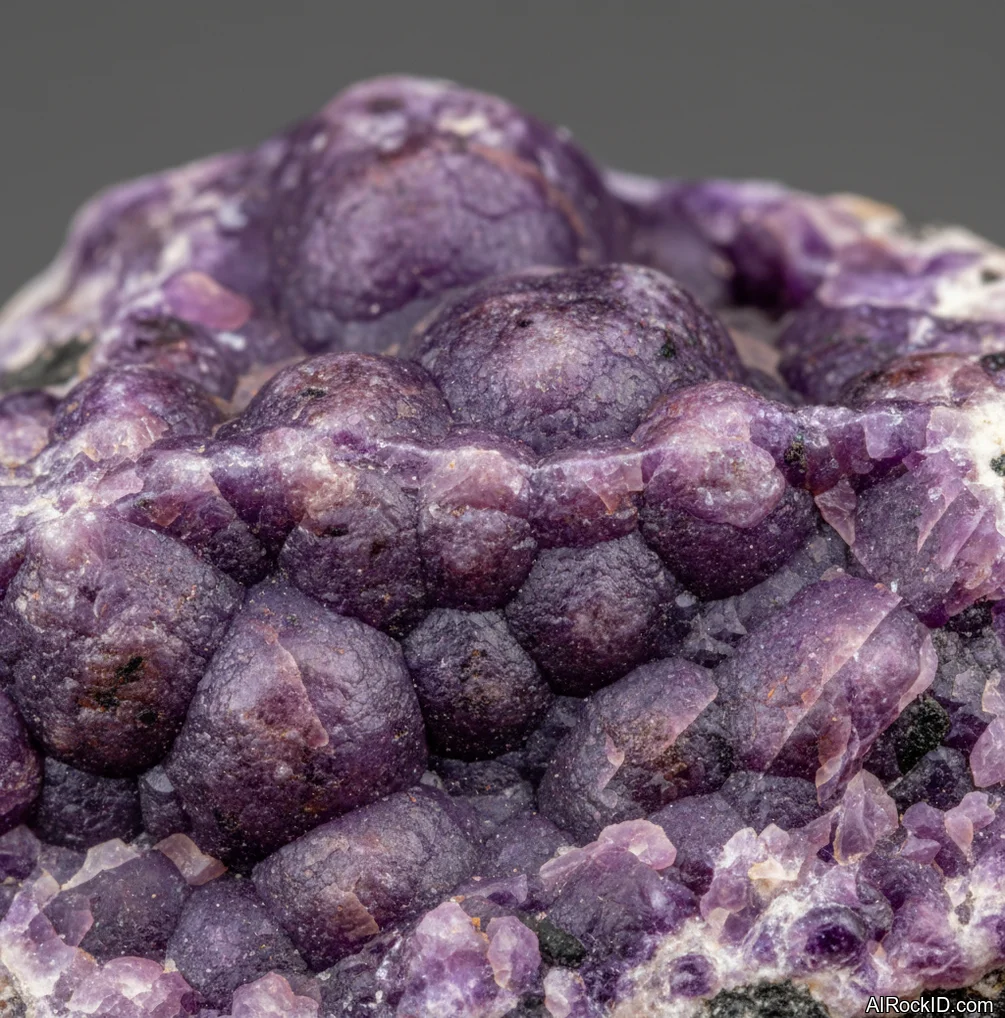
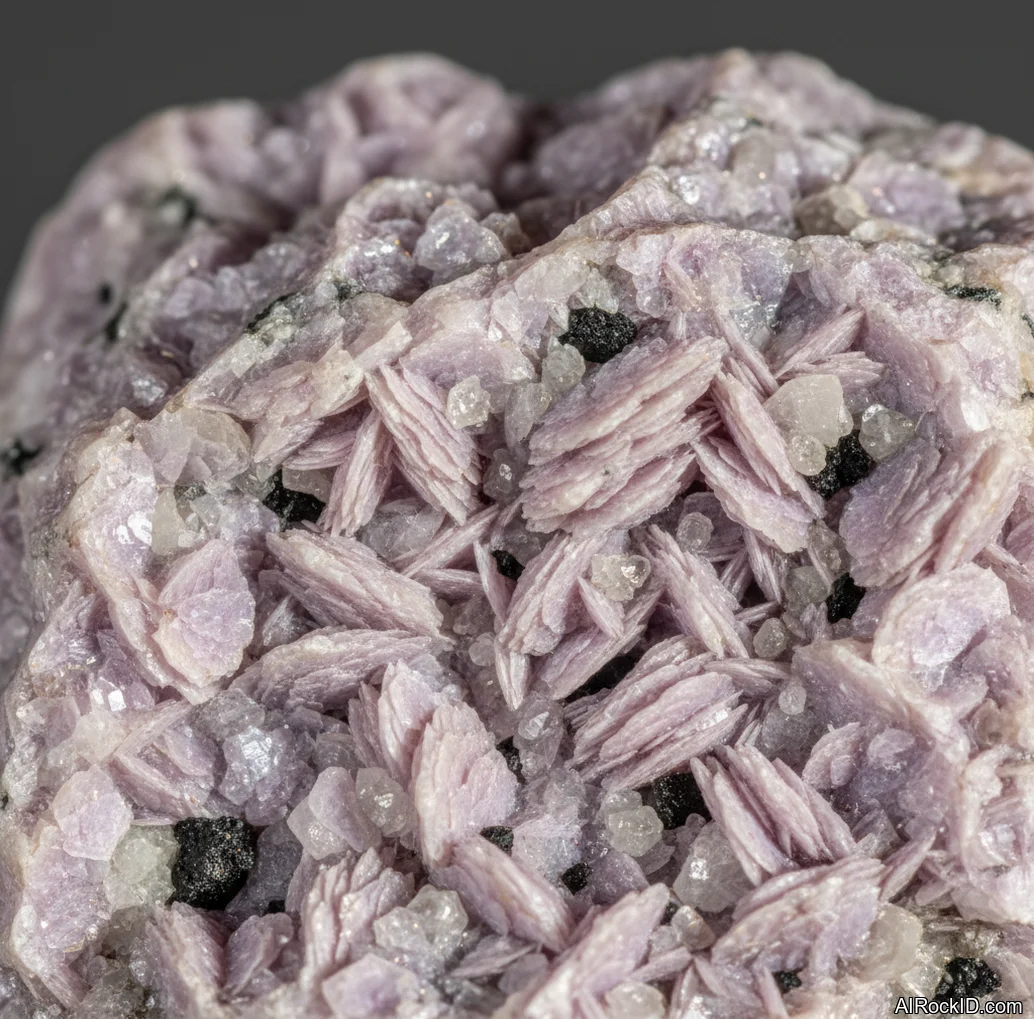
People mix it up with lepidolite, and sometimes even sugilite, at first glance. But stichtite usually gives itself away in the texture. The purple isn’t sparkly-mica. It’s also not that hard, candy-like purple you see in sugilite cabochons. It just looks softer. More chalky-lilac in rough. And it often sits in seams and pods instead of forming obvious crystals.
Origin & History
Tasmania’s the classic origin story here. Stichtite was first described in 1910 out of the Dundas district on Tasmania’s west coast, and it was named after Robert Carl Sticht, a mining manager and metallurgist linked to the Mount Lyell operations.
And if you’ve ever rummaged through older mineral collections, you can almost track how it spread. People went for the color, lapidaries loved how it pops against serpentine (that purple-on-green thing that looks even better once it’s been cut and you can feel the slick polish), and the “atlantisite” trade name stuck because, honestly, it sounds way cooler than “stichtite-bearing serpentinite.” But the mineral name itself is solid and well-established in the literature. It’s not just a marketing tag.
Where Is Stichtite Found?
Most display and lapidary material comes from Tasmania and South Africa, usually as purple stichtite in green serpentine. Smaller occurrences are reported in a handful of ultramafic and serpentinite settings worldwide.
Formation
Look, if you pay attention to where it turns up, it’s almost always the same kind of neighborhood: serpentinite, altered ultramafic rocks, plus chromium moving through the system. Stichtite shows up as a secondary mineral during alteration, right when magnesium-rich rocks are getting hydrated and carbonated and there’s enough chromium around to tint the structure.
And the purple stuff? It usually pops up in veins, seams, or these lumpy, irregular pods sitting in serpentine. It’s also common to find it hanging out with the usual “serpentine crowd” minerals. You’ll spot magnetite grains (those little black specks that cling to a magnet), chromite remnants, and sometimes bits of carbonate close by.
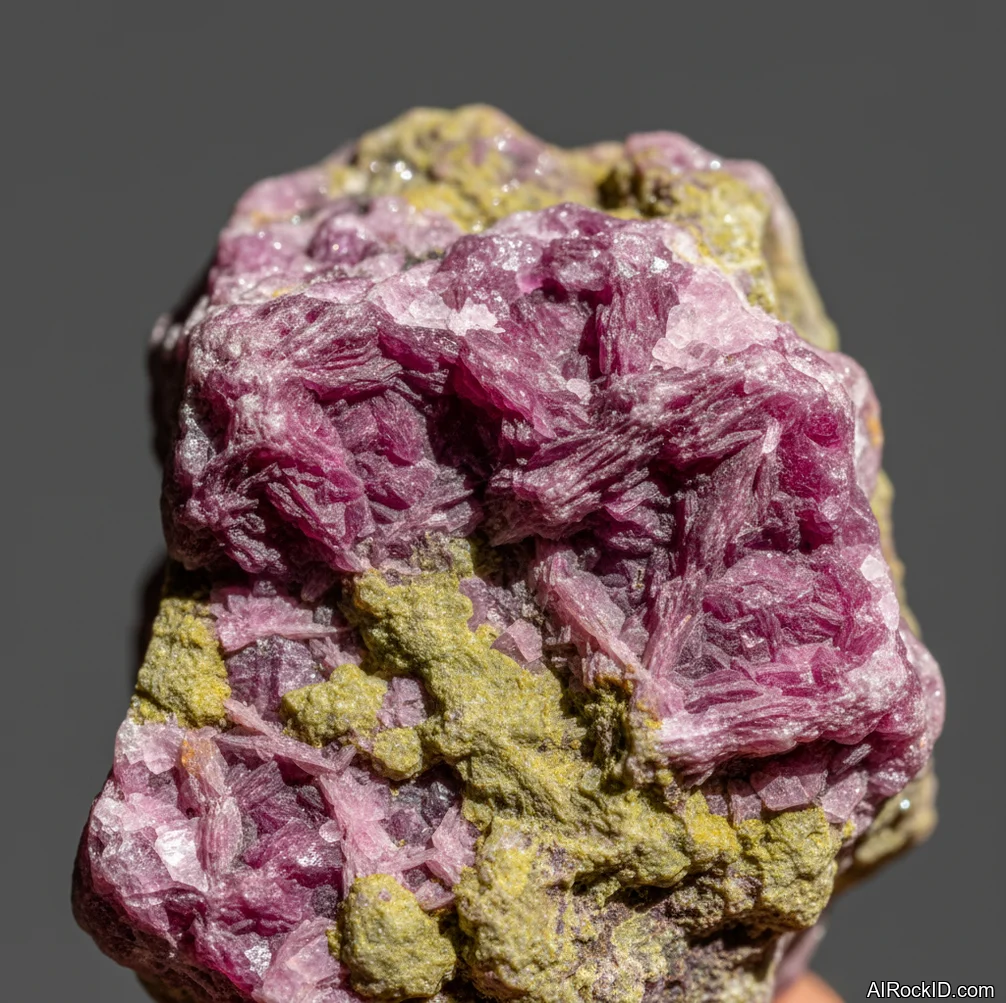
Thing is, if you’re expecting tidy “crystals,” you’re probably going to be disappointed. Stichtite most often shows up as fine-grained to massive material. In a hand sample, it looks more like a smeared or waxy-looking colored mass than a crystal habit you can actually point at. Kind of like that.
How to Identify Stichtite
Color: Lilac, mauve, pinkish purple to deeper grape-purple, often mottled or patchy, frequently set in green serpentine. The purple can look pastel in rough but pops after a good polish.
Luster: Waxy to dull in massive material, sometimes slightly pearly on fresh surfaces.
If you scratch it with a copper coin, it’ll usually mark pretty easily because it’s soft. Compare it side-by-side with lepidolite: lepidolite has that flaky sparkle and splits into micaceous sheets, while stichtite looks more like a smooth, waxy smear. And if you’ve got “atlantisite,” run your fingertip over it: real serpentine plus stichtite often feels slick and cool, not glassy, and the purple tends to be patchy rather than perfectly uniform.
Properties of Stichtite
Physical Properties
| Crystal System | Trigonal |
| Hardness (Mohs) | 1.5-2 (Very Soft (1-2)) |
| Density | 2.00-2.20 g/cm3 |
| Luster | Waxy |
| Diaphaneity | Translucent to opaque |
| Fracture | Uneven |
| Streak | white to pale lilac |
| Magnetism | Non-magnetic |
| Colors | purple, lilac, mauve, pinkish purple |
Chemical Properties
| Classification | Carbonates (layered double hydroxide) |
| Formula | Mg6Cr2(CO3)(OH)16·4H2O |
| Elements | Mg, Cr, C, O, H |
| Common Impurities | Fe, Al, Ni |
Optical Properties
| Refractive Index | 1.520-1.540 |
| Birefringence | 0.010-0.020 |
| Pleochroism | Weak |
| Optical Character | Uniaxial |
Stichtite Health & Safety
Normal handling is pretty low risk. But if you’re cutting or sanding it, don’t kick up a bunch of dust (that fine, chalky stuff gets everywhere). And once you’re done, wash your hands, especially if the surface was rough.
Safety Tips
Use wet cutting, keep the area ventilated, and wear a proper respirator if you’re shaping or polishing it. Don’t sweep the dust up dry. Wipe up the slurry instead (it’s that gritty, gray paste that gets everywhere, including the edge of the bench).
Stichtite Value & Price
Price Range
Rough/Tumbled: $5 - $60 per piece
Cut/Polished: $8 - $35 per carat
Price swings mostly come down to how strong the color contrast is and how cleanly the stone takes a polish (you can feel it on the wheel when it starts to glass up). Solid purple stichtite is less common than the purple-in-green mix. And yeah, larger cab material that’s crack-free costs more.
Durability
Fragile — Scratch resistance: Poor, Toughness: Fair
It’s soft and can bruise or scratch easily, so it holds up better as a display stone than as a daily-wear ring stone.
How to Care for Stichtite
Use & Storage
Keep it in a soft pouch or a divided box so harder stones don’t carve it up. I don’t toss stichtite tumbles into mixed bowls because quartz will scuff them fast.
Cleaning
1) Rinse quickly with lukewarm water. 2) Use a drop of mild soap and your fingers or a very soft cloth, then rinse again. 3) Pat dry and let it air dry fully before storing.
Cleanse & Charge
If you do energy-style cleansing, gentle methods are the move: smoke, sound, or a quick pass on a selenite plate. Skip salt scrubs because the grit can leave a haze of tiny scratches.
Placement
A shelf spot out of direct sun works well, especially where you can see the purple-green contrast from a few feet away. If it’s a polished palm stone, a desk is fine, just keep it away from keys and coins.
Caution
Don’t use ultrasonic or steam cleaners. This material’s soft, and if there are any hairline fractures (the tiny ones you might not even notice), those cleaners can leave dull patches or even chip an edge. Handle it gently. And skip anything abrasive, including gritty cleaners that feel like fine sand between your fingers.
Works Well With
Stichtite Meaning & Healing Properties
Next to the louder, flashier purple stones, stichtite just sits there and doesn’t try so hard. It feels quiet in your palm. When I’m sorting a tray at a show, it’s one of the few pieces I’ll catch myself rubbing with my thumb without even thinking about it, because the surface has this calming, waxy glide (almost like a well-used worry stone). That feel is a big reason people end up reaching for it.
In crystal-healing circles, stichtite gets linked with compassion, emotional softening, and easing out old resentment. I treat that as folk practice, not medicine. Still, the colors do some of the heavy lifting. The purple and green combo reads as heart-focused to a lot of people, and the stone looks gentle enough that it works as a little “check-in” object during journaling or meditation without feeling too intense. You know that feeling when a stone is almost too bold to stare at for long? This isn’t that.
But don’t count on it to hold up like a tough talisman you can wear hard. Carry it every day and it’ll scratch, especially if it’s riding in a pocket with keys or a quartz tumble. I’ve seen plenty of polished atlantisite go cloudy on the high points just from a lot of handling, that slightly dulled, rubbed-down spot where fingers naturally land. Some people genuinely like that broken-in look. If you want it to stay glossy, treat it like a soft mineral and keep it protected.
Identify Any Crystal Instantly
Snap a photo and get properties, value, care instructions, and healing meanings in seconds.