Serpentine
What Is Serpentine?
Serpentine isn’t one single mineral. It’s a whole group of magnesium silicate minerals that show up when ultramafic rocks get altered with water around.
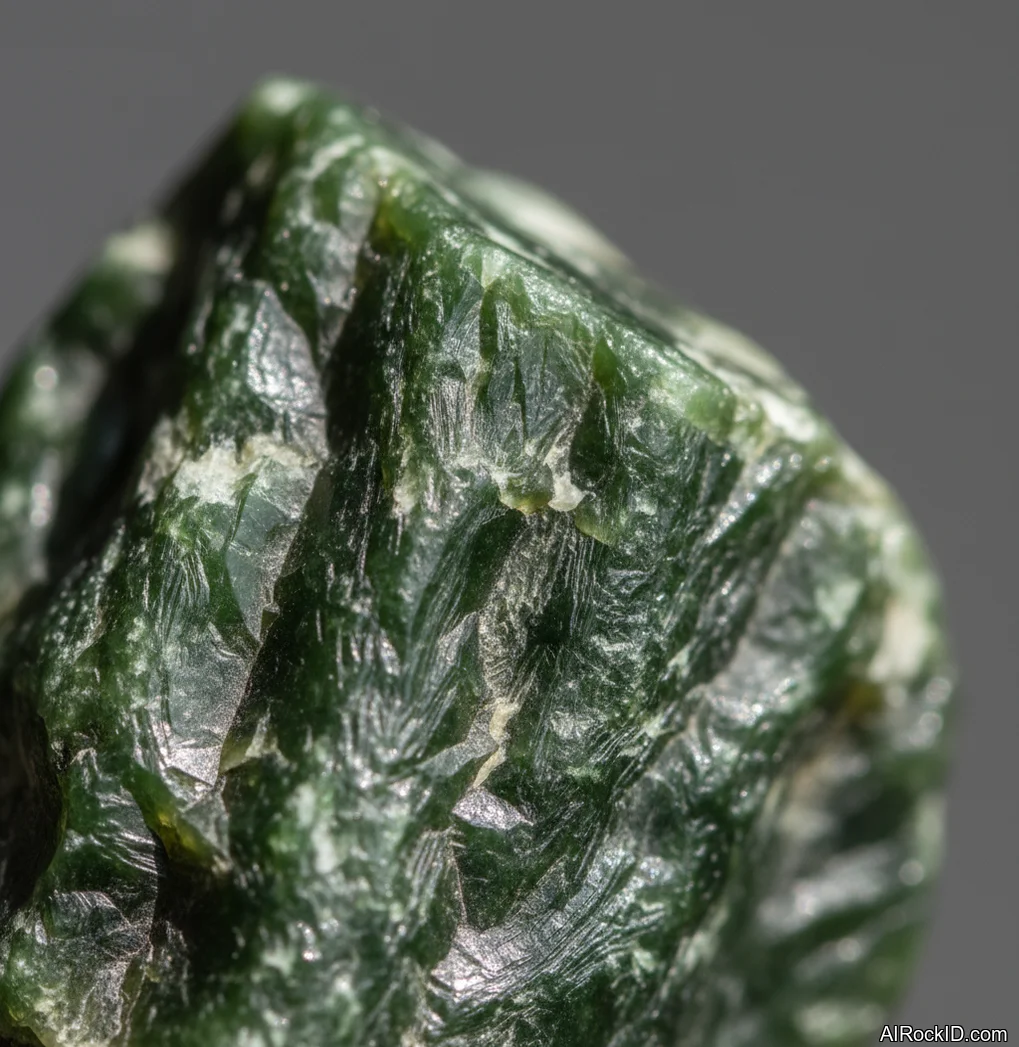
Most people run into it as that smooth green tumbled stone that feels almost soapy. You know the one. It’s got swirls of olive, pistachio, and those darker foresty patches, and if the patterning is strong it can honestly look a bit like snake skin.
Pick up a piece and two things hit you fast. First, it’s usually lighter than you expect for something that looks that solid. Second, it warms up in your hand quicker than quartz or agate, like it’s taking your body heat right away instead of staying cold. The surface can feel slick, kind of like it’s been waxed, even when it’s only lightly polished. Some serpentine is blotchy and kind of dull, but the nicer stuff has real depth to the green and takes a clean, even polish that doesn’t look plasticky (you can usually tell when it’s too glassy).
But here’s the catch: a lot of sellers call it “new jade,” and that’s where the confusion never ends. Real jade means nephrite or jadeite. Serpentine can look pretty close from across a table, especially when it’s carved, but it’s softer, and it’ll show wear sooner if you actually wear it as a bracelet or set it in a ring.
Origin & History
“Serpentine” comes from the Latin *serpentinus*, basically meaning “snake-like,” and yeah, it clicks the second you’ve actually looked at a slab up close and seen that mottled, scaly pattern catching the light.
The mineral group got recognized and described in early modern European mineralogy, and the word starts popping up in 16th to 18th century writing as collectors tried to sort out all those green ornamental stones that looked similar but weren’t actually the same material. Confusing? A little.
Historically, serpentine and serpentinite were used as decorative stone for tiles, carvings, and small objects because they cut easily and take a nice polish (the surface can end up slick, almost waxy, if you work it right). And in older collections, you’ll still run into pieces labeled “jade” from back when people were organizing specimens by color first and chemistry later.
Where Is Serpentine Found?
Serpentine shows up wherever ultramafic rocks have been hydrated, so you’ll see it in ophiolite belts, mountain belts, and old seafloor slices pushed up onto continents.
Formation
Most serpentine comes from serpentinization, basically when ultramafic rocks like peridotite or dunite get hydrated and metamorphically altered. Water sneaks in through fractures, along faults, or up through seafloor routes, then reacts with olivine and pyroxene. Out of that you get serpentine minerals and, pretty often, magnetite. So yeah, some serpentinite bodies end up slightly magnetic even though the serpentine mineral itself isn’t. Weird at first, but it checks out.
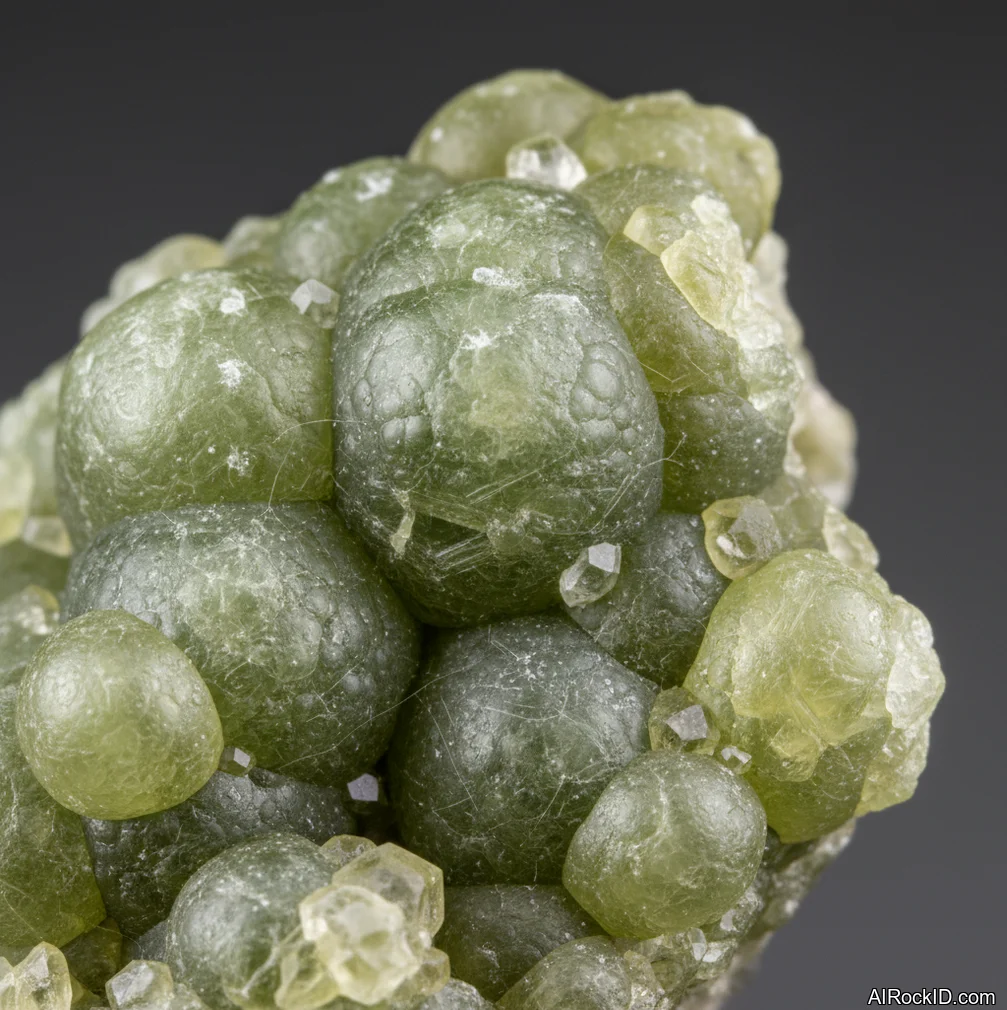
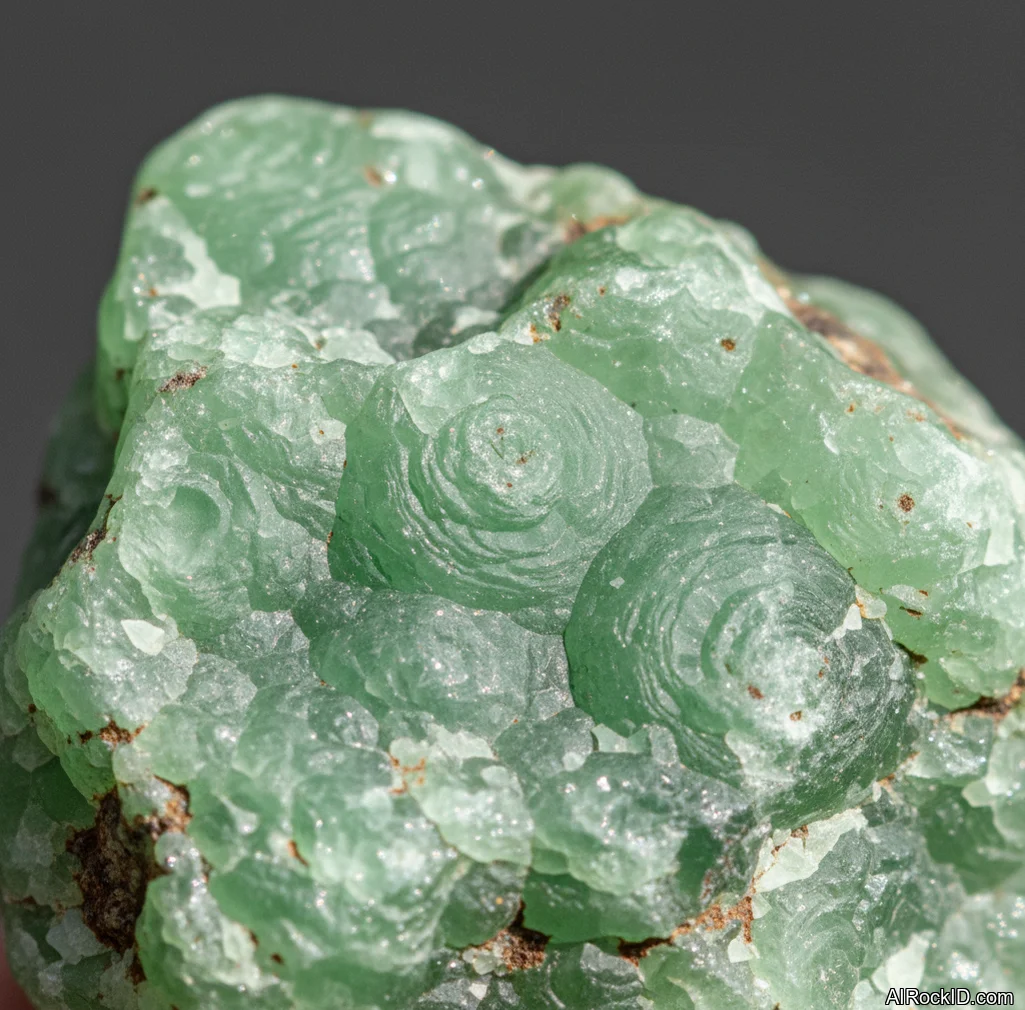
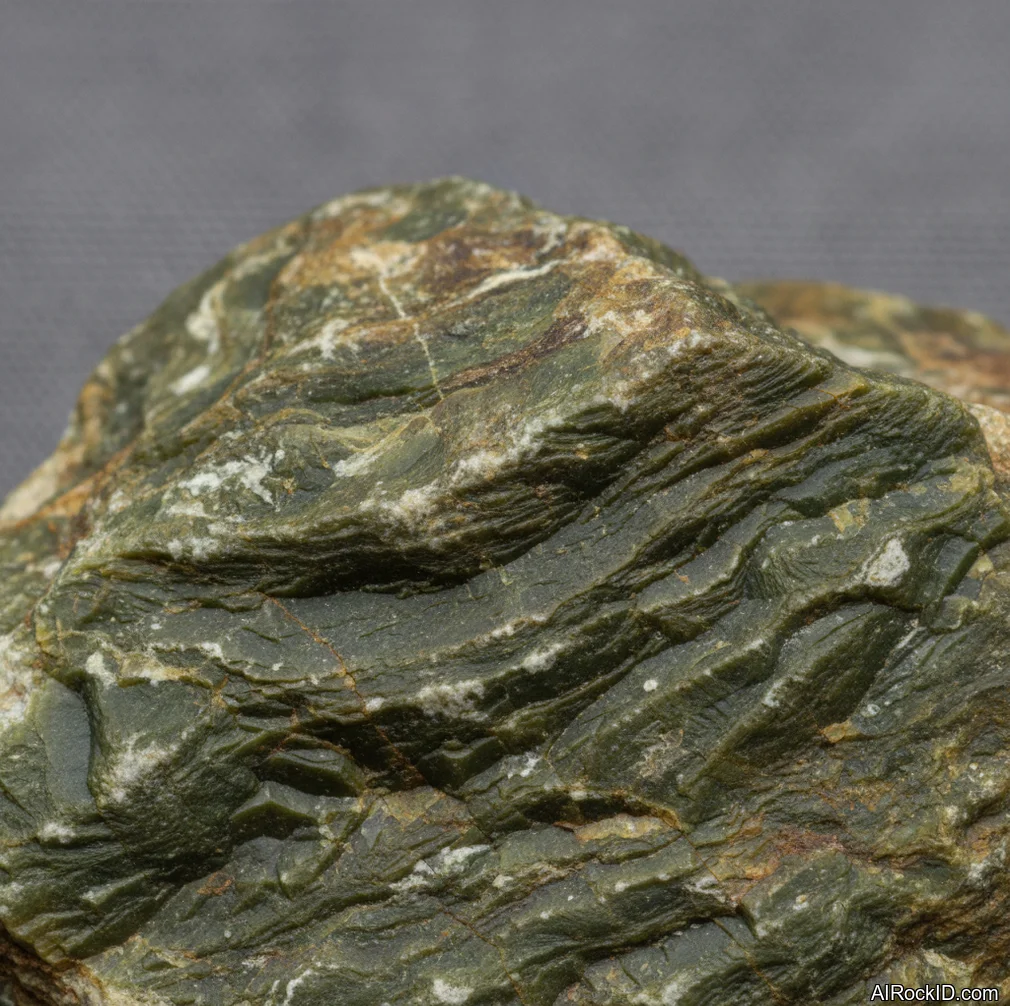
In a hand sample, it usually doesn’t show up as crisp, pointy crystals. It’s more like a massive, fine-grained chunk. And if you’ve ever cracked a piece at a dig and the host rock is that green-black color with a slick feel right on the fresh break, you know exactly what I mean. Fresh faces can look almost greasy (like you touched it with sunscreen on your fingers), but the outside of older, weathered pieces can go pale and chalky if they’ve been sitting in dirt for years.
How to Identify Serpentine
Color: Usually green in a wide range, from pale yellow-green to deep olive, often mottled or veined with darker patches, brown, or black. Some pieces show a whitish network or cloudy zones, especially in massive serpentinite.
Luster: Waxy to greasy on polished surfaces, sometimes slightly silky if fibrous.
If you scratch it with a steel knife, many pieces will mark pretty easily, and a copper coin can scratch the softer material. Rub your thumb across a polished cab and it often feels slick, not glassy, and the shine looks soft instead of sharp like quartz. The real test is to compare it side by side with nephrite: nephrite feels tougher and doesn’t pick up little edge dings as fast.
Properties of Serpentine
Physical Properties
| Crystal System | Monoclinic |
| Hardness (Mohs) | 2.5-4 (Soft (2-4)) |
| Density | 2.50-2.65 |
| Luster | Waxy |
| Diaphaneity | Translucent to opaque |
| Fracture | Uneven |
| Streak | white |
| Magnetism | Non-magnetic |
| Colors | green, olive green, yellow-green, dark green, brown, black, white |
Chemical Properties
| Classification | Silicates (phyllosilicates) |
| Formula | Mg3Si2O5(OH)4 |
| Elements | Mg, Si, O, H |
| Common Impurities | Fe, Ni, Cr, Al |
Optical Properties
| Refractive Index | 1.560-1.571 |
| Birefringence | 0.010 |
| Pleochroism | Weak |
| Optical Character | Biaxial |
Serpentine Health & Safety
Solid chunks are usually safe to handle in your hands, but once you start cutting, sanding, or drilling serpentinite, you can kick up a fine dust that’s rough on your lungs. And if there’s any fibrous material in the mix, the risk goes up.
Safety Tips
Don’t dry sand or grind this stuff. Use wet methods instead, wear proper respiratory protection (a real respirator, not a flimsy dust mask), and keep an eye on the fine powder that wants to settle everywhere. And don’t let dust build up in your workspace.
Serpentine Value & Price
Price Range
Rough/Tumbled: $3 - $25 per tumbled stone or small palm stone
Cut/Polished: $1 - $8 per carat
Price mostly comes down to color, how clean the polish actually is when you tilt it under a light, and whether it’s one of the tougher, more jade-like types like bowenite. Big, clean blocks you can carve (no weird fractures popping up mid-cut) cost more. So do carvings that are properly finished, with crisp edges and a smooth feel in your hand, compared with basic tumbles.
Durability
Nondurable — Scratch resistance: Poor, Toughness: Fair
It can scratch and bruise easily, and polished surfaces will dull over time with pocket carry or rough handling.
How to Care for Serpentine
Use & Storage
Store it in a soft pouch or a separate compartment so harder stones don’t scuff it up. If you keep a bowl of tumbles, put serpentine away from quartz and corundum.
Cleaning
1) Rinse with lukewarm water and a drop of mild soap. 2) Wipe with a soft cloth or a very soft toothbrush for crevices. 3) Rinse again and pat dry, then let it air dry fully before storing.
Cleanse & Charge
If you like ritual cleaning, a quick rinse and a dry cloth works fine for serpentine. Skip salt soaks if the piece has fractures or soft spots, because the surface can get dull.
Placement
Keep it off sunny windowsills if you care about the polish staying crisp, and avoid spots where it’ll get knocked around. On a desk, it’s great as a worry stone since it doesn’t feel cold and sharp.
Caution
Don’t use an ultrasonic cleaner or a steam cleaner on this. Skip harsh acids, too. And if you want it to stay shiny, don’t just drop it in your pocket with keys or loose change, because it’ll come out with little scuffs (you can feel them with a fingernail).
Works Well With
Serpentine Meaning & Healing Properties
Serpentine looks like just another “green stone” at first. But the second it’s in your hand, you notice it’s not the same vibe at all. It’s softer. Kind of cozy, honestly. I’ve seen people at shows pick one up and then, without thinking, keep rubbing it with their thumb like they’re checking a bar of soap for slick spots. That touchy-feely part is exactly why it so often gets cut into palm stones and worry stones.
In metaphysical circles, people tie serpentine to grounding and settling emotions, especially if someone feels overstimulated. I treat that as personal practice, not a medical claim. Thing is, if you’re someone who does better with a physical reminder to slow down, serpentine helps because the polish has that smooth-but-slightly-grippy, waxy feel, instead of that glassy finish that can feel like it wants to shoot right out of your fingers.
But look, the market side is messy. A lot of the “serpentine energy” talk gets wrapped up with the “new jade” label, and that’s mostly sales language. So if you want serpentine, get it because you like how it looks and how it feels in your hand. And if what you actually want is jade for toughness and long wear, don’t let a green color and a fancy card talk you into buying the wrong material.
Identify Any Crystal Instantly
Snap a photo and get properties, value, care instructions, and healing meanings in seconds.