Datolite
What Is Datolite?
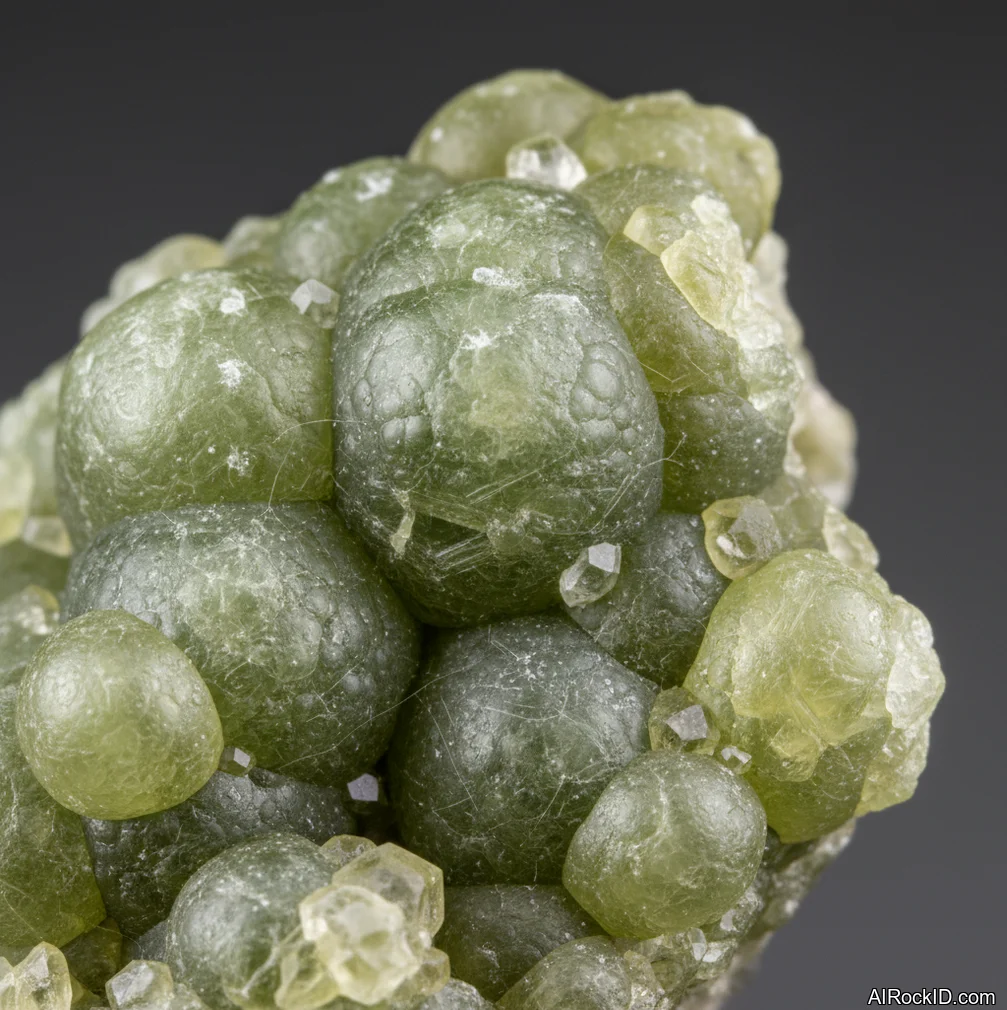
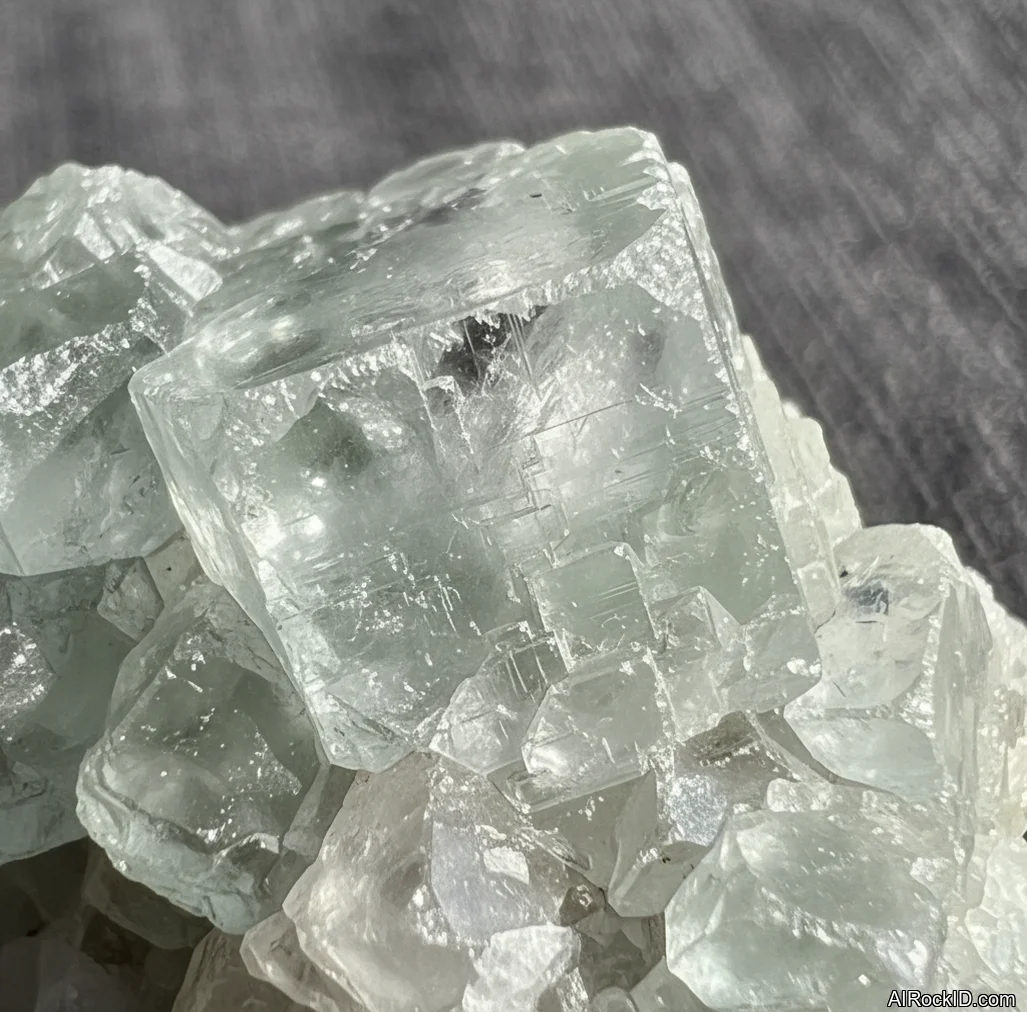
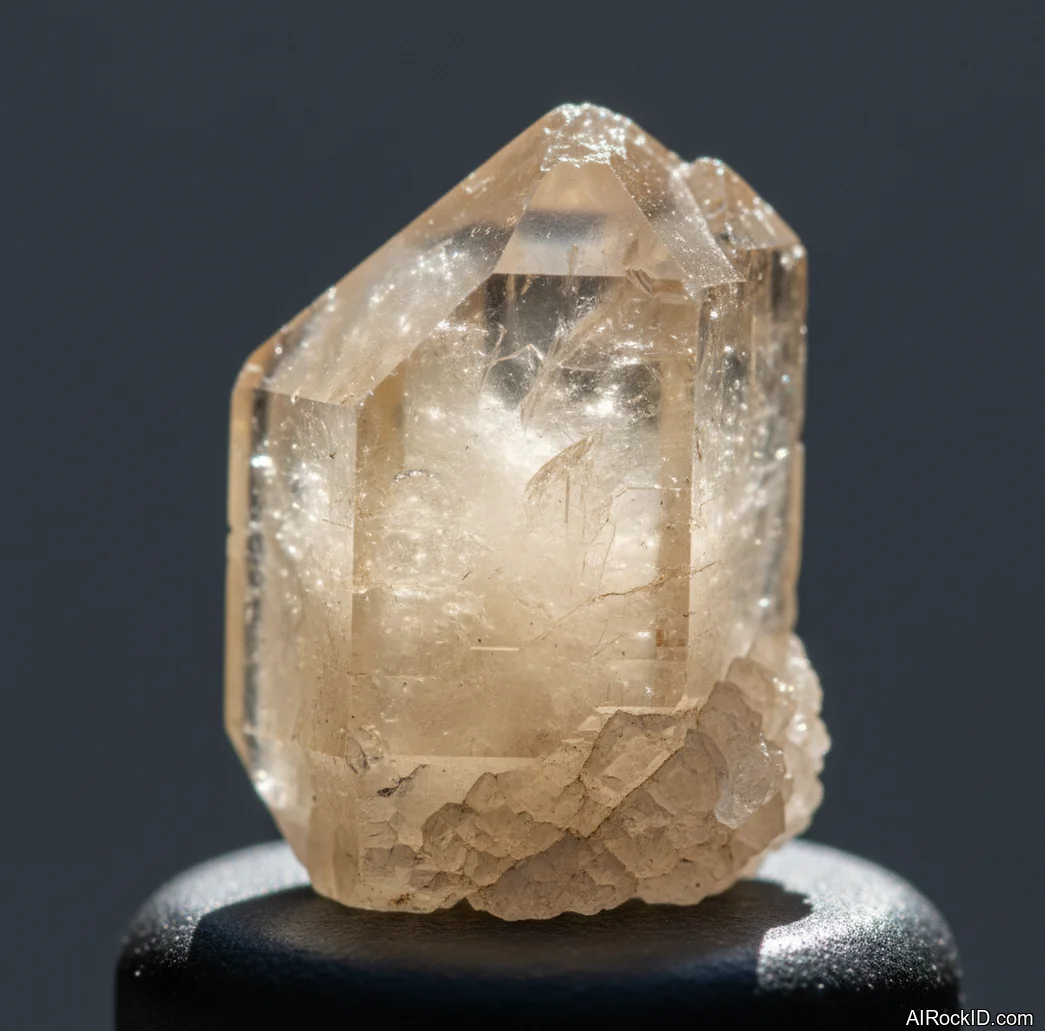
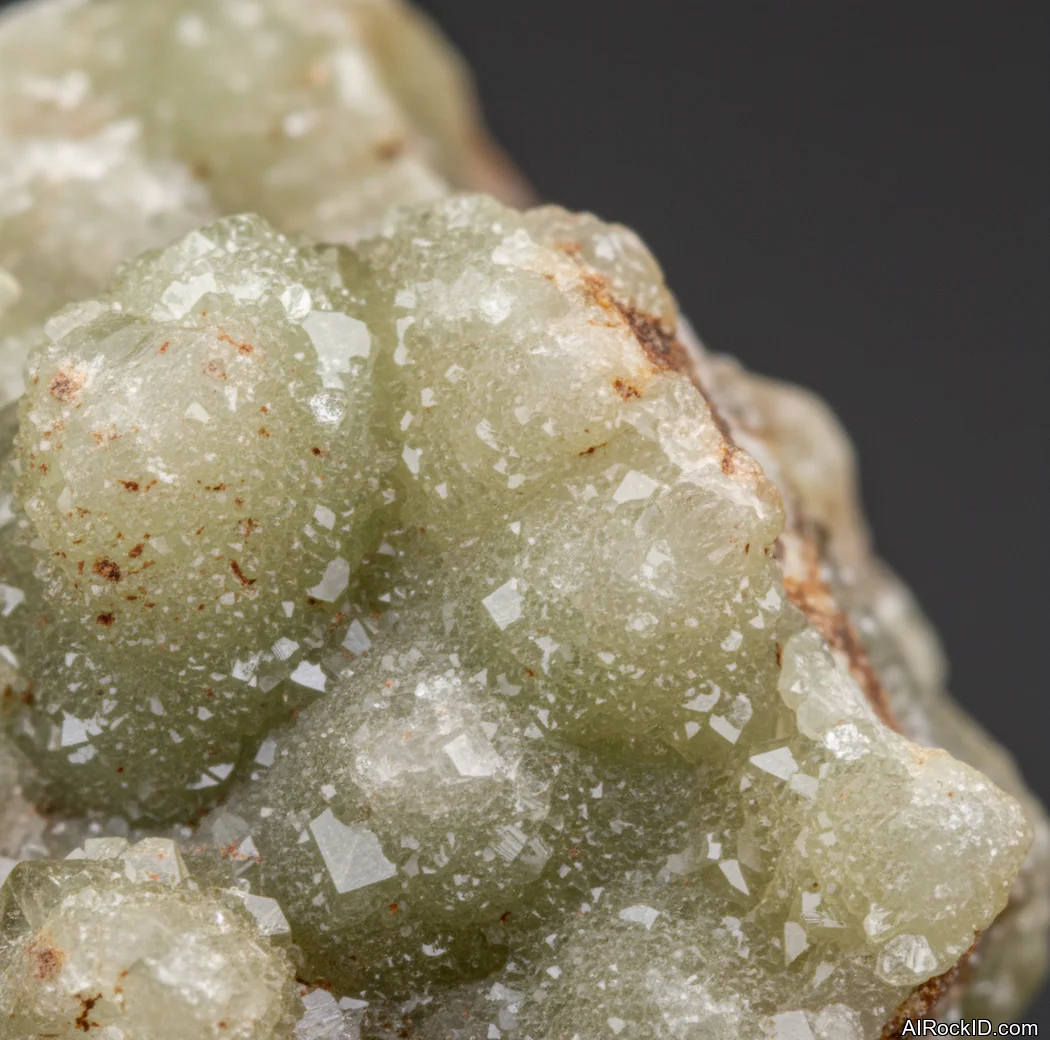
Datolite is a calcium boron silicate mineral with the formula CaBSiO4(OH). Most of the time you’ll see it as glassy, blocky crystals, or as crusty, botryoidal lumps in pale green, white, honey, or straight-up colorless material.
Pick up a solid chunk and you’ll notice the weight right away. It’s got this calm, “honest” heft for its size, not as heavy as garnet, but not airy like some zeolites. The better pieces feel cool against your palm, and the luster is the first dead giveaway: tip it under a lamp and the fresh faces throw back a clean, wet-looking shine.
At first glance, people confuse it with prehnite, apophyllite, or even pale grossular, especially when it’s green and perched on basalt. But thing is, datolite feels different in the field. The crystals are often kind of stubby and geometric, and when you rotate one, the reflections snap on and off (almost like a switch) instead of smearing around the way waxy prehnite does.
Origin & History
Near the tail end of the 1700s, datolite was described from European material and officially named in 1799 by the German mineralogist Abraham Gottlob Werner. Werner’s one of those names that keeps popping up on old mineral labels, and he had a real knack for picking names that collectors still remember.
The word itself comes from Greek, basically meaning “to divide,” a nod to how the mineral can split along cleavage. But here’s the thing: on a rough, pitted piece, you might not see that clean, textbook cleavage at all. Get your hands on a sharper crystal, though, and when the light catches a flat break at just the right angle, it clicks why the name stuck.
Where Is Datolite Found?
You run into datolite in both classic skarn districts and basalt/diabase traprock pockets. The U.S. has famous old-school localities, and Russia’s Dalnegorsk material can be jaw-dropping when it’s clean.
Formation
Most of the datolite I’ve actually handled seems to show up in two basic situations.
One is skarn. That’s the setup where hot fluids from an intrusion chew into limestone or dolostone, and you start getting calcium-rich stuff growing in place like garnet, wollastonite, vesuvianite, and sometimes datolite sneaking in as a later generation.
The other is in cavities in basalt and diabase, especially in traprock. In those little pockets, datolite turns up as crusts, botryoids, or chunky crystals with zeolites, calcite, apophyllite, prehnite, and quartz. And the order really does matter. You’ll often find datolite sitting on top of earlier cavity minerals, and the outside can have that slick, glassy feel even when you crack it and the inside looks milky.
Look, if you take a fresh break and stare at the edge in good light, you can sometimes catch zoning. Some green pieces have a paler core with slightly deeper rims, like the chemistry shifted while the pocket was still doing its thing. It’s subtle. But yeah, it’s there.
How to Identify Datolite
Color: Datolite ranges from colorless and white to pale green, yellow-brown, and honey tones; green is common in traprock pieces. Color can be patchy, with milky zones and clearer “windows” in the same specimen.
Luster: Fresh datolite faces are usually vitreous, like clean glass.
If you scratch it with a steel nail, it’ll usually mark, but it can still scratch softer glassy-looking stuff like calcite. The real test is the feel plus the look: datolite often has that crisp, glassy reflection and a slightly greasy-smooth surface on botryoidal pieces, not the waxy drag you get with prehnite. And under a loupe, the crystal faces tend to look sharper and more geometric than most prehnite blobs.
Properties of Datolite
Physical Properties
| Crystal System | Monoclinic |
| Hardness (Mohs) | 5-5.5 (Medium (4-6)) |
| Density | 2.96-3.00 g/cm3 |
| Luster | Vitreous |
| Diaphaneity | Transparent to translucent |
| Fracture | Conchoidal |
| Streak | White |
| Magnetism | Non-magnetic |
| Colors | Colorless, White, Pale green, Yellow, Honey-brown, Grayish green |
Chemical Properties
| Classification | Silicates |
| Formula | CaBSiO4(OH) |
| Elements | Ca, B, Si, O, H |
| Common Impurities | Fe, Mn, Al, Mg |
Optical Properties
| Refractive Index | 1.626-1.664 |
| Birefringence | 0.038 |
| Pleochroism | Weak |
| Optical Character | Biaxial |
Datolite Health & Safety
It’s safe to handle, and a quick splash of water isn’t a problem. The only real “risk” is physical: the edges can chip, and those bumpy botryoidal surfaces will bruise if you bang them on something.
Safety Tips
If you’re trimming matrix or doing any grinding, put on safety glasses and a dust mask, the same way you would with any silicate mineral. That dust gets everywhere (you can feel it on your teeth), and one little chip in the eye is all it takes.
Datolite Value & Price
Price Range
Rough/Tumbled: $10 - $250 per specimen
Cut/Polished: $20 - $120 per carat
Clean crystals with nice luster and a solid green or honey tone get expensive in a hurry, especially when they’re truly damage-free. And yeah, most dealers will knock the price down hard if the terminations are chipped, because datolite bruises way easier than you’d think at first glance.
Durability
Moderate — Scratch resistance: Fair, Toughness: Fair
Datolite is generally stable in normal room conditions, but it can chip and scratch in a pocket or a crowded display tray.
How to Care for Datolite
Use & Storage
Store datolite wrapped or in a perky box with padding, especially if it’s a crystal cluster. I’ve seen nice terminations get dinged just from sliding around in a flat.
Cleaning
1) Rinse with lukewarm water to remove dust. 2) Use a soft toothbrush with a drop of mild soap for crevices, then rinse well. 3) Pat dry and let it air-dry fully before putting it back in a closed box.
Cleanse & Charge
For metaphysical-style cleansing, stick to gentle options like smoke, sound, or a quick rinse and dry. Avoid long soaks if there’s porous matrix or calcite attached.
Placement
Keep it out of high-traffic shelves where it can get bumped. A little acrylic stand helps, because botryoidal pieces like to roll at the worst moment.
Caution
Don’t use an ultrasonic cleaner. And please don’t just toss it in a bowl with quartz points unless you’re okay with those brand-new, hairline scratches you’ll spot the second the light hits it. If your specimen has calcite or zeolites stuck to it, skip acids and anything harsh, because that stuff can get chewed up fast.
Works Well With
Datolite Meaning & Healing Properties
Grab datolite when you’re frazzled and you want something that doesn’t scream for attention. It’s quieter than most of the flashy stuff. No big “wow” hit. It’s more like somebody nudges the mental volume knob down one click. That’s how it’s felt for me with a chunk sitting on the shop counter, especially those pale green pieces pulled from traprock pockets.
Folks who use crystals for emotional work usually tie datolite to gentle processing, like easing into old grief or loosening up tension that’s been stuck in the body for ages. I’m not putting that anywhere near medical care, and I wouldn’t tell anyone to skip real support. But as a plain little thing to keep in your hand while you journal, or while you sit still for ten minutes and stare at the wall (we’ve all done it), it’s a solid choice.
But look, collector’s warning time. A lot of what gets sold as “datolite” in those mixed tumbled bins is misidentified prehnite, or even just common green calcite. Actual datolite usually hangs onto that glassy look even after it’s been tumbled, and it won’t have that waxy feel. If your piece feels warm and kind of greasy in your fingers, I’d double-check what it is before you build a whole routine around it. Why not?
Identify Any Crystal Instantly
Snap a photo and get properties, value, care instructions, and healing meanings in seconds.