Apophyllite
What Is Apophyllite?
Apophyllite isn’t just one mineral. It’s a group of hydrated potassium-calcium silicate minerals, and it usually shows up as glassy, often transparent crystals growing in the little cavities of volcanic rocks.
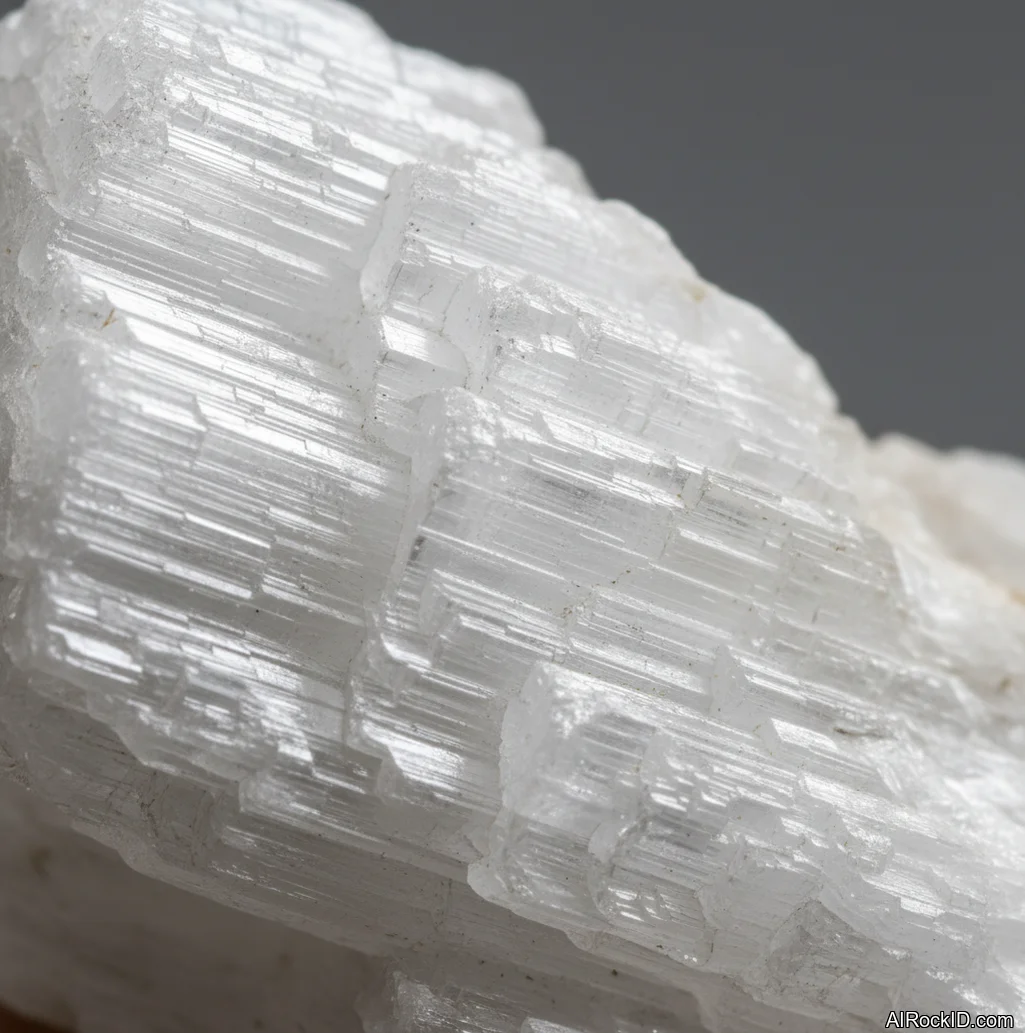
Grab a solid cluster and you notice a couple things fast. It’s lighter than it looks. And the faces stay weirdly cool on your fingertips, even if the room’s warm. The nicest specimens have that clean window-glass shine, plus tiny step-like growth lines that flash when you tip it under a shop light (you can almost “see” the layers).
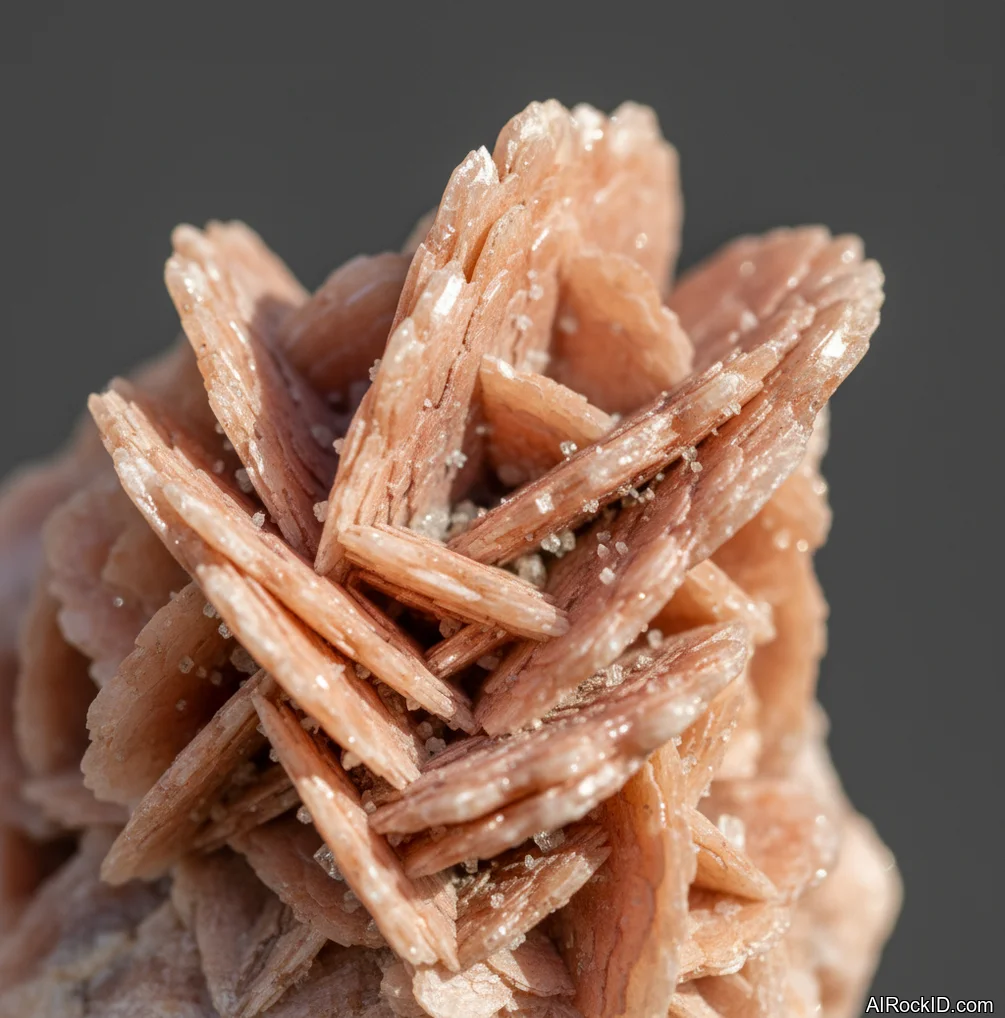
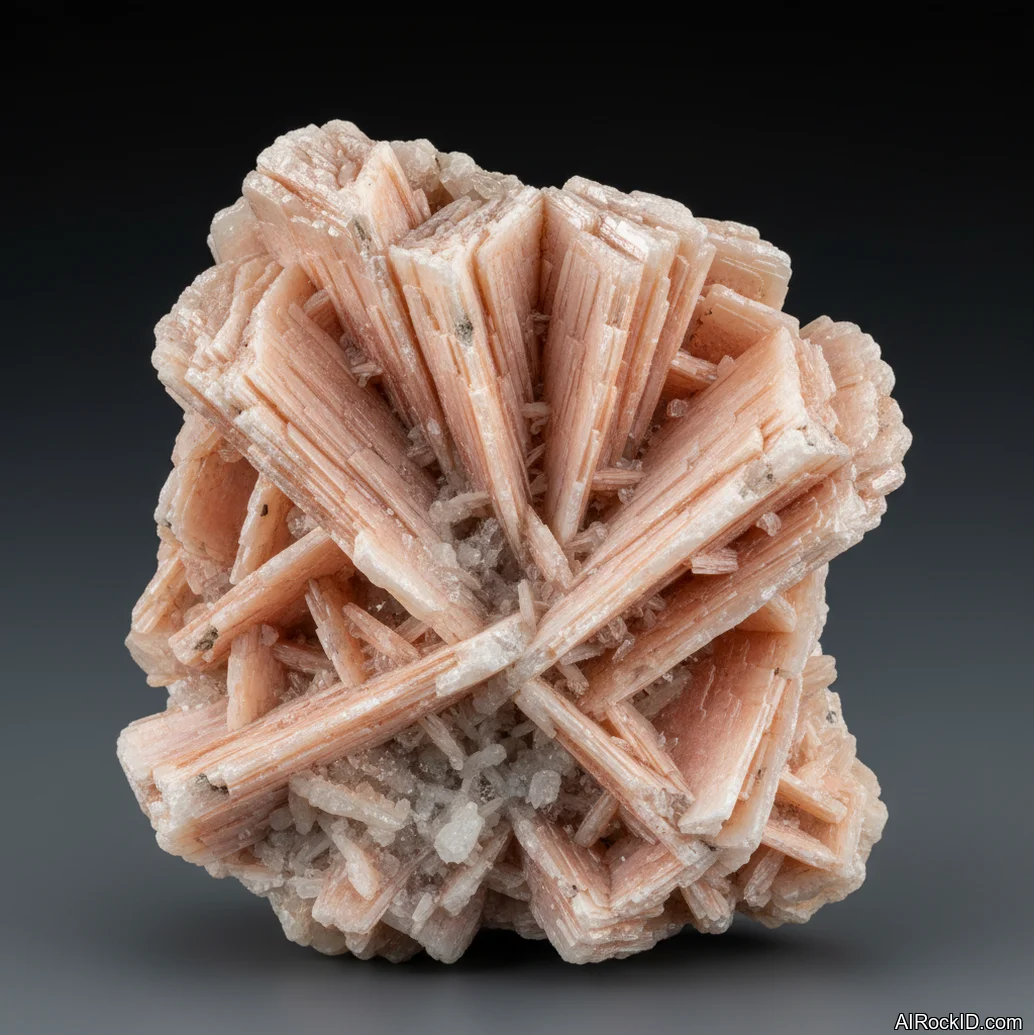
People mix it up with quartz at first, sure, but it doesn’t have that tough quartz vibe. Thing is, apophyllite has real cleavage. I’ve literally seen a collector tap a corner on a table to “test it” and it snapped off a flat chip like it was already scored. Color-wise it can be crystal-clear, milky white, pale mint green, and sometimes this warm peachy tone, especially when it’s sitting with stilbite on basalt.
Origin & History
In 1806, René Just Haüy described apophyllite as its own mineral species, and the name ended up sticking. He borrowed it from Greek, basically meaning “it flakes off,” which makes sense once you’ve actually heated the stuff and watched those thin laminae start to separate (it can literally exfoliate).
And yeah, older labels and dealer tags can be all over the place, because “apophyllite” used to be slapped on a lot of similar-looking material before anyone had the group chemistry properly sorted. These days, modern mineralogy treats it as an apophyllite group with different end-members, but most collectors still just say “apophyllite” unless they’re trying to be extra precise.
Where Is Apophyllite Found?
Most show-table material comes from India’s Deccan Traps basalts, but it also turns up in basalt and hydrothermal settings in places like the USA, Russia, and parts of Europe.
Formation
Most of the stuff that comes out of the Deccan Traps starts life in the boring parts of a basalt flow: little gas bubbles and hairline fractures. At first, those pockets are just empty space. Then the late-stage fluids show up, seep through the rock, and start laying minerals down in coats, one layer at a time, like they’re painting the inside of the cavity.
And in a single specimen you can often see the sequence pretty clearly. There’s usually a drusy base first. Then apophyllite crystals sit on top of that. After that, stilbite fans or heulandite blades cram themselves into whatever space is still left (the “last seat on the bus” zone, basically).
Compared to quartz, apophyllite tends to be the late visitor in these pockets. It forms under low-temperature hydrothermal conditions, and it wants a chemistry with calcium, potassium, and a lot of water. That water part isn’t just trivia, either. Leave a delicate cluster somewhere hot and dry for too long and you can end up with tiny cleavage pops or a more dull surface, especially on the thinner crystals. Who hasn’t watched a nice piece lose a bit of its sparkle like that?
How to Identify Apophyllite
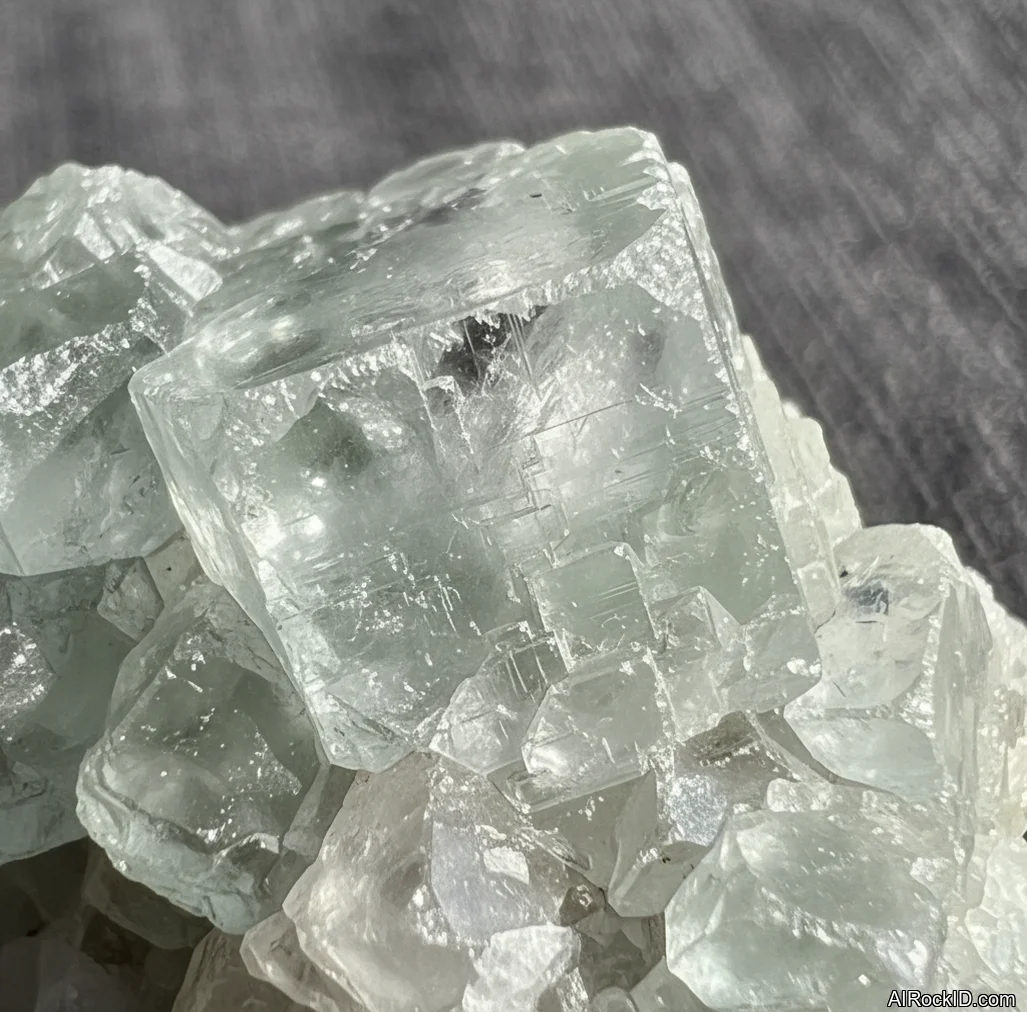
Color: Most apophyllite is colorless to white, with common pale green material and occasional peach to pinkish tones. The green is usually soft and watery, not a saturated emerald color.
Luster: Vitreous, often with a slightly pearly sheen on cleavage surfaces.
Look closely at the crystal shape: apophyllite commonly forms blocky to pyramidal crystals with crisp edges that look almost like they were cut. The real test is cleavage: a small chip often breaks into flat, reflective planes instead of the curved, messy breaks you’d expect from quartz. If you scratch it with a steel nail, it may mark, and that alone separates it from most quartz you’ll see it sold next to at shows.
Properties of Apophyllite
Physical Properties
| Crystal System | Tetragonal |
| Hardness (Mohs) | 4.5-5 (Medium (4-6)) |
| Density | 2.30-2.40 g/cm3 |
| Luster | Vitreous |
| Diaphaneity | Transparent to translucent |
| Fracture | Uneven |
| Streak | White |
| Magnetism | Non-magnetic |
| Colors | Colorless, White, Pale green, Mint green, Peach, Pinkish |
Chemical Properties
| Classification | Silicates (phyllosilicates) |
| Formula | KCa4Si8O20(F,OH)·8H2O |
| Elements | K, Ca, Si, O, F, H |
| Common Impurities | Na, Mg, Fe, Al |
Optical Properties
| Refractive Index | 1.536-1.544 |
| Birefringence | 0.005 |
| Pleochroism | None |
| Optical Character | Uniaxial |
Apophyllite Health & Safety
It’s usually fine to handle, and a quick rinse under plain water won’t hurt it. The real “risk” here isn’t toxicity, it’s chipping or scratching the crystal (especially if it clacks against the sink).
Safety Tips
If you’re trimming off matrix or knocking loose chunks, put on eye protection, and don’t inhale the rock dust coming off the host basalt. It gets in your nose fast.
Apophyllite Value & Price
Price Range
Rough/Tumbled: $10 - $300 per specimen
Cut/Polished: $5 - $40 per carat
Prices jump fast as clarity improves, the piece gets bigger, and the terminations stay clean, especially when it’s sitting pretty on a good matrix with stilbite tucked around it. But here’s the thing: chips and those little cleavage bruises are really common (you can feel them catch on a fingernail), and they drag the value down way more than most folks expect.
Durability
Nondurable — Scratch resistance: Fair, Toughness: Poor
Apophyllite is stable on a shelf, but it cleaves easily and can suffer edge damage from minor bumps.
How to Care for Apophyllite
Use & Storage
Store it where it won’t rattle around, ideally in a padded flat or a display case with space between pieces. I keep my nicer clusters away from the edge of shelves because one bump can take a corner off.
Cleaning
1) Rinse briefly with room-temperature water to remove dust. 2) Use a soft makeup brush or microfiber cloth to gently sweep between crystals. 3) Pat dry and let it air-dry fully before putting it back in a closed box.
Cleanse & Charge
If you do energetic cleansing, stick to low-contact methods like smoke, sound, or leaving it near (not on) a selenite slab. Skip saltwater and rough burial in soil because you’ll scratch faces and bruise edges.
Placement
Indirect light is your friend. A spot where you can catch the sparkle when you walk by is ideal, but don’t cram it into a sunny windowsill where it can heat-cycle every day.
Caution
Skip ultrasonic or steam cleaners, and stay away from harsh chemicals. And don’t just drop it in your pocket next to harder stones either, because apophyllite scratches up fast and ends up looking scuffed and kind of sad.
Works Well With
Apophyllite Meaning & Healing Properties
Pick up apophyllite and it does this weirdly simple thing a lot of stones just don’t. It makes you slow down. I’ve seen customers get quiet the second the light catches those flat faces, like their brain stops juggling browser tabs for a beat.
In the metaphysical world, apophyllite gets linked to clarity, calming, and that “clean room” feeling in your head. That’s the vibe people come in looking for. But I try to keep it practical: if a crystal helps you build a better routine around meditation, sleep, or journaling, awesome. If you’re dealing with anxiety or anything medical, treat the stone like a comforting object, not a treatment.
And there’s a collector lesson in there too. Apophyllite looks tough because it’s glassy and geometric, but it really isn’t. Working with it can be a reminder to be gentle with yourself, sure, but also gentle with the specimen. I’ve chipped more apophyllite sliding display trays around than I ever have with quartz, and now I pick it up like it’s thin window glass (slow, two hands, no clacking it against anything).
Identify Any Crystal Instantly
Snap a photo and get properties, value, care instructions, and healing meanings in seconds.