Diopside
What Is Diopside?
Diopside is a calcium magnesium silicate mineral in the pyroxene group, with the formula CaMgSi2O6. In your hand it comes off like a practical, workhorse mineral. Not delicate like fluorite. Not bulletproof like quartz. Grab a chunk of diopside-bearing rock and it usually has that solid, no-nonsense heft you expect from a common rock-former, the kind that sits heavy in your palm and doesn’t feel airy or fragile.
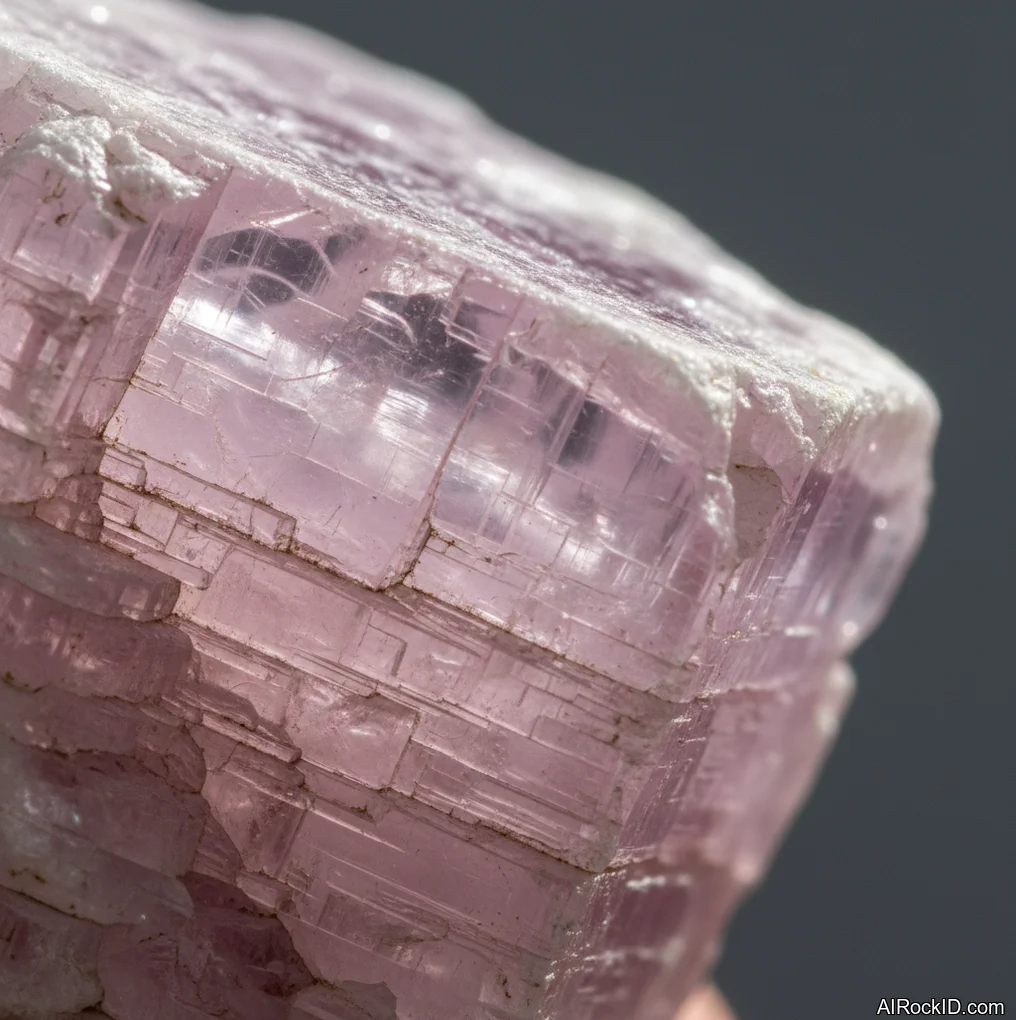
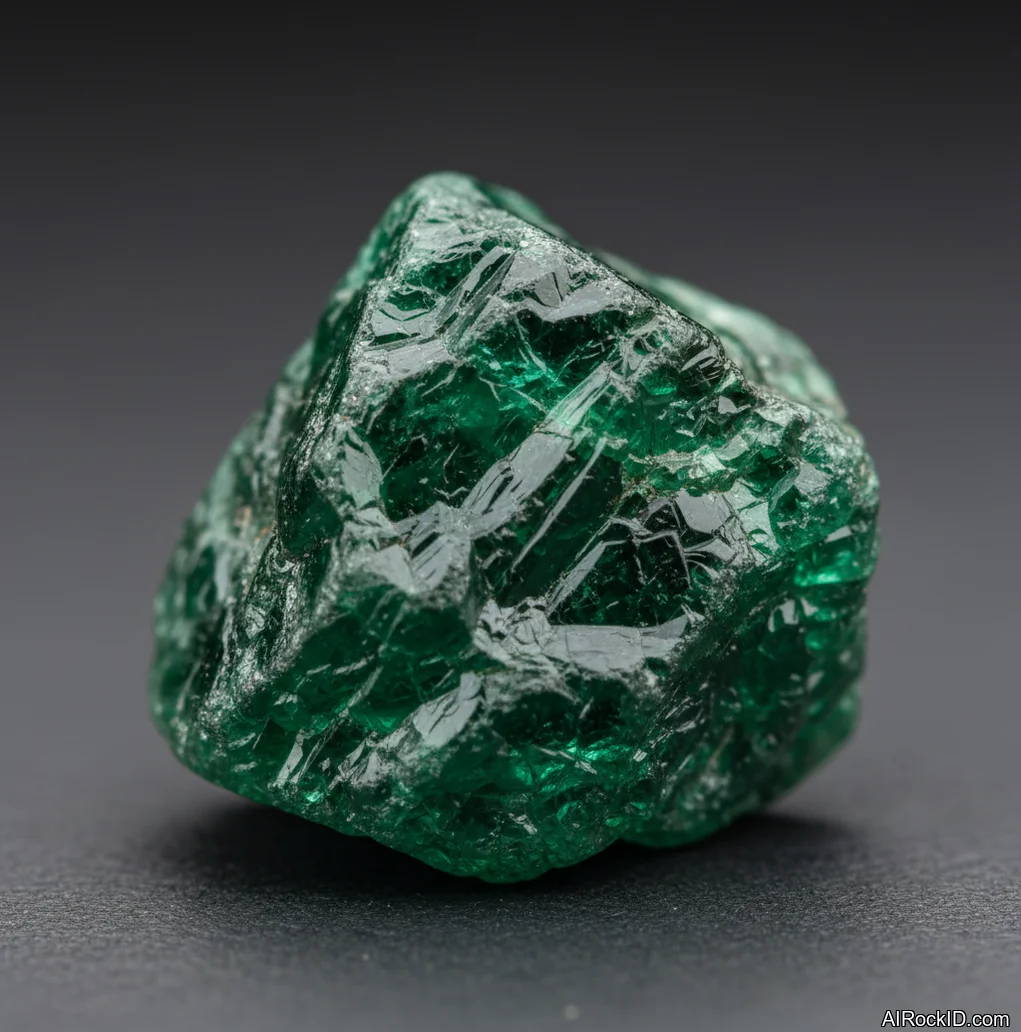
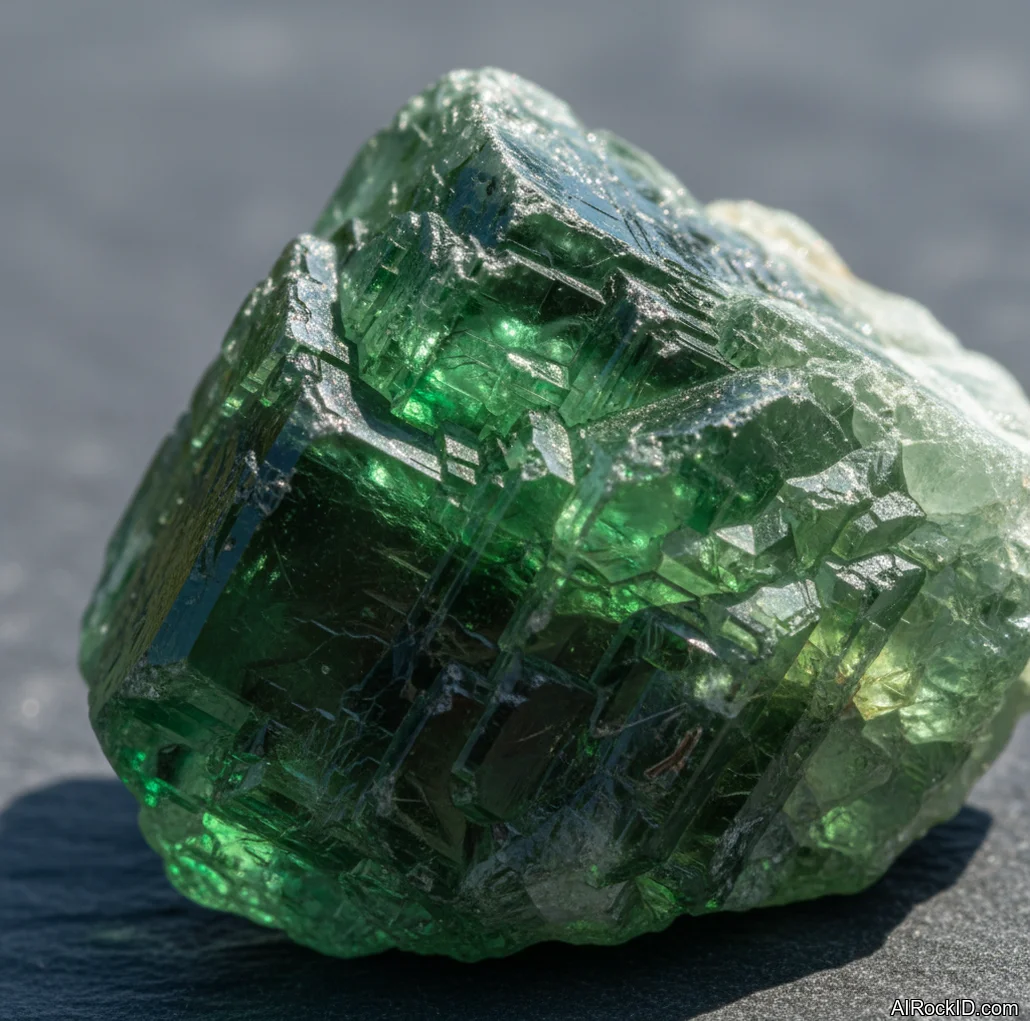
But if you actually stop and look, the vibe changes a lot depending on the variety. Chrome diopside can be this clean, grassy-to-emerald green that looks almost too gemmy for something you’ll also run into as dull grains in basalt. Thing is, the real giveaway (once you’ve handled a few pieces) is the cleavage. Tilt a fresh surface under a lamp and you’ll see those pyroxene cleavage flashes snap on and off as you rotate it. And if you’ve ever tried to cab it, you figure out pretty fast it can get a little splintery along those cleavage directions if you push it too hard. Who hasn’t learned that one the annoying way?
Origin & History
Back in 1800, the French mineralogist René Just Haüy pinned down diopside as its own mineral species, right around the time people were finally separating lookalikes by angles, cleavage, and optics instead of just going off color.
The name’s built from Greek roots for “two” and “appearance,” which is basically a wink at how it can present two different looks depending on your viewing direction and which crystal faces you’re looking at (turn it in your hand and it really does change).
Collector-wise, diopside’s had this weird split life. Rock folks treat it like a common pyroxene you meet in intro mineralogy labs, but gem people came around later, especially after that bright green chrome diopside from Siberia started showing up as affordable faceted stones.
Where Is Diopside Found?
Diopside shows up worldwide in mafic igneous rocks, metamorphosed limestones, and skarns. Chrome-rich material is strongly associated with Russian deposits, while classic crystals and masses come from a long list of alpine and skarn localities.
Formation
Basalt and gabbro pieces are usually rough-feeling, kind of gritty, and almost always dark. If you crack one open, diopside is there but it doesn’t exactly announce itself. It shows up as greenish-black little crystals tucked in with other pyroxenes and plagioclase, the stuff that makes up a lot of the rock anyway. That’s the normal scenario: hot magmas loaded with magnesium and calcium cool off, and diopside crystallizes as part of the standard recipe.
But the flashy collector-grade material is more often tied to contact metamorphism. When limestone or dolostone gets baked by a nearby intrusion, the chemistry changes and diopside can grow in skarns with garnet, wollastonite, vesuvianite, and calcite. And in alpine-style veins, you sometimes get nicer-looking crystals just because there’s open space to grow into (finally, some elbow room). Clean, well-formed diopside crystals still aren’t nearly as common as the “yeah, it’s in there somewhere” kind, though.
How to Identify Diopside
Color: Most diopside you’ll see is green to dark green, but it can run brown, gray, nearly black, or even violet (violane). Chrome diopside is the bright emerald-green end of the range, driven by chromium.
Luster: Vitreous on fresh faces, sometimes a bit dull on weathered surfaces.
Pick up a fresh broken piece and look for two clean cleavage directions that meet at about 87 and 93 degrees, the classic pyroxene “almost 90” look. If you scratch it with a steel nail, it’ll usually mark, but it’ll still scratch softer stuff like calcite with ease. The problem with store lighting is it can make green glass and green diopside look similar, so I always rotate it and watch the cleavage flash instead of trusting color alone.
Properties of Diopside
Physical Properties
| Crystal System | Monoclinic |
| Hardness (Mohs) | 5.5-6.5 (Medium (4-6)) |
| Density | 3.22-3.38 g/cm3 |
| Luster | Vitreous |
| Diaphaneity | Transparent to translucent |
| Fracture | Uneven |
| Streak | White |
| Magnetism | Non-magnetic |
| Colors | Green, Dark green, Black, Brown, Gray, Violet |
Chemical Properties
| Classification | Silicates |
| Formula | CaMgSi2O6 |
| Elements | Ca, Mg, Si, O |
| Common Impurities | Fe, Cr, Mn, Al, Ti |
Optical Properties
| Refractive Index | 1.663-1.736 |
| Birefringence | 0.020-0.030 |
| Pleochroism | Weak |
| Optical Character | Biaxial |
Diopside Health & Safety
Diopside is usually safe to handle and keep on display. But if you’re cutting or grinding it, don’t skip the usual lapidary dust precautions, because that fine powder gets everywhere (and it loves to cling to your hands and sleeves).
Safety Tips
Use water and keep the air moving when you’re sanding or grinding. Fine dust gets everywhere (you’ll feel it in your teeth), so don’t skip a real respirator.
Diopside Value & Price
Price Range
Rough/Tumbled: $5 - $80 per specimen
Cut/Polished: $10 - $80 per carat
Price can jump all over the place depending on color and clarity. Bright, clean chrome diopside with crisp, sharp crystals sitting on a contrasting matrix costs more, but the dark, massive stuff is usually cheap (and yeah, you can feel the difference when you’ve got it in your hand).
Durability
Moderate — Scratch resistance: Fair, Toughness: Fair
It’s stable in normal conditions, but cleavage makes it easier to chip than you’d expect from the hardness number.
How to Care for Diopside
Use & Storage
Store diopside where it won’t get knocked around, especially faceted stones or sharp crystals with exposed edges. I keep mine in a perky box or wrapped because the cleavage chips are real.
Cleaning
1) Rinse with lukewarm water and a drop of mild soap. 2) Use a soft toothbrush to get dust out of cleavage steps and matrix cracks. 3) Rinse well and pat dry; skip harsh chemicals and long ultrasonic sessions for jewelry stones.
Cleanse & Charge
If you do energy-style care, simple methods are best: a quick rinse, a night on a dry windowsill out of direct sun, or resting it on a larger chunk of quartz. Don’t overthink it.
Placement
On a shelf, diopside looks best with side lighting so the cleavage flash and green tones actually show. Keep it away from the edge of a desk where a single bump can do damage.
Caution
Skip steam cleaners and those heavy-duty ultrasonic cleaners on faceted diopside. Thing is, its cleavage can take what looks like a harmless little internal stress line and pop it into a chip in a heartbeat. And don’t just chuck it loose in your pocket next to harder stones like quartz or corundum. That’s asking for trouble.
Works Well With
Diopside Meaning & Healing Properties
Pick up a polished green diopside and the first thing you notice is how cool it sits in your palm, like it’s been hiding in a shaded drawer. It’s got that steady, quiet weight too, the kind that makes you unclench your jaw without realizing you were clenching in the first place. That’s the whole reason people reach for it: slower breathing, softer edges, less of that mental white-knuckle grip. And honestly, I see people grab it when they’re fried, not when they’re trying to get amped.
But here’s the part people don’t always tell you. A lot of diopside being sold is so dark it’s almost black, and if you’re expecting a bright green “heart stone” look, you might set it on your nightstand and think, seriously, that’s it? The brighter chrome diopside tends to feel more “alive” to most folks, probably because your eyes just snap right to that green. And in the hand, a tumbled piece has a totally different vibe than a sharp crystal, not better or worse, just different. Tumbled ones slide around like a worry stone (that smooth, almost waxy finish), while the pointier pieces have those little edges you keep turning over with your thumb.
If crystals are part of your personal practice, treat diopside like support, not a fix. Use it for meditation, journaling, or as a pocket stone on a rough day, sure. But it doesn’t replace therapy, sleep, or real medical care. When someone tells me they want “emotional healing,” I steer them toward habits first, stones second. Let diopside be the reminder sitting in your palm, not the whole plan.
Identify Any Crystal Instantly
Snap a photo and get properties, value, care instructions, and healing meanings in seconds.