Epididymite


Quick answer: Epididymite is a rare beryllium sodium silicate most often seen as colorless, white, or pale yellow tabular to prismatic crystals. Because it can resemble other light-colored silicates, identification is strongest when crystal habit, locality, hardness, and optical or lab data are considered together.
AI Rock ID can help compare epididymite against visually similar pale minerals from a clear photo, especially when crystal habit and matrix are visible. RockIdentifier.io provides reference information to support visual screening, but rare minerals such as epididymite may still require expert or laboratory confirmation.
Good fit
- Collectors interested in rare beryllium-bearing silicate minerals
- Specimens with documented locality data, especially from alkaline pegmatites or nepheline syenites
- Collections focused on rare white, colorless, or vitreous crystals
- Study specimens where crystal habit and association minerals are preserved
Not a good fit
- Buyers who want an easy visual ID from color alone
- Jewelry use, because epididymite is rare and not commonly cut for wear
- Handling by children without supervision due to its beryllium content
- Collectors seeking large, inexpensive display crystals
Most commonly confused with
- Eudidymite: Eudidymite has the same chemical formula as epididymite but a different crystal structure, so visual separation may be difficult without crystallographic data.
- Albite: Albite is more common, usually feldspathic in habit, and lacks beryllium.
- Quartz: Quartz is harder at Mohs 7 and typically lacks the tabular beryllium-silicate habit of epididymite.
- Natrolite: Natrolite commonly forms acicular or radiating zeolite crystals and has a different chemistry.
Epididymite vs. Similar Pale Minerals
| Feature | Epididymite | Common lookalikes |
|---|---|---|
| Typical color | Colorless, white, pale yellow | Often similar in quartz, albite, natrolite, and eudidymite |
| Hardness | Mohs 5–5.5 | Quartz is harder; many zeolites are softer |
| Key chemistry | Beryllium sodium silicate | Albite and natrolite lack beryllium; quartz is silica |
| Best ID clue | Crystal habit plus verified locality and associations | Color alone is usually unreliable |
| Confirmation | Optical, XRD, or expert mineralogical testing | Often needed for rare pale silicates |
AI identification confidence
AI identification confidence for epididymite is usually moderate to low from a single photo because many pale silicates look alike. Confidence improves when the image shows crystal shape, cleavage, matrix, scale, and a known collecting locality.
When AI gets it wrong
- The specimen is a white or colorless crystal with no visible crystal habit.
- The photo is overexposed, blurry, or taken without scale.
- The listing has no locality, matrix, or association minerals.
- The specimen may be eudidymite, albite, quartz, natrolite, or another pale silicate.
Final recommendation
For buying epididymite, prioritize specimens with a trusted label, specific locality, and clear photos of the crystal habit. For high-value or unusual pieces, request documentation or confirmation from a knowledgeable dealer, mineral club, or laboratory.
Advanced recommendations
- Epididymite
- Eudidymite
- Phenakite
How to Check Epididymite Authenticity
Authentic epididymite specimens are usually sold as mineral specimens rather than mass-market tumbled stones or jewelry. A reliable listing should include a specific locality, crystal size, matrix description, and photos that show the tabular or prismatic habit. Because epididymite can closely resemble eudidymite and other pale silicates, high-confidence authentication may require X-ray diffraction, optical testing, or review by an experienced mineralogist.
Buying Tips for Epididymite Specimens
Look for sellers who provide locality data, provenance, and clear magnified images rather than relying only on the name. Be cautious with vague labels such as “white rare crystal” or specimens offered without mineralogical context. Rare beryllium silicates are often more valuable when crystal form, matrix, and collection information are intact.
Locality Matters in Epididymite Identification
Epididymite is associated with alkaline igneous environments, including nepheline syenites and related pegmatites. Locality information can help separate epididymite from more common white minerals, especially when a specimen comes from a known rare-mineral district. A missing or inconsistent locality does not prove a specimen is false, but it lowers identification confidence.
What Is Epididymite?
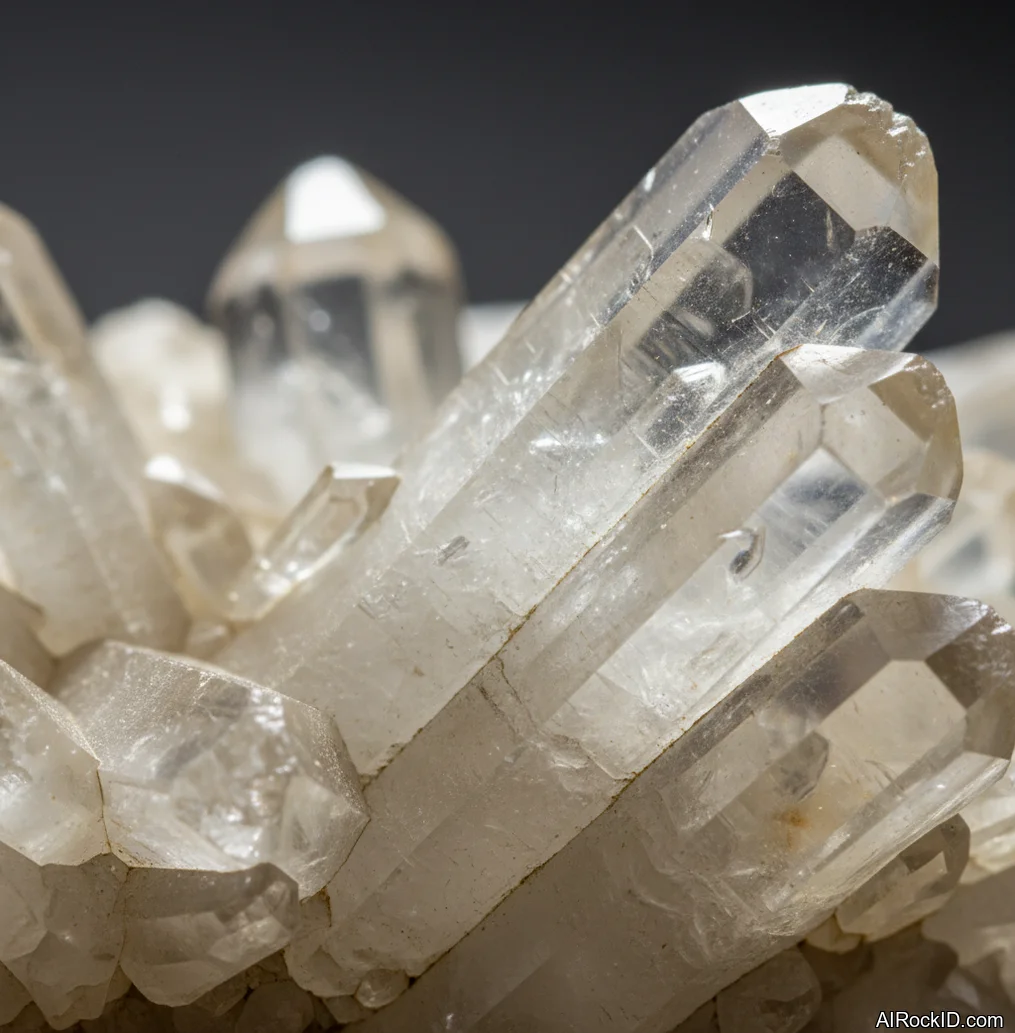
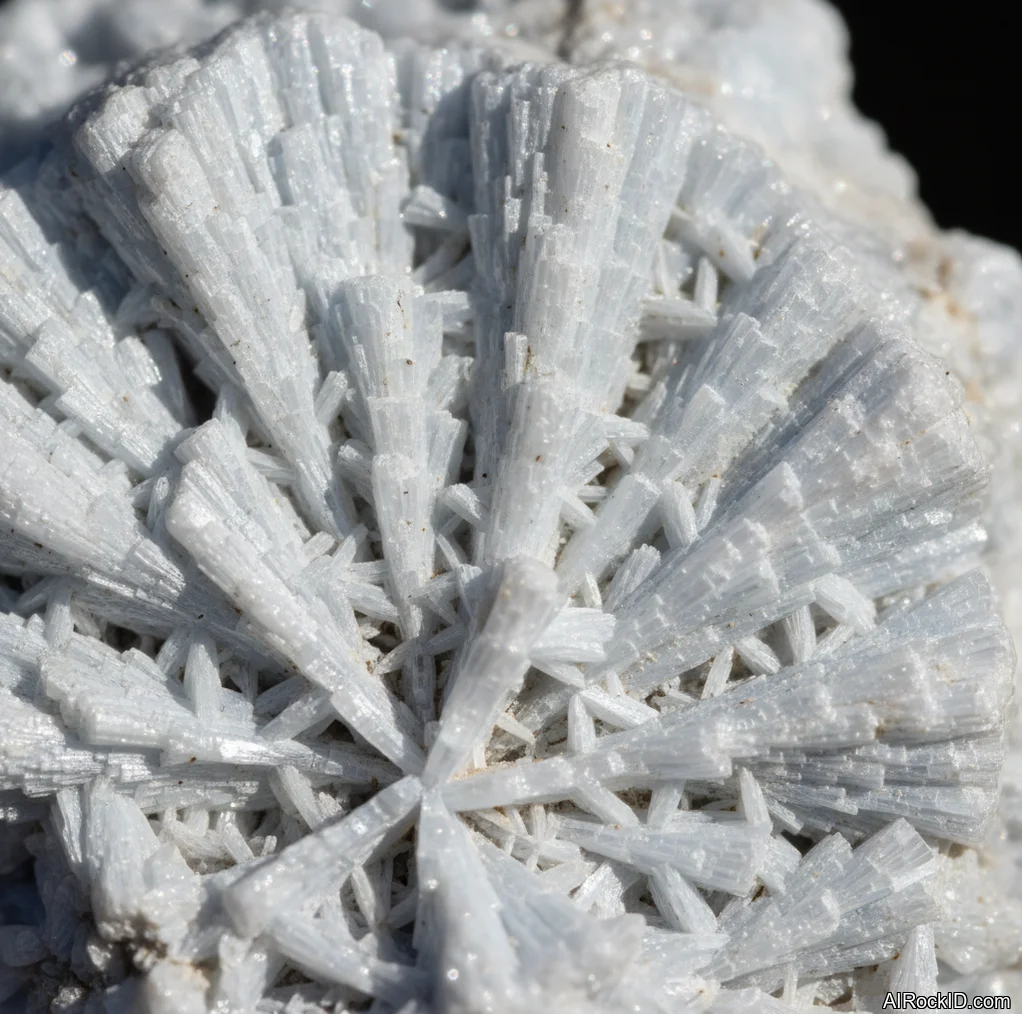
Epididymite is a seriously rare beryllium silicate mineral, formula NaBeSi3O7(OH). Most of the time it turns up as tiny colorless to white crystals, and sometimes they bunch into tight little sprays that honestly look like frost stuck to a darker rock.
Hold a thumbnail-sized cluster in your hand and you notice it right away. It feels light for its size. Not featherweight like some zeolites, but it also doesn’t have that dense, heavy pegmatite heft a lot of other stuff has. And if you tip it under a desk lamp, the shine is clean and glassy, not oily or greasy. Thing is, most specimens are small and kind of finicky, so you end up staring through a loupe instead of appreciating it from across the room. That’s just how it goes.
At a glance, it’s easy to confuse with other pale pegmatite minerals. Fair enough. But epididymite usually grows in crisp little crystals and fan-like clusters that feel more architectural than chalky albite or the cottony look natrolite can have. If you’ve handled enough cabinet minerals, you start to spot that “icy, sharp” look on good pieces, and once you see it, you don’t really forget it.
Origin & History
Norway’s Langesundfjord area is basically where epididymite first entered the written record. Back in 1892, Waldemar Christofer Brøgger and Hans Reusch described it while they were digging into the strange, beryllium-rich rocks around the Larvik region.
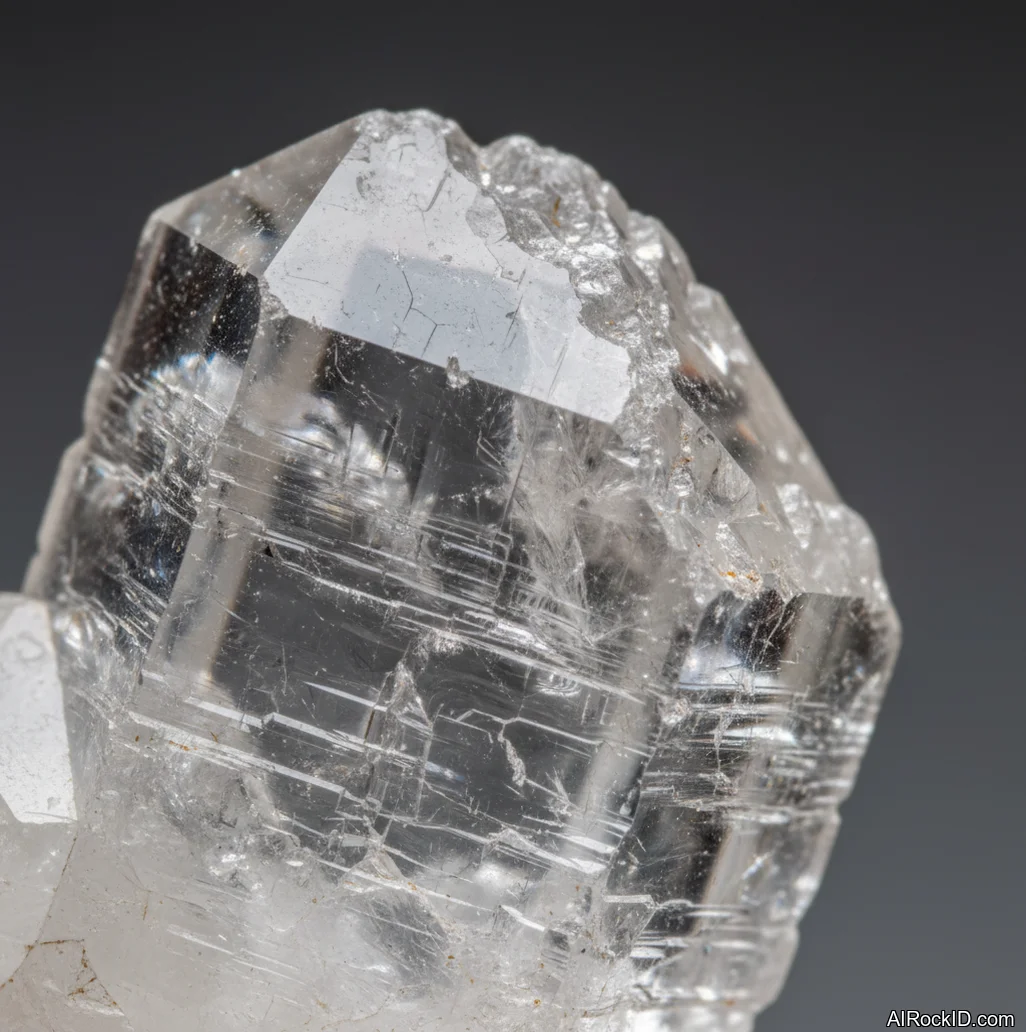
The name’s pulled from Greek and it means “upon twins,” which makes sense because the crystals often twin. And if you’ve ever had a clean crystal in hand and you turn it under a lamp, you get it immediately. The faces snap into alignment, then they separate, then they line up again. Why call it anything else? Thing is, with this mineral the name isn’t just a tag, it’s a hint about what you should be seeing.
Where Is Epididymite Found?
It’s mainly a pegmatite and alkaline-rock collector mineral, best known from Norway, with smaller finds reported from a handful of other classic beryllium localities worldwide.
Formation
Epididymite usually shows up as raw bits from alkaline complexes and granitic pegmatites. It’s a late-stage thing. Think fluids hanging around at the end, tons of silica, and a chemistry mix that has beryllium and sodium in it. This isn’t “common rock-former” territory. It’s picky, and it only shows when the recipe and the timing line up just right.
Look, the mineral buddies it keeps make the whole story pretty obvious. You’ll spot it with quartz and feldspar, plus other beryllium minerals, and in alkaline environments it can turn up with zeolites too. I’ve had a couple specimens in hand where the epididymite was tucked into tiny cavities, sitting on a darker matrix, and you could see it clearly grew into open space instead of getting crushed up by later deformation. That’s why the best crystals have those crisp, sharp edges. (You can almost feel it when you tilt the piece under a light, right?)
How to Identify Epididymite
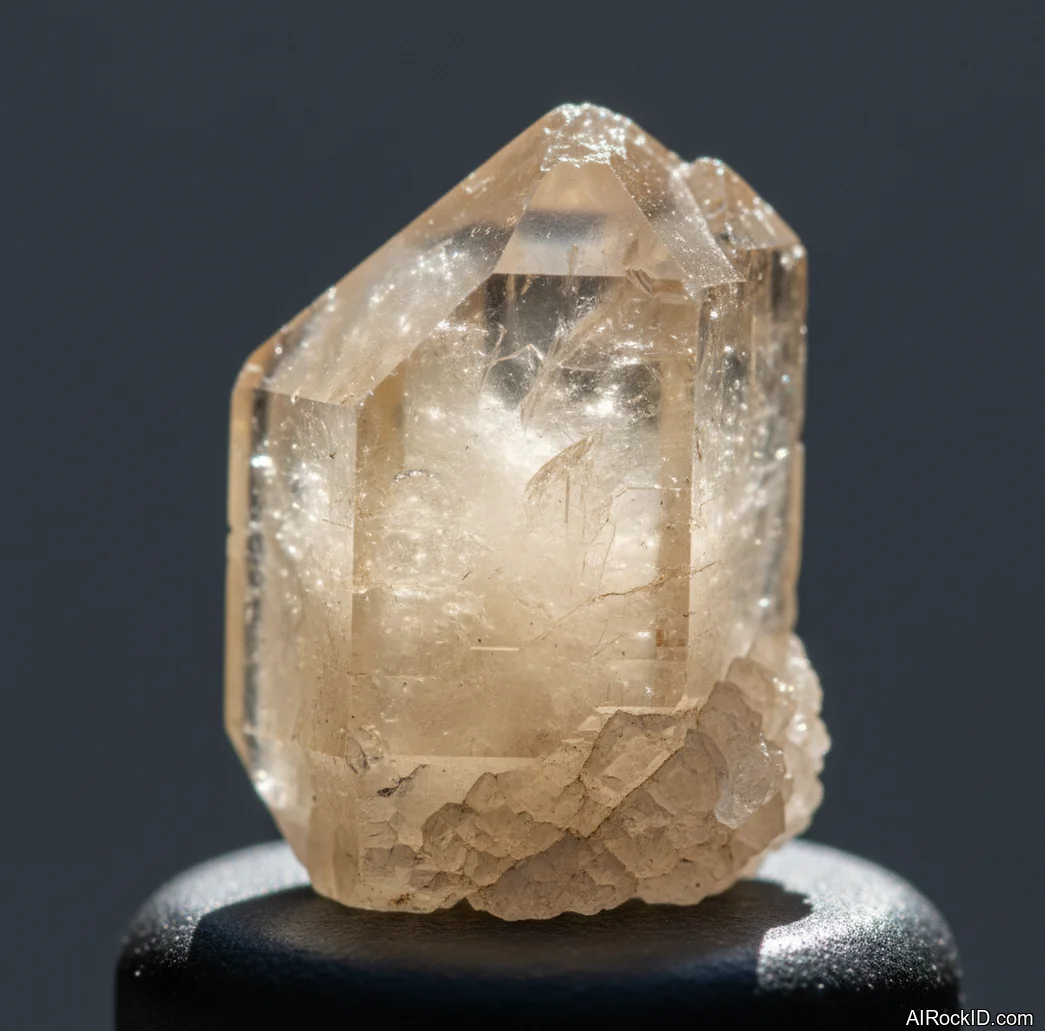
Color: Most epididymite is colorless to white, sometimes with a faint gray cast from matrix staining. Transparent crystals exist, but a lot of material reads as translucent because the crystals are small and clustered.
Luster: Vitreous to slightly pearly on some faces.
Pick up the specimen and use a 10x loupe. You’re looking for sharp little prismatic crystals and twinning that makes the terminations look “split” or doubled. If you scratch it with a copper coin, it won’t do much, but a steel point can mark it. And if someone’s calling a white, fuzzy spray “epididymite” with no crystal edges at all, I’d be skeptical and ask for locality and a close photo.
Common Look-Alikes
Epididymite is sometimes confused with these materials:
- Natrolite
- Nepheline
- Petalite (colorless variety)
- Glass fakes (clear or milky)
- Beryllite
- Milky Quartz (especially tiny sprays)
Market Cautions & Treatments
When AI Can Get This Wrong
AI photo ID has a rough time with epididymite versus natrolite and milky quartz, especially when you only see white sprays on matrix. The real test is luster: epididymite is always a bit dull, while natrolite shines. A needle will scratch epididymite easier than quartz, and it won't have the same cold heft in the palm.
Properties of Epididymite
Physical Properties
| Crystal System | Orthorhombic |
| Hardness (Mohs) | 5-5.5 (Medium (4-6)) |
| Density | 2.55-2.60 |
| Luster | Vitreous |
| Diaphaneity | Transparent to translucent |
| Fracture | Uneven |
| Streak | White |
| Magnetism | Non-magnetic |
| Colors | Colorless, White, Grayish white |
Chemical Properties
| Classification | Silicates |
| Formula | NaBeSi3O7(OH) |
| Elements | Na, Be, Si, O, H |
| Common Impurities | Fe, Mn |
Optical Properties
| Refractive Index | 1.546-1.556 |
| Birefringence | 0.010 |
| Pleochroism | None |
| Optical Character | Biaxial |
Epididymite Health & Safety
Handling it is fine. Just don’t kick up dust, because dust from beryllium-bearing minerals is a respiratory hazard. Think of that super-fine, chalky powder you see after you scrape or grind a piece, the stuff that clings to your fingertips and hangs in the air for a second. Yeah, that. Keep it out of your lungs. Treat it like any Be mineral and avoid breathing it in.
Safety Tips
Don’t saw, sand, or crush it unless you’ve got real ventilation and a respirator rated for fine particulates. And if you’ve been handling a bunch of specimens and moving them around a lot, wash your hands afterward (dust gets into the weirdest places).
Epididymite Value & Price
Price Range
Rough/Tumbled: $40 - $600 per specimen
Prices swing a lot depending on how sharp the crystals are, how clear they look when you tilt them under a light, and whether the label calls out a trusted locality like Norway. Thing is, you’ll see plenty of tiny clusters with chips or busted points (usually from being rattled around in a box). But clean, cabinet-worthy pieces? Those jump in price fast.
Durability
Moderate — Scratch resistance: Fair, Toughness: Fair
It’s generally stable on the shelf, but the crystals can chip easily if the specimen knocks around in a flat.
How to Care for Epididymite
Use & Storage
Store it in a perky box or a thumbnail case so the crystals don’t rattle. If it came in an old cardboard flat from a show, I’d upgrade it.
Cleaning
1) Use a soft, dry brush to remove loose dust. 2) If needed, rinse quickly in cool water with a drop of mild soap. 3) Pat dry and let it air dry fully before putting it back in a closed box.
Cleanse & Charge
If you do energy-style care, keep it simple: a quick smoke cleanse or a short sit on clean quartz. I wouldn’t leave it soaking in salt water out of habit.
Placement
Give it calm shelf space where it won’t get bumped, ideally at eye level with a small light so the crystal faces flash. A loupe nearby is part of the setup.
Caution
Skip ultrasonic cleaners and any harsh chemicals. Don’t grind it or drill into it. And keep it out of kids’ hands (seriously) because the crystals chip fast, and once an edge flakes off you’ll feel that rough little bite when you run a finger over it.
Works Well With
Epididymite Meaning & Healing Properties
Most dealers who even know epididymite exists stick it in the “clear head, clean signal” bucket, and I get why. It’s colorless. It forms these precise little crystals that look almost too tidy, like they were laid down with a ruler.
In my own box, it’s the one I reach for when I’m trying to separate details instead of spiraling out. Like, “write the plan, don’t just panic about the plan.” And yeah, I’m probably reacting to how it looks. Sharp mineral. Sharp thinking. Simple as that.
Thing is, you don’t handle it like a worry stone. You don’t rub it with your thumb until it goes slick. You grab it by the matrix, turn it slowly, catch the angles, watch how the light picks out those crisp edges (and you’re careful, because the good bits feel easy to snag). That little ritual by itself can settle your brain down.
But I’m not going to act like it’s medicine. If anxiety or sleep is what you’re up against, keep the real-world supports in place and treat the crystal side as a personal practice. That’s the honest version.
And here’s the limitation nobody likes to say out loud: epididymite is so rare that a lot of the “meanings” you see online read like copy-paste from other clear minerals. So if you want to work with it, let the specimen do the talking. Sit with it for a week, jot down what you notice (even the boring stuff), and don’t force a story that doesn’t fit. It’s a collector mineral first. That’s part of the charm, honestly.
Common mistakes
- Identifying epididymite by white or colorless appearance alone
- Assuming epididymite and eudidymite can always be separated by eye
- Buying rare-mineral specimens without locality information
- Mistaking common albite or quartz for epididymite on matrix
- Using hardness tests aggressively on small or fragile collector specimens
- Treating an AI photo match as a final identification for a rare mineral
Identify Epididymite from a photo
Compare Epididymite traits, care tips, value clues, and common lookalikes with a clear photo.