Flint
What Is Flint?
Flint’s basically a dark, fine-grained kind of chert, made from microcrystalline quartz (SiO2), and it snaps with that sharp conchoidal fracture.
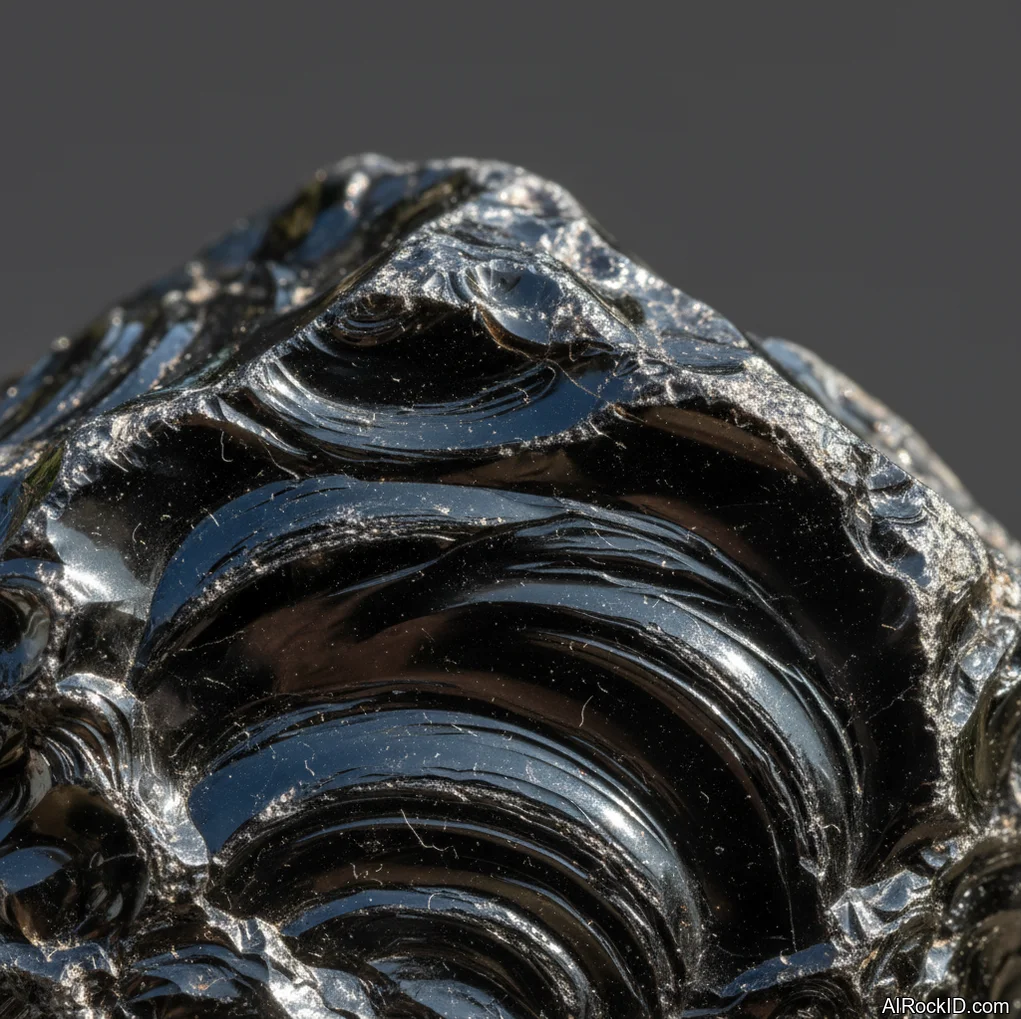
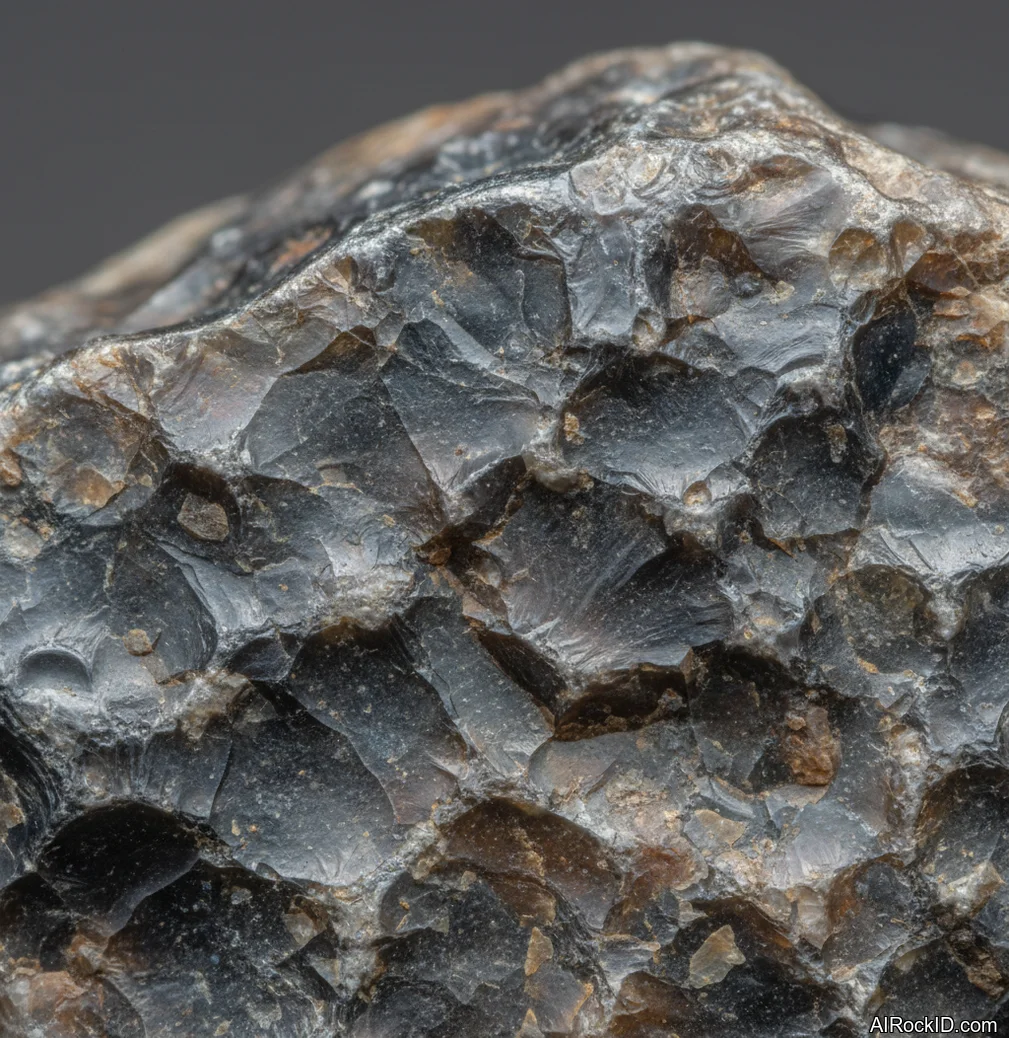
Grab a nodule and the first thing you notice is the weight. It’s heavier than it looks. And it feels cool sitting in your palm, while the outside usually has this chalky, beat-up rind that’s a lot like dried plaster if you rub your thumb over it. Crack it open and the fresh surface is a whole different deal. Smooth. Waxy. Sometimes it even looks a little greasy under a shop light (the kind that makes everything look harsher than it is).
It can pass for “just a gray rock” until you pay attention to the edges. That’s where it gives itself away. The flakes pop off like tiny shells, and they’re stupid sharp. I’ve nicked my thumb more than once just sorting raw chunks into trays, because those fresh chips don’t seem threatening until you brush them the wrong way. Whoops.
Origin & History
“Flint” traces back to the Old English *flint*, with even older Germanic roots that basically mean “hard stone.” People were calling it that, and using it, ages before anyone tried to pin it down in a mineralogy book, partly because it’s rock material, not a single crystal species.
If you’ve ever stood nose-to-glass at a museum case full of prehistoric tools, you’ve already run into flint. It was one of the go-to materials for knapping blades, scrapers, and arrowheads (the kind with those crisp, glassy edges that look like they’d still bite), and later it got used for spark-making in flintlocks. That’s the real legacy. Not rare. Not flashy. Just reliably sharp and reliably hard.
Where Is Flint Found?
Flint forms as nodules and layers in sedimentary rocks, especially chalk and limestone, and it turns up in beach gravels and farm fields wherever those units weather out.
Formation
Most flint starts out as silica drifting through sediment, usually on the seafloor. You’ve got tiny silica skeletons from radiolarians and sponges dumping loads of SiO2 into the muck, and over a long stretch of time that silica tightens up and reorganizes into microcrystalline quartz. It tends to bunch up into nodules inside chalk or limestone. That’s why those white cliff faces sometimes have black lumps stuck in them like someone pressed in blobs of tar.
But calling every dark chert “flint” is where things get messy, because dealers do it constantly. In your hand, real flint from chalk country usually shows that classic pale cortex on the outside, and the inside has this glassy-waxy look, then it snaps with clean conchoidal breaks. Other cherts? They can feel tougher or just kind of dead and dull, and some are packed with fossils or little voids (you can catch them as tiny pits when you run a thumb over a fresh break). And yeah, that stuff makes knapping miserable. Why fight it?
How to Identify Flint
Color: Most flint is dark gray to black, sometimes brown, bluish gray, or banded. Fresh breaks can show subtle color zones, while weathered surfaces go pale from the chalky cortex.
Luster: Fresh faces have a waxy to sub-vitreous luster, not a glittery sparkle.
Look closely at a fresh chip: flint usually breaks in smooth, curved shells with razor edges. If you scratch it with a steel nail, it won’t bite, and it’ll scratch ordinary window glass easily. And when you tap two pieces together, the sound is a sharp, high “click,” not a dull thud like basalt or slag.
Properties of Flint
Physical Properties
| Crystal System | Trigonal |
| Hardness (Mohs) | 6.5-7 (Hard (6-7.5)) |
| Density | 2.58-2.64 g/cm3 |
| Luster | Waxy |
| Diaphaneity | Opaque |
| Fracture | Conchoidal |
| Streak | White |
| Magnetism | Non-magnetic |
| Colors | Black, Dark gray, Gray, Brown, Bluish gray, Tan (weathered cortex), Banded gray-black |
Chemical Properties
| Classification | Oxides |
| Formula | SiO2 |
| Elements | Si, O |
| Common Impurities | Fe, Mn, C, Al, Ca |
Optical Properties
| Refractive Index | 1.53-1.54 |
| Birefringence | 0.009 |
| Pleochroism | None |
| Optical Character | Uniaxial |
Flint Health & Safety
Flint itself isn’t toxic. But if you’ve ever popped off a fresh flake, you know how nasty-sharp that edge is, like a tiny glass razor, and it’ll open your skin up fast before you even realize what happened. Thing is, the bigger worry is what happens when you grind or saw it. That fine dust? It’s silica dust, and breathing silica dust is a respiratory hazard.
Safety Tips
If you’re cutting or lapping flint, run water, keep the air moving with decent ventilation, and wear a real respirator that’s rated for fine particulates (not just a flimsy dust mask). And don’t throw raw chips loose in your pocket. They’ll find skin, and you’ll end up with those annoying little surprise cuts.
Flint Value & Price
Price Range
Rough/Tumbled: $1 - $25 per piece
Cut/Polished: $0.25 - $3 per carat
Price mostly comes down to the pattern, the color, and how much prep it needs. A clean knapping-grade nodule you can pick up and start working right away, plus banded flint or fossil flint that actually looks good in the hand, will run higher than whatever random chunks you scooped out of a field with dirt packed into the cracks.
Durability
Durable — Scratch resistance: Excellent, Toughness: Good
Flint is chemically stable in normal conditions, but sharp edges chip easily and the cortex can crumble if it’s heavily weathered.
How to Care for Flint
Use & Storage
Store it so the sharp edges don’t rub other specimens. I keep raw nodules in a tray and any knapped flakes in small boxes so they don’t bite me when I reach in.
Cleaning
1) Rinse under lukewarm water to remove grit. 2) Scrub gently with a soft brush and a drop of mild soap, especially around the chalky cortex. 3) Rinse well and let it air-dry completely.
Cleanse & Charge
If you do energetic cleansing, running water or smoke cleansing is fine since flint is stable. I wouldn’t bother with salt if the piece has a crumbly cortex.
Placement
On a shelf, flint looks best with a light hitting the fracture face at an angle so the waxy sheen shows. Keep it somewhere you won’t drag your hand across a fresh edge.
Caution
Sharp edges will slice you up, so treat any chipped or knapped piece like a razor blade (seriously). And don’t dry-grind or drill it, because the silica dust that kicks up is hazardous.
Works Well With
Flint Meaning & Healing Properties
Next to those flashy quartz points, flint just feels blunt. Practical, too. When I toss a little piece in my pocket, it’s not because it looks pretty. It’s because it has this steady, grounded vibe that kind of nudges me to stop spiraling and just do the next step.
A lot of folks link flint with protection and boundaries, and yeah, I get why. It literally makes edges. You can feel that in your hand right away: it’s cool to the touch, hard as a rock, and totally no-nonsense. But look, I’m gonna say the quiet part out loud. None of this replaces real medical care, and flint isn’t going to fix anxiety or pain all by itself.
Where I’ve actually seen it help is with focus. If you sit with it for a short meditation, thumb rubbing that smooth fracture face (the one that almost feels waxy, like worn porcelain), it’s easier to stay present because the texture is so specific. But thing is, it can feel a little harsh when you’re in a tender mood. I’ve had days where it felt too sharp emotionally, so I put it back and grabbed something softer instead, like smoky quartz or lepidolite. Why force it?
Identify Any Crystal Instantly
Snap a photo and get properties, value, care instructions, and healing meanings in seconds.