Flower Jasper
What Is Flower Jasper?
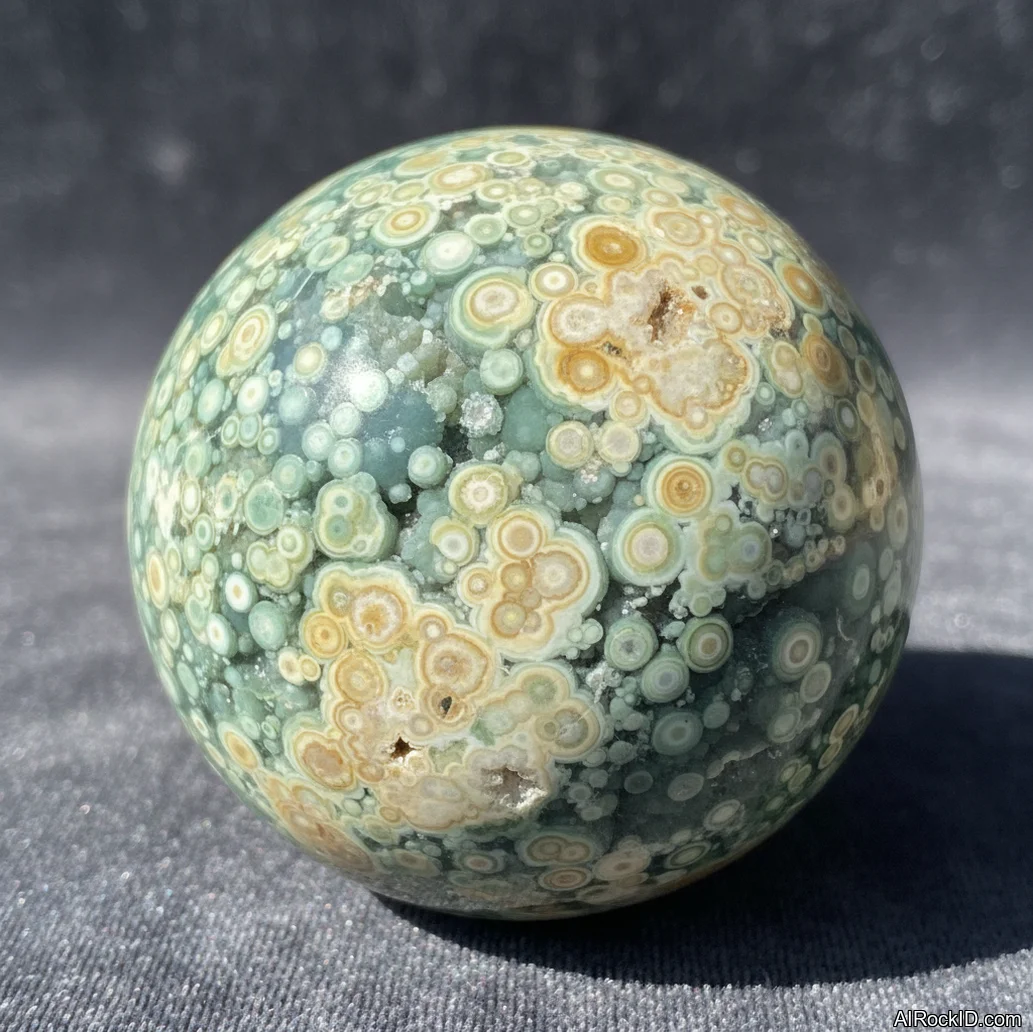
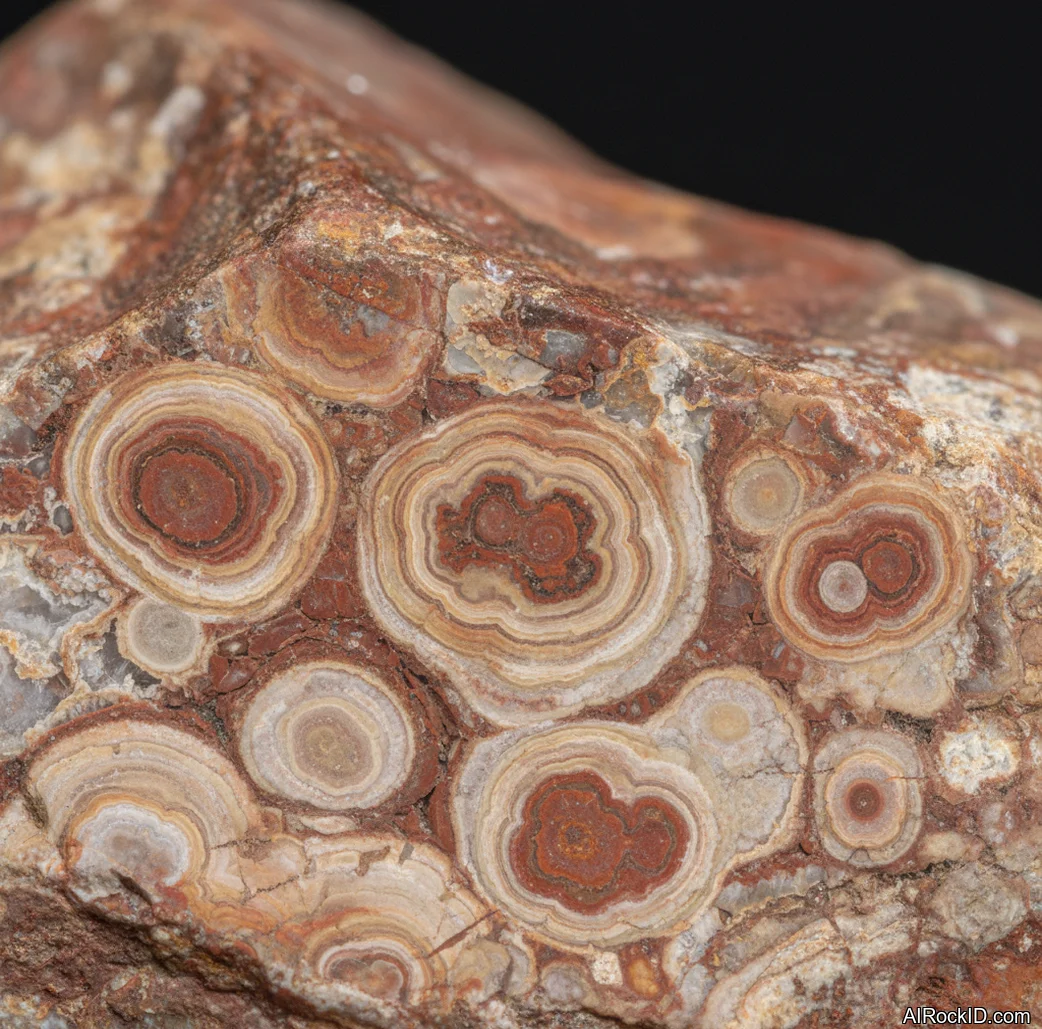
Flower Jasper is a patterned jasper, meaning microcrystalline quartz (chalcedony), and you can spot it by those flower-like orbicules and petal-shaped plumes sitting in a fine-grained silica matrix.
Grab a polished palm stone and it hits you fast. It stays cool in your hand. And the surface has that slick, greasy-waxy feel jaspers get when somebody’s taken the time to really polish it up (you can feel it kind of “grab” and then glide under your thumb). The pattern is the whole reason people want it. Some pieces read like soft pink blossoms drifting in gray fog, but others swing cream and tan, with little ring marks that look like tiny bullseyes when you tilt them toward the light.
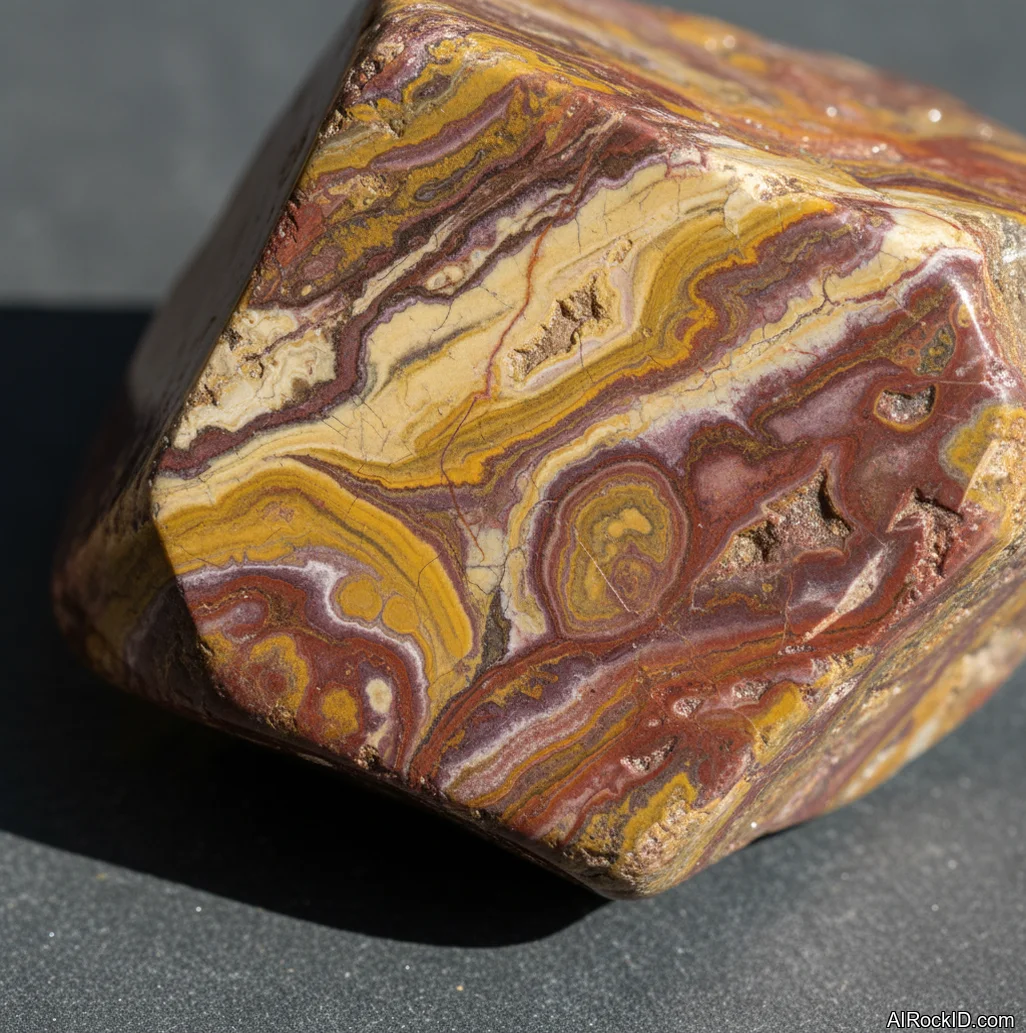
Most of what’s out there is tumbled, carved, or cut into cabochons, because that’s where the look pops. Big rough chunks exist. But the really nice “garden full of flowers” pattern usually shows best on a wide, flat polished face, not on a bumpy raw surface. And yeah, sellers sometimes slap “flower jasper” on a few different orbicular jaspers, so two stones with the same label can end up looking weirdly different. Who hasn’t seen that happen?
Origin & History
“Jasper” is an old word. It traces back through Old French *jaspre* and the Latin *iaspidem*, and it was used for spotted stones way before anyone was doing modern mineral ID.
“Flower Jasper,” though, is a newer trade name. It came out of the look of the material, not because it’s some formal species name that one scientist “described” on a certain date.
And honestly, the name stuck in the trade because you can get it in one second. I’ve stood at shows and watched people lean over a tray, point at the orbicules, and go, “Those look like blossoms,” and yeah, that’s basically it.
Historically, jaspers in general got used for seals, beads, and small carvings since they’ll take a clean polish and they don’t crumble the way softer rocks do.
Where Is Flower Jasper Found?
Flower-patterned jasper and orbicular jasper material shows up in multiple countries, with a lot of trade stock coming through big lapidary networks rather than one famous single mine.
Formation
Look close at those “flowers” and you’re basically watching silica do slow, picky chemistry. Jasper is microcrystalline quartz, which means you don’t get big, showy crystals. You get this tight mesh of tiny quartz fibers instead, the kind that feels almost waxy when it’s polished and has that smooth, hard drag under your fingertip.
The flower and orbicule patterns usually come from rhythmic silica being laid down in pulses, with the impurities changing as it goes. Sometimes it starts around little seed points, like fragments, bubbles, or earlier mineral grains. And once that cycle gets going, you can end up with those round, petal-like rings that look almost too deliberate to be natural.
Compared to a clean quartz point, jasper forms where silica-rich fluids are moving through cracks, volcanic ash, or sediment and then hardening. The neat part is the pattern can be a snapshot of shifting conditions. One phase it’s laying down a pale band, and the next it’s pulling in iron or manganese so you get a darker rim. But it all finishes as the same thing: tough, fine-grained quartz.
How to Identify Flower Jasper
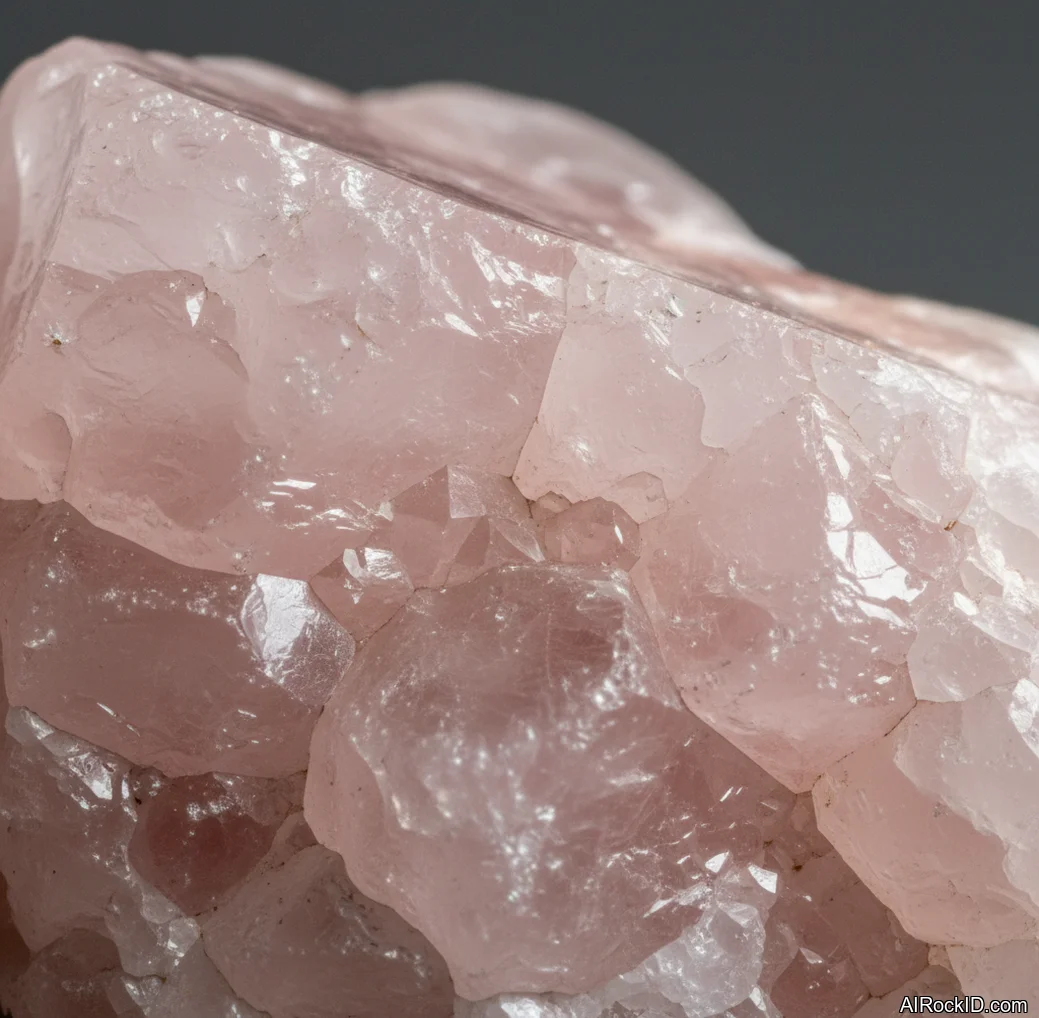
Color: Most Flower Jasper runs gray to beige with pink, salmon, cream, or tan orbicules that read like little blossoms or rosettes. Some pieces have brown or black outlines around the “flowers,” especially when iron staining is stronger.
Luster: Waxy to dull in rough pieces, and waxy to vitreous on a good polish.
Pick up a piece and feel the temperature. Real jasper stays cool longer than glassy resin fakes, and it feels denser than it looks. If you scratch it with a steel nail, it shouldn’t take a mark easily, but it will scratch glass because it’s quartz-based. The problem with photos online is saturation: in hand, the pinks are often softer and more natural than the neon stuff you sometimes see in listings.
Properties of Flower Jasper
Physical Properties
| Crystal System | Trigonal |
| Hardness (Mohs) | 6.5-7 (Hard (6-7.5)) |
| Density | 2.58-2.64 |
| Luster | Waxy |
| Diaphaneity | Opaque |
| Fracture | Conchoidal |
| Streak | White |
| Magnetism | Non-magnetic |
| Colors | Gray, Beige, Cream, Pink, Salmon, Tan, Brown, Black |
Chemical Properties
| Classification | Silicates |
| Formula | SiO2 |
| Elements | Si, O |
| Common Impurities | Fe, Mn, Al, Ca |
Optical Properties
| Refractive Index | 1.530-1.543 |
| Birefringence | 0.009 |
| Pleochroism | None |
| Optical Character | Uniaxial |
Flower Jasper Health & Safety
Flower Jasper is usually fine to pick up, carry around, or set on a shelf. Thing is, like any silica-heavy stone, the only real issue is the dust if you’re cutting it or grinding it (that super-fine grit that hangs in the air and ends up on your fingers).
Safety Tips
If you’re doing lapidary work, don’t just dry-grind and hope for the best. Run water on the wheel so the dust turns into slurry, keep some real ventilation going, and wear a proper respirator. Silica dust gets insanely fine, and you really don’t want to be breathing it in.
Flower Jasper Value & Price
Price Range
Rough/Tumbled: $5 - $60 per piece
Cut/Polished: $0.50 - $6 per carat
Price mostly tracks how crisp the pattern is and how “floral” it looks when you’re staring at a broad face. If the polish comes out clean, the piece is big, and the orbicules stay tight and sharply outlined (not fuzzy or smeared), the price climbs in a hurry.
Durability
Durable — Scratch resistance: Good, Toughness: Good
It’s stable microcrystalline quartz, but polished surfaces can dull if you let it rattle around with harder stones or grit.
How to Care for Flower Jasper
Use & Storage
Keep it in a pouch or a divided box if it’s polished, because quartz-on-quartz rubbing will haze a shine over time. I toss my palm stones in soft bags when I’m packing for a show.
Cleaning
1) Rinse with lukewarm water and a drop of mild soap. 2) Use a soft toothbrush to get into pits or vugs. 3) Rinse well and dry with a microfiber cloth.
Cleanse & Charge
Running water is fine, and so is a quick wipe with a damp cloth if you don’t want to soak it. For a low-effort reset, set it on a piece of clear quartz or selenite for a few hours.
Placement
On a desk or nightstand it reads really nicely because the pattern pulls your eye in without being loud. If you’ve got direct sun blasting through a window, I’d rotate it now and then so one side doesn’t hog all the UV for years.
Caution
Skip harsh cleaners and ultrasonic machines, especially if the stone has those tiny pinhole pits on the surface that love to hold onto gunk (you’ll never fully rinse it out). And don’t grind or drill dry. Silica dust gets in the air fast, and it’s a real lung hazard.
Works Well With
Flower Jasper Meaning & Healing Properties
Flower Jasper looks kind of “cute” at first, sure. But once you actually carry one, you notice that classic jasper weight. It’s heavy in the pocket, and the surface has that dry, grippy feel, not slick like glass. A lot of people grab patterned jaspers as everyday grounding stones for exactly that reason. They’re calm to look at, and they feel like something you’d scoop up off a riverbank.
In crystal-healing circles, Flower Jasper usually gets linked to gentle emotional support and easing stress, mostly because those soft flower-like patterns read as safe and comforting. I keep that in the personal-practice lane, not the medical lane. If you’re anxious, holding a stone can give your hands something to do and buy you a quiet minute. But it’s not a substitute for real help.
But here’s the collector truth: not every piece lands the same. Some slabs are just muddy gray with a few faint dots, and they don’t give off that “flower garden” look people expect from the nicer photos. Then you find a good one and it’s obvious. The pattern’s so clear you end up tilting it around under the light, like, wait, is that another little blossom tucked in the matrix?
Identify Any Crystal Instantly
Snap a photo and get properties, value, care instructions, and healing meanings in seconds.