Garnet
What Is Garnet?
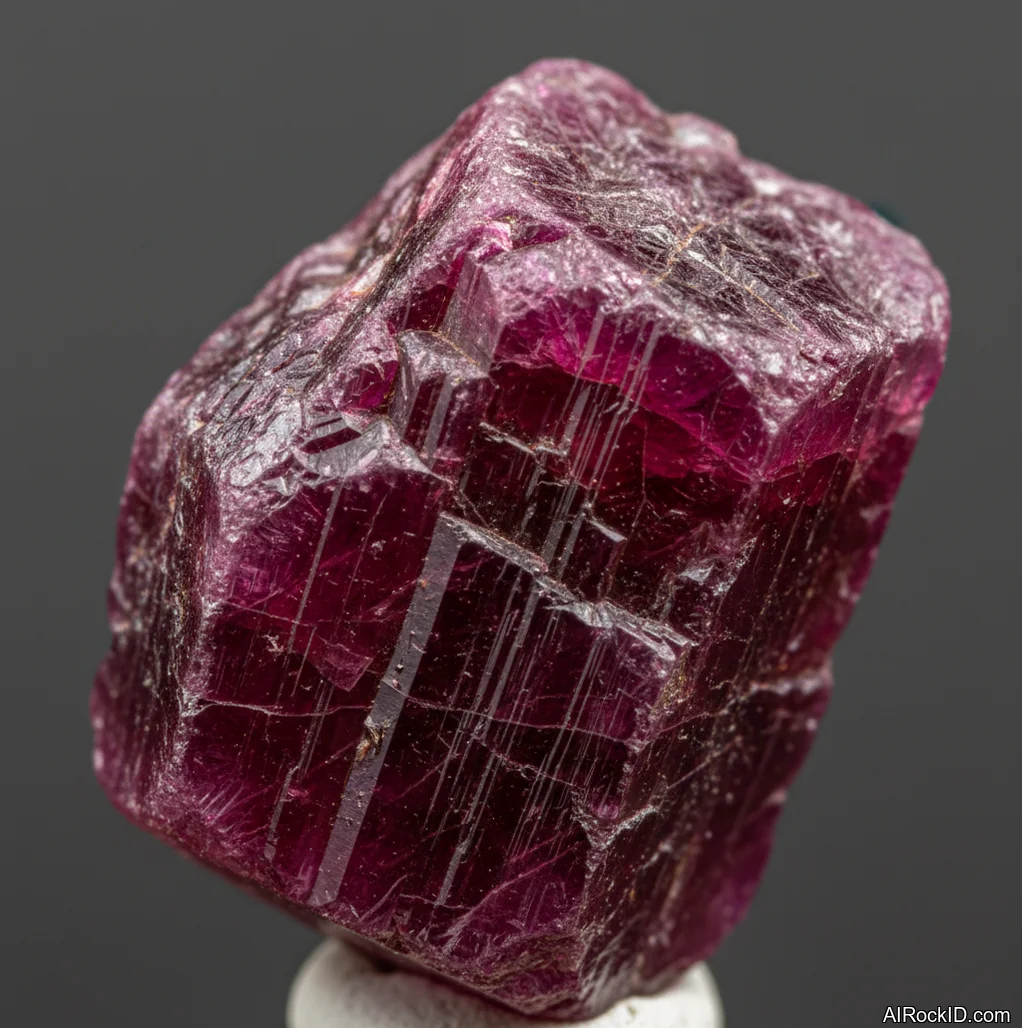
Garnet isn’t just one mineral. It’s a whole group of closely related silicate minerals that all share the same crystal structure, and you usually run into them as red to brownish-red crystals or grains in metamorphic and igneous rocks.
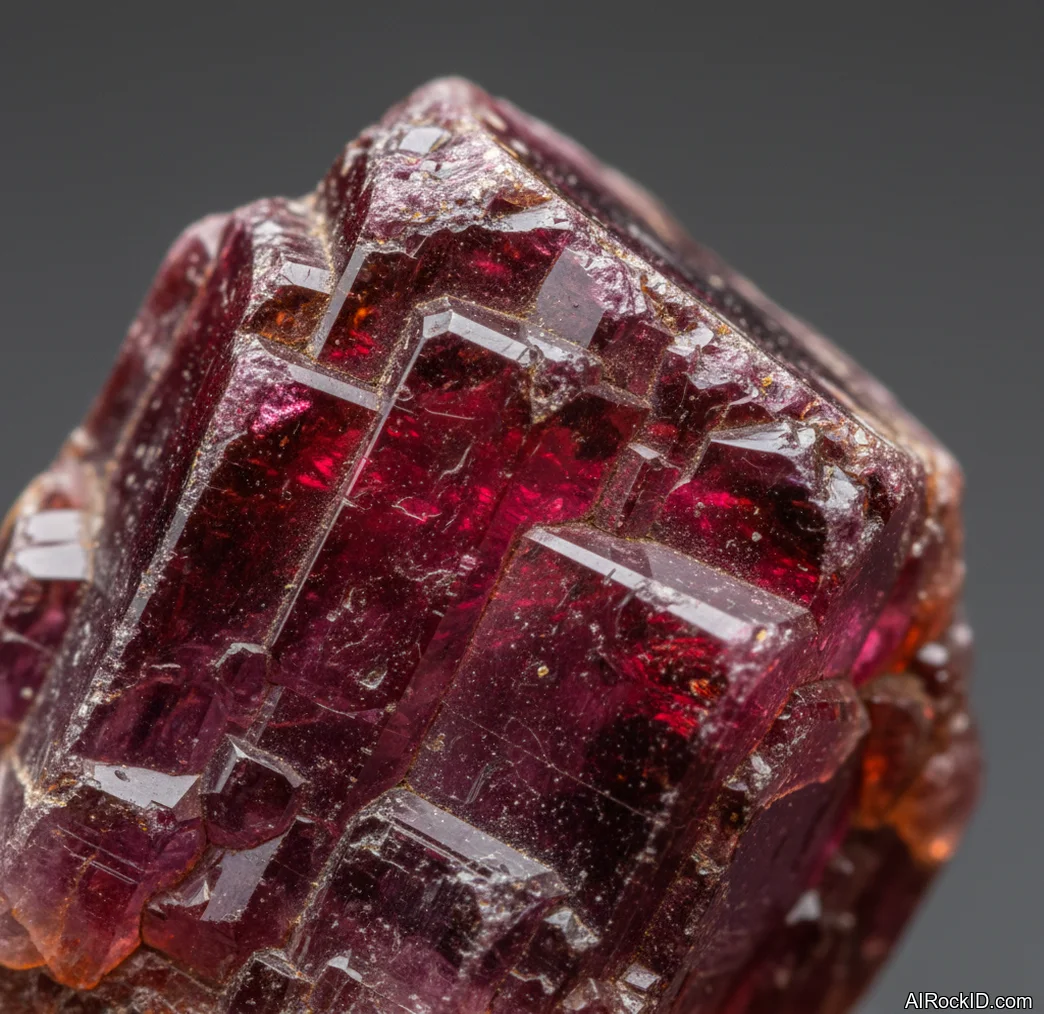
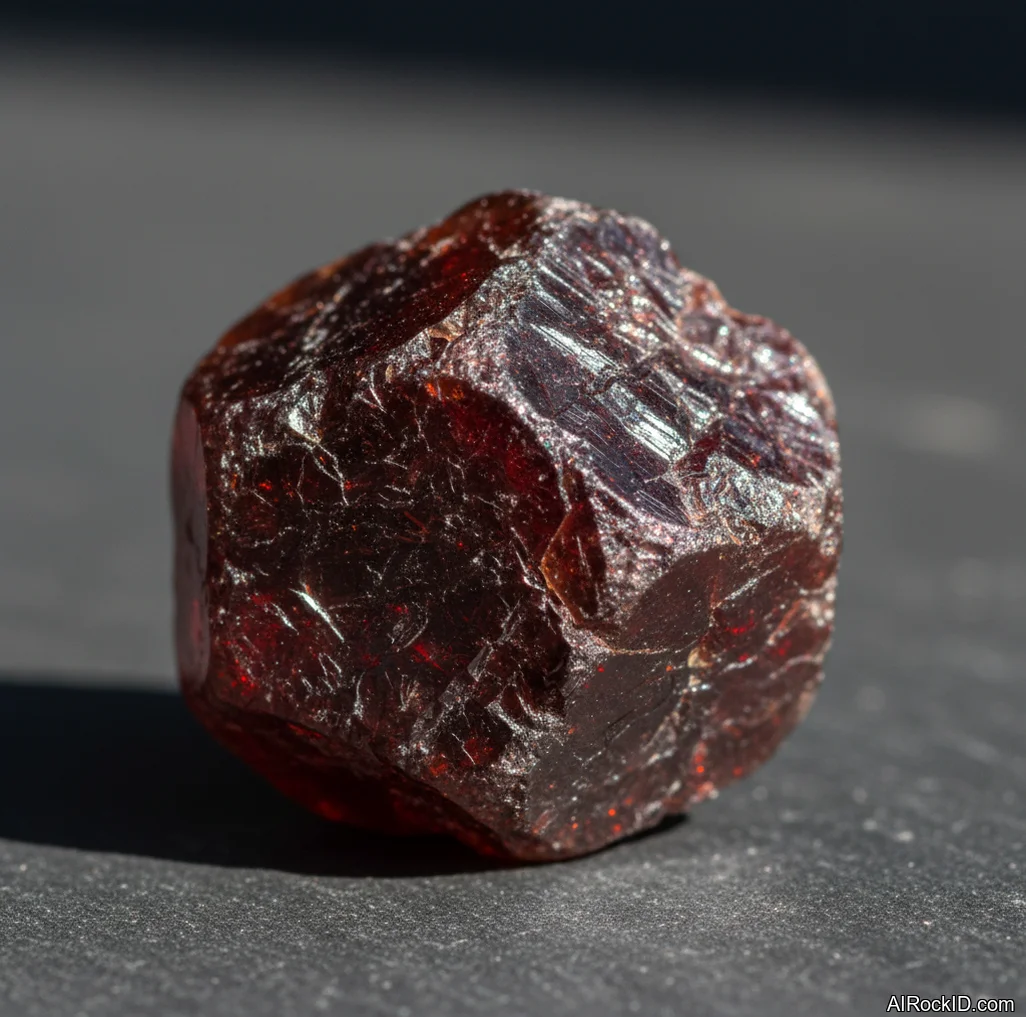
Pick up a chunky garnet sitting in schist and you notice the weight first. It’s weirdly heavy in your palm for something that size. And when you tip it under a shop light, the faces get that glassy, almost wet shine, like there’s a thin film on it (there isn’t). A lot of folks hear “garnet” and picture dark red, clear gem material, but most of the garnet you actually find in the field is more wine-colored to brownish red, and it’s only translucent right along the edges.
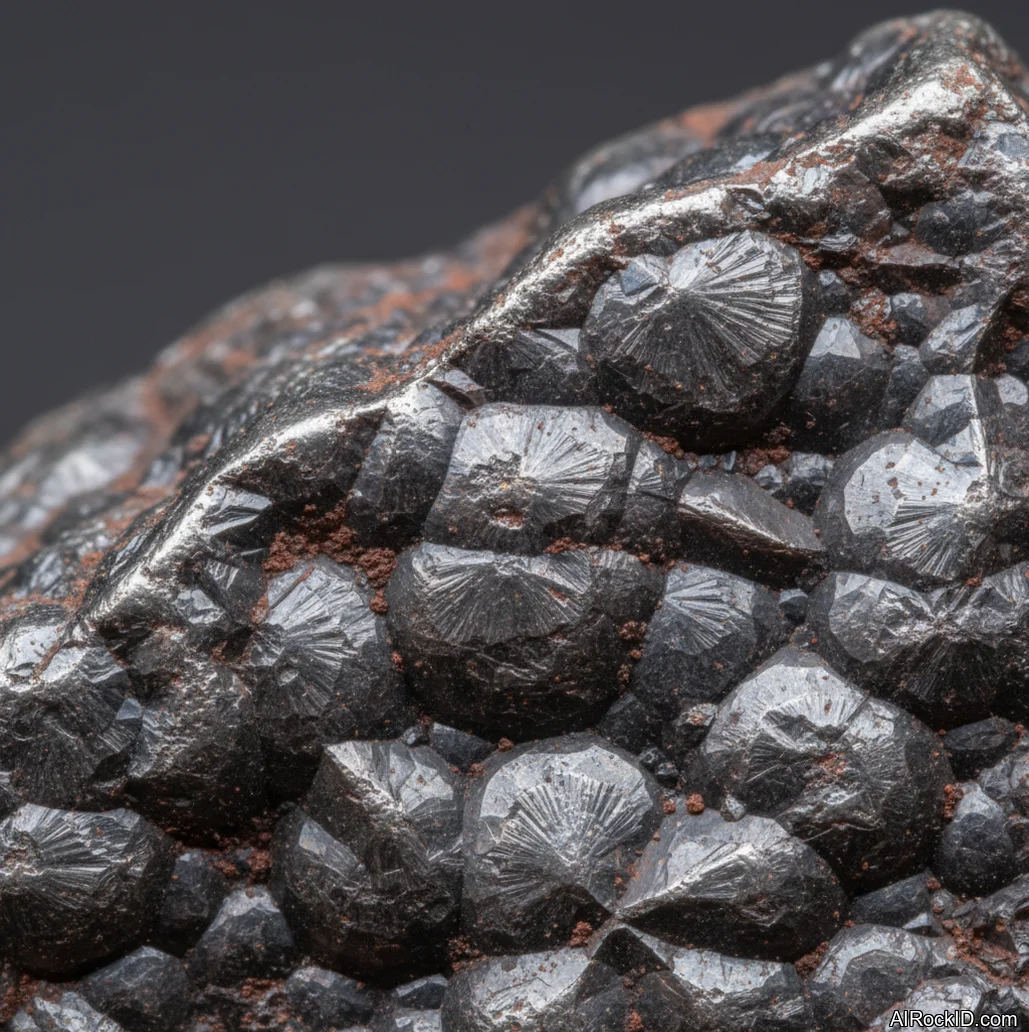
Look at the shape for a second and it clicks. Garnets love those rounded dodecahedrons and trapezohedrons, like little geometry dice that nature tumbled smooth. But you’ll also see garnet as peppery grains scattered through a rock. And those grains? They can be hard enough to chew through sandpaper fast when you’re prepping a slab.
Origin & History
“Garnet” traces back to the Latin *granatum*, meaning “pomegranate,” because those little red crystals in the rock can look like pomegranate seeds tucked into the matrix. You see the word pop up in medieval lapidary manuscripts. But the modern idea of garnet as a whole mineral group didn’t really land until much later, when chemistry and optics finally caught up enough to sort things out.
As a named mineral, garnet shows up in the early days of scientific mineralogy. And over time the group got split into species like almandine and pyrope once people started separating them by composition, like iron-rich versus magnesium-rich (that kind of nitty-gritty). Old jewelry books also tossed around the word “carbuncle” for red stones that seemed to glow under lamplight, and a decent chunk of those were garnet, even if the naming was pretty loose by today’s standards.
Where Is Garnet Found?
Garnet turns up worldwide in metamorphic belts and some igneous settings, with both industrial abrasive deposits and gem pockets depending on the locality.
Formation
Most of the garnet you’ll actually bump into forms during metamorphism, when heat and pressure shuffle minerals around in rocks like schist, gneiss, and amphibolite. If you’ve ever split a piece of mica schist and had those red crystals pop out from the glittery mica sheets (the flakes feel slick, almost greasy under your thumb), that’s the classic look.
Thing is, the chemistry drives what kind you get. Iron plus aluminum steers things toward almandine. Magnesium points you at pyrope. Manganese tends to mean spessartine. And calcium is what opens the door to grossular and andradite.
But it’s not just a metamorphic story. Some garnets grow in igneous rocks, and you also see them in skarns where hot fluids react with limestone. That’s where the colors can get kind of wild: greens like andradite and uvarovite, and grossular that runs from honey-colored to that weird minty shade.
And yeah, garnet can act like a little time capsule for geologists. The crystals trap zoning and inclusions that basically log the rock’s pressure-temperature path. Pretty handy, right?
How to Identify Garnet
Color: Common garnet is deep red, brownish red, or reddish purple, but the group also includes orange (spessartine), yellow to green (grossular), and bright green (uvarovite) varieties.
Luster: Most garnet shows a vitreous (glassy) luster on fresh faces.
Pick up a rough crystal and roll it between your fingers. Garnet feels slick and glassy on faces, but the edges are often rounded from wear, especially in river-worn pieces. If you scratch it with a steel nail, it usually won’t mark, but it will scratch glass with a sharp corner. The real test is shape plus heft: those stubby dodecahedrons in schist are hard to fake, and cheap red glass doesn’t have the same “dense” feel.
Properties of Garnet
Physical Properties
| Crystal System | Cubic |
| Hardness (Mohs) | 6.5-7.5 (Hard (6-7.5)) |
| Density | 3.5-4.3 g/cm3 |
| Luster | Vitreous |
| Diaphaneity | Transparent to translucent |
| Fracture | Conchoidal |
| Streak | White |
| Magnetism | Non-magnetic |
| Colors | Red, Brownish red, Reddish purple, Orange, Yellow, Green, Brown, Black, Colorless |
Chemical Properties
| Classification | Silicates (nesosilicates) |
| Formula | X3Y2(SiO4)3 (X = Mg, Fe2+, Mn2+, Ca; Y = Al, Fe3+, Cr, V) |
| Elements | Si, O, Mg, Fe, Mn, Ca, Al, Cr, V |
| Common Impurities | Ti, Na, K |
Optical Properties
| Refractive Index | 1.72-1.89 |
| Birefringence | None |
| Pleochroism | None |
| Optical Character | Isotropic |
Garnet Health & Safety
For most people, handling garnet is pretty low risk. But if you’re cutting or grinding it, treat it like any other mineral: be careful not to breathe in the dust (that fine, gritty powder that clings to your fingers and shows up on the work surface). Normal care is enough.
Safety Tips
If you’re going to sand or shape garnet-bearing rock, put on a respirator and keep the work wet while you cut. Dust gets everywhere fast (you can feel it sticking in your throat), so don’t do it dry.
Garnet Value & Price
Price Range
Rough/Tumbled: $3 - $60 per piece
Cut/Polished: $20 - $500 per carat
Most of the price comes down to color and clarity, sure. But the specific type of garnet matters a lot, too. Clean tsavorite or a really fine spessartine can spike in price in a hurry, while darker almandine usually stays pretty affordable, even when the stones get larger.
Durability
Durable — Scratch resistance: Good, Toughness: Good
Garnet is stable in normal wear, but chips can happen on sharp facet edges, especially on rings that get knocked around.
How to Care for Garnet
Use & Storage
Store garnet jewelry in a separate pouch or box so harder stones don’t nick it and it doesn’t scratch softer stones. If it’s a matrix piece, keep it where it won’t get bumped off a shelf.
Cleaning
1) Rinse with lukewarm water to remove grit. 2) Use mild soap and a soft brush, especially around prongs. 3) Rinse again and dry with a soft cloth; avoid leaving water trapped behind settings.
Cleanse & Charge
If you’re into energetic cleaning, running water and a quick dry works fine for garnet. I avoid salt piles on metal-set jewelry because the metal, not the garnet, is what gets unhappy.
Placement
On a desk, garnet’s nice where you’ll actually touch it, like next to a keyboard or on a worry-stone tray. For display, side lighting makes the crystal faces flash instead of looking flat.
Caution
Skip ultrasonic and steam cleaners if the garnet is included or has fractures, and honestly, steer clear of those cleaners for most jewelry settings too. And don’t just toss garnet pieces loose in your pocket with your keys, because they’ll come out scuffed up fast (metal-on-stone makes that gritty scratchy sound you can feel).
Works Well With
Garnet Meaning & Healing Properties
In the crystal crowd, garnet gets pitched as a “get moving” stone. And honestly, that matches how it feels in my hand. It’s dense. Grounded. None of that airy, floaty thing people swear they get from clear quartz. When I’m sorting trays at a show and my brain’s toast, I’ll snag a garnet in matrix for a minute because it’s plain, it’s heavy, and it sort of snaps my attention back into place (you can feel the extra weight right away).
But here’s the part that gets skipped. The “garnet energy” talk can get way overcooked, and at the end of the day it’s still a rock. If you’re dealing with anxiety, burnout, or anything medical, you deal with that using real-world tools first. What garnet can do, if you’re into this kind of thing, is work as a physical anchor for habits. I’ve carried a small almandine pebble in my pocket during long work weeks, and the whole point was the reminder every time my fingers bumped it, not some invisible force field.
Compared to the flashier stones, garnet feels steady. Red garnet usually gets tied to motivation, courage, and basic stamina, while green garnets get talked about as growth and heart stuff. Thing is, I’ve watched people react differently depending on color and cut. A dark red cabochon reads quieter than a bright orange spessartine that looks like it’s lit from inside, even if the meaning write-ups insist they’re basically saying the same thing. Why’s that? Who knows. But it’s real.
Identify Any Crystal Instantly
Snap a photo and get properties, value, care instructions, and healing meanings in seconds.