Gilsonite
What Is Gilsonite?
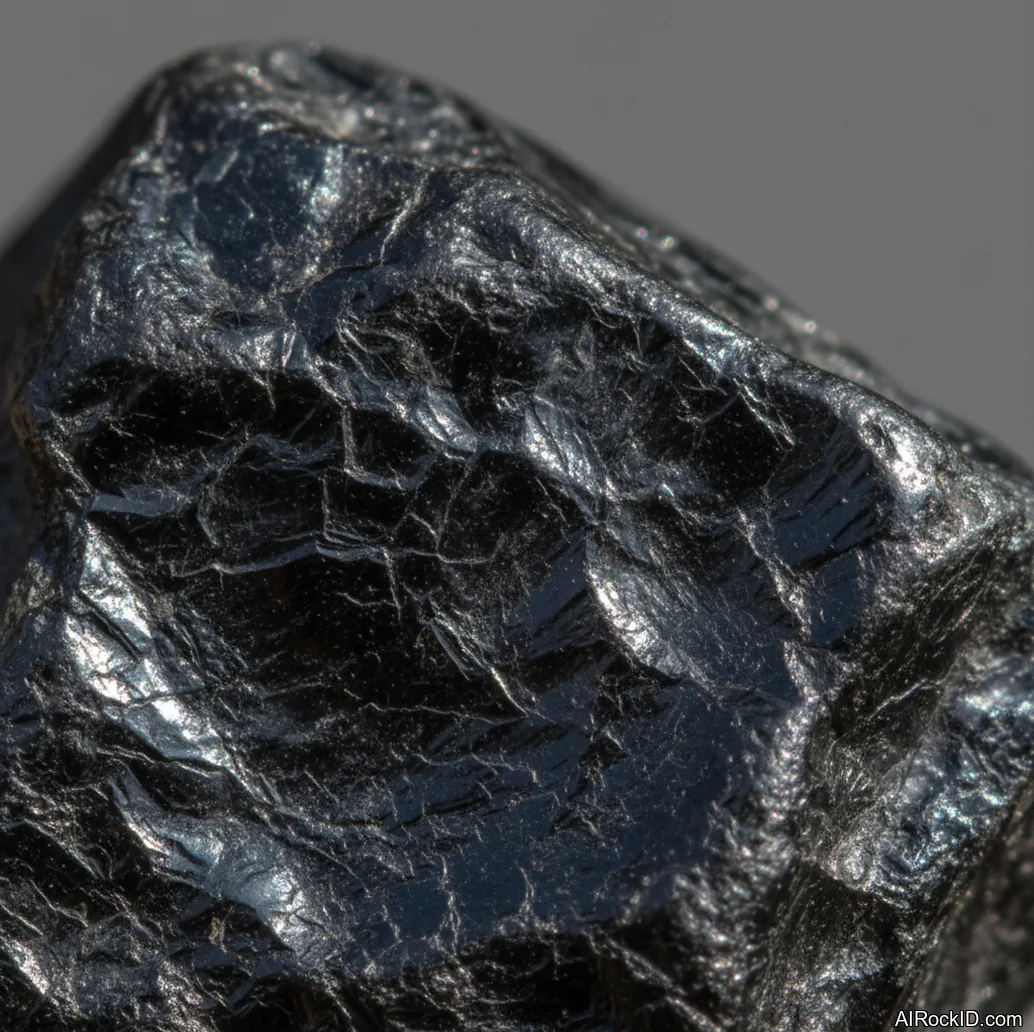
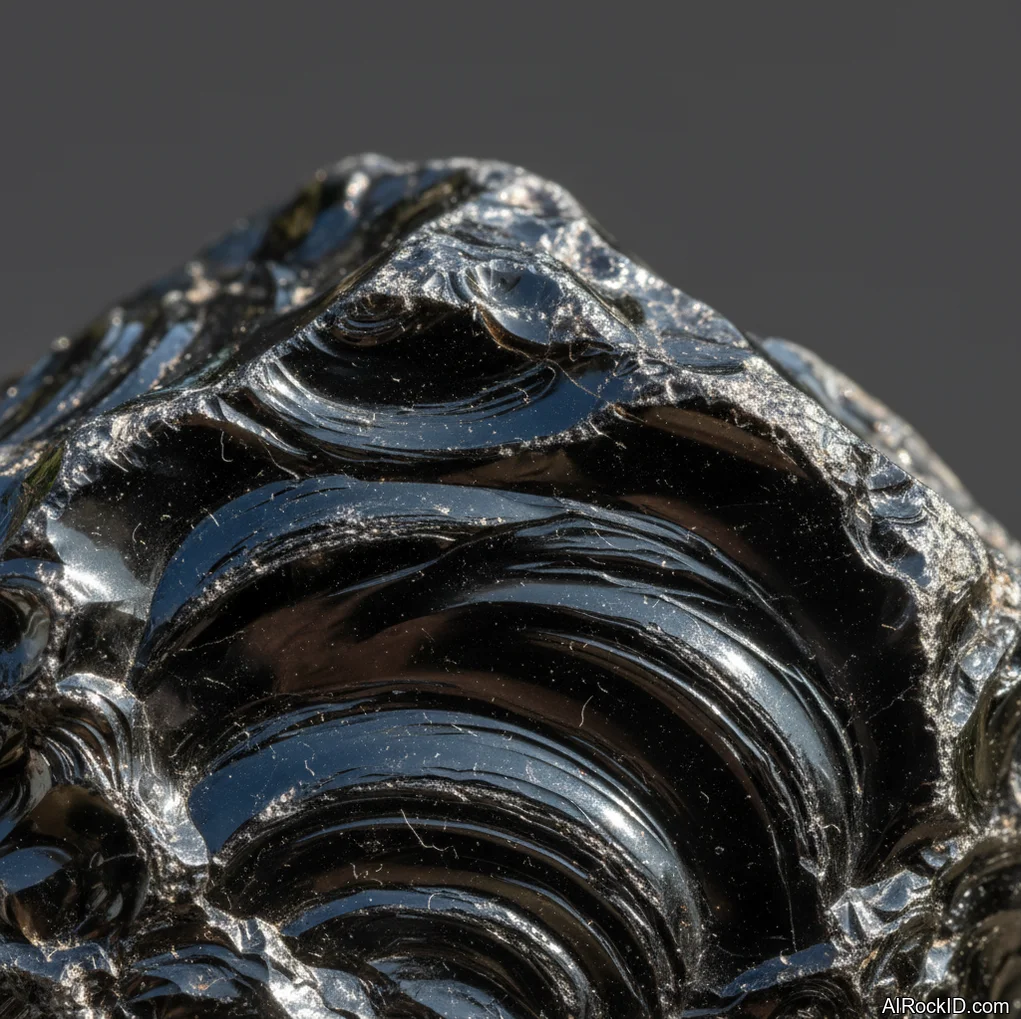
Gilsonite is a naturally occurring solid hydrocarbon resin. It’s an asphaltite (solid bitumen), and when it breaks it does that glassy, conchoidal snap like black glass.
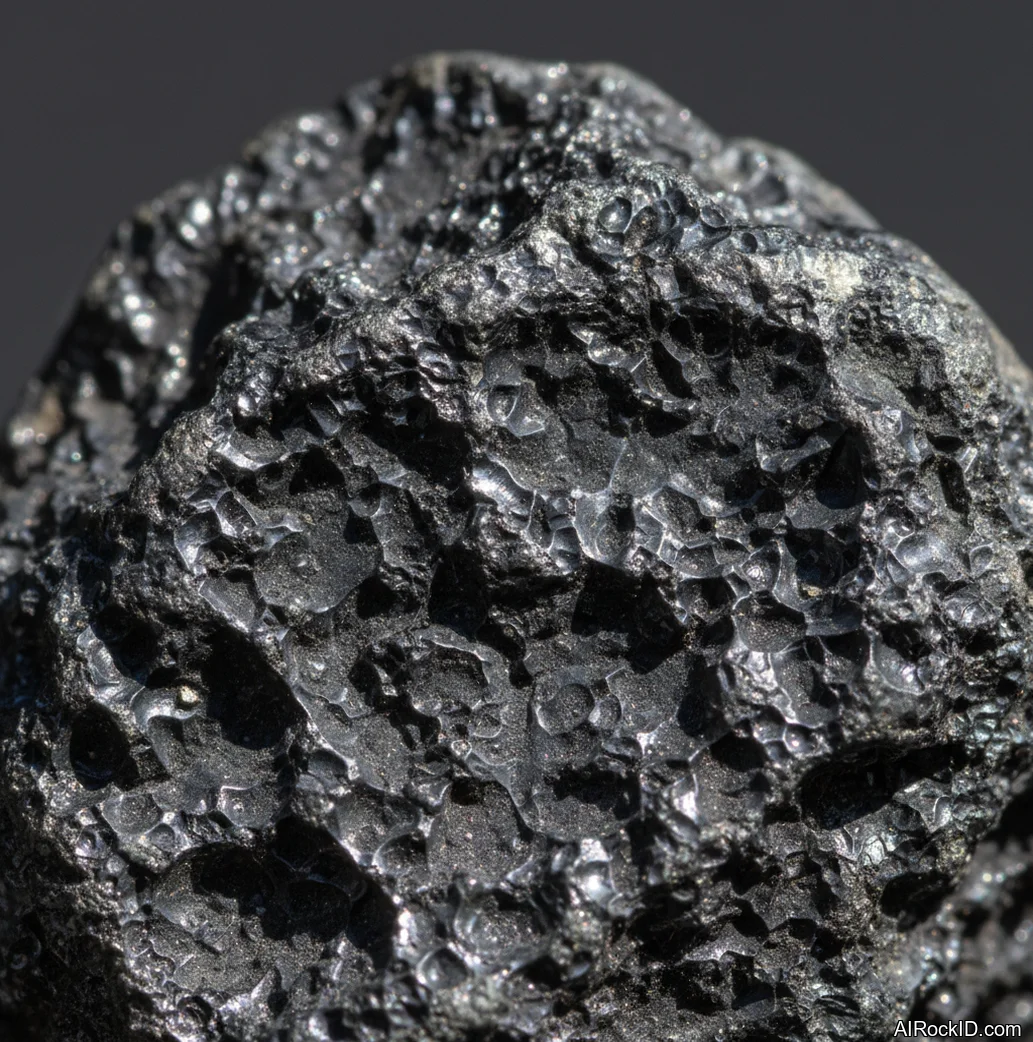
Pick up a chunk and the first thing you notice is the weight. It’s lighter than you’d expect for something that looks so dense and dark. It also warms up in your hand quicker than quartz or obsidian, and if you rub it with your thumb you can sometimes coax out a faint tarry smell, especially right off a fresh break (the sharp edge is usually where you’ll catch it). Most pieces I’ve handled have this resinous shine on the sharp edges, but the flatter faces can look almost dull until you tilt them under a lamp and the sheen pops.
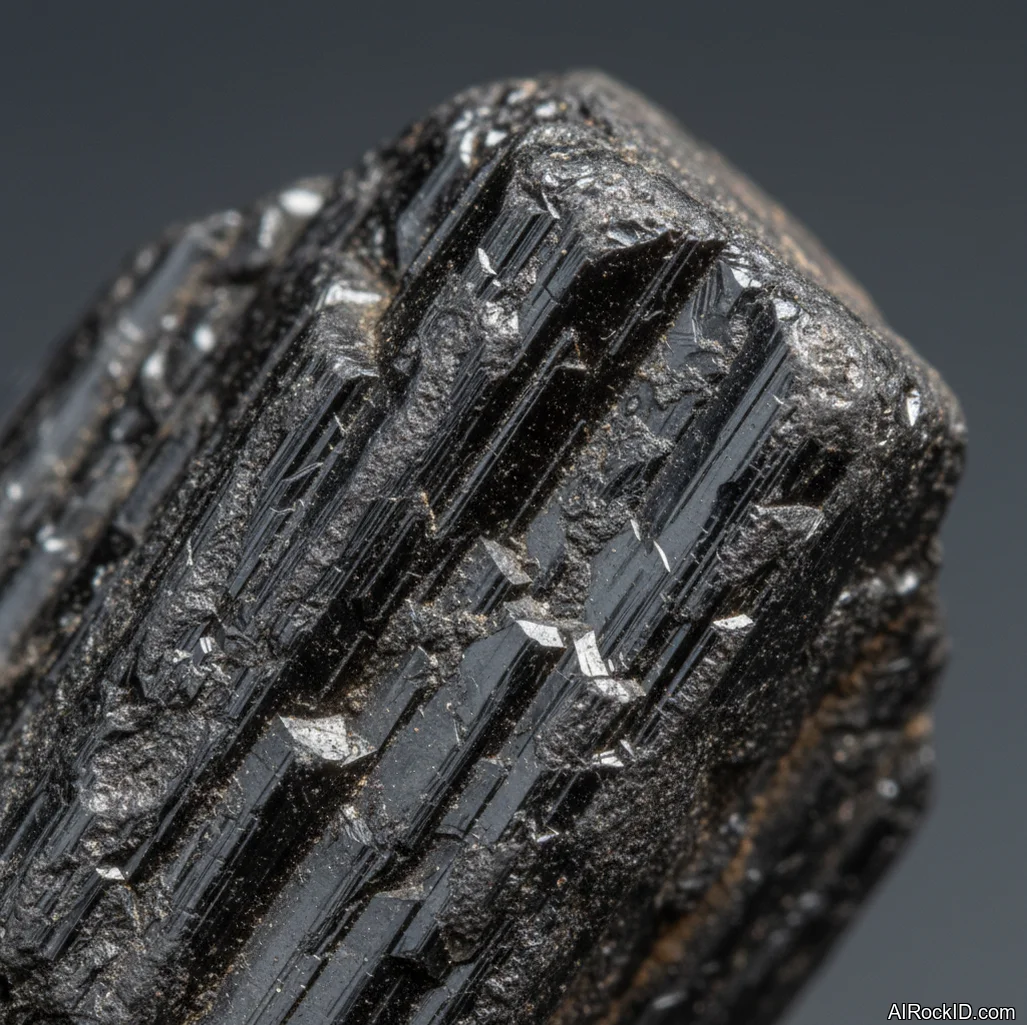
People mix it up with obsidian at a glance, sometimes even black tourmaline. But it doesn’t show crystal faces, and it doesn’t have that “cold” feel volcanic glass does. And it’s softer. A copper coin will bite it. So yeah, that softness is why a lot of gilsonite on the market shows up as chunky specimens, not jewelry-grade cabbing rough.
Origin & History
Utah miners and traders were already digging this stuff up and shipping it out in the late 1800s. But the name that actually stuck traces back to Samuel H. Gilson, the guy who pushed it commercially under the label “Gilsonite.” The older name, “uintahite,” is way more literal. It points straight to the Uinta Basin, where the classic veins show up as glossy black seams cutting through the country rock (the kind that leaves a dark smudge on your fingers if you rub a fresh surface).
Thing is, it mattered because it wasn’t just some oddball curiosity. Gilsonite turned into a legit industrial material used in varnishes, paints, printing inks, waterproofing, and foundry work. So in the collecting world it’s got this weird split personality. Part mineral shelf piece. Part old-school industrial raw material. Who else has that going on?
Where Is Gilsonite Found?
Most collector material comes from the Uinta Basin in northeastern Utah, where it occurs in near-vertical veins. Related solid bitumens are also produced in parts of the Middle East.
Formation
Raw pieces from Utah come out of steep, vein-like fractures, basically cracks that got filled with hydrocarbons that later hardened up. Think petroleum that moved around underground, got squeezed into those fractures, and then, over a long stretch of time, lost the lighter fractions until what was left was a hard, brittle solid.
The host rocks in the Uinta Basin are sedimentary. And the veins can slice right across the bedding in a way that looks almost wrong the first time you see it in photos. But if you picture pressure-driven fluids forcing their way up through fractures, it clicks. Cooling does part of the work. So does evaporation of volatiles, and then long-term oxidation keeps pushing it toward that hard, shiny asphalt-resin look collectors recognize (the kind that catches a sharp glint when you tilt it under a light).
How to Identify Gilsonite
Color: Usually jet black, sometimes with brownish edges or a faint smoky-brown translucence on thin chips. Fresh breaks can show a slightly different black than weathered surfaces.
Luster: Resinous to sub-vitreous, especially on sharp fresh fracture faces.
If you scratch it with a copper coin, it’ll mark pretty easily, which rules out obsidian fast. The real test is a fresh snap: the break is conchoidal and glossy, and thin flakes can look brown when held to a bright light. And don’t be surprised if it smells a little bit like asphalt when warmed by your fingers.
Properties of Gilsonite
Physical Properties
| Crystal System | Amorphous |
| Hardness (Mohs) | 2-3 (Soft (2-4)) |
| Density | 1.04-1.10 g/cm3 |
| Luster | Resinous |
| Diaphaneity | Opaque |
| Fracture | Conchoidal |
| Streak | brown to black |
| Magnetism | Non-magnetic |
| Colors | black, brownish black, dark brown |
Chemical Properties
| Classification | Organic (hydrocarbon resin, asphaltite) |
| Formula | Variable (predominantly hydrocarbons) |
| Elements | C, H, S, N, O |
| Common Impurities | S, N, O, mineral ash (silicates, carbonates) |
Optical Properties
| Refractive Index | 1.50-1.60 |
| Birefringence | None |
| Pleochroism | None |
| Optical Character | Isotropic |
Gilsonite Health & Safety
Handling intact pieces is usually safe. But don’t heat it, and don’t grind or sand it, because that’s how you end up making dust. Freshly broken edges can be nasty, too, sharp like glass (the kind that catches your finger before you even notice).
Safety Tips
Wash your hands after you’ve been handling it for a while. Keep it away from high heat. And don’t cut or polish it unless you’ve got proper ventilation and you’re wearing a respirator, because that dust gets everywhere (on your clothes, in your nose, the whole deal).
Gilsonite Value & Price
Price Range
Rough/Tumbled: $5 - $60 per specimen
Price jumps around depending on size, that clean resinous luster you can see when you tilt it under a light, and whether you’ve got a good-looking veined chunk that snaps with sharp breaks or the crumbly, industrial-grade stuff that just sheds grit. And yeah, older stock labeled “uintahite” with solid provenance can end up costing more than the rock itself.
Durability
Nondurable — Scratch resistance: Poor, Toughness: Poor
It can scuff, chip, and pick up fingerprints easily, and heat can soften it slightly or bring out odor.
How to Care for Gilsonite
Use & Storage
Store it in a box or a specimen case where it won’t rub against harder minerals. I keep mine in a small plastic cup because it likes to leave little black scuffs on foam.
Cleaning
1) Dust it with a soft brush or microfiber cloth. 2) If it needs more, wipe lightly with a barely damp cloth and dry right away. 3) Skip solvents and ultrasonic cleaners, since they can haze the surface or make it tacky.
Cleanse & Charge
For metaphysical cleaning, use smoke, sound, or a quick pass over selenite rather than salt water. Sunlight and heat aren’t your friend with this one.
Placement
It looks best under a side light so the resinous gleam shows on broken curves. Keep it away from windowsills and radiators.
Caution
Don’t leave gilsonite sitting in a hot car. It softens, and you’ll regret it. And don’t tumble it either. If you’re going to wire-wrap it, pad it first (a little leather or a bit of cloth works). Thing is, those tight pressure points from the wire can bite in and chip it.
Works Well With
Gilsonite Meaning & Healing Properties
In crystal shops, gilsonite almost always gets filed under the “deep black grounding” stuff, usually sitting right beside jet or shungite. And yeah, I get it. It has this quiet, soak-it-up feel to it, and it’s literally a solidified hydrocarbon, so people treat it like a little sink for mental static.
When I’m stressed, I’ll grab a piece and it works kind of like a worry stone, just… rougher. Mine’s got this curved fracture that slots right under my thumb, and I don’t even notice I’m rubbing it until I’m halfway through a phone call. But I wouldn’t hand it to someone who wants something hardy for everyday carry. It scuffs up fast, and once you scratch it, that scratch is there. Period.
If you’re using it in a spiritual way, keep one foot on the ground too. People link gilsonite with protection and clearing, but that’s tradition and personal practice, not medicine. So if you like the little ritual of setting a “boundary” before work or journaling, it fits that vibe nicely, especially if you pair it with a cleaner, brighter stone so the whole setup doesn’t feel so heavy (because it can).
Identify Any Crystal Instantly
Snap a photo and get properties, value, care instructions, and healing meanings in seconds.