Hiddenite
What Is Hiddenite?
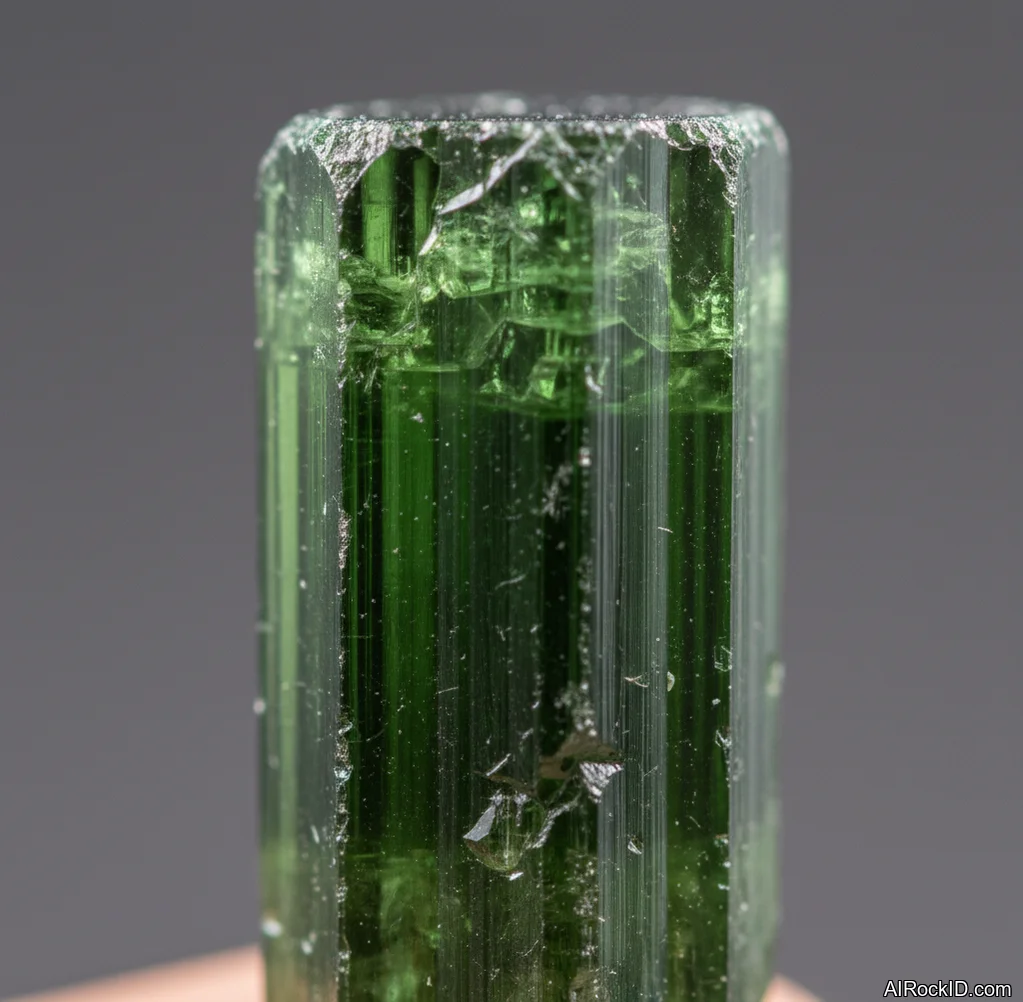
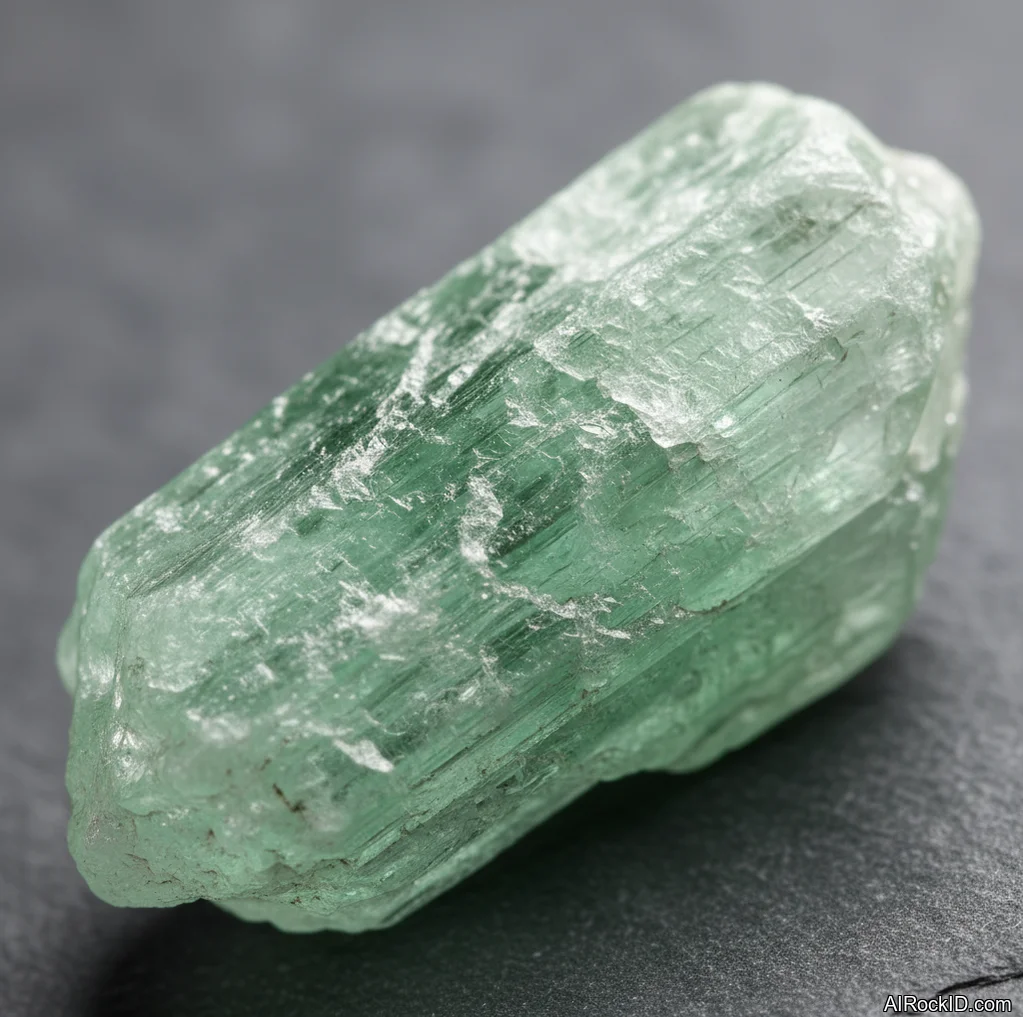
Hiddenite is the green gem variety of spodumene, a lithium aluminum silicate mineral. If you’ve only seen it in photos, the first surprise when you actually hold one is how blade-like it can look. Long, mint-green, with sharp edges and that slick, glassy skin that catches fingerprints fast.
Pick up a clean crystal and you’ll notice it isn’t super heavy for its size, but it has that cool, crisp “real mineral” chill in your fingers that plastic fakes never quite get. Look down the length and you’ll usually spot pleochroism, meaning the green shifts as you tilt it. One angle reads more yellow-green, then it slides into a cooler, slightly bluish green, and sometimes it just goes watery and pale (almost like it’s washed out).
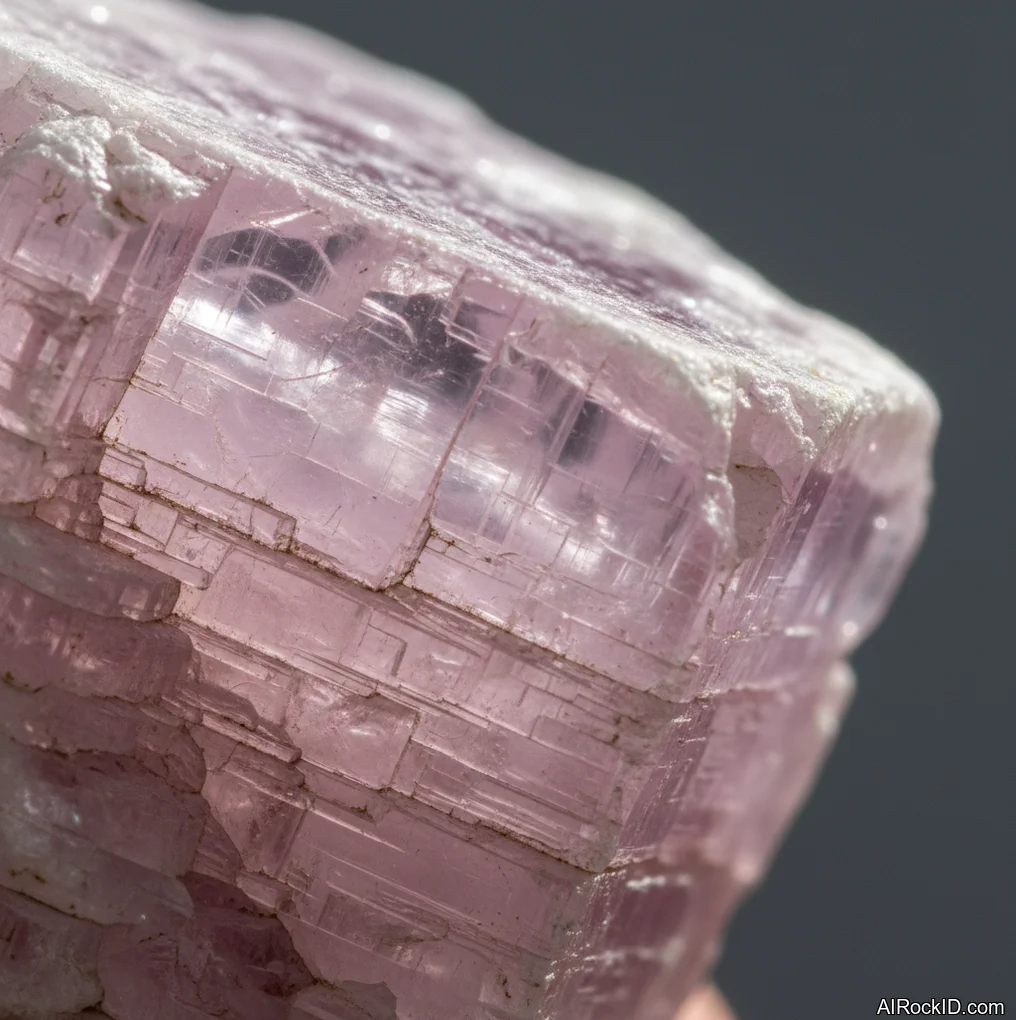
But here’s the catch: most hiddenite you run into isn’t museum-grade transparent material. A lot of pieces are pale, cracked, or show frosty cleavage steps that flash like tiny mirrors when you rotate them under a lamp.
Origin & History
North Carolina’s kind of the textbook example here. Hiddenite was first described in 1879 from the area around the town of Hiddenite in Alexander County. The name isn’t random, either. It honors William Earl Hidden, the mineral explorer who helped draw attention to the deposit and to that new green spodumene turning up there.
Old U.S. material still hits differently with collectors because it’s tied to one exact place and one exact moment in gem history, not just the generic tag of “green spodumene.” I’ve held a few pieces marked “Hiddenite, NC” at shows, and you can feel the little pause people do. Even when the color’s on the lighter side, that label makes folks stop, lean in, and actually read it (and yeah, sometimes they squint at the handwriting on the old card). Why? Because it means something.
Where Is Hiddenite Found?
Hiddenite comes from lithium-rich pegmatites, with classic material from North Carolina and a lot of modern gem rough coming out of Brazil, Afghanistan, and Pakistan.
Formation
Most hiddenite turns up in granitic pegmatites, those chunky, coarse-grained pockets where crystals get the room to go big, like tourmaline, beryl, and quartz. You need a melt that’s loaded with lithium. And you need actual open space so long, prismatic spodumene crystals can grow out without getting crunched or snapped as the pocket shifts.
Compared to kunzite, the pink version of the exact same mineral, hiddenite’s green is usually tied to trace chromium (with a little iron sometimes tagging along). Out in the field and later in the market, it tends to show up as long, knife-like blades sitting in matrix, or as broken chunks of cleavagey crystal. They can look perfect at first glance. But then you tilt one under a light or even just exhale on it, and all those internal fractures suddenly flare up like little bright lines inside.
How to Identify Hiddenite
Color: Hiddenite ranges from very pale yellow-green to stronger yellow-green and, in fine stones, a cleaner medium green that can look almost emerald-ish at a glance. Color often shifts with viewing angle because it’s strongly pleochroic.
Luster: Vitreous luster on fresh faces, with bright flashes off cleavage planes.
Look closely for long, prismatic crystal habit and those flat cleavage surfaces that reflect like tiny sheets of glass. The real test is rotation under a single light source: you’ll see the green change noticeably from one direction to another. If you scratch it with a steel blade, it usually won’t take the scratch easily, but it can chip along cleavage, so don’t go hard on a nice piece.
Properties of Hiddenite
Physical Properties
| Crystal System | Monoclinic |
| Hardness (Mohs) | 6.5-7 (Hard (6-7.5)) |
| Density | 3.13-3.20 g/cm3 |
| Luster | Vitreous |
| Diaphaneity | Transparent to translucent |
| Fracture | Uneven |
| Streak | White |
| Magnetism | Non-magnetic |
| Colors | pale green, yellow-green, medium green |
Chemical Properties
| Classification | Silicates |
| Formula | LiAlSi2O6 |
| Elements | Li, Al, Si, O |
| Common Impurities | Cr, Fe, Mn |
Optical Properties
| Refractive Index | 1.660-1.676 |
| Birefringence | 0.016 |
| Pleochroism | Strong |
| Optical Character | Biaxial |
Hiddenite Health & Safety
Hiddenite is usually safe to pick up and keep on display. You can clean it the normal way, no big deal. But don’t bang it around or drop it on a hard surface. It can cleave, and you’ll sometimes see a clean, flat break that looks almost like a fresh slice through the stone.
Safety Tips
If you’re going to cut or grind it, treat the dust like any other silicate dust. Run a water feed so it stays wet and doesn’t plume up, and wear a proper respirator (not just a flimsy paper mask).
Hiddenite Value & Price
Price Range
Rough/Tumbled: $20 - $300 per specimen
Cut/Polished: $80 - $800 per carat
Prices climb fast as saturation goes up, clarity tightens, and you’ve actually got paperwork on where it came from, with North Carolina carrying extra weight. The clean stuff, cut well, that still reads as a nice green under everyday room light (not just under a jeweler’s lamp) is what pulls the biggest per-carat prices.
Durability
Moderate — Scratch resistance: Good, Toughness: Fair
It’s hard enough for careful wear, but perfect cleavage means it can split or chip if it takes a knock.
How to Care for Hiddenite
Use & Storage
Store hiddenite separately so it doesn’t get banged by harder stones like corundum or topaz. I keep mine in a small box with foam because cleavage chips love to happen during travel.
Cleaning
1) Rinse with lukewarm water. 2) Use a little mild soap and your fingers or a very soft brush. 3) Rinse again and pat dry; don’t slam it around in a bowl.
Cleanse & Charge
For a gentle reset, use running water briefly or set it on dry salt nearby, not buried. If you do sunlight, keep it short so you can watch for any color shift over time.
Placement
A bright shelf works great, but angle it so you can see the pleochroism when you walk past. A single desk lamp makes the cleavage flashes look sharp and clean.
Caution
Skip ultrasonic or steam cleaners. And don’t wear it for sports or heavy work, because one bad knock at the wrong angle can split it right along its cleavage.
Works Well With
Hiddenite Meaning & Healing Properties
In metaphysical circles, people talk about hiddenite like it’s in the same lane as kunzite, just greener and a little more “heart-forward.” I get it. When you’re holding a polished piece, it feels gentle in the hand, not pointy, even though the crystal itself can be literally sharp on the edges.
Grab a transparent crystal and just sit with it for a minute. The first thing I notice is how the color kind of fades in and out when I tilt my wrist, especially if there’s a lamp nearby or you’re close to a window. That shifting green is the whole point, really. It makes it easy to use as a focus object, because you’re watching change happen instead of trying to clamp your feelings in place.
But I’m not going to act like it’s medicine. If you work with stones for intention, hiddenite lines up well with letting go of old resentment, being a little more open, cooling off after a stressful day, and just getting your breathing to slow down (why do we forget to do that?). And even if you don’t buy any of the metaphysical stuff, it’s still a solid reminder to slow down and actually look at what you’re holding, because the best part of hiddenite is what it does under light.
Identify Any Crystal Instantly
Snap a photo and get properties, value, care instructions, and healing meanings in seconds.