Jaspillite
What Is Jaspillite?
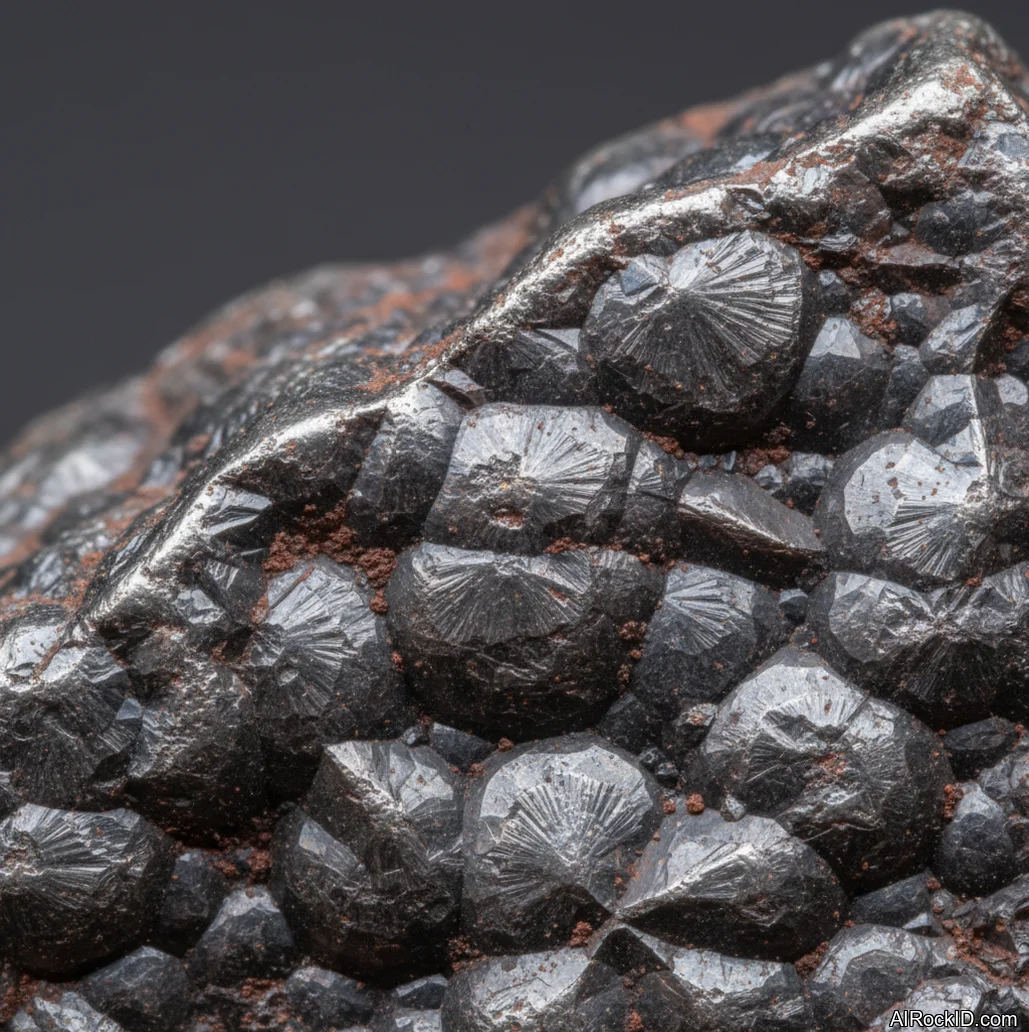
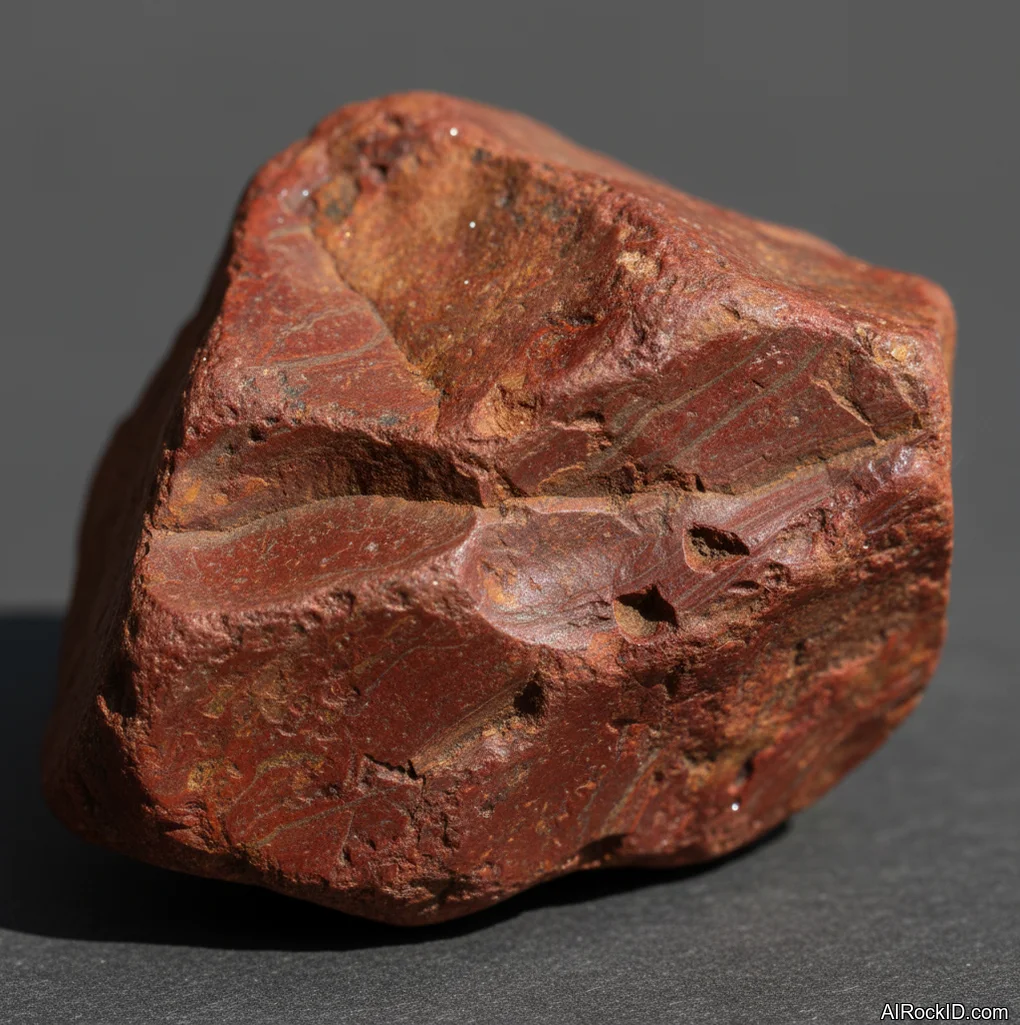
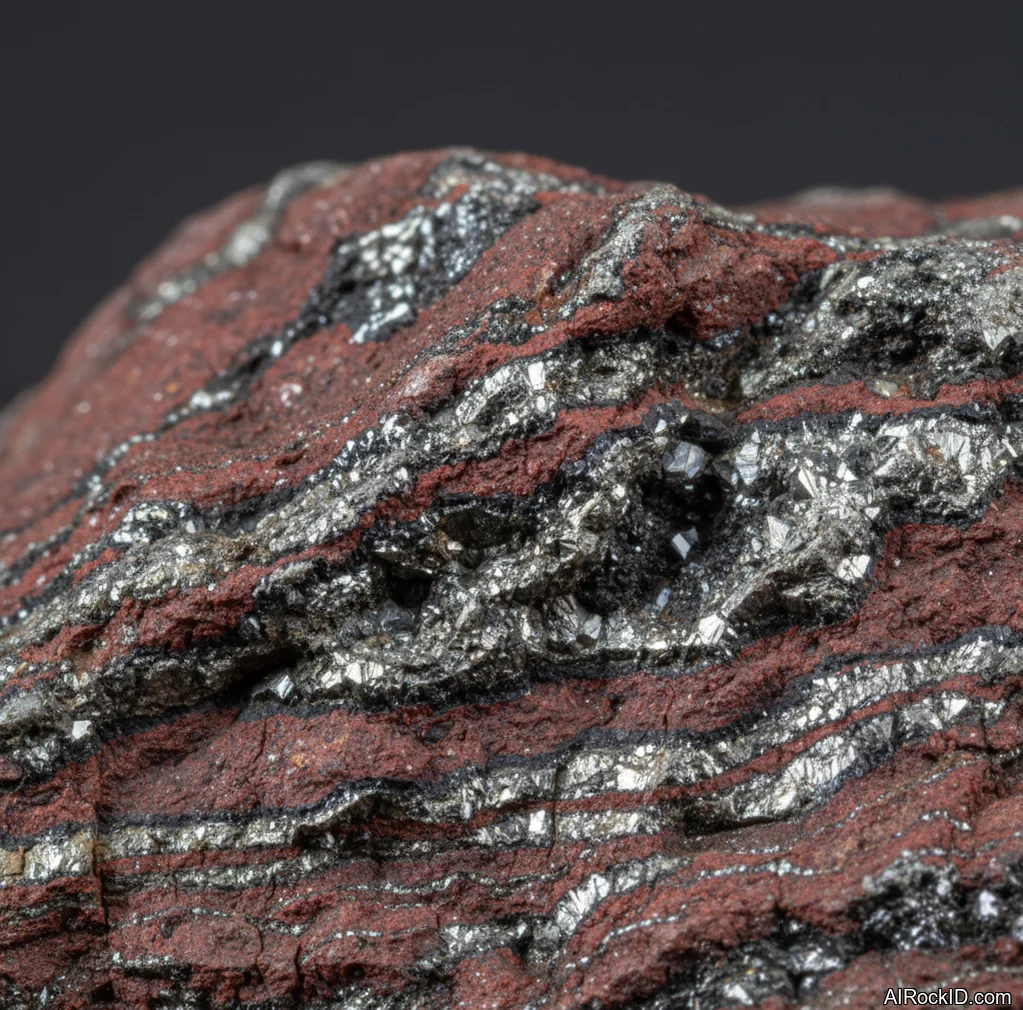
Jaspillite is a banded iron formation rock, basically red jasper (microcrystalline quartz) stacked in layers with iron oxides like hematite, and sometimes magnetite too. At a glance it looks like a striped candy cane for geology nerds, only the stripes are brick red and gunmetal gray, and it has that no-nonsense look.
Pick up a piece and the weight hits you first. It feels oddly heavy in your palm compared to plain jasper because of those iron-rich bands, and a polished face comes off slick, but not glassy the way agate does. If you lean in, the red layers usually aren’t transparent at all. They’re dense, kind of matte jasper that still takes a shine (which is a little satisfying). And the gray bands? Tilt them under a shop light and they can flash metallic for a second.
Most of what you see for sale is cut into slabs or tumbled stones, since raw jaspillite can honestly just look like a rusty chunk until you put a fresh saw cut on it. But when the banding is tight and straight, it’s the sort of rock you keep turning over and over, tracing the layers with your thumb like a record groove. Why do you keep doing that? Because it just feels right.
Origin & History
“Jaspillite” is the name people used for iron-rich rocks with jasper banding that show up with banded iron formations, especially in the Lake Superior iron ranges in the United States. The word’s basically a mash-up of “jasper” and “-lite,” and that’s what you’re looking at: a rock where jasper is a big ingredient, not one neat, standalone mineral species.
If you flip through old mining and regional geology reports from the early 1900s, jaspillite pops up next to terms like taconite and iron formation while everyone was trying to sort out what counted as ore, what was waste, and what was just nice-looking banded rock. The collector crowd sort of grabbed the name back later. And dealers still lean on it because, honestly, “jaspillite” looks a lot better on a label than “iron formation slab.”
Where Is Jaspillite Found?
Jaspillite comes from banded iron formation belts worldwide, with well-known material from the Lake Superior region (USA) and iron districts in Brazil and Russia.
Formation
Compared to a lot of flashy crystals, jaspillite has a slow, layered origin story. It starts out as chemical sediment in ancient oceans: silica-rich layers (that later turn into jasper or chert) laid down back and forth with iron-rich layers (that become hematite or magnetite). Over time those layers get compacted, cooked a bit by metamorphism, and you end up with the tight banding you notice the second you look at a fresh cut face.
Thing is, the real test is how consistent that banding stays. Some pieces have bands that run ruler-straight for inches, and you can almost feel that steady, calm deposition in it (like someone stacked pages neatly) plus later deformation that didn’t fully scramble the layering. But other chunks are folded, boudinaged, or fractured, and in a tumble that can turn into a messy-looking mix. Still jaspillite. Just not the clean “barcode” look people tend to want for display slabs.
How to Identify Jaspillite
Color: Most jaspillite shows alternating bands of deep red to reddish-brown jasper and steel-gray to black iron oxide layers. Some pieces lean more brown-red, especially when the iron bands weather to goethite.
Luster: Polished surfaces range from waxy on the jasper to submetallic or metallic on the hematite-rich bands.
If you scratch it with a steel nail, the jasper bands usually won’t budge, but a softer weathered iron band might mark slightly. I’ve had slabs where the gray layers feel just a hair different under a fingertip, almost like a finer grit, and that’s the iron oxide doing its thing. And if there’s magnetite in the mix, a small magnet will give you a weak pull on certain bands, but don’t expect every piece labeled jaspillite to react.
Properties of Jaspillite
Physical Properties
| Crystal System | Amorphous |
| Hardness (Mohs) | 5.5-7 (Hard (6-7.5)) |
| Density | 3.0-4.0 |
| Luster | Waxy |
| Diaphaneity | Opaque |
| Fracture | Conchoidal |
| Streak | red-brown |
| Magnetism | Weakly Magnetic |
| Colors | red, reddish-brown, steel-gray, black, brown |
Chemical Properties
| Classification | Oxides and silicates (rock mixture) |
| Formula | SiO2 + Fe2O3 (± Fe3O4) |
| Elements | Si, O, Fe |
| Common Impurities | Mn, Al |
Optical Properties
| Refractive Index | 1.53-1.54 |
| Birefringence | None |
| Pleochroism | None |
| Optical Character | Isotropic |
Jaspillite Health & Safety
It’s usually fine to pick up and put on a shelf. But it’s still a silica-heavy rock, so if you ever cut it or grind it (when the air gets that chalky haze and you can feel grit on your fingers), don’t breathe the dust.
Safety Tips
Use water and make sure you’ve got real airflow when you’re sawing or sanding (a window cracked isn’t always enough). And for the fine stuff, put on a properly fitted dust mask or a respirator, the kind that actually seals around your nose and cheeks instead of gapping when you talk.
Jaspillite Value & Price
Price Range
Rough/Tumbled: $5 - $60 per piece
Cut/Polished: $2 - $10 per carat
Straight, high-contrast banding and a clean, glassy polish can jack the price up in a hurry. Big slabs with tight layers usually cost more, too, since the yield drops and, honestly, the cutting time is no joke.
Durability
Durable — Scratch resistance: Good, Toughness: Good
It’s stable in normal household conditions, but softer weathered iron bands can undercut a little if the polish is thin or the piece gets knocked around.
How to Care for Jaspillite
Use & Storage
Keep it in a pouch or a drawer if it’s polished, because the shine can pick up scratches from harder stuff like quartz points. Raw chunks are less fussy, but they’ll still chip if you clack them together.
Cleaning
1) Rinse with lukewarm water to remove grit. 2) Use a soft brush with a drop of mild soap for fingerprints and shop dust. 3) Dry fully with a towel so water spots don’t dull the polish on darker iron bands.
Cleanse & Charge
If you do energetic cleansing, smoke, sound, or a quick rinse works fine. I wouldn’t leave it soaking for days just because iron-rich layers can stain the water and sometimes pick up a film.
Placement
On a desk, it’s a great “touch stone” because the banding gives your fingers something to follow. For shelves, a slab on a stand shows the layers best under side lighting.
Caution
Skip harsh acids and those rust-remover products. They can bite into the surface and leave the iron oxide bands etched or discolored, kind of like a dull, blotchy stripe you can’t buff back out. And if you’re going to cut it, handle it like any silica-bearing rock: keep the dust under control.
Works Well With
Jaspillite Meaning & Healing Properties
Most dealers will sell jaspillite as a “grounding” stone, and yeah, I see the appeal. It’s heavy for its size. Dense. When you’ve actually got one in your palm, it has that cool, almost damp-feeling smoothness at first, and the banding repeats in this steady, no-surprises way that’s weirdly soothing. After a show, when I’m sorting flats and my brain’s fried, I’ll leave a jaspillite palm stone right on the table. And I’ll catch myself rubbing those stripes with my thumb like it’s a nervous habit.
But there’s a line here. It’s still a rock, not a cure. If you’re reaching for it when your mood’s sliding or your focus is shot, use it like a physical reminder. Pick it up when you’re spiraling, notice the weight, feel how cold the surface is, and let the bands drag your attention back to something plain and real. That’s an actual, normal human thing. You don’t need to pretend it’s medicine.
Symbolically, people connect it to stamina and “iron will,” which is kind of on-the-nose when you remember it’s got iron oxides in it. I’ve also seen folks use it in meditation spaces when they want something earthy that isn’t flashy or sparkly (no glitter, no drama). And that makes sense. Jaspillite doesn’t try to steal the show. It just sits there, solid, doing what it does.
Identify Any Crystal Instantly
Snap a photo and get properties, value, care instructions, and healing meanings in seconds.