Kiwi Jasper
What Is Kiwi Jasper?
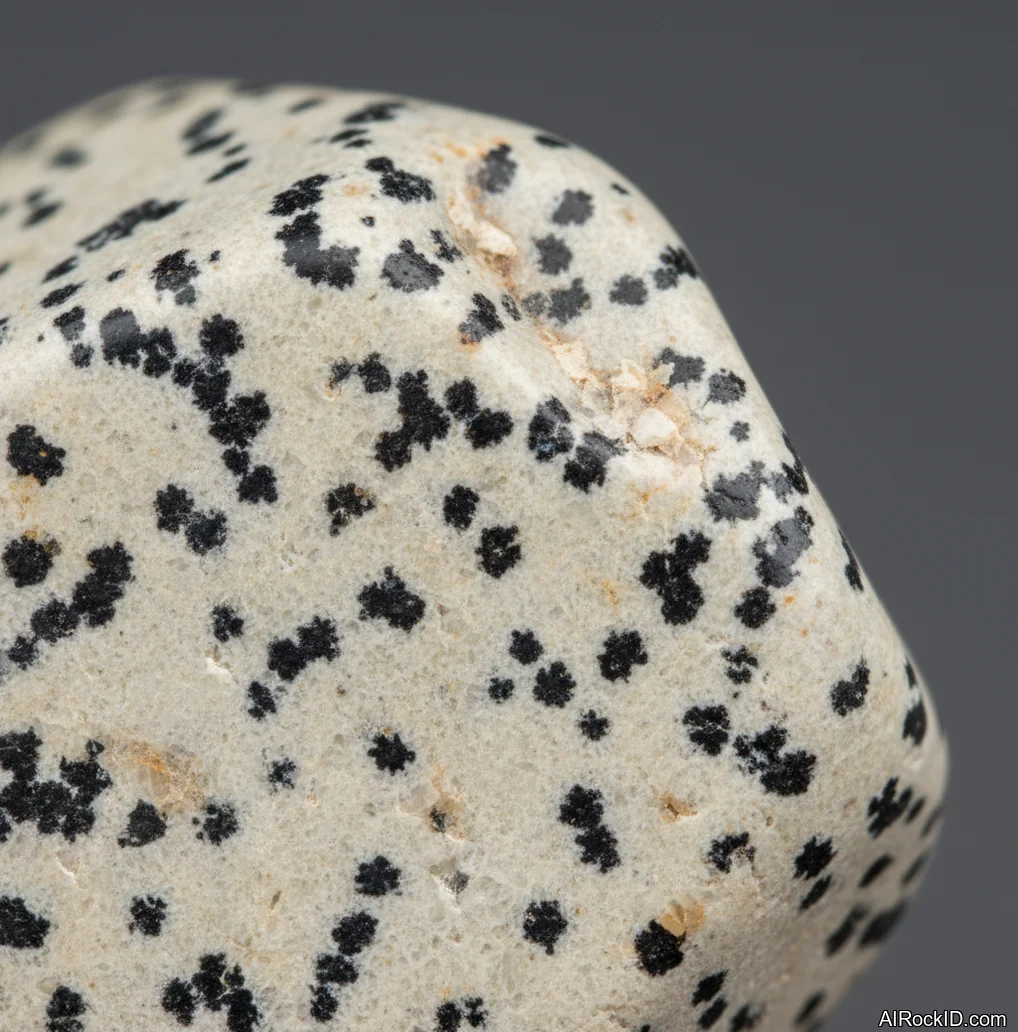
Kiwi Jasper is an opaque, fine-grained jasper (microcrystalline quartz). It’s usually a pale gray to gray-green stone with those peppery black speckles, plus the occasional tan or rust-colored patch.
Grab a tumbled piece and you can feel that familiar quartz heft right away. Not heavy like hematite. But it also won’t give you that weird “plasticky” vibe some dyed stones do. The pattern is the whole reason people pick it up in the first place: tiny black dots and little smudges that honestly look like kiwi seeds, and sometimes you’ll catch softer cloudy zones that remind me of lichen on a rock (the kind you’d find on a damp trail).
Most of the stuff you see for sale is polished. Raw chunks are out there, but they’re often kind of blocky and, well, quiet-looking until somebody gives them a decent cut and polish. And yeah, despite the name, it’s usually not from New Zealand. That one gets people every time at shows.
Origin & History
“Kiwi jasper” is a trade name that really caught on in the late 20th century, right when beads and tumbled stones started selling like crazy. But it was never “described” as a formal mineral the way something like spodumene was, because this is a rock name tied to a certain look and pattern, not one strict composition.
Thing is, the name’s basically marketing shorthand. Sellers leaned hard into the kiwi fruit idea: that pale inside, then those black, seed-like specks you can spot the second you dump a handful of tumbled pieces into a tray. And you’ll hear “sesame jasper” tossed around in the same bins too, usually for the same material or something extremely close.
Where Is Kiwi Jasper Found?
Most commercial Kiwi Jasper on the market is imported and sold under a trade name, with common supply coming through Asian lapidary channels. It’s also widely distributed through rock shops in the USA.
Formation
Jasper is basically silica that never bothered to form big, showy crystals. It’s microcrystalline quartz and chalcedony instead, and that material can fill little gaps, replace whatever was there first, or glue sediments together, and the end result is hard and opaque.
Those speckles you see in Kiwi Jasper? They’re usually tiny inclusions or small patches of darker minerals that got trapped in the silica while it was coming together.
Look, if you hold a polished face under a bright desk lamp and tilt it back and forth, the surface has this super-fine texture, almost like sugar, except it’s packed in and doesn’t move. That tight grain is why it takes such a clean shine. But there’s a catch. If the black spots are softer than the surrounding quartz, the polish can “undercut” those areas, and some cabochons end up with little low dips you can actually catch with a fingernail (kind of annoying once you notice it).
How to Identify Kiwi Jasper
Color: Base color ranges from off-white to light gray and gray-green, usually with scattered black speckles and occasional tan, cream, or rusty patches. Patterns are mottled and random rather than banded.
Luster: Waxy to vitreous when polished, dull when raw.
If you scratch it with a steel nail, it shouldn’t mark easily, and it’ll scratch common window glass. The real test is the feel: polished Kiwi Jasper stays cool in your hand for a while, unlike resin or dyed composite pieces that warm up fast. And check the speckles with a loupe, natural spots look embedded and irregular, while printed or coated fakes can look too crisp or sit on the surface.
Properties of Kiwi Jasper
Physical Properties
| Crystal System | Trigonal |
| Hardness (Mohs) | 6.5-7 (Hard (6-7.5)) |
| Density | 2.58-2.65 |
| Luster | Waxy |
| Diaphaneity | Opaque |
| Fracture | Conchoidal |
| Streak | White |
| Magnetism | Non-magnetic |
| Colors | White, Gray, Gray-green, Black, Tan, Cream, Rust |
Chemical Properties
| Classification | Silicates |
| Formula | SiO2 |
| Elements | Si, O |
| Common Impurities | Fe, Mn, Al, Ca |
Optical Properties
| Refractive Index | 1.530-1.540 |
| Birefringence | 0.009 |
| Pleochroism | None |
| Optical Character | Uniaxial |
Kiwi Jasper Health & Safety
Kiwi Jasper is usually fine to handle, and it’s fine if it gets wet. But like any silica-rich rock, the real issue isn’t the stone in your hand, it’s the dust in your lungs. If you’re grinding it or cutting it with a saw and you see that chalky haze hanging in the air (and it’ll cling to your fingers), that’s the part you don’t want to breathe.
Safety Tips
If you need to cut it or sand it, keep it wet so you’re not kicking up a cloud of dust, and put on a properly fitted respirator that’s rated for fine particulates (the kind that actually seals to your face).
Kiwi Jasper Value & Price
Price Range
Rough/Tumbled: $3 - $20 per tumbled stone
Cut/Polished: $0.50 - $3.00 per carat
Price mostly comes down to the pattern and how well it’s been polished. A clean, pale base with crisp, peppery speckles (the kind that pop when you tilt it under a light and you can see the shine run across the surface) and not many pits will move way faster than the muddy gray stuff.
Durability
Durable — Scratch resistance: Good, Toughness: Good
It’s stable in normal household conditions, but polished surfaces can lose shine if they bang around with harder stones like corundum.
How to Care for Kiwi Jasper
Use & Storage
Tossing it in a bowl with harder gems will haze the polish over time. I keep my jaspers in soft bags or separated in a drawer tray.
Cleaning
1) Rinse with lukewarm water. 2) Use a mild soap and a soft toothbrush to lift skin oils from the polish. 3) Rinse again and pat dry with a clean cloth.
Cleanse & Charge
If you do the metaphysical side, a quick rinse and a night on a dry windowsill away from harsh sun is plenty. Avoid salt baths if the piece has pits that trap residue.
Placement
It reads best under natural light where the speckles pop. On a desk, it’s the kind of stone you end up rubbing with your thumb while you think.
Caution
Skip harsh cleaners and ultrasonic machines. They can dull the surface, and they’ve got a nasty habit of turning up tiny fractures you didn’t even know were there. And if your piece is porous or really pitted, make sure it’s dried well after washing, especially down in those little pinholes where water likes to hang around.
Works Well With
Kiwi Jasper Meaning & Healing Properties
Look at Kiwi Jasper for a second and you’ll get why people call it a “calm” stone. The colors stay soft, kind of muted, and the speckles keep it from looking like a flat slab of paint. When I’m standing at the counter sorting a tray of tumbles, it’s one of the few jaspers where my eyes stop bouncing around and my brain drops down a gear just from the patterning.
In crystal-healing circles, folks usually reach for it to steady emotions and take the edge off everyday stress. It’s more of a supportive, background kind of stone than a big, dramatic “your whole life changes today” one. And yeah, I’ve had customers pick it out on purpose for desk work or studying because it doesn’t feel intense. But keep your feet on the ground. It’s not medicine, and it’s not a substitute for real help if you’re dealing with anxiety or sleep issues.
One practical thing, from handling a lot of it: smooth Kiwi Jasper works really well in a worry-stone shape. The polish usually comes out satiny instead of that super slick, glassy finish, so your thumb actually grips and doesn’t skid off. But if you’re buying online, expect a few little pits here and there (tiny pinholes, basically). Normal. That’s just what happens with jasper that has mixed inclusions.
Identify Any Crystal Instantly
Snap a photo and get properties, value, care instructions, and healing meanings in seconds.