Moss Agate
What Is Moss Agate?
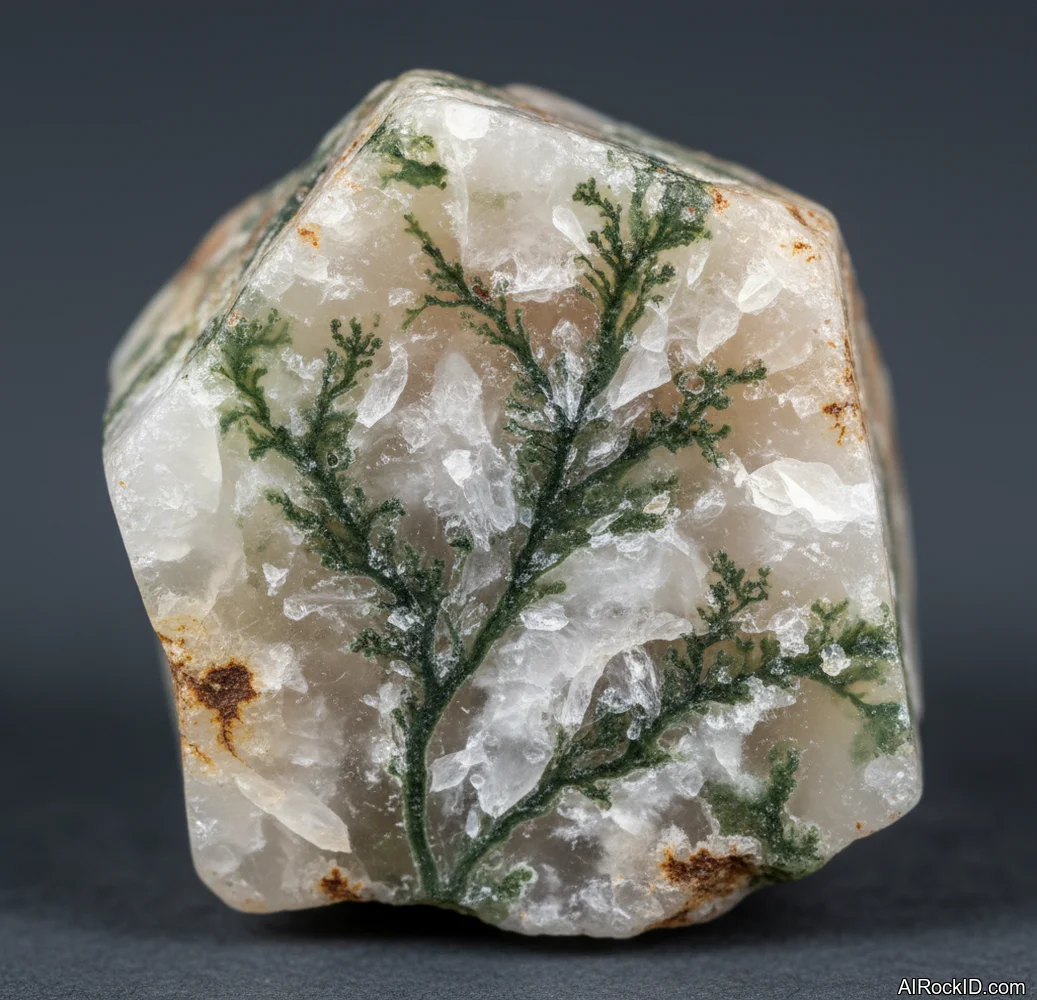
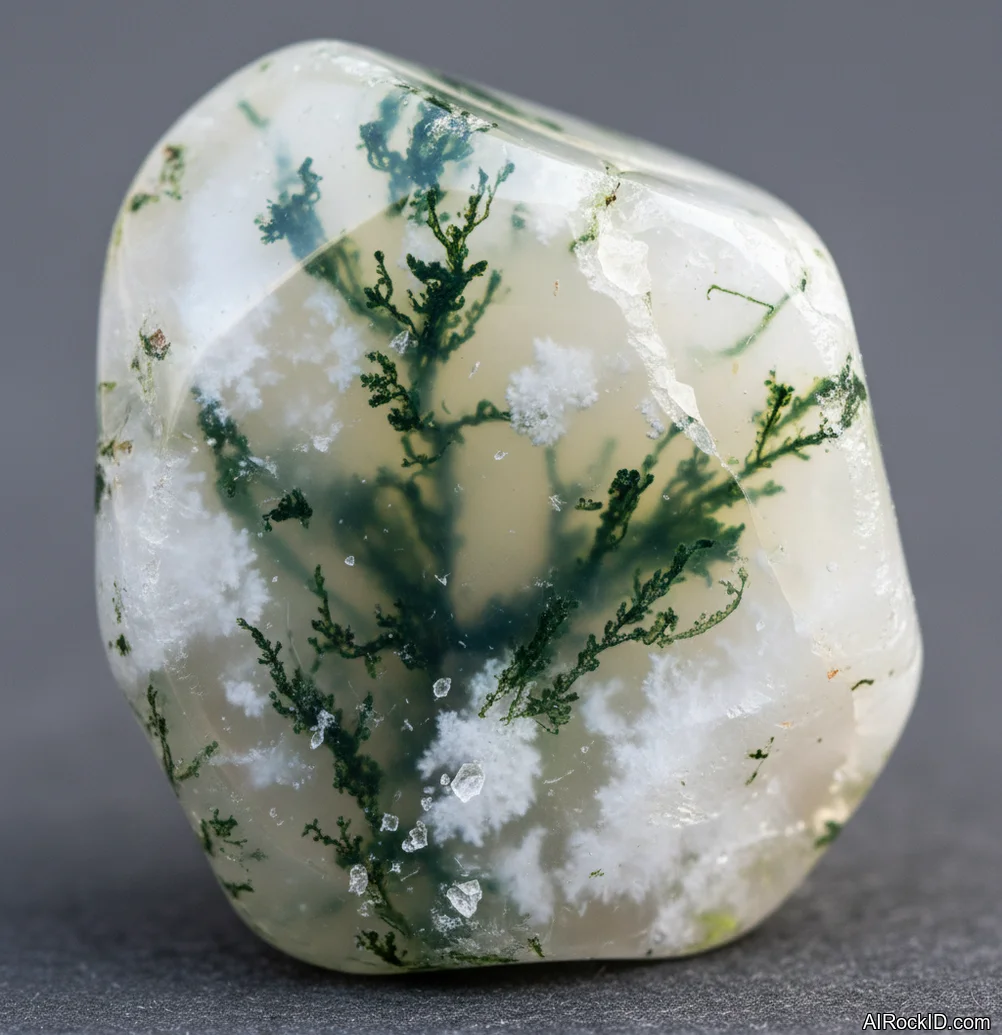
Moss agate is a translucent chalcedony (microcrystalline quartz) with those green, brown, or black, mossy-looking inclusions, usually from iron or manganese minerals. The first time you see it, it honestly looks like somebody sealed a tiny patch of forest inside clear quartz. But then you tilt it in your hand and realize the “moss” isn’t smeared on the outside at all. It’s floating inside the stone.
Grab a palm stone and the first thing you notice is the temperature. It stays cool longer than glass or resin, even after it’s been sitting in your pocket for a bit, and polished chalcedony has that slick, almost soapy feel under your thumb (hard to describe until you’ve felt it). Some pieces photograph kind of muddy, then you stick them under a bright desk lamp and suddenly they wake up. And the really good ones have depth. You can see the inclusions sitting at different levels, not just one flat layer.
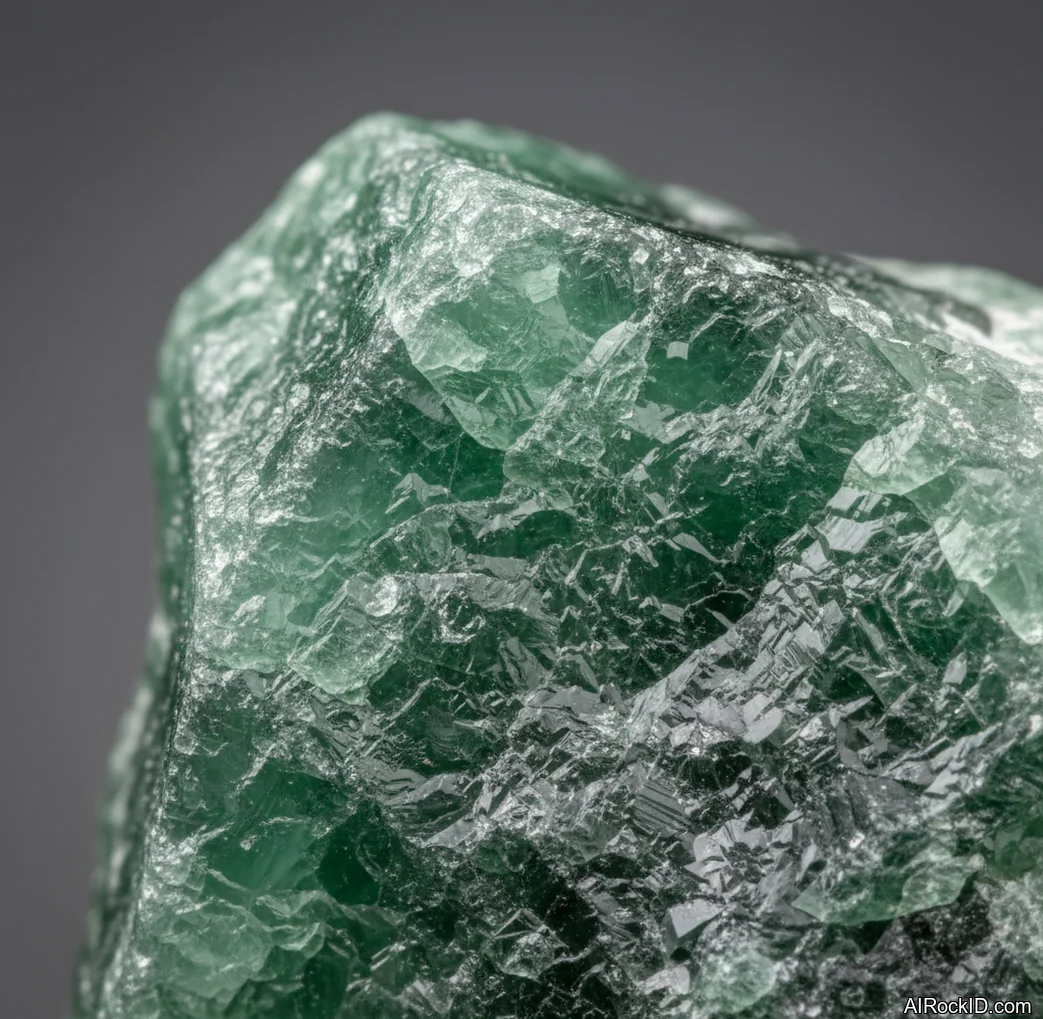
But here’s the thing: a lot of what gets sold as moss agate is dyed crackle agate, or low-grade chalcedony with green dye forced into fractures. The pattern ends up loud and flat, and the color pools in the cracks like a highlighter line. Real moss agate looks more natural and a little uneven, like actual plant growth. Kind of messy. In a good way.
Origin & History
Look at the name for a second and you’ll realize it’s more of a description than a location. “Moss” is literally about those fuzzy green inclusions you can spot when you tilt the stone under a lamp, and “agate” is there because it’s chalcedony that’s usually patterned, even if it doesn’t always show the classic banding people expect from agate. Not every piece has stripes. Some just… don’t.
And “Mocha stone”? That’s older trade talk tied to material that passed through the port of Mocha in Yemen. It wasn’t necessarily mined there, but the shipping route name stuck, and you’ll still see “mocha” show up on old labels at shows and in antique jewelry descriptions. Funny how a port name can cling like that, right?
Where Is Moss Agate Found?
Most of the moss agate you’ll run into comes from India and Madagascar, with classic collector material from Montana in the USA. Brazil and Russia also produce solid lapidary-grade pieces.
Formation
Next to a big, glassy clear quartz point, moss agate comes together in a much quieter, slower way. Silica-rich fluids seep into little cavities and hairline fractures in volcanic rock or in sedimentary settings, then they gel up into chalcedony. Given enough time, that gel hardens into microcrystalline quartz.
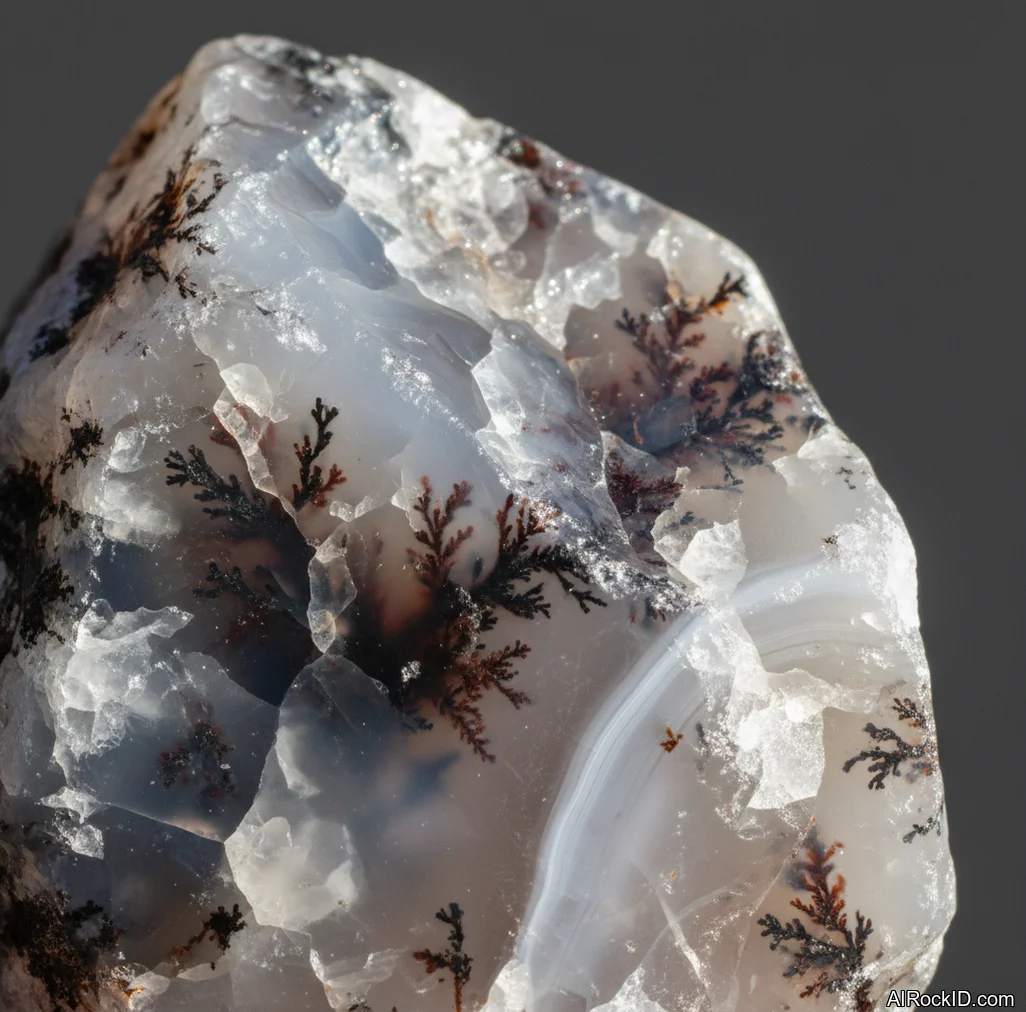
And those “moss” shapes? They’re inclusions, not actual plant fossils. Iron and manganese oxides (and sometimes chlorite or hornblende-like minerals) grow while the silica is setting, spreading out in branching or feathery patterns. If you’ve ever cut a piece, you can literally run into a layer where the dendrites just stop dead, then they start back up again in the next band. It feels weirdly abrupt. Like flipping pages in a book.
How to Identify Moss Agate
Color: Body color runs from milky white to grayish translucent, with green most common for the inclusions plus brown, red, or black branching patches. Some material has a bluish chalcedony base that makes the green look deeper.
Luster: Waxy to vitreous, especially on a fresh polish.
The real test is depth. Tilt it under a single strong light and the inclusions should look like they’re inside the stone, not painted on top. If you scratch it with a steel blade you shouldn’t get much, but it will scratch glass because it’s quartz-based. Cheap versions often have dye sitting in cracks, and you can spot it as bright color that follows fracture lines and looks too uniform.
Properties of Moss Agate
Physical Properties
| Crystal System | Trigonal |
| Hardness (Mohs) | 6.5-7 (Hard (6-7.5)) |
| Density | 2.58-2.64 g/cm3 |
| Luster | Waxy |
| Diaphaneity | Translucent |
| Fracture | Conchoidal |
| Streak | White |
| Magnetism | Non-magnetic |
| Colors | Colorless, White, Gray, Green, Brown, Black, Red |
Chemical Properties
| Classification | Silicates |
| Formula | SiO2 |
| Elements | Si, O |
| Common Impurities | Fe, Mn, Al, Ca |
Optical Properties
| Refractive Index | 1.530-1.543 |
| Birefringence | 0.009 |
| Pleochroism | None |
| Optical Character | Uniaxial |
Moss Agate Health & Safety
Moss agate is non-toxic, so it’s safe to handle. But it’s still a silica stone, and that fine powder you get when you cut or grind it can hang in the air and end up in your lungs, so don’t breathe the dust.
Safety Tips
If you’re shaping it, keep the dust down with a little water, make sure you’ve got real airflow moving through the space, and wear a proper respirator that’s actually rated for silica dust.
Moss Agate Value & Price
Price Range
Rough/Tumbled: $5 - $80 per piece
Cut/Polished: $0.50 - $8 per carat
Price jumps when you’ve got those crisp, stacked dendrites, that clean see-through look, and cutting that actually has some life to it when you tilt it in your hand. But if the base material is cloudy and the inclusions read kind of flat, it usually stays cheap, even when the pieces are big.
Durability
Durable — Scratch resistance: Good, Toughness: Good
It’s stable quartz, but polished pieces can dull if they bang around with harder stones in a pocket or a mixed tumbler jar.
How to Care for Moss Agate
Use & Storage
Store it in a pouch or a separate compartment if it’s polished, because chalcedony picks up tiny scuffs that show under bright light. Raw chunks are tough, but they’ll still chip on sharp edges if you toss them in a drawer.
Cleaning
1) Rinse with lukewarm water and a drop of mild soap. 2) Use a soft toothbrush to get into pits or druzy pockets. 3) Rinse well and pat dry; skip harsh cleaners and long soaks if the piece has porous spots.
Cleanse & Charge
A quick rinse and a wipe is fine for physical cleaning; for a ritual reset, people use moonlight or set it on a piece of clear quartz. Keep it out of direct sun for long stretches if you’ve got a dyed piece, because dye can fade.
Placement
Looks best where light can pass through the edges, like a windowsill with indirect light or a shelf near a lamp. On a dark shelf it can read as just gray until you pick it up.
Caution
Don’t use an ultrasonic cleaner if the stone has fractures, little pits, or any druzy spots. And skip bleach and acids entirely. Thing is, if you think it might be dyed, don’t let it sit in water for hours either.
Works Well With
Moss Agate Meaning & Healing Properties
Grab moss agate when you’re over the flashy stuff and just want a stone that feels solid. I’ve sold a bunch of it to gardeners and hikers who like the whole vibe, and honestly, that checks out the second you look at it: earthy, layered, kind of alive, but it’s not shouting for attention.
In crystal lore, people link it to grounding, growth, and calming the nervous system down a notch. I take that as a personal-practice thing, not medical care. When I’m stressed, I’ll toss a smooth piece in my pocket, and yeah, I end up rubbing it with my thumb without even thinking. The surface has that cool, waxy-polished feel, and the pattern gives your eyes somewhere to roam. For a while.
But don’t assume every piece is going to land the same. Some are basically white chalcedony with a couple little wisps, and they feel sort of empty in your hand (you know what I mean?). The ones people actually bond with usually have strong dendrites and real depth, and those are the pieces you catch yourself staring at under a lamp at 11 pm, turning it slightly to see what shows up next.
Identify Any Crystal Instantly
Snap a photo and get properties, value, care instructions, and healing meanings in seconds.