Mimetite
What Is Mimetite?
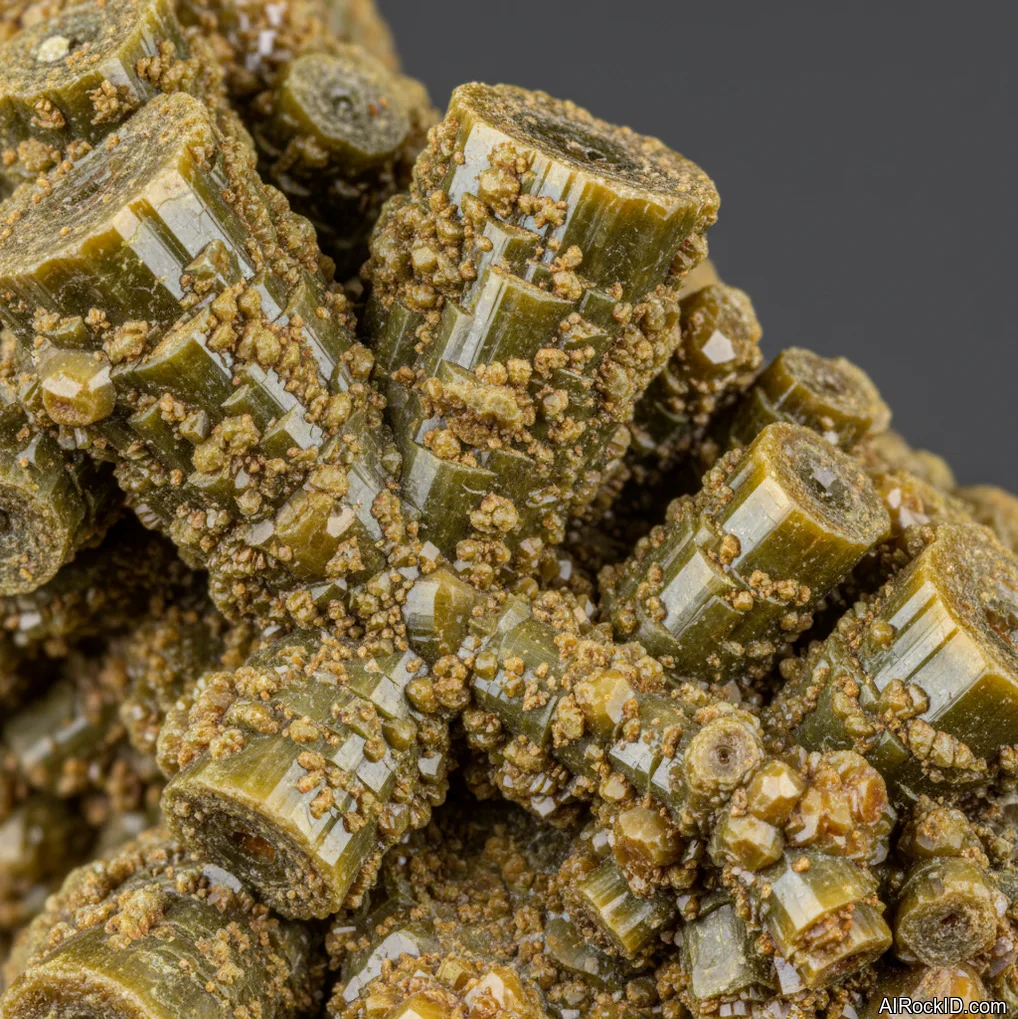
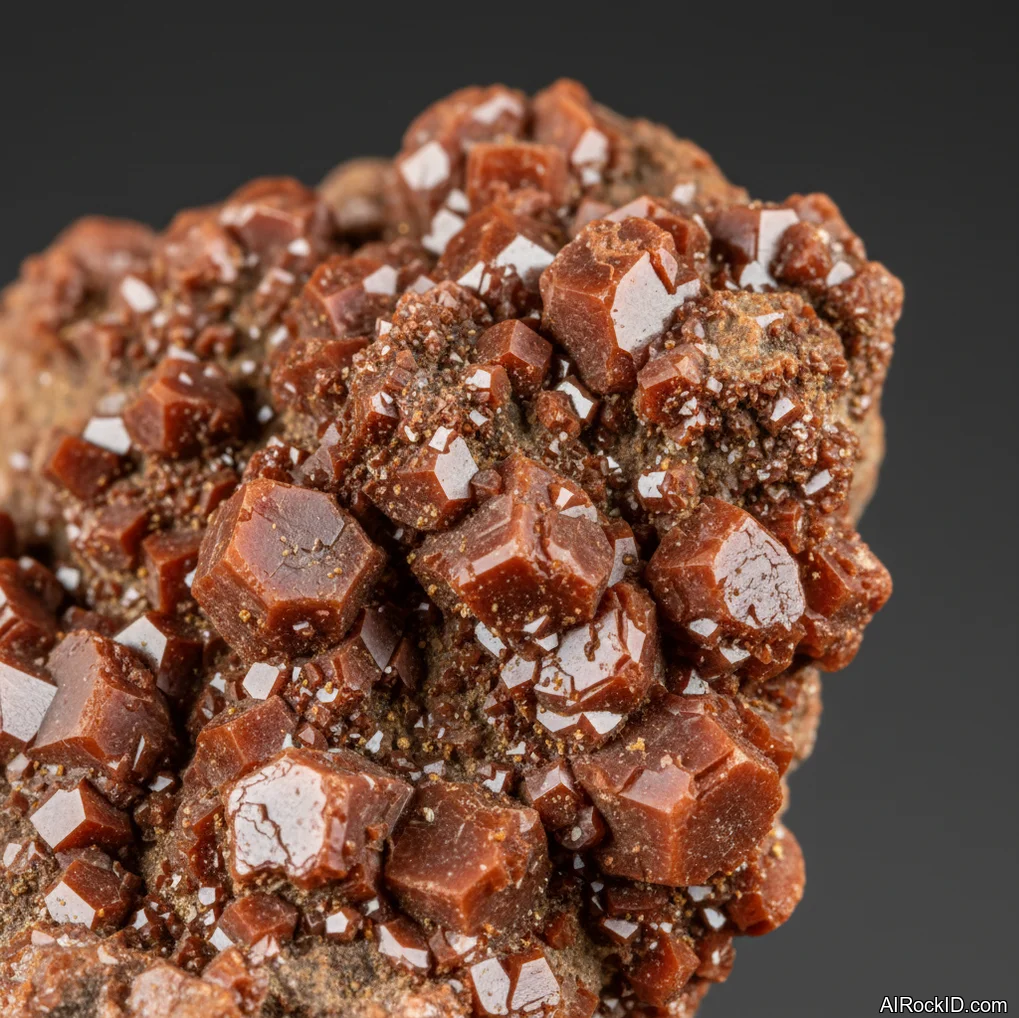
Mimetite is a lead arsenate chloride mineral in the apatite group, with the formula Pb5(AsO4)3Cl. Most folks run into it as tiny hexagonal barrels or stubby prisms, usually honey-yellow or orange, or that waxy lemon shade that looks kind of fake until you tilt it under a lamp and it suddenly makes sense.
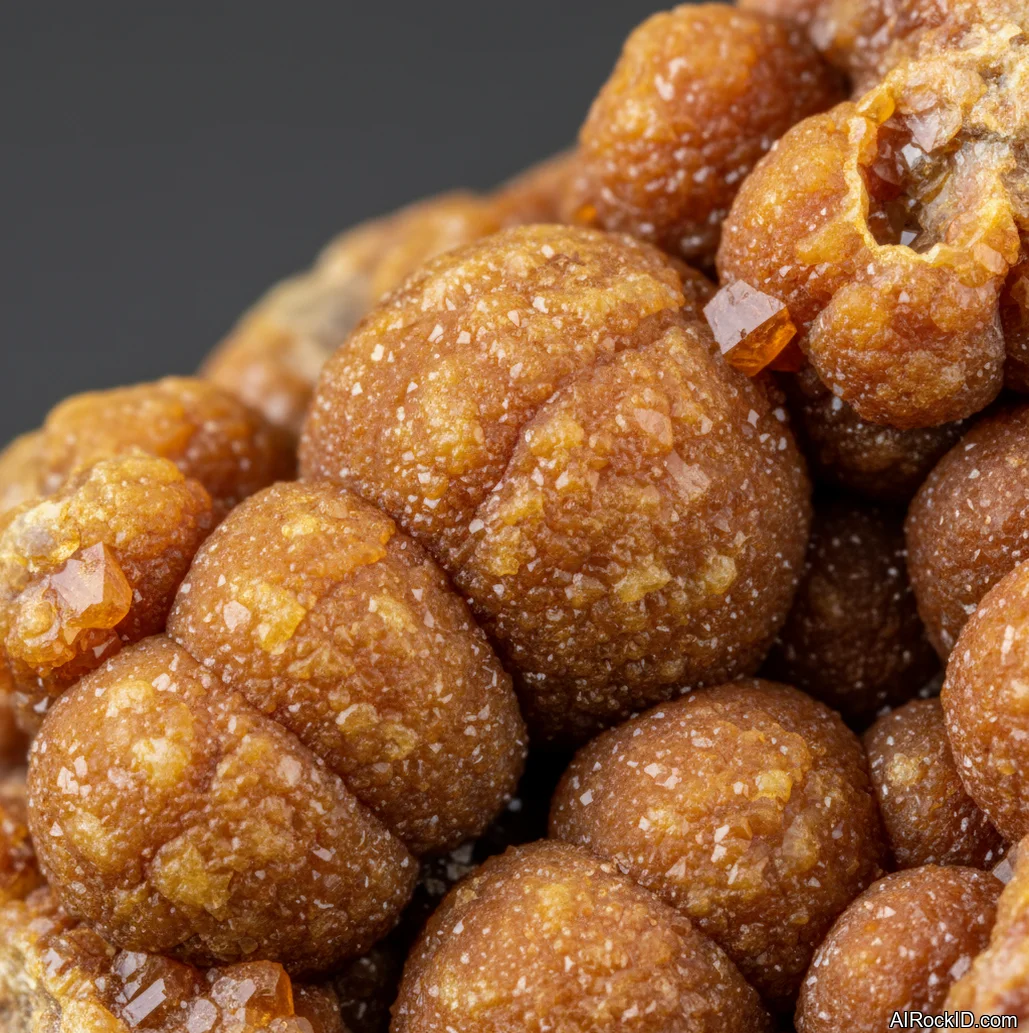
Hold a decent cabinet piece and the first thing that hits you is the heft. It feels weirdly heavy for its size, like it wants to sink into your palm, and that lead content gives it a “dense” punch collectors learn to clock pretty quickly. But it isn’t always crystal faces and neat little shapes. I’ve handled botryoidal mimetite that really does feel like a bunch of tiny grapes, slick on the high spots, then gritty and scratchy right around the edges where the crust runs into the matrix (that sandy transition zone gives it away).
At a glance, mimetite gets mixed up with pyromorphite all the time, and yeah, I get it. Same group, similar habits, and the colors can overlap. Thing is, the mimetite I keep seeing at shows tends to skew more yellow to orange, and the crystals often read a little more barrel-like, while a lot of the pyromorphite people chase is greener and looks chunkier. How many times have I heard someone call it wrong across a table? Plenty.
Origin & History
In 1832, François Sulpice Beudant pinned mimetite down as its own species. The name traces back to the Greek “mimētēs,” which means “imitator,” and that fits because it can look an awful lot like other lead minerals, especially pyromorphite.
Old specimen labels? Total chaos sometimes. You’ll run into “campylite” on vintage pieces, usually the kind with those curved, barrel-ish crystals that catch the light differently when you tilt the thumbnail-sized cluster in your hand. And yeah, some dealers still use the name. But if you’re buying, ask what they based the ID on, because people mix up mimetite and pyromorphite both ways.
Where Is Mimetite Found?
Mimetite turns up in oxidized zones of lead deposits worldwide, especially where arsenic is around. Classic collector material comes from Mexico, Namibia, Morocco, and parts of Europe.
Formation
Look for mimetite in lead ore bodies that’ve been weathered and cracked open to oxygen and groundwater. It’s a secondary mineral, the sort of stuff that shows up after the primary sulfides start falling apart. You’ll usually spot it hanging out with goethite, limonite, cerussite, smithsonite, and sometimes that bright green copper-mineral mash that (let’s be honest) makes any piece look better once it’s on a shelf.
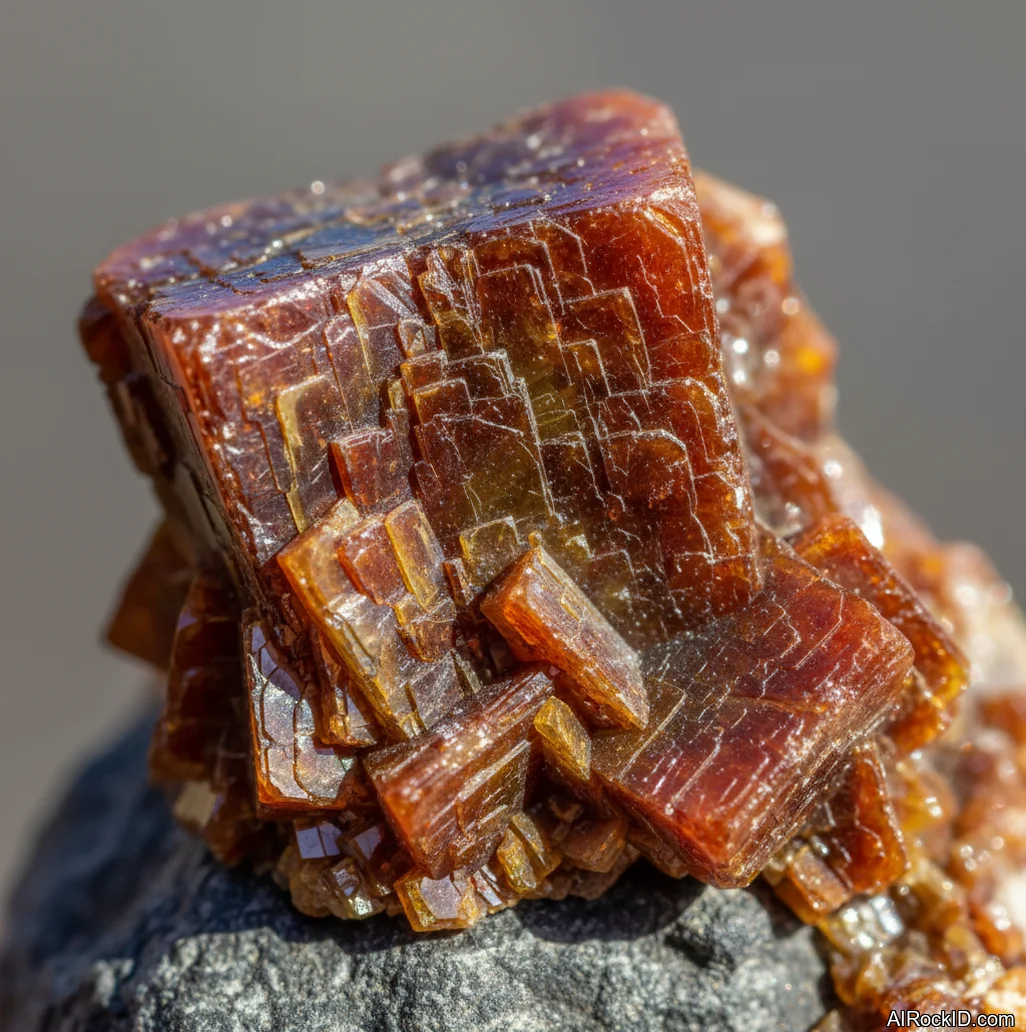
Thing is, the basic recipe doesn’t change: you need lead plus arsenate in an oxidizing setting, with a little chloride around. It might paint a thin crust along fractures, sit in vugs, or straight-up replace earlier minerals. And the best crystals I’ve seen were perched on dark iron oxides, where that gritty brown-black base makes the yellow-orange color punch hard even when the crystals are tiny. Who doesn’t love that kind of contrast?
How to Identify Mimetite
Color: Common colors run yellow, honey, orange, and brownish orange, with occasional greenish or whitish material. The tone can shift a lot under warm indoor lighting versus daylight.
Luster: Usually resinous to vitreous, sometimes a bit waxy on botryoidal pieces.
Pick up the piece and trust your sense of heft. For its size, mimetite often feels surprisingly heavy compared to most yellow minerals at a show table. Look closely at crystal shape too: short hexagonal prisms and rounded “barrels” are a very typical habit. The problem with eyeballing it is pyromorphite can look nearly identical, so if it really matters, you want a label from a trusted source or an analytical ID.
Properties of Mimetite
Physical Properties
| Crystal System | Hexagonal |
| Hardness (Mohs) | 3.5-4 (Soft (2-4)) |
| Density | 7.0-7.2 g/cm3 |
| Luster | Resinous |
| Diaphaneity | Transparent to translucent |
| Fracture | Uneven |
| Streak | White |
| Magnetism | Non-magnetic |
| Colors | Yellow, Orange, Honey, Brown, Greenish-yellow, White |
Chemical Properties
| Classification | Phosphates (Arsenates, Vanadates) |
| Formula | Pb5(AsO4)3Cl |
| Elements | Pb, As, O, Cl |
| Common Impurities | P, V, Ca |
Optical Properties
| Refractive Index | 2.13-2.16 |
| Birefringence | 0.03 |
| Pleochroism | None |
| Optical Character | Uniaxial |
Mimetite Health & Safety
Don’t grind, sand, or drill mimetite, and don’t treat it like some pocket stone you rub smooth all day. The dust gets everywhere, like that fine grit that sticks to your fingertips and sneaks under your nails. So wash your hands after you handle it (soap, not just a quick rinse), keep it out of food areas, and don’t leave it where kids can get to it.
Safety Tips
Try not to kick up dust, keep it in a case, and don’t clean it with water. And if you’ve gotta handle a bunch of old, dusty pieces, wear gloves (the thin ones that still let you feel what you’re doing) and wash your hands afterward.
Mimetite Value & Price
Price Range
Rough/Tumbled: $20 - $600 per specimen
Cut/Polished: $30 - $200 per carat
Prices climb fast when the crystals are sharp, not chipped, and the color’s solid, especially if they’re sitting on a contrasting matrix and there’s a clear locality label you can actually trust. And even the tiny stuff can cost a lot if the specimen’s clean, the faces look crisp up close, and the whole piece just sits right in the hand (no crumbs, no weird gaps).
Durability
Fragile — Scratch resistance: Fair, Toughness: Poor
It’s stable in normal display conditions, but the crystals can chip easily and don’t love rough handling.
How to Care for Mimetite
Use & Storage
Keep mimetite in a closed display case or a specimen box, ideally with padding so crystals don’t rattle. I separate it from harder specimens because one bump from quartz can leave little bruises on the crystal edges.
Cleaning
1) Use a soft, dry brush to lift loose dust. 2) Blow out crevices with a bulb blower or canned air held at a distance. 3) If grime won’t budge, spot-clean the matrix carefully with a barely damp cotton swab, avoiding the crystals and then letting it air-dry fully.
Cleanse & Charge
If you do any metaphysical-style cleansing, stick to smoke, sound, or leaving it near but not in salt. Skip water and salt baths for safety and to protect the surface.
Placement
A shelf with stable temperature and no direct sun is best, and somewhere it won’t get bumped. I like it at eye level because the resinous luster shows off when light hits from above.
Caution
Thing is, this contains lead and arsenic. So don’t use it in elixirs. Don’t drop it into water you plan to drink either. And if a piece is chipped or cracked and you can see that fine, chalky dust coming off when you handle it, avoid breathing that dust in.
Works Well With
Mimetite Meaning & Healing Properties
In crystal circles, people love to label mimetite a “motivation” or “manifesting” stone. Mostly it’s because of that loud yellow-orange color, the kind your brain automatically connects with momentum and getting stuff done. That’s the whole vibe.
But keep your feet on the ground: mimetite is a lead arsenate. So no, I wouldn’t carry it in your pocket, tuck it under your pillow, or dunk it into anything water-based for a ritual. Just don’t.
When you pick up a clean cluster, it doesn’t feel like a cozy, soothing stone at all. It’s more of a little jolt. Bright. Slightly hectic. Your eyes bounce around the piece because there’s so much visual chatter going on (all those tiny crystal faces catching the light at different angles).
And honestly, the most “real” effect I notice is how it snaps me into attention. When I’m sorting flats at a show, mimetite is one of the few minerals that makes me pause, refocus, and actually think through what I’m about to do with my money. Do I want it, or am I just dazzled? That’s a pretty solid “focus” moment, even if you’re not into anything mystical.
If you still want to work with it symbolically, treat it like a display buddy. Put it on your desk where you’ll see it while you plan, budget, or write. Wash your hands after handling it, and keep your fingers away from your face. Basic safety stuff.
And if what you really want is that same sunny color energy without the chemistry baggage, citrine or yellow calcite will scratch that itch with a lot less stress.
Identify Any Crystal Instantly
Snap a photo and get properties, value, care instructions, and healing meanings in seconds.