Vanadinite
What Is Vanadinite?
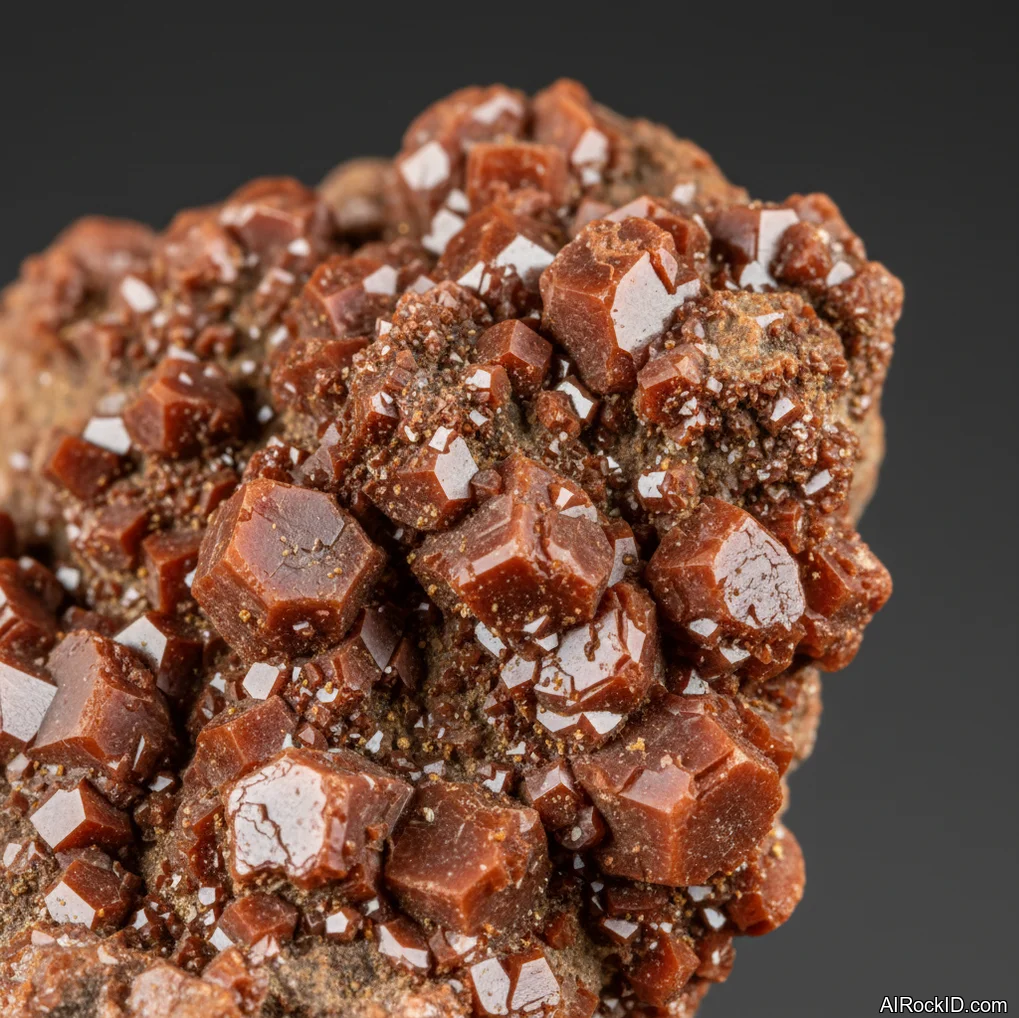
Vanadinite is a lead chlorovanadate mineral, Pb5(VO4)3Cl, and it shows up as bright red to orange hexagonal crystals.
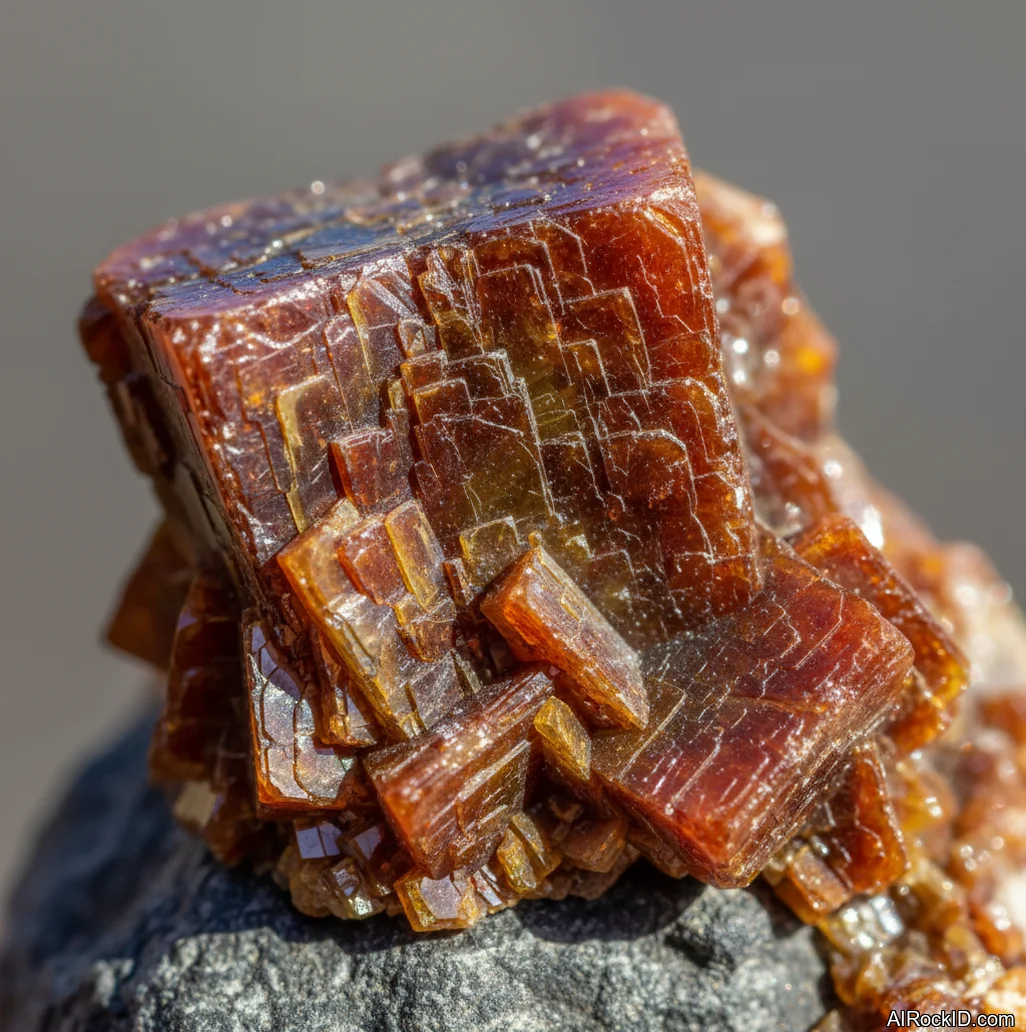
First time you see it, it honestly looks like someone glued a bunch of red sugar cubes onto a rock. But then you actually pick a piece up and, wow, it’s got weight. Even a small cabinet specimen feels weirdly dense for how big it is, and the crystals have this glossy, almost candy-like shine that catches light fast when you tilt it in a display case.
Look, get your face in close and you’ll see why collectors go after it. The crystals are usually short hexagonal prisms with flat terminations. Sometimes you’ll spot hopper faces. Sometimes they’re stacked up like tiny barrels, one on top of another (and it’s hard not to stare). But don’t treat it like a pocket stone. A lot of vanadinite edges can be kind of crumbly, and if it’s perched on a soft matrix, even a small bump can knock crystals loose.
Origin & History
Most dealers will tell you vanadinite got its name from vanadium, and yeah, that’s true. The mineral species was described in 1838, and the name actually traces back to Vanadis, an old name for the Norse goddess Freyja. That’s the same place vanadium got its name, too.
Back in the 1800s, it mattered for a practical reason: it was a clear marker for vanadium in lead deposits. These days the “history” you notice is really a market thing. Moroccan material basically set the modern look people expect, with those bright, punchy crystals you see in photos, while older Southwest US pieces tend to read quieter, more subtle, and kind of earthy in hand.
Where Is Vanadinite Found?
It turns up in oxidized lead deposits worldwide, but most showy collector crystals on the market come from Morocco and parts of Mexico and the US Southwest.
Formation
Raw chunks from oxidized lead districts really do tell the whole story. Vanadinite shows up in the oxidation zone of lead ore bodies, right where lead minerals get changed near the surface and vanadium-bearing fluids are in the mix. You’ll spot it hanging out with galena’s “afterlife” minerals: cerussite, anglesite, wulfenite, and, every now and then, mimetite.
Quartz can grow just about anywhere. Vanadinite? Not so much. It wants arid or well-ventilated oxidation conditions where those bright vanadate minerals can stick around instead of getting rinsed out. And because it’s heavy and soft, the crystals that survive in one piece usually formed in sheltered pockets (little protected voids), not in spots that got crushed up and reworked.
How to Identify Vanadinite
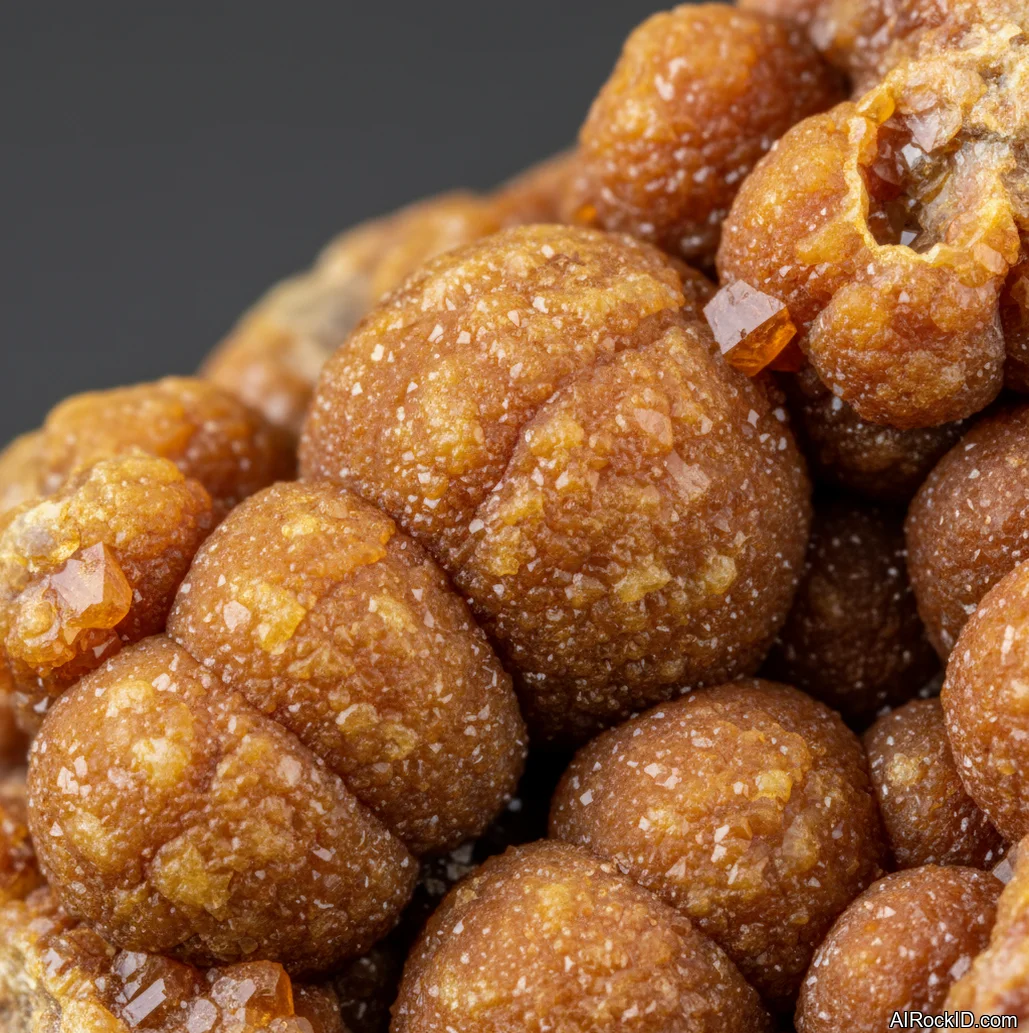
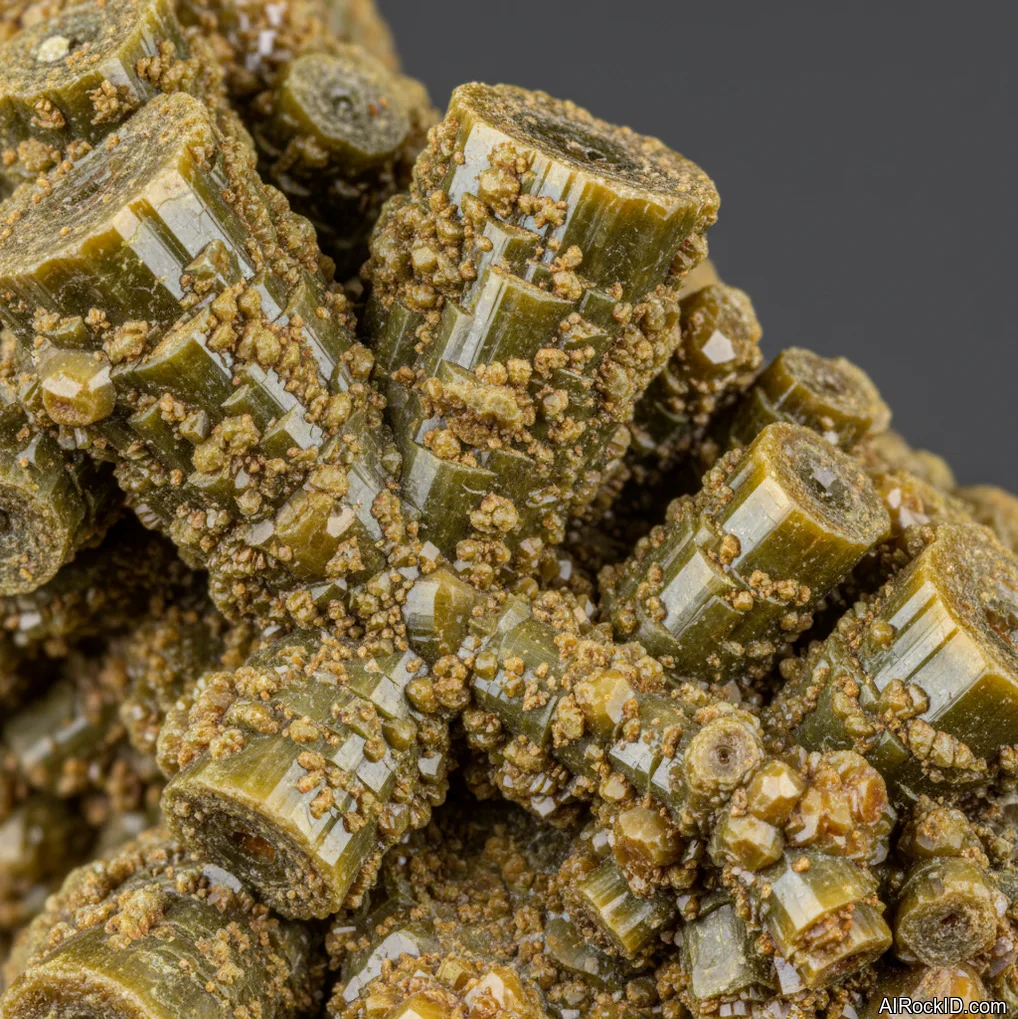
Color: Most pieces are red, orange-red, or rusty orange, sometimes drifting into brown. Some localities kick out honey-yellow to tan crystals, but the classic look is that traffic-cone red.
Luster: Vitreous to resinous, often with a glossy “wet” look on fresh crystal faces.
Pick up a specimen and compare the weight to something similar-sized like calcite. Vanadinite feels surprisingly heavy because of the lead content. If you scratch it with a copper coin, it can mark, since it sits around Mohs 2.5 to 3. The problem with lookalikes is mimetite and pyromorphite, so if you’re buying serious pieces, ask the dealer if it’s been tested and whether the ID is from the seller or a lab.
Properties of Vanadinite
Physical Properties
| Crystal System | Hexagonal |
| Hardness (Mohs) | 2.5-3 (Soft (2-4)) |
| Density | 6.6-7.2 g/cm3 |
| Luster | Resinous |
| Diaphaneity | Transparent to translucent |
| Fracture | Uneven |
| Streak | white to pale yellow |
| Magnetism | Non-magnetic |
| Colors | red, orange, orange-red, brown, yellow, tan |
Chemical Properties
| Classification | Vanadates |
| Formula | Pb5(VO4)3Cl |
| Elements | Pb, V, O, Cl |
| Common Impurities | As, P, Ca, Fe, Zn |
Optical Properties
| Refractive Index | 2.00-2.18 |
| Birefringence | 0.020-0.028 |
| Pleochroism | Weak |
| Optical Character | Uniaxial |
Vanadinite Health & Safety
It’s okay to put it on display and even pick it up for a minute if your hands are clean, but still treat it like any other lead mineral. So keep it away from kids and food areas, and don’t do anything that could create dust (no scraping or grinding).
Safety Tips
Wash your hands after you handle it, and don’t lick your fingers or rub your face without thinking. And whatever you do, don’t toss it in a tumbler, hit it with sand, or blast it with compressed air. Also, don’t soak it in water.
Vanadinite Value & Price
Price Range
Rough/Tumbled: $15 - $300 per specimen
Price mostly comes down to crystal size, color, and how clean the terminations are. Those sparkly red hexagonal crystals sitting on white barite from Morocco usually pull in more money than the darker ones with chipped tips on a plain brown matrix.
Durability
Fragile — Scratch resistance: Poor, Toughness: Poor
It’s stable sitting on a shelf, but the crystals chip easily and the fine dust is not something you want to breathe.
How to Care for Vanadinite
Use & Storage
Store it in a perky box or a cabinet where it won’t get bumped. I keep my nicer pieces in individual flats because crystals can shed if they rub against foam too hard.
Cleaning
1) Use a soft, dry artist brush to lift loose dust gently. 2) If you need more, use a barely damp cotton swab on the matrix only and avoid the crystal faces. 3) Let it air dry fully, then wash your hands.
Cleanse & Charge
If you do the metaphysical side, skip water and salt. I’ve had good luck with smoke, sound, or just setting it on a dry selenite plate for a bit.
Placement
A stable shelf is best, away from direct sun and vibration. Put it where it won’t get knocked over, because chipping is way more common than people expect.
Caution
Contains lead, so treat it like you would anything you don’t want in your body. Don’t ingest it, and don’t breathe the dust. And seriously, don’t use it in elixirs. Keep it out of reach of kids and pets. No soaking, either. If you’re thinking about cutting or grinding it, stop for a second, because that’s how you end up with fine dust everywhere. Only do that with proper PPE and good ventilation (mask on, goggles on, and don’t do it over the kitchen counter).
Works Well With
Vanadinite Meaning & Healing Properties
Pick up vanadinite and it honestly feels like a tiny brick. It’s got that dense, heavy-in-the-hand weight (the kind that makes your fingers notice), and I think that’s why people link it with focus and actually getting things done. When I’ve got one sitting on my desk, it reads like “stay on task” energy, not that floaty, dreamy vibe you get from something like celestite.
But look, the practical side matters. You don’t want to handle it nonstop. And you really don’t want it in water, or anywhere near food. So if your usual thing is sleeping with stones under your pillow or keeping them in your pocket all day, vanadinite is a bad pick. I treat it like a display ally: glance at it, hold it briefly, then put it back.
In the shop, I’ve noticed people reach for it when they’re burnt out, spinning too many plates, or trying to bulldoze through procrastination. That’s a vibe-based take, not medicine. If you’re dealing with attention issues, anxiety, or anything health-related, crystals aren’t for diagnosing or treating anything, and lead minerals especially shouldn’t be used in any “internal” way. Why risk it?
Identify Any Crystal Instantly
Snap a photo and get properties, value, care instructions, and healing meanings in seconds.