Pyromorphite
What Is Pyromorphite?
Pyromorphite is a lead chlorophosphate mineral with the formula Pb5(PO4)3Cl, and it forms down in the oxidation zone of lead ore deposits.
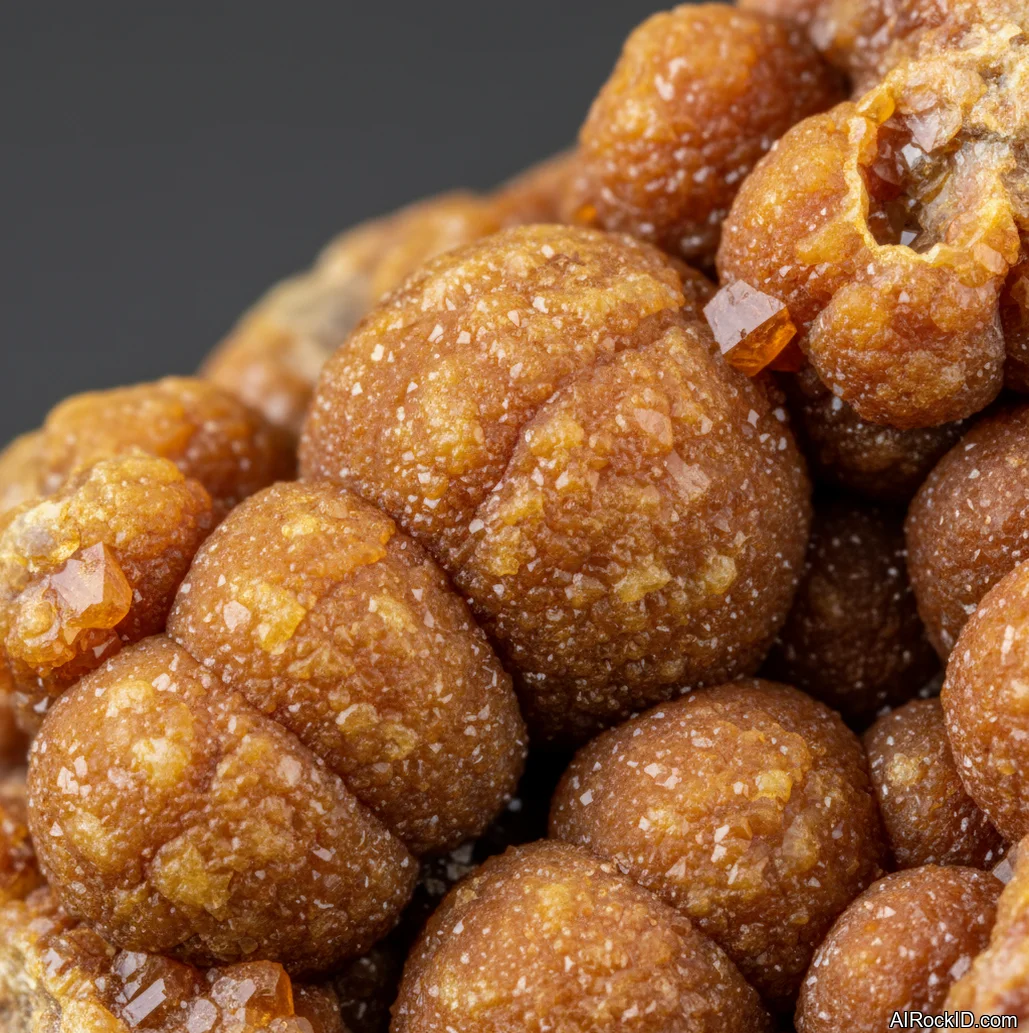
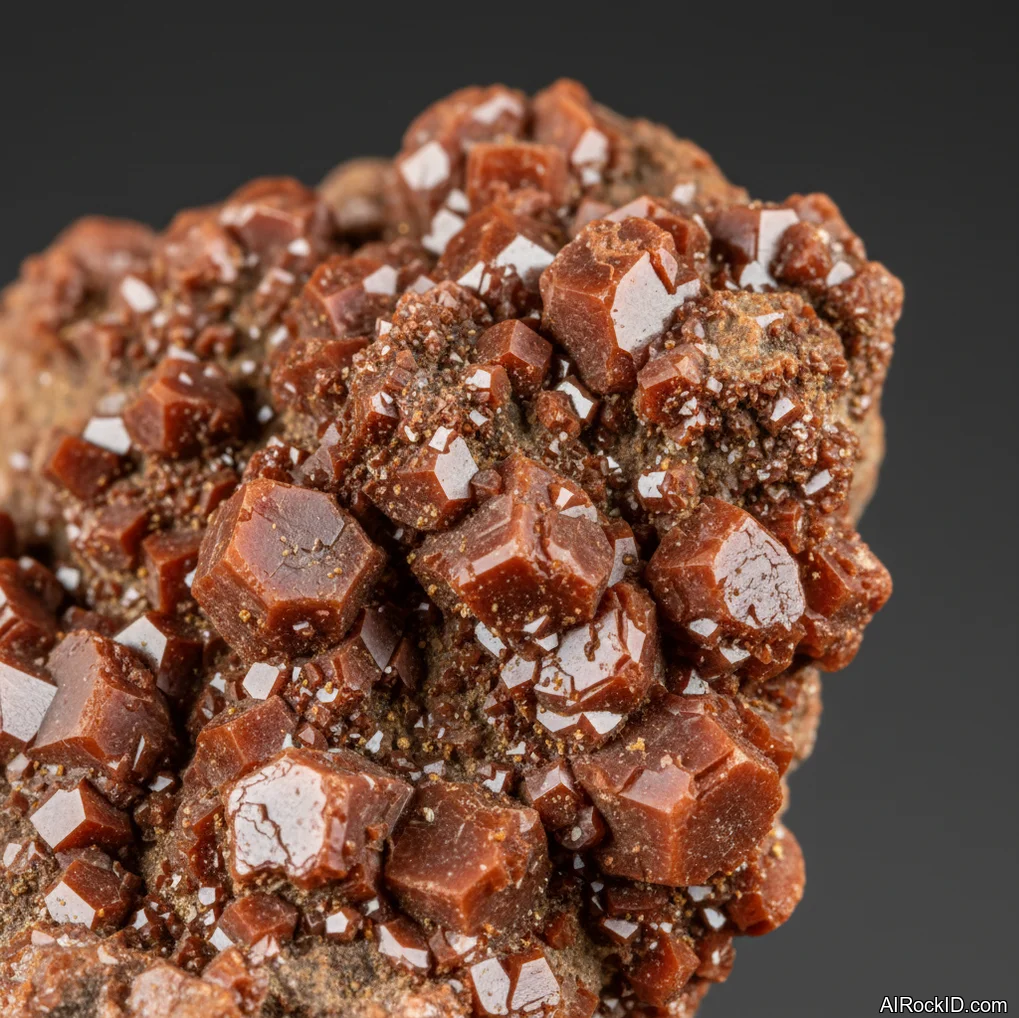
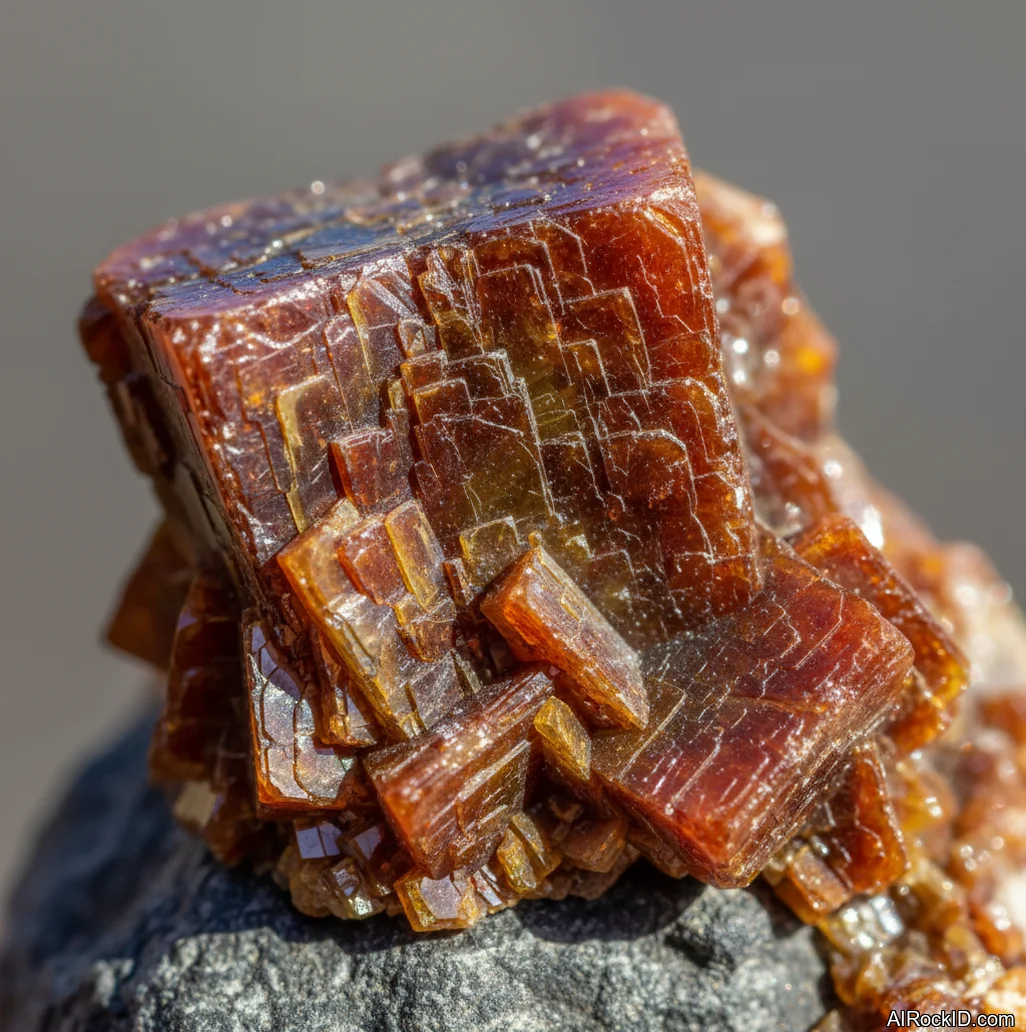
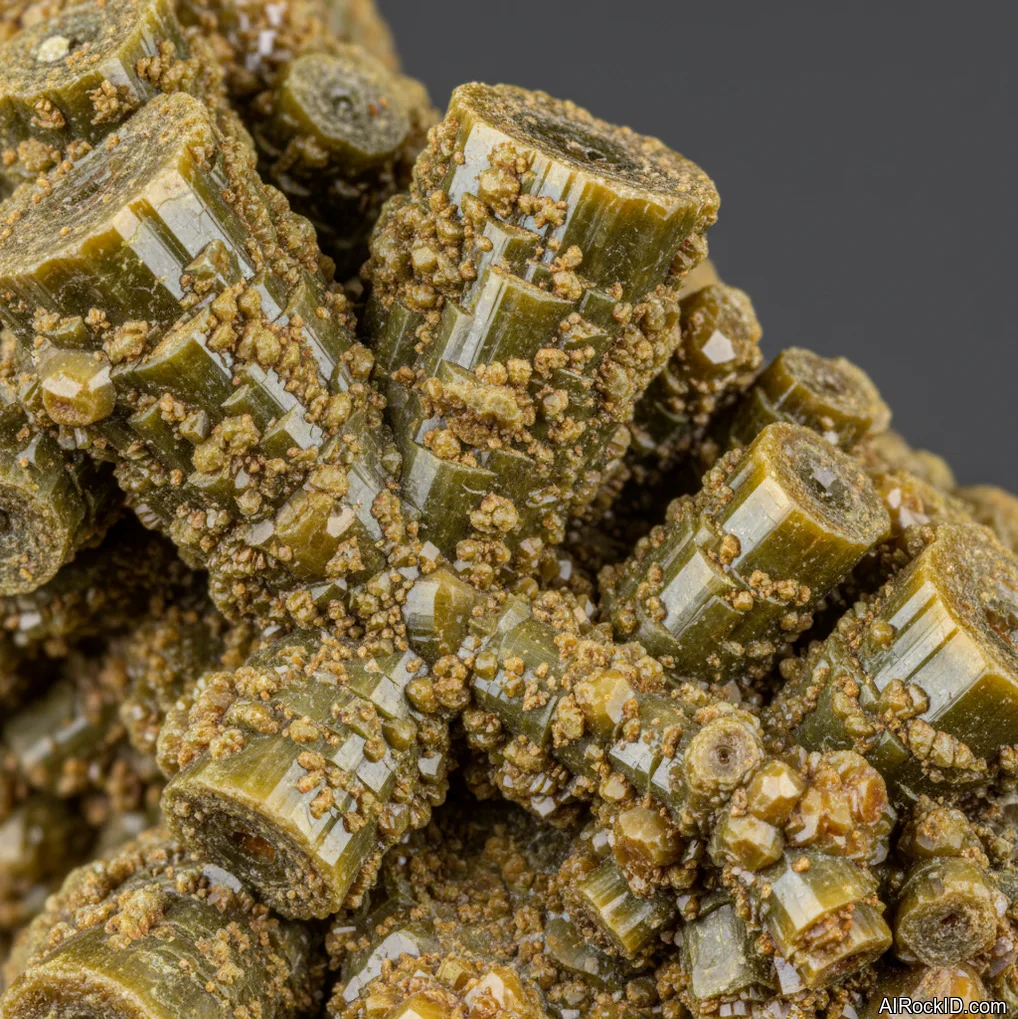
Grab a decent cabinet piece and the first thing that hits you is the weight. It’s got that dead, heavy feel in your hand that quartz just doesn’t have, and yeah, that heft is one of the fastest giveaways that you’re dealing with a lead mineral. But the color is what pulls you in. Most folks run into pyromorphite as that loud leaf green, but I’ve also handled honey-yellow, brown, and this odd olive shade that looks kind of dusty until you sweep a flashlight across it.
And if you get your nose right up to the crystals, you’ll see why people chase it. The usual crystal habit is those little barrel shapes and hexagonal prisms, sometimes stubby like pencil erasers, other times longer and stacked like tiny columns. On matrix it can look glassy and clean. But it can also have this slightly “greasy” look when the faces are micro-pitted (you can feel it a bit if you drag a fingernail across a rough spot). That doesn’t mean it’s fake. It just means it grew in rough conditions and got etched later.
Origin & History
1784 is the date that matters. That’s when the German mineralogist Abraham Gottlob Werner put pyromorphite on the record, right in the middle of that messy stretch when lead minerals were being sorted, re-sorted, and renamed as chemistry finally got more precise.
The word itself is built from Greek for “fire” and “form.” Why? Because early workers noticed the stuff could crystallize after you heated it up and then let it cool, like it was literally getting its shape after firing. And look, if you’ve handled old mineral labels, you’ve probably seen pyromorphite tossed in with “green lead ore,” or written as “mimetite/pyromorphite” back before anyone had quick tests or decent reference books to lean on.
Where Is Pyromorphite Found?
It turns up wherever lead deposits weather near the surface, especially in old mining districts with plenty of oxygen and groundwater moving through fractures.
Formation
Most pyromorphite shows up late in the story, not way down deep. It’s usually sitting in the oxidation zone above primary lead sulfides like galena, where acidic water and oxygen basically gnaw through the old ore and then re-precipitate new minerals in little pockets and fractures.
And phosphate is the other piece people tend to blank on. It can come from nearby apatite, phosphate-rich rocks, guano (yeah, really), or groundwater that’s hauling dissolved phosphate along. When that phosphate runs into lead under the right chemistry window, pyromorphite drops out, often right there with cerussite, anglesite, and limonite. I’ve split open iron-stained gossan chunks at shows, the kind that leave a rusty smear on your fingers, and found that green lining inside like somebody took a brush and painted the cavity. But it’s not always that neat. Sometimes it’s just a thin crust of tiny barrel shapes that looks almost sugary until you put it under a loupe.
How to Identify Pyromorphite
Color: Most specimens are bright to yellowish green, but pyromorphite can also be brown, orange, yellow, or even gray-green depending on impurities and mix with related species.
Luster: Luster is usually vitreous, with a slicker look on tightly packed microcrystals.
Pick up the piece and judge the heft. Pyromorphite feels surprisingly heavy for its size, and that’s a big clue compared to green calcite or green quartz lookalikes. Look for hexagonal barrel or prism crystals under a loupe, often with flat terminations and faint growth zoning. The real test is hardness: it’s around Mohs 3.5 to 4, so a steel needle can scratch it, but it won’t crumble like chalky malachite.
Properties of Pyromorphite
Physical Properties
| Crystal System | Hexagonal |
| Hardness (Mohs) | 3.5-4 (Soft (2-4)) |
| Density | 6.5-7.1 g/cm3 |
| Luster | Vitreous |
| Diaphaneity | Transparent to translucent |
| Fracture | Uneven |
| Streak | white |
| Magnetism | Non-magnetic |
| Colors | green, yellow-green, yellow, brown, orange, gray-green |
Chemical Properties
| Classification | Phosphates |
| Formula | Pb5(PO4)3Cl |
| Elements | Pb, P, O, Cl |
| Common Impurities | As, V, Ca, Fe |
Optical Properties
| Refractive Index | 2.050-2.070 |
| Birefringence | 0.020 |
| Pleochroism | Weak |
| Optical Character | Uniaxial |
Pyromorphite Health & Safety
Thing is, it’s a lead mineral, so handle it the same way you’d handle lead fishing weights you’ve actually had in your tackle box, the kind that leave that dull gray rub-off on your fingers. Don’t grind it. Don’t lick it (why would you?). And don’t let kids mess with it unless you’re right there watching.
Safety Tips
Wash your hands after you touch it. Don’t do anything that kicks up dust. And stash it somewhere it won’t rub off and sprinkle gritty crumbs onto whatever else is in the bin or on the shelf. If you absolutely have to cut or shape a piece, keep it wet while you work and wear a proper respirator rated for particulates (not just a flimsy mask). Why risk breathing that stuff?
Pyromorphite Value & Price
Price Range
Rough/Tumbled: $20 - $600 per specimen
Cut/Polished: $30 - $200 per carat
Prices jump fast once the crystals get bigger, the terminations are sharp, and the color stays clean while they’re still sitting on matrix. And damage is a huge deal because these crystals are soft. One little chip on the barrel and, boom, it gets knocked down into “study specimen” pricing.
Durability
Fragile — Scratch resistance: Poor, Toughness: Fair
It’s fairly stable on a shelf, but it scratches easily and the crystal edges bruise if it rattles around in a box.
How to Care for Pyromorphite
Use & Storage
Store it in a perky box or a padded flat, not loose in a bowl. I keep my better pieces in individual specimen boxes because the crystals bruise if they tap each other.
Cleaning
1) Skip soaking and just start with a soft, dry brush to lift dust. 2) If it needs more, use a barely damp cotton swab with a drop of mild soap and dab only the matrix, not the crystal faces. 3) Rinse the swab, wipe again with clean water, then pat dry and let it air out completely.
Cleanse & Charge
For a metaphysical-style cleanse, use smoke, sound, or a quick pass under cool running water without soaking, then dry right away. Don’t use salt water.
Placement
Give it a stable shelf spot where it won’t get bumped, and keep it out of direct sun if the color looks a little delicate. A small acrylic stand works well because you can tilt it to catch the luster without touching the crystals.
Caution
Lead mineral. Don’t use it in elixirs. Don’t put it in aquariums. And seriously, skip any cleaning method that makes dust or a wet slurry, because that stuff gets everywhere (on your hands, in the air, on the table) before you even notice.
Works Well With
Pyromorphite Meaning & Healing Properties
Compared to a lot of those “feel-good” stones, pyromorphite feels grounded and kind of heavy in your palm, and people either love that or go, nope, too much. When I’m holding a chunky cluster, the whole vibe shifts and my focus tightens up fast. It’s less floaty than fluorite. And it’s less buzzy than moldavite. Just steady.
If you’re using crystals as a personal focus tool, pyromorphite is one people reach for when they’re thinking about getting organized, actually following through, or clearing out mental clutter. Thing is, it’s still a lead mineral. So I keep it simple and practical: handle it for a bit, wash your hands, and don’t make it the one you’re absentmindedly rubbing all day while you’re on calls.
And here’s the straight collector note. Some sellers will say it’s “safe in water” because pyromorphite is relatively insoluble compared to other lead minerals. But water plus time plus whatever else is in that water is still a gamble, and you really don’t need to take that gamble for a meditation routine. Use it like a desk mineral, not a bath mineral. Metaphysical use is personal belief and personal experience, not medical care.
Identify Any Crystal Instantly
Snap a photo and get properties, value, care instructions, and healing meanings in seconds.