Nuummite
What Is Nuummite?
Nuummite is a rare metamorphic rock made mostly of amphibole minerals, specifically anthophyllite and gedrite, and when it’s polished it can throw a blue, gold, or coppery flash.
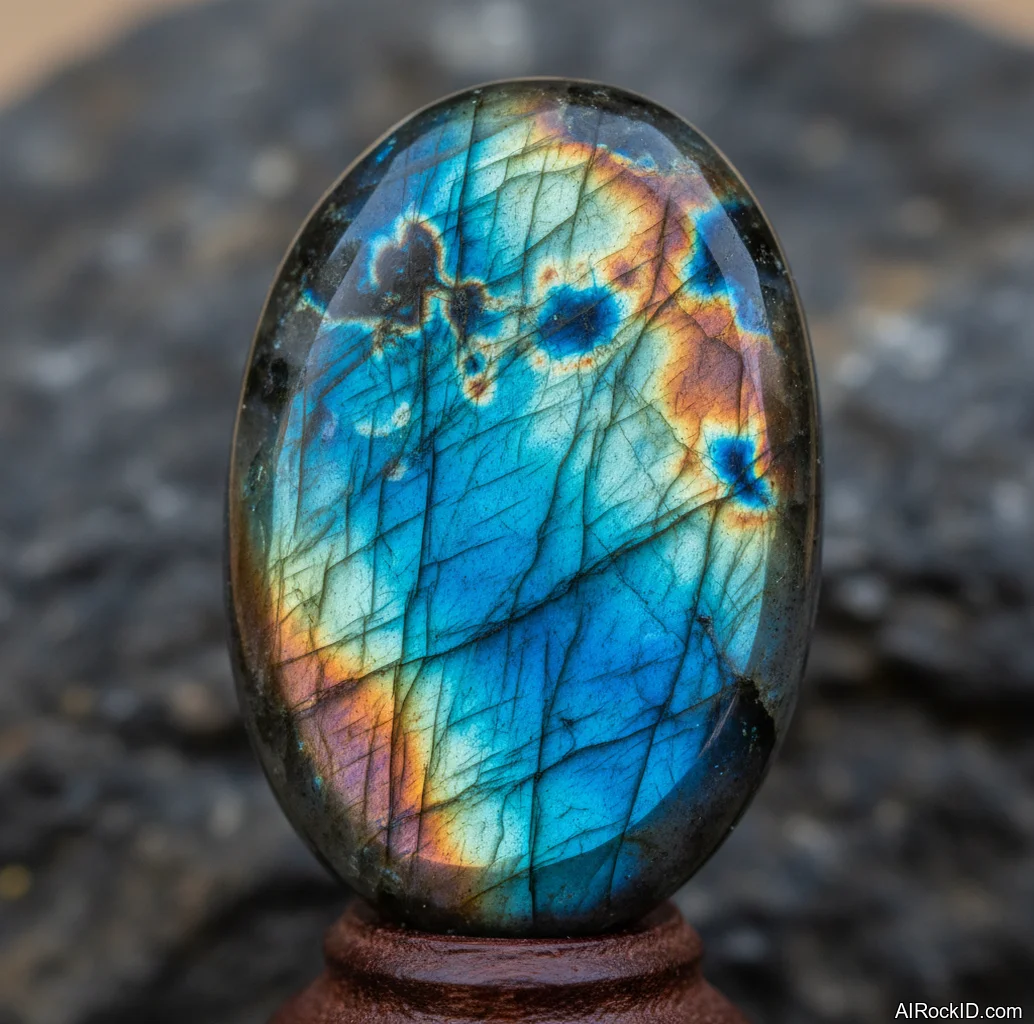
Pick up a piece and the weight hits you first. It feels oddly heavy for something that small, and if it’s been polished well the surface has this slick, almost oily feel (like a cab that’s been on the wheel a little longer than usual). At first it just reads as a plain black stone. But tip it under a single overhead light and the “fire” snaps on in sheets or streaks, then it’s gone the moment you lose the angle. Weird how fast it disappears, right?
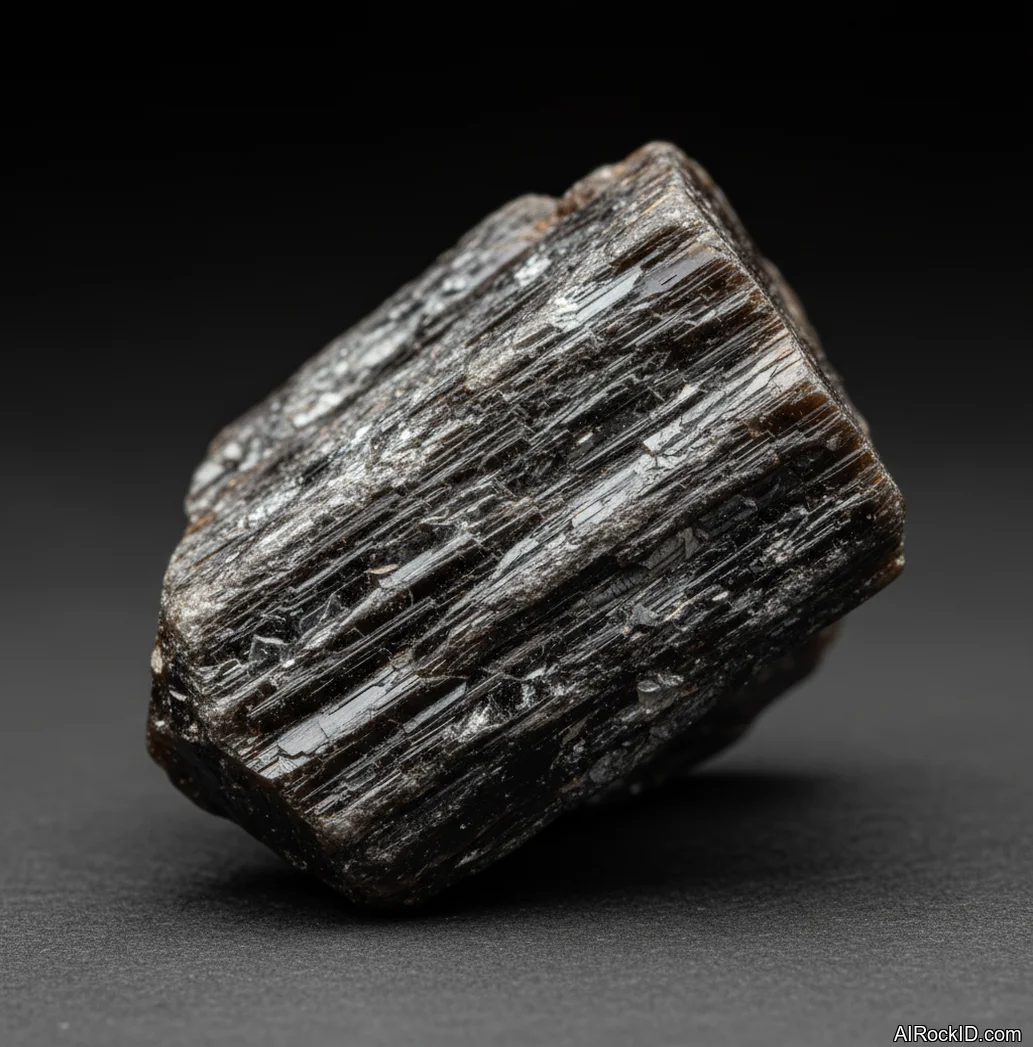
Most of the nuummite you’ll see for sale is cut into cabochons or palm stones, because that curved, polished face is the easiest way to show the flash. Raw nuummite can be pretty underwhelming. And that’s the catch. A rough chunk sitting in a tray can look like nothing at all, while a polished one two inches away looks like it’s got lightning trapped inside.
Origin & History
Greenland material got its scientific write-up in 1810 from the Danish mineralogist K.L. Giesecke. The name traces back to Nuuk (it used to be called Godthåb), right near where the classic material turns up.
Dealers will sometimes call it “the oldest stone.” Why? It forms in seriously old Archean rocks in southwest Greenland.
Nuummite didn’t really take off in today’s gem and mineral trade until lapidaries learned the trick: you’ve got to orient the cut so it catches the amphibole lamellae. And you can spot the difference instantly. I’ve seen folks at shows stroll past a tray of dark, almost sooty-looking slabs, then freeze when the seller tilts one under a lamp and that blue-gold flash snaps on like someone just flipped a switch.
Where Is Nuummite Found?
Classic nuummite comes from southwest Greenland near Nuuk, hosted in very old metamorphic terranes; commercial material is largely Greenland-sourced.
Formation
Nuummite starts out as magnesium and iron rich rock that gets shoved into brutal heat and pressure during regional metamorphism, and that’s when amphiboles like anthophyllite and gedrite grow in. Give it enough time and you wind up with amphibole crystals that are intergrown and layered, mixed in with other dark minerals, so the whole piece stays close to black.
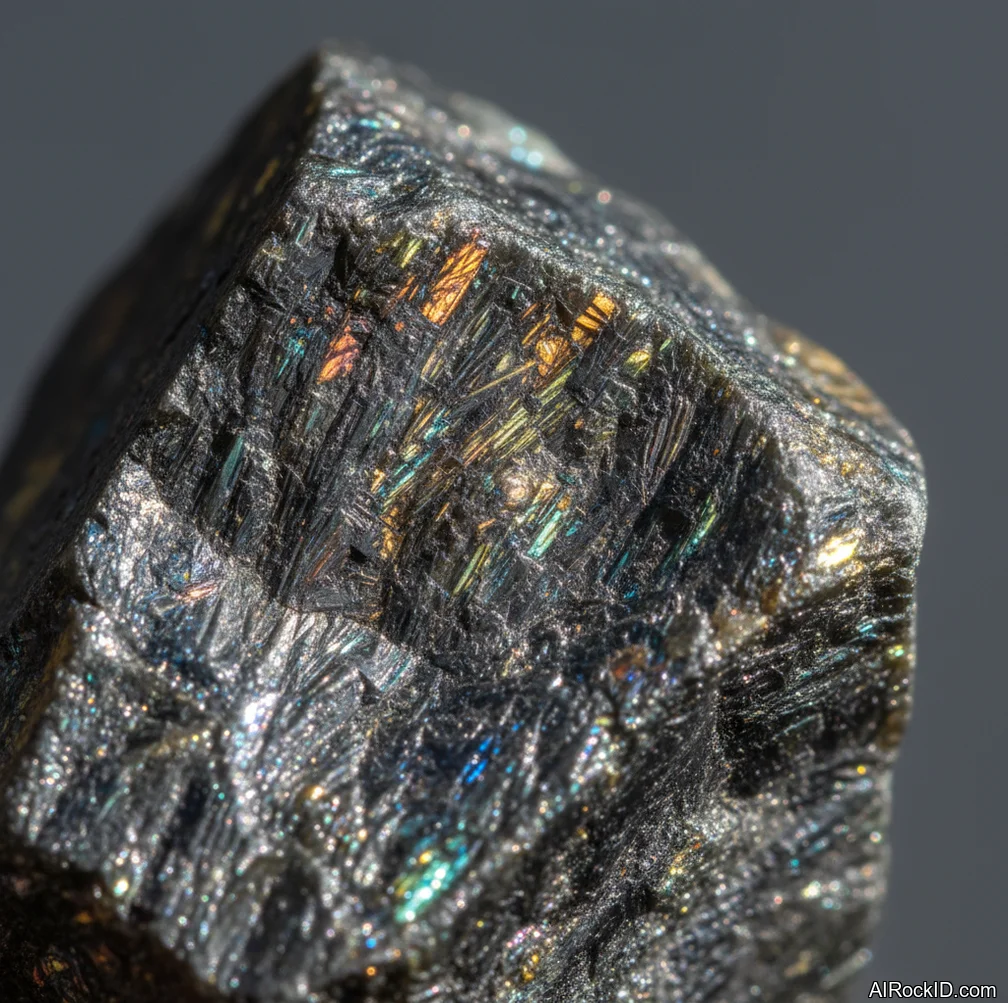
That flash everyone’s chasing is just light hitting the stone’s internal structure, especially those thin amphibole intergrowths. Orientation is everything. Cut it the wrong way and it looks flat and dead. Cut it right and you’ll see those broad, rolling plates of blue and gold, and sometimes that coppery bronze that really pops under a tight spotlight (the kind with a small, hard beam).
How to Identify Nuummite
Color: Body color is usually black to very dark brown. The flash can be blue, gold, greenish-gold, or coppery bronze in patches or sheets.
Luster: Polished surfaces show a vitreous to silky sheen with strong iridescent chatoyancy-like flash.
Look closely under a single point light and rotate it slowly; real nuummite flashes in broad areas that blink on and off with angle, not a glittery sparkle. The real test is feel plus look: most pieces feel dense and stay cool to the touch, while resin or coated fakes often feel a little warm and too perfect. If you scratch it with a steel nail on an inconspicuous spot, it usually marks, because it’s not a hard gem material.
Properties of Nuummite
Physical Properties
| Crystal System | Monoclinic |
| Hardness (Mohs) | 5.5-6 (Medium (4-6)) |
| Density | 2.9-3.2 g/cm3 |
| Luster | Vitreous |
| Diaphaneity | Opaque |
| Fracture | Uneven |
| Streak | gray to greenish-gray |
| Magnetism | Non-magnetic |
| Colors | black, dark brown, blue flash, gold flash, coppery bronze flash |
Chemical Properties
| Classification | Silicates (inosilicates, amphibole group) |
| Formula | (Mg,Fe)7Si8O22(OH)2 (anthophyllite-gedrite amphibole series, variable composition) |
| Elements | Mg, Fe, Si, O, H, Al |
| Common Impurities | Al, Ca, Mn, Ti |
Optical Properties
| Refractive Index | 1.60-1.70 |
| Birefringence | 0.010-0.030 |
| Pleochroism | Moderate |
| Optical Character | Biaxial |
Nuummite Health & Safety
Handling it is totally fine, and a quick splash of water isn’t a big deal either. But if you start cutting it or sanding it, you’ll kick up this fine mineral dust (the kind that clings to everything) and you really don’t want that stuff in your lungs.
Safety Tips
If you’re going to grind or polish it, do it wet and wear proper respiratory protection. And when you’re done, scoop up the slurry while it’s still damp (it’s kind of like thin gray mud) instead of letting it dry out and turn into dust.
Nuummite Value & Price
Price Range
Rough/Tumbled: $20 - $250 per palm stone or small specimen
Cut/Polished: $3 - $20 per carat
Prices jump around depending on how intense the flash is, how much of the stone it covers, and how clean the polish actually looks under a light. Big cabochons that throw those blue-gold sheets across the face, with no dead zones when you tilt them, go for way more than smaller stones where the shimmer comes and goes in patches.
Durability
Moderate — Scratch resistance: Fair, Toughness: Fair
It’s stable in normal conditions, but the polish can dull or scratch if it rides loose in a pocket or gets cleaned like a quartz.
How to Care for Nuummite
Use & Storage
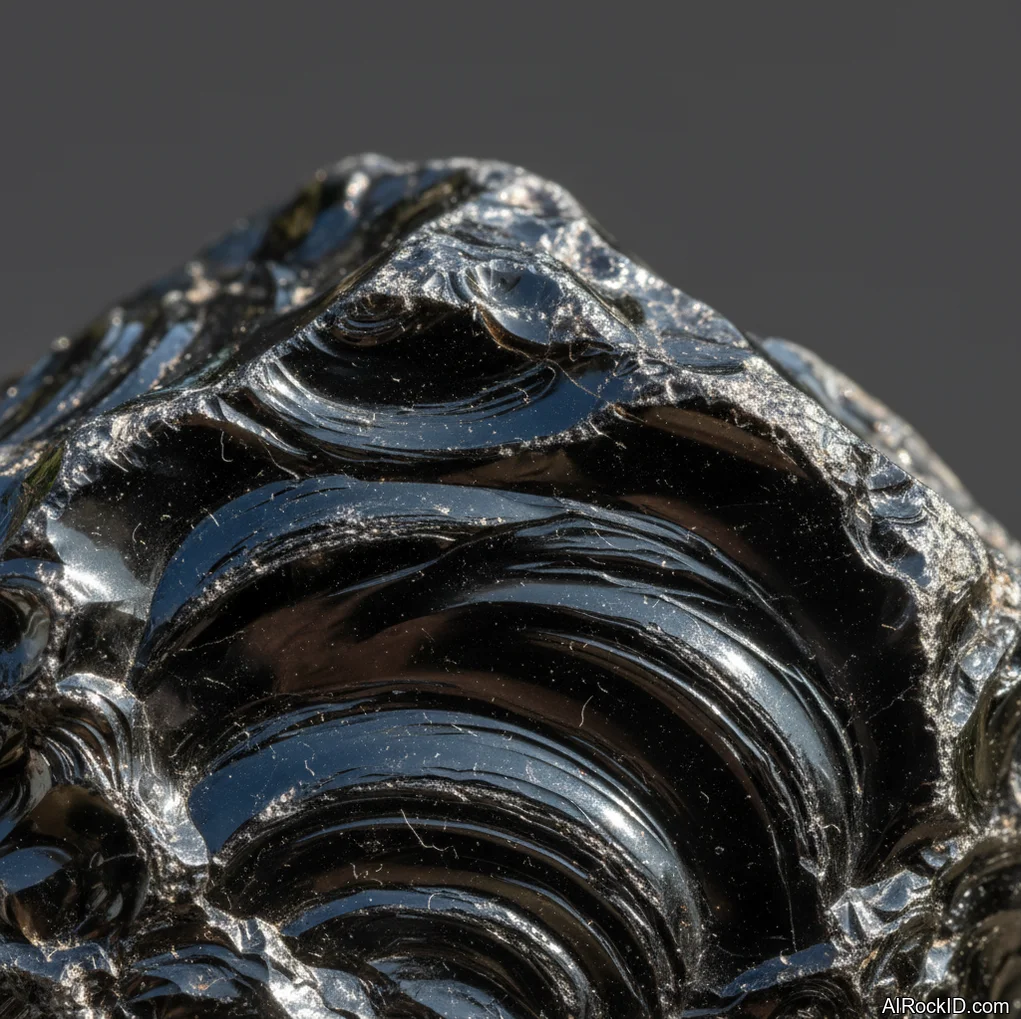
Store it like you’d store labradorite or obsidian: separate from harder stones so it doesn’t get scuffed. A small pouch or a divided box keeps that mirror polish looking good.
Cleaning
1) Rinse with lukewarm water. 2) Use a drop of mild soap and your fingers or a soft cloth to wipe the surface. 3) Rinse again and pat dry; don’t scrub with anything gritty.
Cleanse & Charge
If you do energy-style care, smoke, sound, or a quick rinse works fine. I don’t leave it baking in direct sun for days because the whole point is the surface, and I want that polish protected.
Placement
Angle it where a single lamp can hit it, like on a shelf near a reading light, so the flash shows when you walk by. On a desk, it’s one of those stones you’ll keep turning in your hand without thinking.
Caution
Skip ultrasonic cleaners, steam cleaners, and anything too abrasive. They’ll fog up the polish and wipe out that flash fast (you know that milky haze you can see the second light hits it?). And don’t dry-sand or grind unless you’ve got dust control in place.
Works Well With
Nuummite Meaning & Healing Properties
Compared to a lot of the shinier metaphysical stones, nuummite feels heavier in your palm and kind of turned inward. When I’m sorting trays at a show, it’s the one I grab when I want something grounding that still feels awake. It’s dark, sure, but then you tilt it and that flash pops, so it never reads as dull.
A lot of people who work with crystals connect nuummite with protection and “shadow work.” And I get why. It’s literally this dark, ancient-looking stone with little streaks of hidden light that only show up when you catch the angle just right. The metaphor is pretty obvious, and it lands. But it’s still a rock, not a treatment, and it won’t replace real support if you’re dealing with anxiety, trauma, or anything medical.
One real-world thing I’ve noticed: nuummite makes people fidget. Smooth cab. Cool to the touch. Weighty in that satisfying way. If you calm down by rubbing a worry stone, nuummite is great for that totally normal, non-mystical reason. And for meditation, it works as a solid focus anchor, because the flash gives your eyes something to track without being loud (or glittery). Why fight that if it helps?
Identify Any Crystal Instantly
Snap a photo and get properties, value, care instructions, and healing meanings in seconds.