Painite
What Is Painite?
Painite is a borate mineral so rare it almost sounds made up, with the formula CaZrAl9O15(BO3). Most folks run into it through some “rarest gem” headline, but the real stuff is usually a tiny, dark reddish-brown crystal sitting on matrix, not some big, sparkling cut stone.
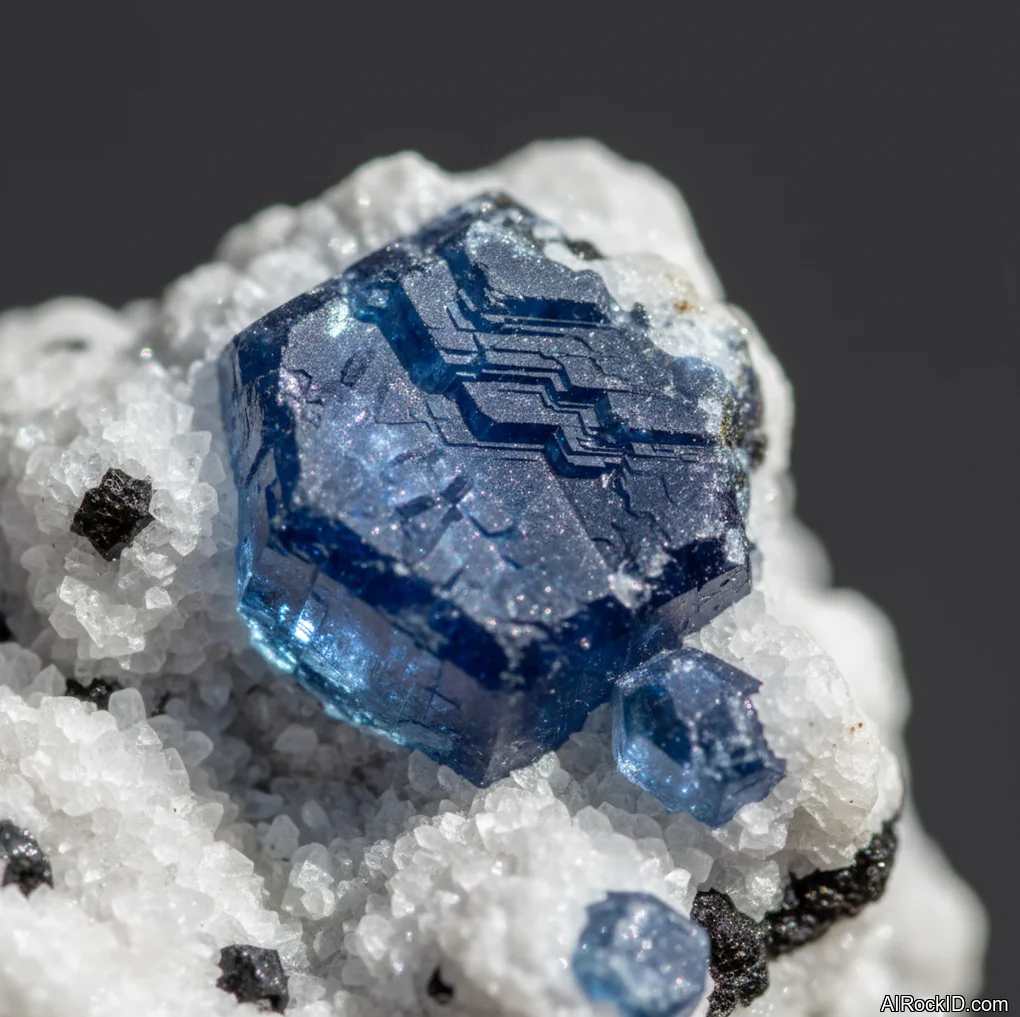
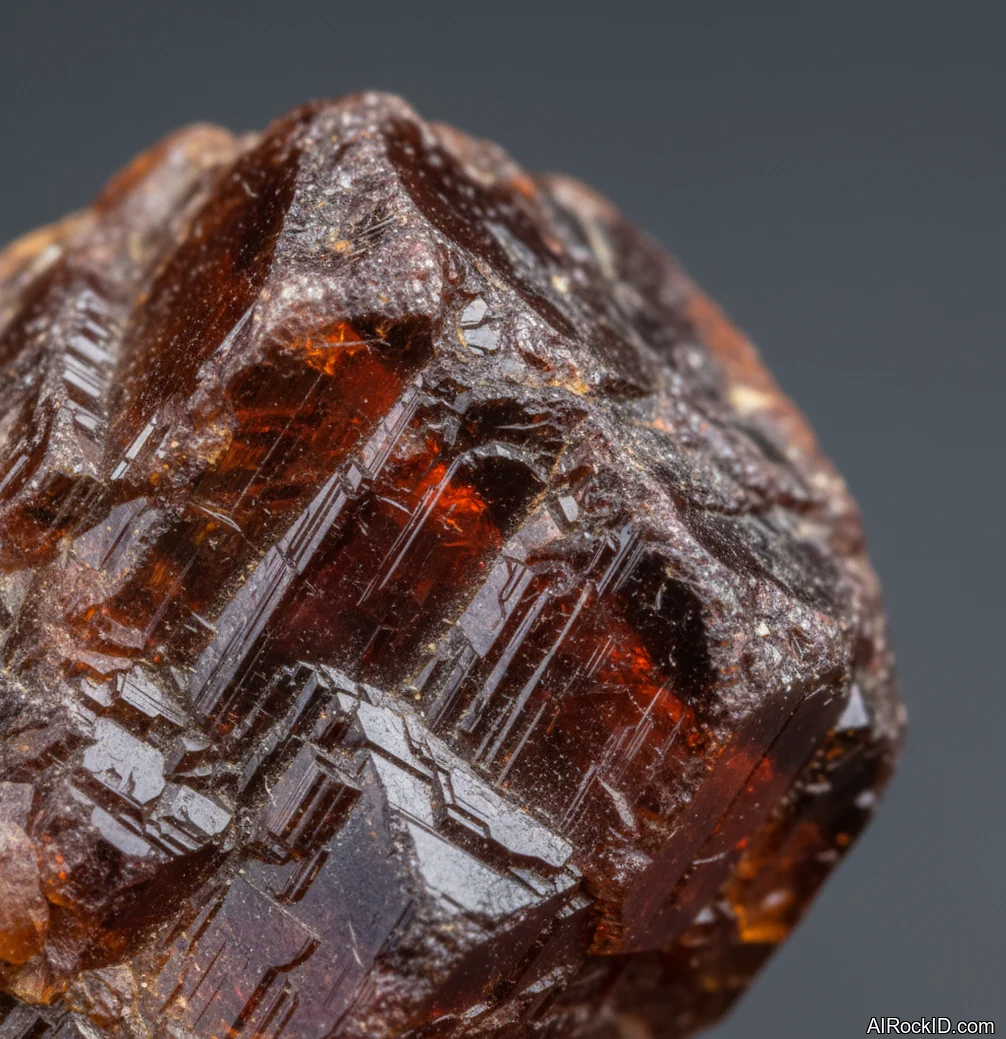
Hold a piece in your hand and the size hits you first. Small. Thumbnail-small is totally normal. And even when the faces are crisp and sharp, it can read as nearly black until you tip it under a bright LED and, right on the edge, you catch that rusty red-to-brown glow.
Compared to quartz or garnet, painite just feels like collector territory. It’s the kind of label you look at twice at a show because, honestly, you think it must be a typo. But once you’ve seen a real one in a dealer’s case, you don’t forget it: those prismatic crystals, a glassy (sometimes slightly resinous) shine, and that dense “this isn’t glass” feel when you roll it between your fingers.
Origin & History
London, 1950s. A gem dealer and mineral collector, Arthur C. D. Pain, walked into the British Museum (Natural History) with a small brown crystal from Myanmar (back when it was still called Burma). It wasn’t flashy. More like that tea-stained, slightly muddy brown you get when a stone’s been handled a lot, with dull little faces that only catch the light if you tilt it just right. But it turned out to matter.
In 1957, the museum described it as a brand-new mineral species. And they named it after him: painite.
For a long time, painite had this near-myth status, mainly because only a handful of samples were known. The whole “only a few crystals exist” line really was accurate for a while, even if people keep repeating it like nothing’s changed since the 1950s. But later finds in Myanmar shifted things for collectors. It’s still very, very scarce, though, especially if you’re talking about clean, well-formed crystals.
Where Is Painite Found?
Most collector material comes from Myanmar, especially the Mogok area and later finds in northern Myanmar. A few other countries have reported painite, but it’s not something you see coming out in volume.
Formation
Look at where painite actually turns up and you notice the same setup over and over: high-grade metamorphic rocks and gem-bearing marbles, where boron-rich fluids had room to mix with aluminum and zirconium. It’s a finicky recipe. Nature just doesn’t make it that often.
Most of the painite crystals people mention are tied to the Mogok region’s marble-hosted gem deposits. Think complicated metamorphism, lots of fluid movement, and chemistry that has to land in a pretty narrow window. But here’s the thing with painite: that “right chemistry” is so rare that even when you’re standing in the right kind of rock, you could spend your whole life in the field and still never spot it.
How to Identify Painite
Color: Typically deep reddish-brown to brown, sometimes with orange-brown flashes on thin edges. In chunky crystals it can look almost black until strong light hits it.
Luster: Vitreous to slightly resinous on clean faces.
At first glance, a lot of painite gets mistaken for dark garnet or even a random brown crystal on matrix. The real test is optical and lab work, but in-hand you can watch for that prismatic habit and the way the color “wakes up” only when you tilt it into a bright light. And if a seller’s got a big, clean, cheap “painite” cabochon, slow down and ask for documentation, because the market loves a rare name.
Properties of Painite
Physical Properties
| Crystal System | Hexagonal |
| Hardness (Mohs) | 8 (Very Hard (7.5-10)) |
| Density | 3.90-4.01 g/cm3 |
| Luster | Vitreous |
| Diaphaneity | Transparent to translucent |
| Fracture | Uneven |
| Streak | White |
| Magnetism | Non-magnetic |
| Colors | Reddish-brown, Brown, Orange-brown, Dark brown |
Chemical Properties
| Classification | Borates |
| Formula | CaZrAl9O15(BO3) |
| Elements | Ca, Zr, Al, O, B |
| Common Impurities | Fe, Cr, V |
Optical Properties
| Refractive Index | 1.787-1.816 |
| Birefringence | 0.029 |
| Pleochroism | Strong |
| Optical Character | Uniaxial |
Painite Health & Safety
Handling painite is pretty low risk. Thing is, like any mineral, you don’t want to be breathing in the dust if it gets ground down or cut, especially when you can feel that gritty powder in the air and it sticks to your fingertips.
Safety Tips
If you’re getting any lapidary work done, make sure they’re cutting wet and the area’s got real ventilation. And don’t dry sand it, seriously.
Painite Value & Price
Price Range
Rough/Tumbled: $200 - $5,000 per specimen
Cut/Polished: $300 - $3,000 per carat
Painite pricing can jump all over the place, and it mostly comes down to what you’re actually holding. A verified crystal still stuck on matrix is one thing. A loose crystal with clean, sharp faces is another. And a faceted stone with documentation and decent color is its own category entirely. Sure, size counts. But with painite, clarity and the paperwork usually move the needle more.
Durability
Durable — Scratch resistance: Excellent, Toughness: Fair
It’s stable in normal conditions, but crystals can be brittle, so sharp impacts and hard tumbles are what usually do the damage.
How to Care for Painite
Use & Storage
Store it like you’d store a small, valuable crystal: in a perky box or a padded thumbnail case so it doesn’t rattle against harder stones. And keep the label with it, because provenance is half the point here.
Cleaning
1) Rinse briefly in lukewarm water with a drop of mild soap. 2) Use a soft toothbrush to get dust out of crevices without scraping crystal faces. 3) Pat dry and let it air dry fully before boxing it up.
Cleanse & Charge
For a low-drama cleanse, I stick to smoke, sound, or a quick pass under running water, then dry it well. If you’re doing intention work, keep it simple and don’t over-handle a tiny crystal.
Placement
Put it somewhere stable, not on a wobbly shelf edge. A small acrylic display box is boring but it works, especially for thumbnail crystals.
Caution
Skip ultrasonic cleaners and steamers. And don’t just drop it into one of those mixed tumble pouches with quartz or corundum, where everything clacks together. Painite is hard, sure, but the crystals are usually tiny, and one good smack can chip an edge before you even notice. Why risk it?
Works Well With
Painite Meaning & Healing Properties
Most dealers don’t even bother with the metaphysical talk around painite, because it sits in the “collector cabinet” world, not the “carry-it-in-your-pocket” world. But if you’re the kind of person who likes matching a stone’s vibe to its geology, painite usually comes off as focused and kind of stern. It’s rare. It’s dense. No fluffy feel to it.
Hold a real piece and the first thing you notice is the weight, like it’s heavier than your brain expects for something that small. That gets me every time. For meditation, I’d use it like a one-point stone: pick one topic, set one intention, keep it short, then put it back. And look, I’ll say the obvious out loud: none of this is medical care, and painite isn’t replacing a doctor, a therapist, or a good night’s sleep. Not even close.
Thing is, the big issue with painite in spiritual circles is access. Most people will never actually hold one, so it turns into a symbol more than a tool. So if you do have one, I’d rather see it used as a nudge toward precision, patience, and real research (the unglamorous part). And yeah, sometimes just owning something that rare makes you slow down and pay attention. Why wouldn’t it?
Identify Any Crystal Instantly
Snap a photo and get properties, value, care instructions, and healing meanings in seconds.