Phoenix Stone


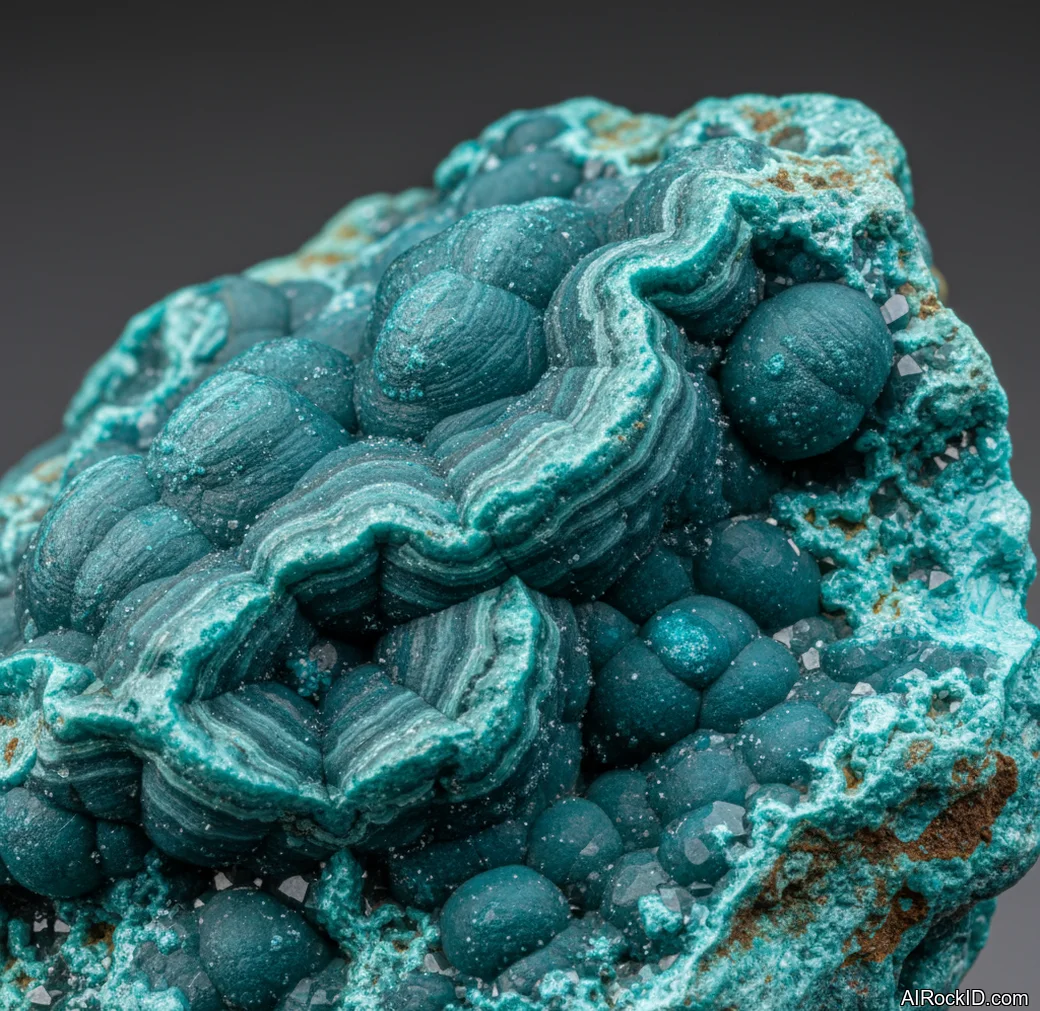
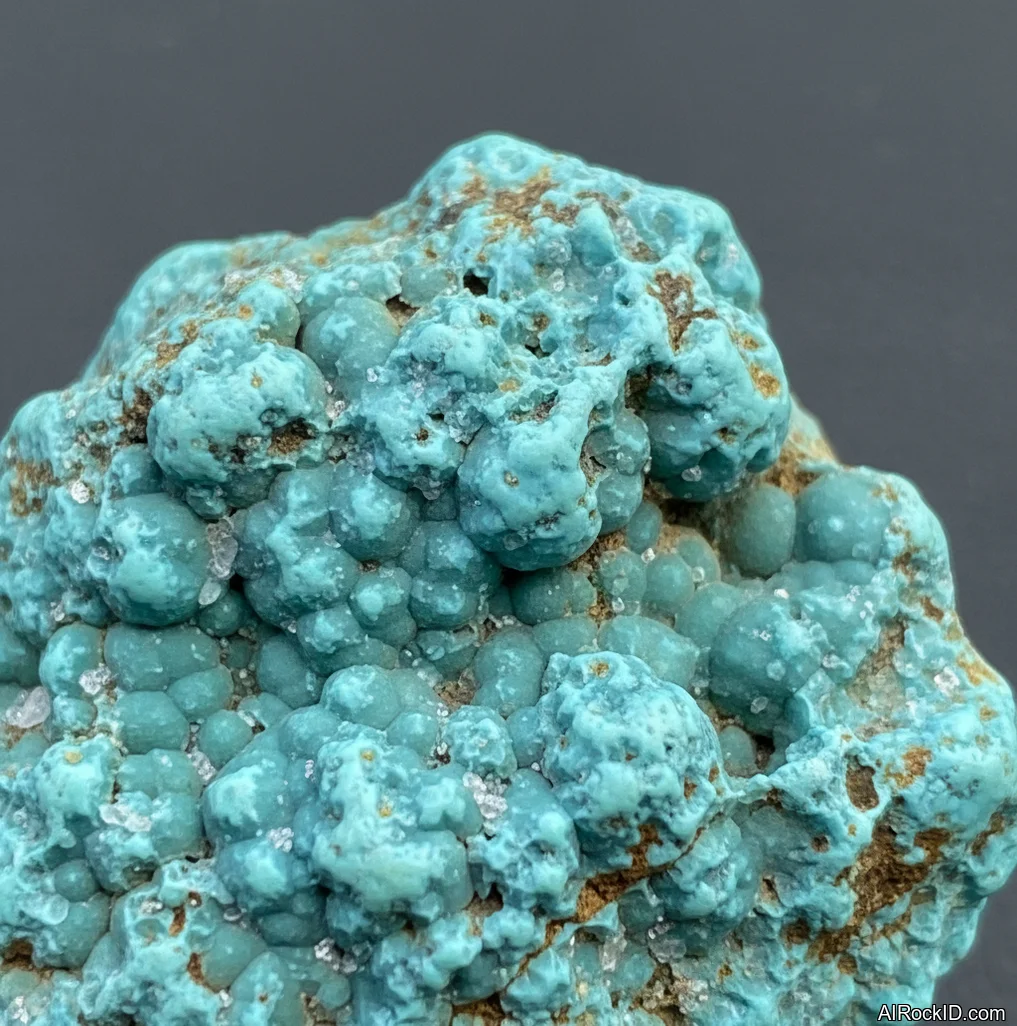
Quick answer: Phoenix Stone is a trade name most often used for blue-green chrysocolla-rich material in a quartz or mixed copper-mineral matrix. Because it can resemble several copper minerals, color alone is not enough for identification.
AI Rock ID can help screen Phoenix Stone by comparing color, luster, texture, and visible matrix patterns from a clear photo. RockIdentifier.io should be used as an identification aid rather than a substitute for gemological testing when value, treatment, or species confirmation matters.
Good fit
- Collectors who like blue-green copper minerals with natural matrix patterns
- Jewelry buyers who prefer cabochons, beads, or protected settings rather than high-wear rings
- Beginners comparing chrysocolla-rich stones to turquoise, amazonite, or dyed howlite
- People interested in metaphysical traditions around renewal, calm, and emotional balance
Not a good fit
- Daily-wear rings or bracelets exposed to frequent knocks and water
- Buyers who need a single precise mineral species name without lab confirmation
- Anyone seeking a hard gemstone comparable to quartz, topaz, or corundum
- Projects requiring ultrasonic cleaning, steam cleaning, or chemical exposure
Most commonly confused with
- Chrysocolla: Phoenix Stone is usually chrysocolla-rich, but the trade name may include quartz, copper minerals, and mixed matrix rather than pure chrysocolla.
- Turquoise: Turquoise is typically more waxy and can show spiderweb matrix; Phoenix Stone often has more varied blue-green copper staining and mixed silicate texture.
- Amazonite: Amazonite is a feldspar with a harder, more uniform blue-green appearance and lacks the copper-mineral matrix typical of Phoenix Stone.
- Shattuckite: Shattuckite is usually a deeper blue copper silicate and may occur with chrysocolla, but Phoenix Stone is a broader trade material.
Phoenix Stone Lookalike Comparison
| Material | Typical Clue | Key Difference |
|---|---|---|
| Phoenix Stone | Blue-green chrysocolla-rich areas with mixed matrix | Trade name; composition can vary by source and stabilization |
| Turquoise | Waxy blue to green with possible spiderweb matrix | Phosphate mineral, often more established in jewelry grading |
| Amazonite | More uniform blue-green feldspar cleavage | Harder and not a copper silicate |
| Shattuckite | Richer royal to dark blue copper mineral zones | More specific mineral identity than Phoenix Stone |
| Dyed Howlite | Bright color concentrated in porous areas or cracks | Artificial color may be visible at drill holes or damaged edges |
AI identification confidence
AI identification confidence for Phoenix Stone is usually moderate because the name refers to a mixed, trade-labeled material rather than one single mineral species. Confidence improves when photos show natural matrix, untreated edges, drill holes, luster, and scale.
When AI gets it wrong
- Images are over-saturated, filtered, or taken under strong blue-green lighting
- The specimen is polished, stabilized, or coated, hiding texture and porosity
- Only one close-up is provided without scale, matrix, or broken edges
- Dyed howlite, dyed magnesite, or composite material is photographed from a finished bead only
Final recommendation
Choose Phoenix Stone when the appeal is its blue-green copper-mineral appearance and natural-looking matrix rather than a guaranteed single-species identification. For higher-priced pieces, ask for disclosure about stabilization, dyeing, backing, and any lab documentation.
How to Check Phoenix Stone Authenticity
Authentic Phoenix Stone should be sold with clear disclosure that it is a trade material, often chrysocolla-rich and sometimes stabilized for durability. Look for natural variation in color, matrix, and texture rather than perfectly uniform blue-green color. Inspect drill holes, chips, and edges for bright dye concentration or a pale base that may suggest dyed imitation material.
Questions to Ask Before Buying Phoenix Stone
Ask whether the stone is natural, stabilized, dyed, backed, or assembled. Request the seller's source information and whether the material is being sold as chrysocolla-rich Phoenix Stone or as a more specific mineral such as chrysocolla, shattuckite, or turquoise. For expensive cabochons or jewelry, independent testing is the most reliable way to confirm composition and treatments.
Best Jewelry Uses for Phoenix Stone
Phoenix Stone is better suited to pendants, earrings, brooches, beads, and protected cabochon settings than to exposed daily-wear rings. Its relatively low hardness and possible stabilization mean it can scratch, dull, or absorb substances more easily than harder gems. A bezel or protective setting helps reduce edge wear and chipping.
What Is Phoenix Stone?
Phoenix Stone is basically a trade name for chrysocolla-rich material. Most of the time it’s intergrown with quartz plus other copper minerals, then cut and sold as a blue-green ornamental stone.
Pick up a piece and the first thing you feel is the temperature. It stays cool in your palm, the way silicate minerals do, and the better pieces have this waxy-to-vitreous look where the surface almost seems lit from inside when you tilt it under a lamp.
People glance at it and expect turquoise behavior. But it usually doesn’t. It’s typically softer, and the polish can be a bit moodier. Some pieces will take a pretty glassy shine when there’s a lot of quartz in the mix, and others stay more satin-looking with tiny pits you can catch with a fingernail (that’s the softer chrysocolla getting undercut during polishing).
Origin & History
Phoenix Stone isn’t a formally recognized mineral species name. It’s a lapidary and market label people use for material coming out of the copper district around Phoenix, Arizona. Rockhounds and cutters started paying attention because, when you slab it and hit it with a little water, you can get that classic Southwest look right away: blue-green chrysocolla sitting in white quartz, with darker copper-oxide webbing running through it like little veins.
Chrysocolla, though, was described long before anyone started calling anything “Phoenix Stone.” The name traces back to Greek words for “gold glue,” which points to ancient metalworking. But in a modern shop, Phoenix Stone usually just means that good-looking Arizona chrysocolla plus quartz mix, not some old historical reference (most people aren’t thinking about ancient metallurgy at the saw table, are they?).
Where Is Phoenix Stone Found?
Most material sold as Phoenix Stone is tied to Arizona copper mines and nearby workings, with similar chrysocolla-quartz mixes also coming from other copper districts.
Formation
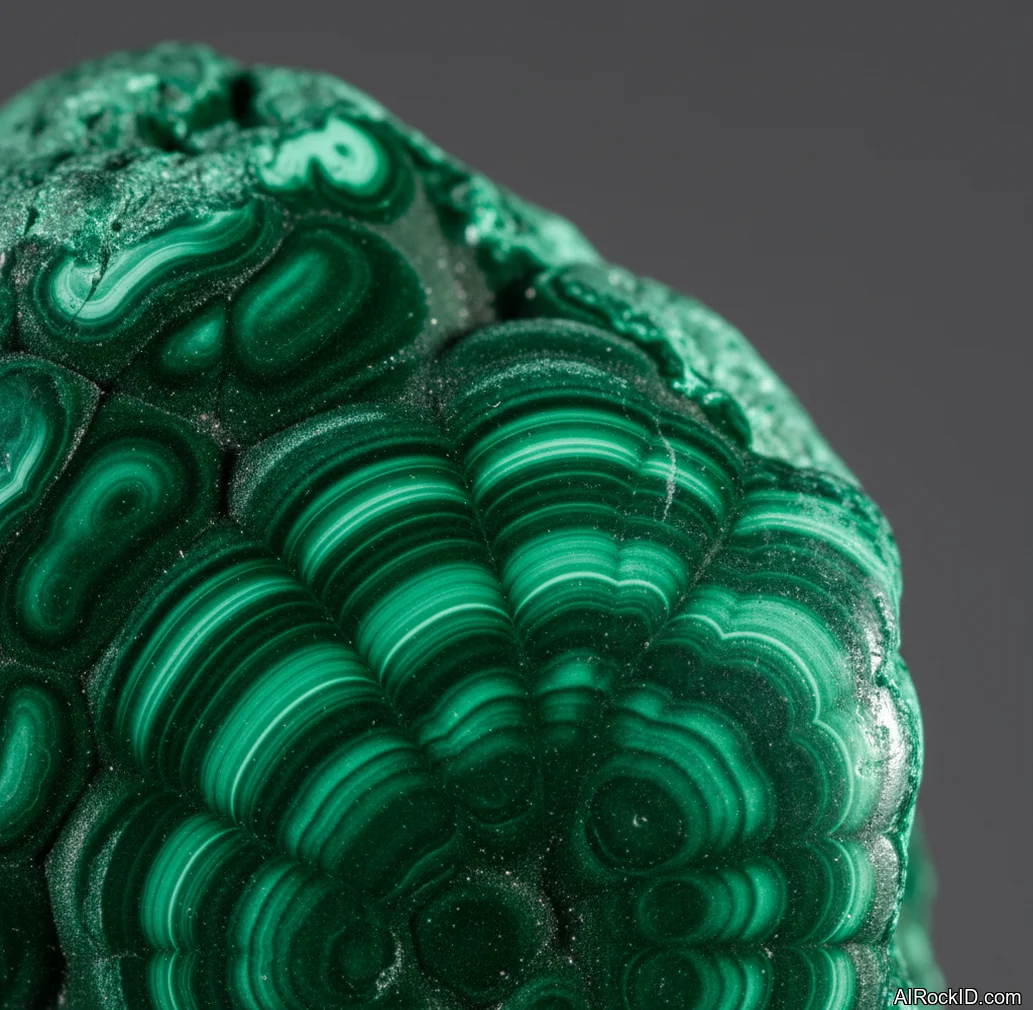
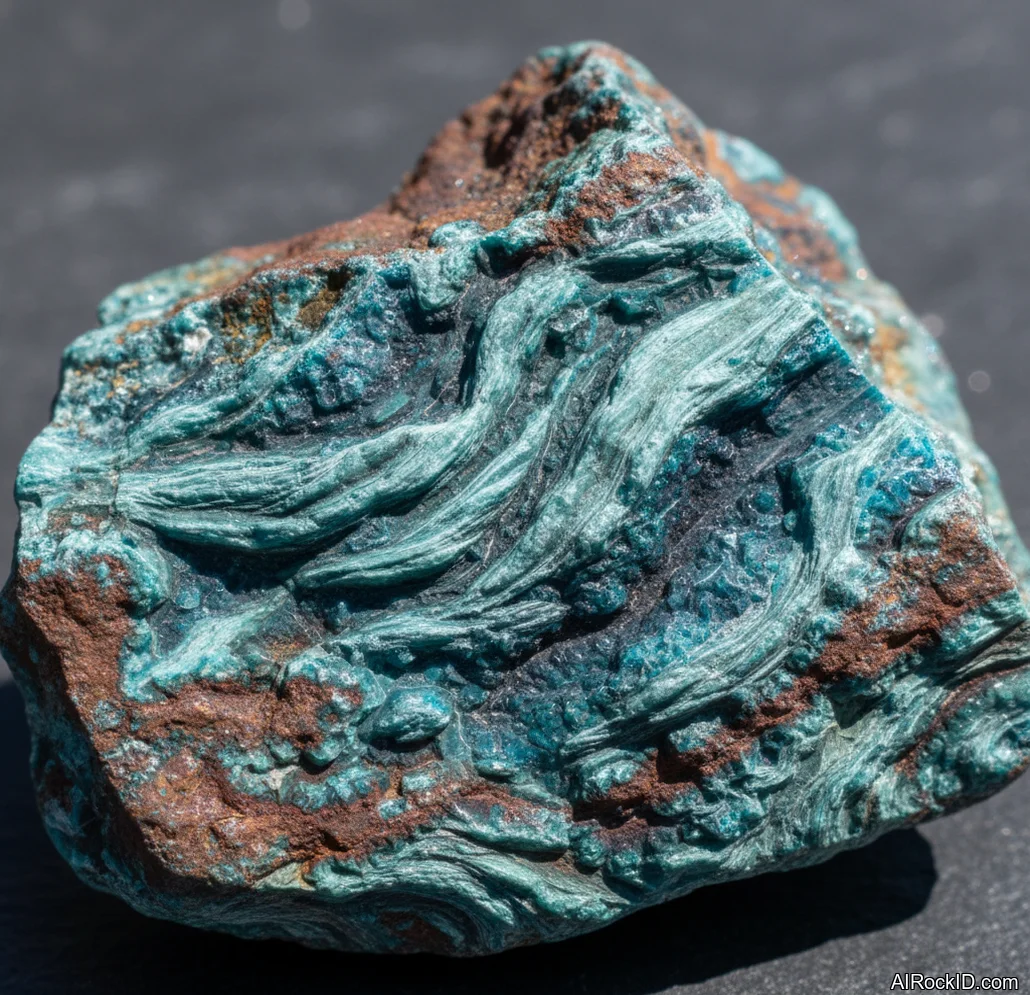
Look at where this stuff actually shows up in the ground and it’s really just a weathering-zone tale. Phoenix Stone forms up in the oxidized parts of copper deposits, where groundwater and oxygen chew on the primary sulfides, and out of that you end up with secondary copper minerals like chrysocolla, malachite, cuprite, tenorite, and friends.
But unlike those clean, single-mineral crystals, Phoenix Stone is usually more of a patchwork. Chrysocolla can gel up and seep into little fractures, then quartz can move in later and “freeze” it in place, and iron oxides will often stain the edges (you’ll see that rusty halo line). So one slab will take a polish like glass, and the next one from the same pile will feel a bit chalky on the back. Weird? Not really. That mixed, mosaic texture is exactly why.
How to Identify Phoenix Stone
Color: Most pieces run blue-green to green, often with white or gray quartz, and occasional brown to black webbing from iron or copper oxides. The color can be patchy, with cloudy zones next to clearer, more “gel-like” areas.
Luster: Luster ranges from waxy to vitreous, depending on how much quartz is present and how well the surface is polished.
Pick up a polished cab and tilt it under a hard overhead light. If it flashes glassy in spots, that’s usually quartz-rich material holding the chrysocolla together. If you scratch it with a steel needle in an inconspicuous spot and it leaves a mark easily, you’re in soft chrysocolla territory, not turquoise. The problem with online listings is they’ll call anything blue-green “Phoenix,” so ask for a close photo of the back and edges where you can see the mix and any undercut pits.
Common Look-Alikes
Phoenix Stone is sometimes confused with these materials:
- Turquoise (especially stabilized turquoise and reconstituted turquoise blocks)
- Dyed howlite or dyed magnesite sold as “turquoise” or “phoenix”
- Chrysoprase (green chalcedony, especially when it’s cloudy or patchy)
- Variscite (green to blue-green, often with pale webbing that reads “turquoise” in photos)
- Amazonite (blue-green feldspar, usually with blocky cleavage and white streaking)
- Blue-green glass or “sea glass” cab material (too uniform, too glossy, often too light)
Market Cautions & Treatments
When AI Can Get This Wrong
At first glance, phone cameras push Phoenix Stone straight into “turquoise” or “amazonite” because all three live in the same blue-green lane and the quartzy parts blow out to white in bright light. AI also trips on dyed howlite, since the webby matrix pattern reads as “natural” in a quick photo. The real test is in-hand: Phoenix Stone often has a mixed luster (waxy patches next to glassier quartz), stays cool in the palm, and a quick scratch check on a hidden spot tells you it’s not turquoise-hard.
Properties of Phoenix Stone
Physical Properties
| Crystal System | Amorphous |
| Hardness (Mohs) | 2-4 (Soft (2-4)) |
| Density | 2.0-2.4 |
| Luster | Waxy |
| Diaphaneity | Translucent to opaque |
| Fracture | Uneven |
| Streak | blue-green |
| Magnetism | Non-magnetic |
| Colors | blue-green, green, turquoise blue, white, gray, brown, black |
Chemical Properties
| Classification | Silicates |
| Formula | Cu2H2Si2O5(OH)4·nH2O |
| Elements | Cu, H, Si, O |
| Common Impurities | Fe, Al, Mn |
Optical Properties
| Refractive Index | 1.50-1.55 |
| Birefringence | None |
| Pleochroism | None |
| Optical Character | Isotropic |
Phoenix Stone Health & Safety
For day-to-day stuff, it’s pretty low risk. But if you’re doing lapidary work, don’t breathe the dust. Seriously. Handle it the same way you’d handle any soft copper-mineral blend when you’re grinding or polishing (wet work helps, and that fine green-blue powder sticks to everything).
Safety Tips
If you need to cut it, do it wet so the dust doesn’t go everywhere. And wear a properly fitted respirator that’s actually rated for fine particulates, not just a loose mask. Once you’re done, that cutting sludge gets on everything (it’s gritty and slick at the same time), so wash your hands after handling it.
Phoenix Stone Value & Price
Price Range
Rough/Tumbled: $8 - $60 per tumbled stone or small cab
Cut/Polished: $2 - $15 per carat
Prices bounce around, but there’s still a pretty clear pattern if you’ve spent any time handling the stuff. Dense, quartz-rich material that takes a glassy high polish and holds a strong blue color costs more. But if it’s porous, or has that dry, chalky feel that almost drags under your finger, it’ll sell cheap and might need stabilization.
Durability
Nondurable — Scratch resistance: Poor, Toughness: Fair
It can scratch easily and some material is porous, so it doesn’t love rough wear or abrasive cleaning.
How to Care for Phoenix Stone
Use & Storage
Store it in a small pouch or separate compartment so harder stones don’t scuff it. If you’ve got a mixed bowl of tumbles, keep Phoenix Stone out of it.
Cleaning
1) Rinse quickly with lukewarm water and a drop of mild soap. 2) Use a soft toothbrush for crevices, very light pressure. 3) Pat dry and let it air-dry fully before putting it away.
Cleanse & Charge
If you do energetic cleansing, keep it simple: smoke, sound, or a quick pass over a selenite plate. Long soaks aren’t necessary, and they can be rough on porous pieces.
Placement
I like it where you’ll actually see the color, like a desk or shelf with indirect light. Direct sun can be hard on some copper-mineral colors over time, so don’t bake it on a windowsill.
Caution
Skip ultrasonic cleaners, steam cleaners, and anything harsh or chemical-heavy. And don’t wear it doing stuff where it’s going to bang into things, because it scratches pretty easily and the edges can chip.
Works Well With
Phoenix Stone Meaning & Healing Properties
Grab Phoenix Stone when your head’s buzzing and your chest is doing that tight, locked-in thing. That’s usually when I end up reaching for those blue-green copper minerals in general, not because I think they’re magic, but because that color plus the cool, slick feel in your palm can interrupt the spiral fast.
But look, I’m not going to sell it as some medical tool. In my own routine it’s better as a reminder object. I’ll hold it while I take a few slow breaths, or I’ll leave a polished piece on my desk where I can feel it with my fingertips and remember to unclench my jaw and, honestly, drink some water.
And yeah, most dealers lean hard on the “rebirth” angle because of the name, and I get why that sticks. The material is literally formed out of oxidation and change in a copper deposit, so the story kind of writes itself. The practical part is simpler: it’s a calming hand-stone, and the nicer quartz-rich pieces feel smoother and less chalky (that dusty draggy feeling), which makes you actually want to pick them up and use them.
Common mistakes
- Assuming every Phoenix Stone piece has the same mineral composition
- Calling all blue-green copper-bearing stones turquoise without testing
- Using hardness tests on finished jewelry, which can permanently damage the surface
- Cleaning the stone with ultrasonic machines, steam, acids, or harsh jewelry dips
- Buying very uniform bright blue-green beads without asking about dye or stabilization
- Treating metaphysical traditions as medical or safety advice
Identify Phoenix Stone from a photo
Compare Phoenix Stone traits, care tips, value clues, and common lookalikes with a clear photo.