Prasiolite Green Amethyst
What Is Prasiolite Green Amethyst?
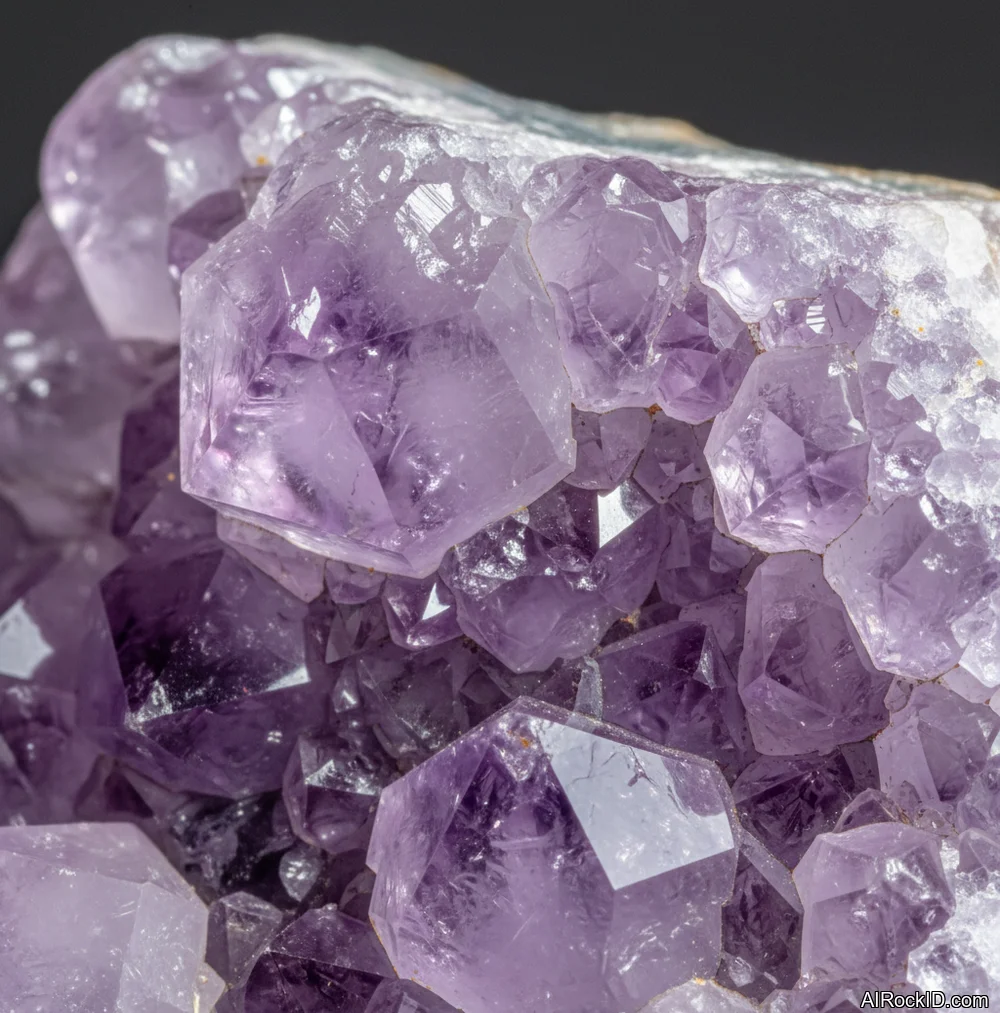
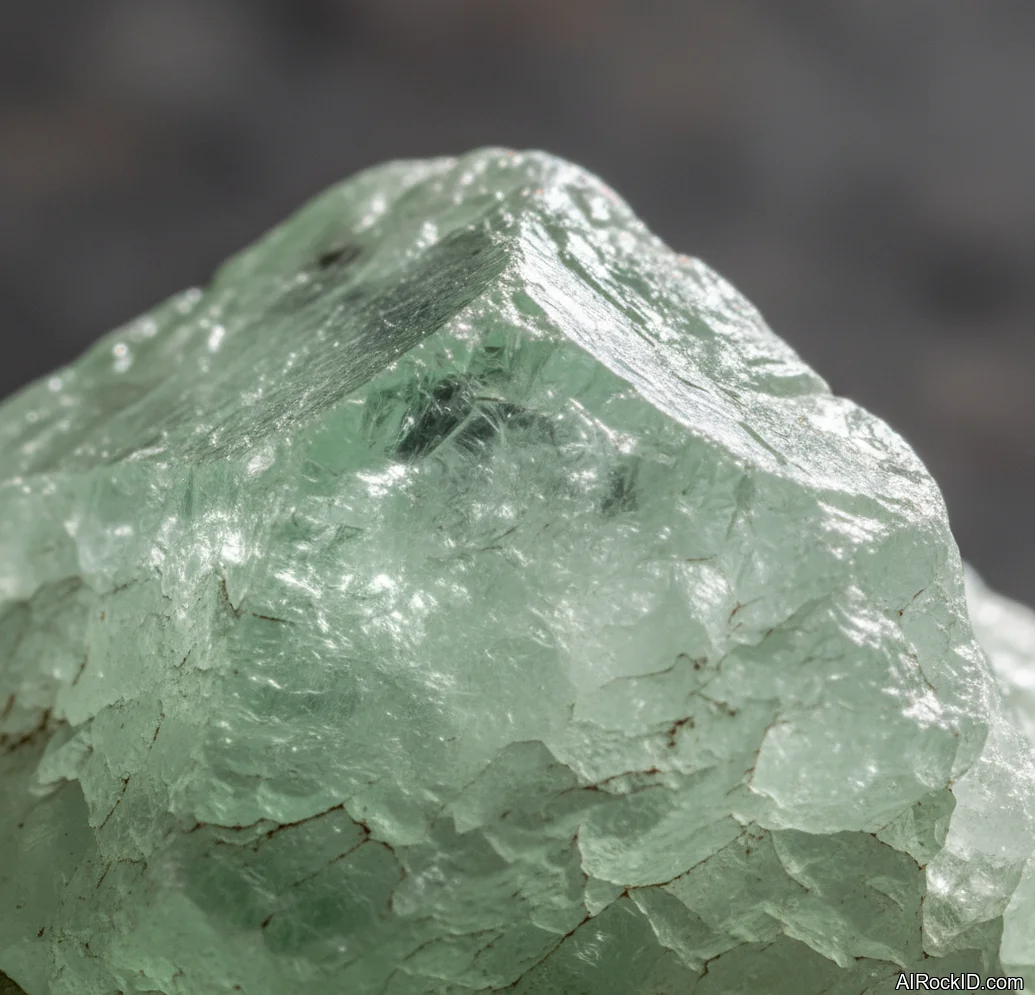
Prasiolite, which you’ll often see labeled “green amethyst,” is just quartz with a pale green color, and most of it gets that way because certain amethyst or smoky quartz is heat-treated.
Hold a piece and it’s basically the same deal as any quartz. It hits your palm cool at first, it’s hard, and if you click it gently against another stone you get that clean, glassy little tick that quartz always has. The only real hook is the color: it can be a washed-out mint green, or it can lean a bit yellow-green, and it’ll look punchier under warm indoor bulbs but kind of fade back in daylight. Funny how much lighting messes with it, right?
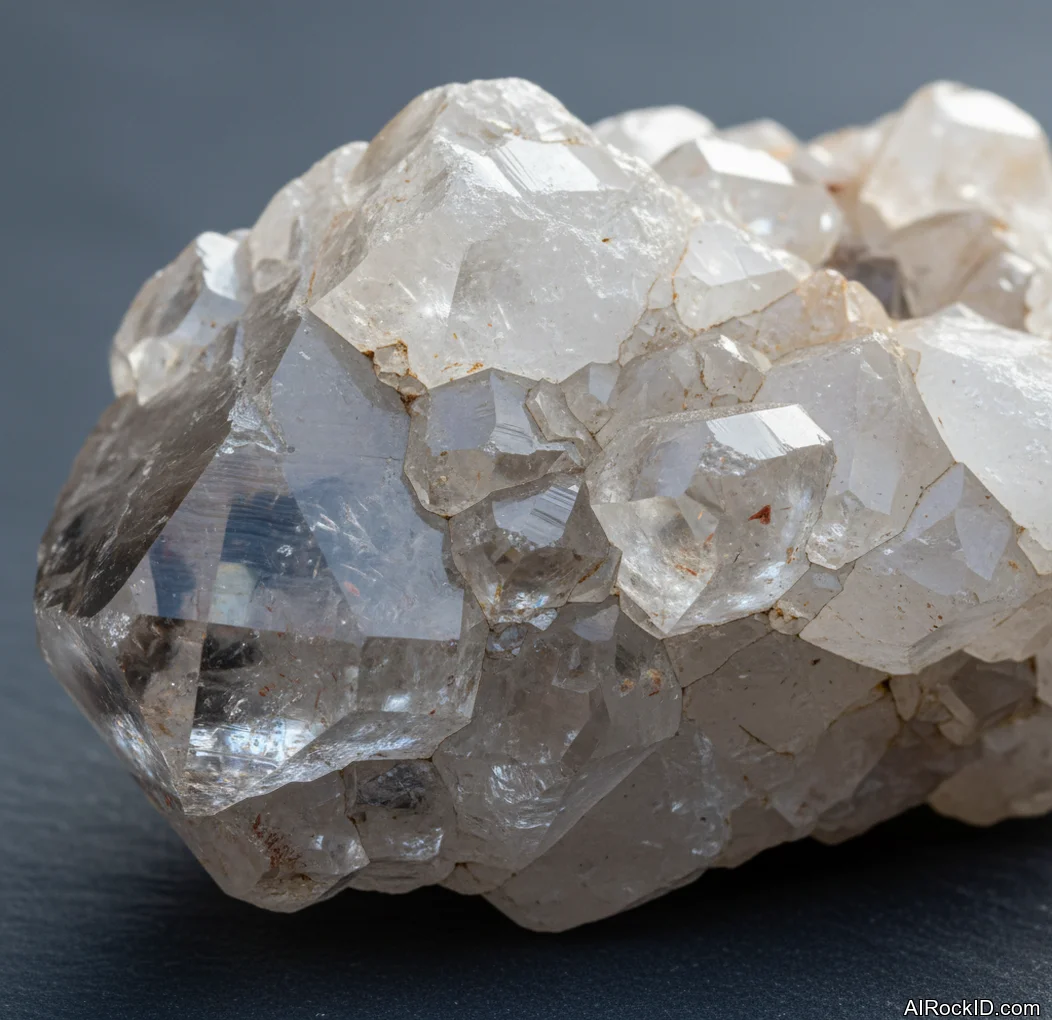
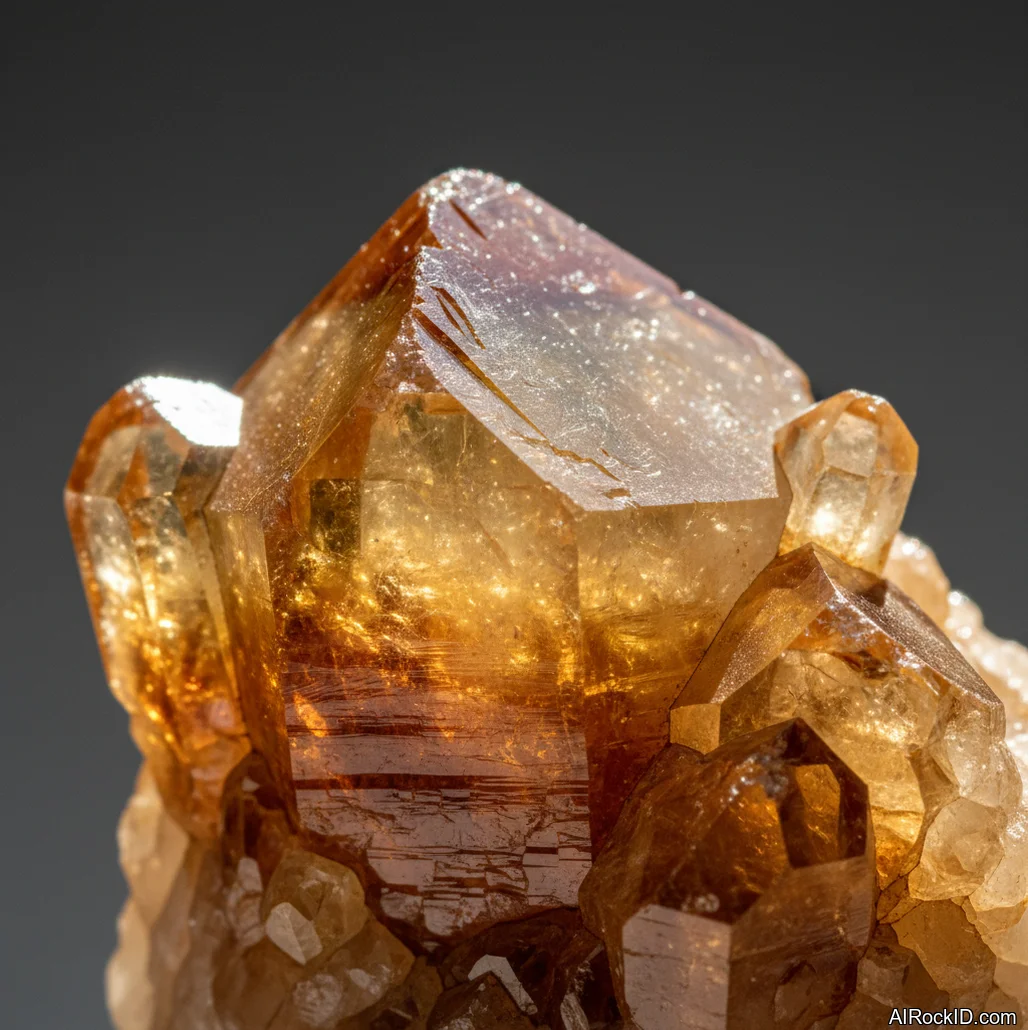
And honestly, a lot of what you’re seeing at shows is cut material, not a natural crystal sitting there. Faceted prasiolite can look super clean and almost watery, but sometimes it crosses into that too-perfect vibe. Natural green quartz usually isn’t that uniform. You tend to see zoning, faint smoky tones, or little inclusions that interrupt the color (the stuff you notice when you tilt it and the light catches).
Origin & History
Prasiolite gets its name from Greek roots that basically mean “leek-green stone.” It’s not some dusty old museum term, either. It’s a newer trade name that really took off once folks figured out that a thin piece of amethyst will flip to green if you heat it just right.
Calling it “green amethyst” is pure marketing, and yeah, it trips people up at the counter constantly. It’s still quartz, sure. But it’s not a separate mineral, and once those color centers change, it isn’t amethyst anymore. Most dealers I’ve dealt with will print “prasiolite” on the tag when they’re being honest, and they’ll slap “green amethyst” on there when they’re trying to sell it quick.
Where Is Prasiolite Green Amethyst Found?
Most commercial prasiolite starts as amethyst from Brazil (especially Minas Gerais) that turns green after heating, while truly natural prasiolite is reported from a few scattered localities including parts of the USA, Brazil, and the Swiss Alps.
Formation
Quartz forms when silica-rich fluids squeeze through cracks and little open pockets in volcanic rock and hydrothermal veins. If the chemistry doesn’t swing around much and that cavity stays open long enough, you end up with those classic prismatic crystals, with clean faces that had time to stack up.
Prasiolite’s green, though, usually isn’t something the crystal “grew” as down in the ground. It typically starts out as amethyst or smoky quartz that already has the right trace iron and the right radiation history, and then heat nudges the color centers over into that pale green. But here’s the catch: only certain amethyst will do it, so you can’t just toss any purple quartz in an oven and expect a nice green to pop out. I’ve watched people try (and, yeah, it usually ends exactly how you think).
How to Identify Prasiolite Green Amethyst
Color: Light mint-green to yellowish green, typically very even in faceted stones and more uneven or zoned in natural pieces. Color is usually soft rather than saturated.
Luster: Vitreous, like clean glass.
Look closely at the color under two lights: daylight and a warm lamp. A lot of prasiolite looks greener under warm bulbs and almost watery-clear in sun. If you scratch it with a steel blade, you won’t get far, but it will scratch ordinary window glass easily. And in the hand it should feel like quartz: cool, hard, and not “waxy” like many green chalcedonies.
Properties of Prasiolite Green Amethyst
Physical Properties
| Crystal System | Trigonal |
| Hardness (Mohs) | 7 (Hard (6-7.5)) |
| Density | 2.65 g/cm3 |
| Luster | Vitreous |
| Diaphaneity | Transparent to translucent |
| Fracture | Conchoidal |
| Streak | White |
| Magnetism | Non-magnetic |
| Colors | pale green, mint green, yellow-green, green with faint smoky tone |
Chemical Properties
| Classification | Silicates |
| Formula | SiO2 |
| Elements | Si, O |
| Common Impurities | Fe, Al, Ti, Mn |
Optical Properties
| Refractive Index | 1.544-1.553 |
| Birefringence | 0.009 |
| Pleochroism | Weak |
| Optical Character | Uniaxial |
Prasiolite Green Amethyst Health & Safety
Prasiolite is just quartz (SiO2), so it’s generally safe to handle and rinse off under the tap. If you’re cutting or grinding it, though, treat it like any other lapidary work: keep the dust down, wear the usual protection, and don’t breathe the fine powder.
Safety Tips
If you’re shaping it, keep a spray bottle or a slow trickle of water on it, make sure you’ve got real airflow in the area (open doors, a fan pulling dust out), and wear a proper respirator that’s actually rated for fine silica dust.
Prasiolite Green Amethyst Value & Price
Price Range
Rough/Tumbled: $5 - $40 per tumbled stone or small specimen
Cut/Polished: $2 - $15 per carat
Bigger, clean stones with a deeper green and a crisp cut usually fetch more. But that pale, kind of window-glass-looking stuff? Cheap. Natural-color prasiolite, or crystals tied to a documented locality, can shoot up in price in a hurry.
Durability
Durable — Scratch resistance: Excellent, Toughness: Good
It’s stable for normal wear, but long, direct sun can make some pieces look a bit washed out over time.
How to Care for Prasiolite Green Amethyst
Use & Storage
Store it like you would any quartz jewelry: separate from softer stones so it doesn’t act like sandpaper in a pouch. If it’s a display piece, keep it out of harsh window sun to protect the color.
Cleaning
1) Rinse with lukewarm water and a drop of mild soap. 2) Use a soft brush for settings or crevices, then rinse well. 3) Pat dry with a microfiber cloth and let it air-dry before storing.
Cleanse & Charge
A simple rinse and a few minutes on a windowsill with indirect light is plenty if you do that sort of thing. Skip salt bowls if the stone is set in metal that can tarnish.
Placement
On a desk it looks clean and calming, especially next to clear quartz where the green reads greener by contrast. I like it on a shelf where you can catch that glassy flash when you walk past.
Caution
Skip steam cleaners and those harsh jewelry dips, especially if you’ve got faceted stones sitting in a setting. And don’t leave it parked in direct sun for weeks on end (like on a windowsill) if you actually want the color to stay consistent.
Works Well With
Prasiolite Green Amethyst Meaning & Healing Properties
Next to purple amethyst, prasiolite just sits there and breathes. It’s not “louder.” Not sharper. It’s that steady, airy green that doesn’t argue with whatever else you’ve got on the table.
And when I’m sorting trays at a show, I’ll sometimes park a prasiolite point right by the cash box. Not for any dramatic reason. It just keeps the vibe from getting too wired when the crowd’s piling in and the fluorescent lights are buzzing (you know that slightly jittery feeling?).
If you’re into crystal symbolism, people usually link this green quartz energy with heart-centered themes and clear communication. In my own stash, it’s the one I reach for when I want that clean quartz feel, but I’m kinda over the purple storyline for the day. But look, here’s the honest limit: if you’re expecting a deep emerald-green punch, you’re going to be disappointed. Most prasiolite is pale. That soft color is a big part of why it reads “gentle” to people.
None of this is medical. Thing is, there’s also a practical bit that gets lost in all the woo talk: prasiolite’s color can swing a lot depending on the lighting and what it’s sitting on. Put it on a white cloth and it can look almost clear, like it’s washing out at the edges. Set it on black velvet and suddenly the green pops back in. So that little shift ends up changing how people react way more than any label ever does.
Identify Any Crystal Instantly
Snap a photo and get properties, value, care instructions, and healing meanings in seconds.