Pyrope Garnet
What Is Pyrope Garnet?
Pyrope garnet is a magnesium-aluminum garnet with the formula Mg3Al2(SiO4)3. It usually runs deep red to purplish red, and it crystallizes in the cubic system.
Pick up a decent pyrope and the first thing you clock is the weight. Seriously. Even a small tumbled piece sits heavy in your palm compared to quartz, and the surface has that glassy feel, but it’s not slick like a freshly polished windowpane (more like smooth, hard, and a little “dry” under your thumb).
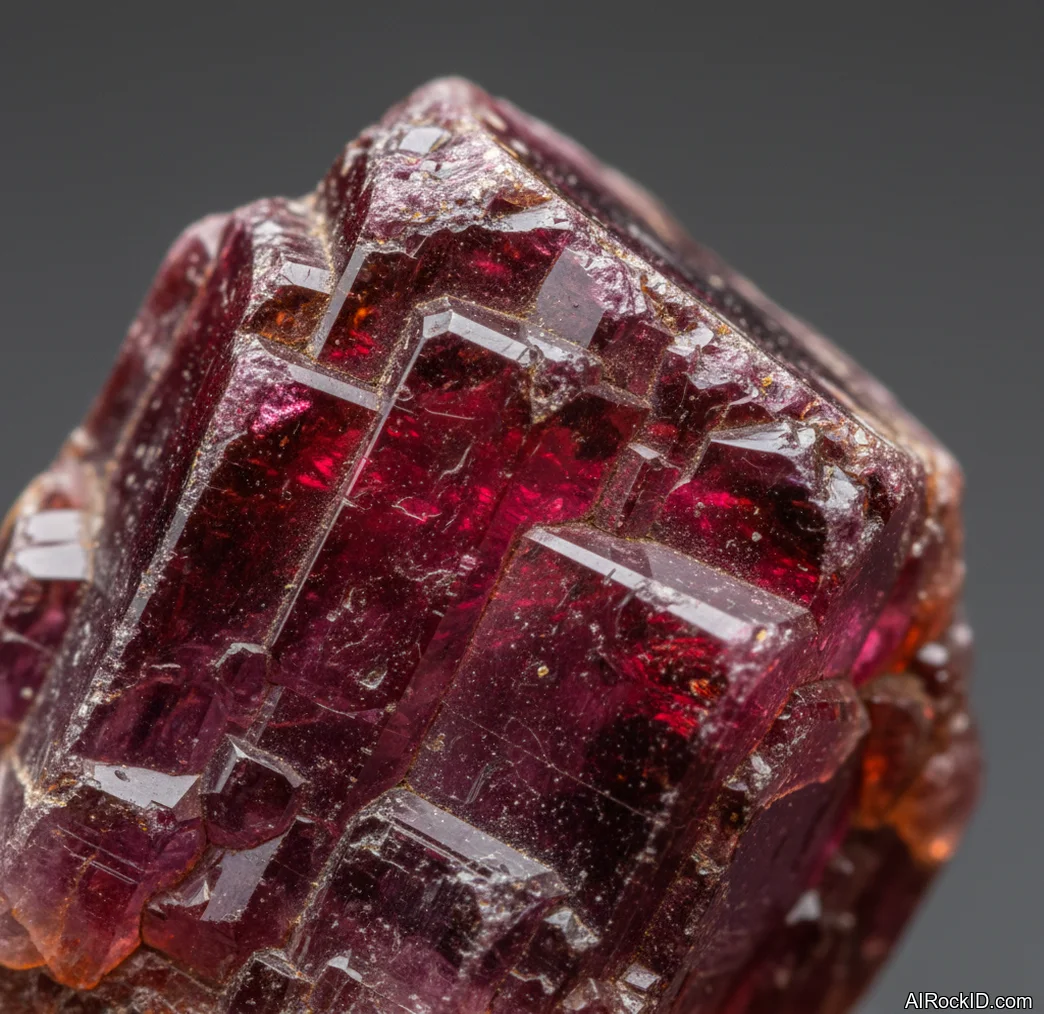
And the color is what grabs you. Under indoor lighting it can read almost black-red. Then you move it closer to a window and it wakes up, flashing wine, cranberry, sometimes a hint of purple. Ever notice how some stones look dead until the light hits them right?
But here’s the thing: people will call any red garnet “pyrope” at a glance, and in the real world a lot of stones are mixed within the garnet family. You’ll run into pyrope-almandine blends constantly in jewelry trays. Pure pyrope usually keeps that cleaner, slightly purplish red, and it doesn’t pick up the brownish, brick-like tone you see in a lot of almandine-heavy material.
Origin & History
In 1803, Abraham Gottlob Werner called pyrope its own garnet species. He pulled the name from the Greek “pyropos,” basically “fire-eyed,” and honestly, that tracks once you’ve seen a good one catch a point light and flash like it’s lit from inside.
And you’ll also hear “Bohemian garnet” when you’re digging through old jewelry or poking around antique markets, especially for pieces tied to what’s now the Czech Republic. Most of that stuff is small, but the color is loud. I’ve had Victorian-era pieces in my hands where the stones are basically pinheads, set so close together you can feel the metal beads between them with a fingernail (if you’re not careful), and they still look punchy after a century of wear. That says a lot about garnet durability, doesn’t it?
Where Is Pyrope Garnet Found?
Pyrope occurs in high-grade metamorphic rocks and mantle-derived rocks, and it also shows up as rounded grains in placer deposits where tougher minerals survive transport.
Formation
Most pyrope grows under serious pressure, the kind you only get way down in the lower crust or up in the mantle. That’s why it keeps coming up alongside peridotite and kimberlite, and why diamond exploration people pay attention to pyrope grains in the first place. They’re hunting for those specific “G10” type pyrope compositions that tip them off to diamond-friendly ground.
But if you’re collecting, what you usually run into is pyrope that’s been popped out of its original rock and then sorted by moving water. River-tumbled garnet grains and little pebbles get rounded off (you can feel that smooth, almost waxy edge when you rub one between your fingers) and end up sitting in gravels with magnetite and other heavy minerals. And in metamorphic rocks, pyrope can show up in gneiss or schist as rounded, sometimes cracked crystals that honestly look like somebody pushed tiny red marbles into the rock and left them there.
How to Identify Pyrope Garnet
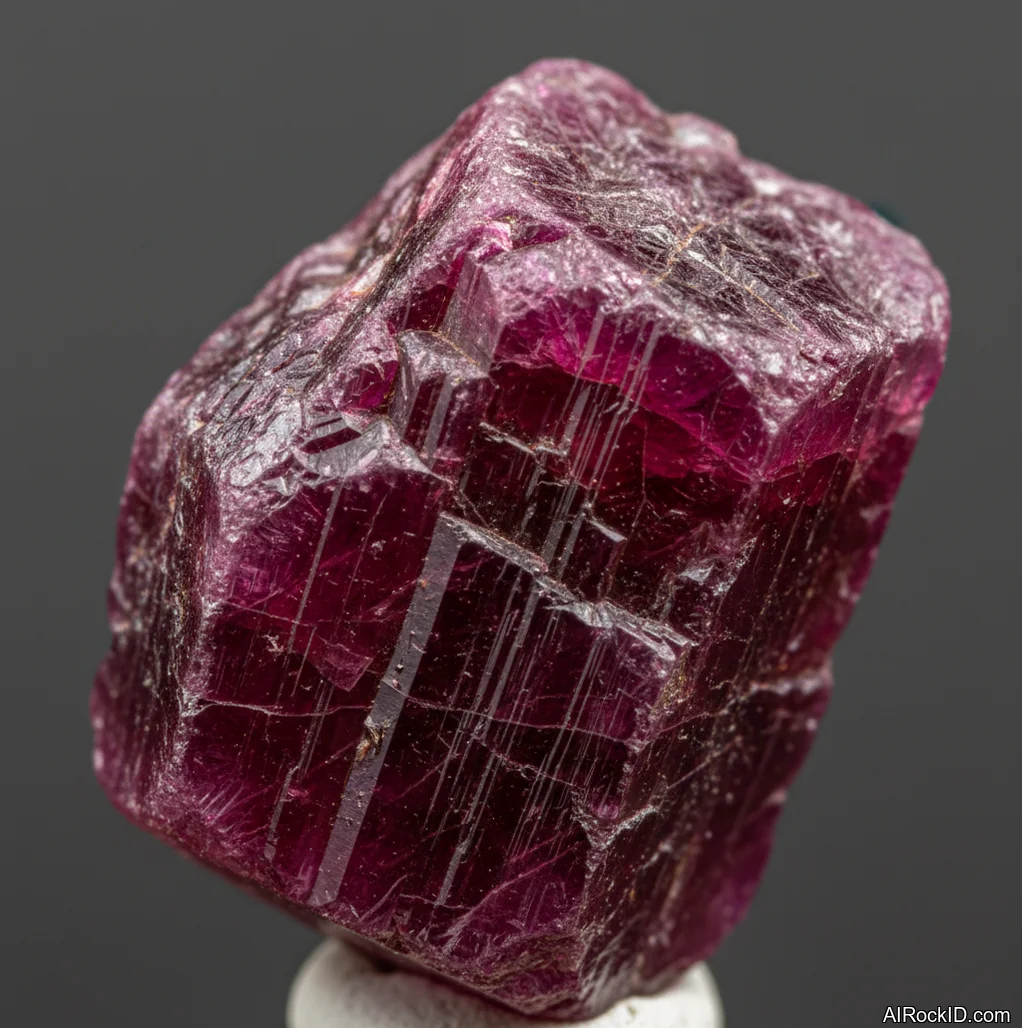
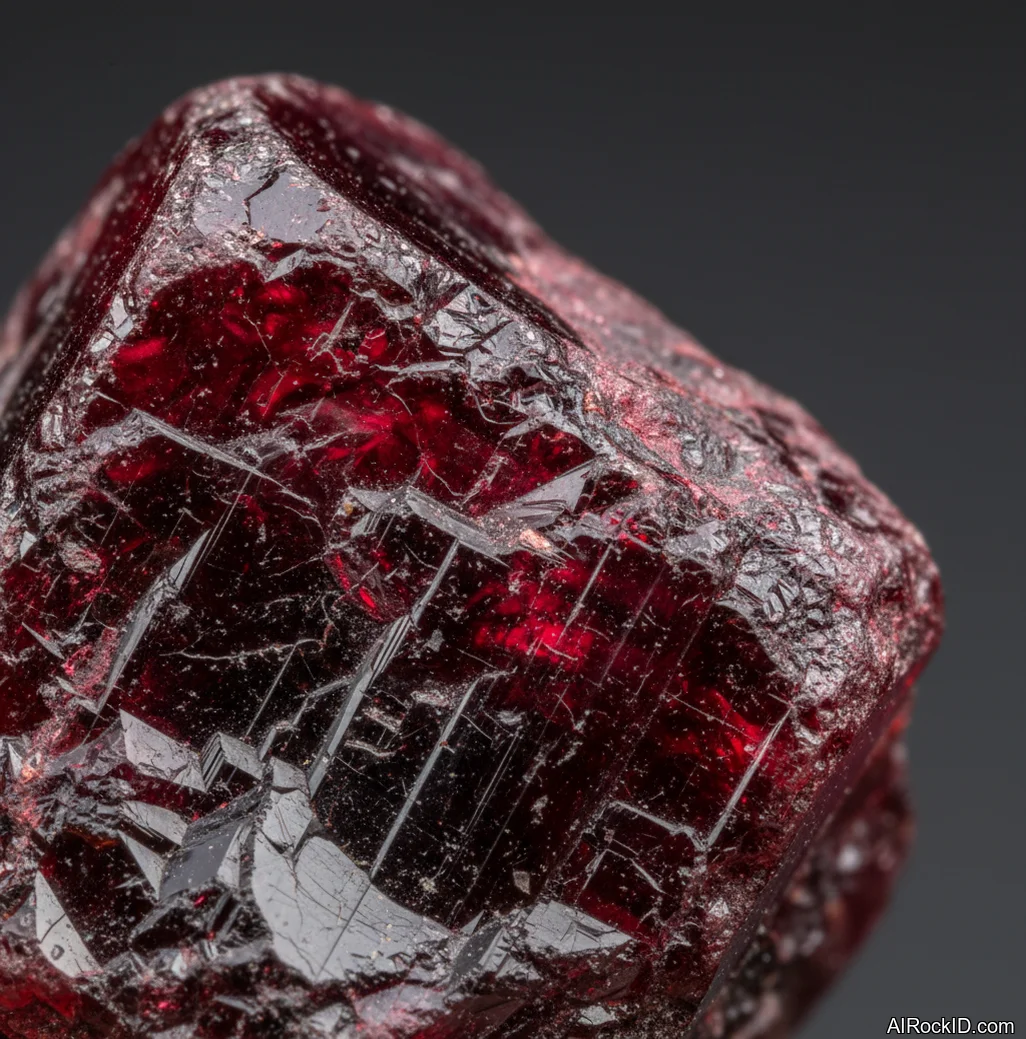
Color: Typical pyrope is deep red to purplish red, sometimes so dark it looks nearly black until strong light hits it. Chrome-bearing pyrope can lean more vivid red with a slightly “cool” tone.
Luster: Vitreous luster, like broken bottle glass on a fresh face.
Look closely at the shape on natural crystals. Garnets love dodecahedrons and trapezohedrons, and the faces can look softly rounded from growth or wear. The real test is weight and hardness together: it feels dense, and it’ll scratch glass without much drama. And if you’ve got a loupe, check for curved fracture surfaces and little internal “heat” flashes instead of the bright rainbow fire you’d expect from cubic zirconia.
Properties of Pyrope Garnet
Physical Properties
| Crystal System | Cubic |
| Hardness (Mohs) | 7.0-7.5 (Hard (6-7.5)) |
| Density | 3.70-3.90 g/cm3 |
| Luster | Vitreous |
| Diaphaneity | Transparent to translucent |
| Fracture | Conchoidal |
| Streak | White |
| Magnetism | Non-magnetic |
| Colors | Deep red, Purplish red, Dark red, Reddish brown (when mixed with almandine) |
Chemical Properties
| Classification | Silicates |
| Formula | Mg3Al2(SiO4)3 |
| Elements | Mg, Al, Si, O |
| Common Impurities | Fe, Cr, Mn, Ca |
Optical Properties
| Refractive Index | 1.714-1.742 |
| Birefringence | None |
| Pleochroism | None |
| Optical Character | Isotropic |
Pyrope Garnet Health & Safety
Pyrope garnet’s usually fine to handle, and it won’t have any issues being in water either. But if you’re grinding or sanding it, treat it like any other silicate: wear eye protection, keep the dust down (wet sanding helps), and don’t breathe that grit.
Safety Tips
If you’re going to cut or grind it, keep a steady trickle of water on the spot, put on eye protection (real goggles, not just regular glasses), and don’t breathe in the fine dust.
Pyrope Garnet Value & Price
Price Range
Rough/Tumbled: $5 - $60 per tumbled stone or small specimen
Cut/Polished: $20 - $300 per carat
Most of the price comes down to color (that bright, stop-you-in-your-tracks red vs the too-dark stuff), clarity, and size. Clean, well-cut stones that still look lively under indoor light and don’t turn inky cost a lot more than the common dark material.
Durability
Durable — Scratch resistance: Excellent, Toughness: Good
Pyrope is stable in everyday handling and normal household conditions, but it can chip on sharp edges if it takes a hard knock.
How to Care for Pyrope Garnet
Use & Storage
Keep pyrope away from harder stones like corundum and diamond so it doesn’t pick up surface scuffs. I store mine in small gem jars or wrap jewelry pieces so the stones don’t clack together.
Cleaning
1) Rinse with lukewarm water and a drop of mild soap. 2) Use a soft toothbrush to get into settings or pits. 3) Rinse well and dry with a soft cloth.
Cleanse & Charge
If you do energetic cleansing, running water and a quick wipe are usually enough. Avoid salt soaks if the stone is set in metal that can tarnish.
Placement
A pyrope looks best where light can get through it, even a little. Try a spot near a lamp or a window shelf, but don’t cook it on a hot sill inside a magnifying glass situation.
Caution
Skip ultrasonic cleaners if the piece has heavily included stones, or if it’s older and the prongs feel a little fragile when you nudge them with a fingernail. And don’t put any garnet jewelry anywhere near harsh acids or bleach.
Works Well With
Pyrope Garnet Meaning & Healing Properties
Compared to a lot of the “love and light” stones people rave about, pyrope feels way more grounded when you actually hold it. It’s dense. It’s dark. And it doesn’t come off as fragile at all. When I’ve got one rolling around in my pocket, it sits there like a steady little weight, kind of like a worry stone, except it doesn’t heat up in your hand as fast.
In crystal lore, pyrope usually gets linked to drive, courage, and hanging on when you’d honestly rather bail. I can live with that idea, as long as it stays in the realm of personal practice and doesn’t drift into medical territory. What I notice day to day is less dramatic: if I’m fidgety, a tumbled garnet gives my fingers something smooth and solid to mess with. Slick surface, rounded edges, that cool-to-warm shift after a minute. And yeah, that alone can make it easier to focus.
But here’s where it gets annoying. A lot of sellers lump “pyrope” in with basically any red garnet, then pile on huge promises like it’s going to fix your life. If you’re after the vibe you connect with pyrope, just buy it for what it is: a deep red garnet that feels heavy and looks better in strong light. Use it as an intention tool if that’s your thing (why not?), but don’t treat it like a replacement for a doctor or a therapist.
Identify Any Crystal Instantly
Snap a photo and get properties, value, care instructions, and healing meanings in seconds.