Pyroxmangite
What Is Pyroxmangite?
Pyroxmangite is a manganese silicate mineral with the formula MnSiO3, and it sits in the pyroxenoid group.
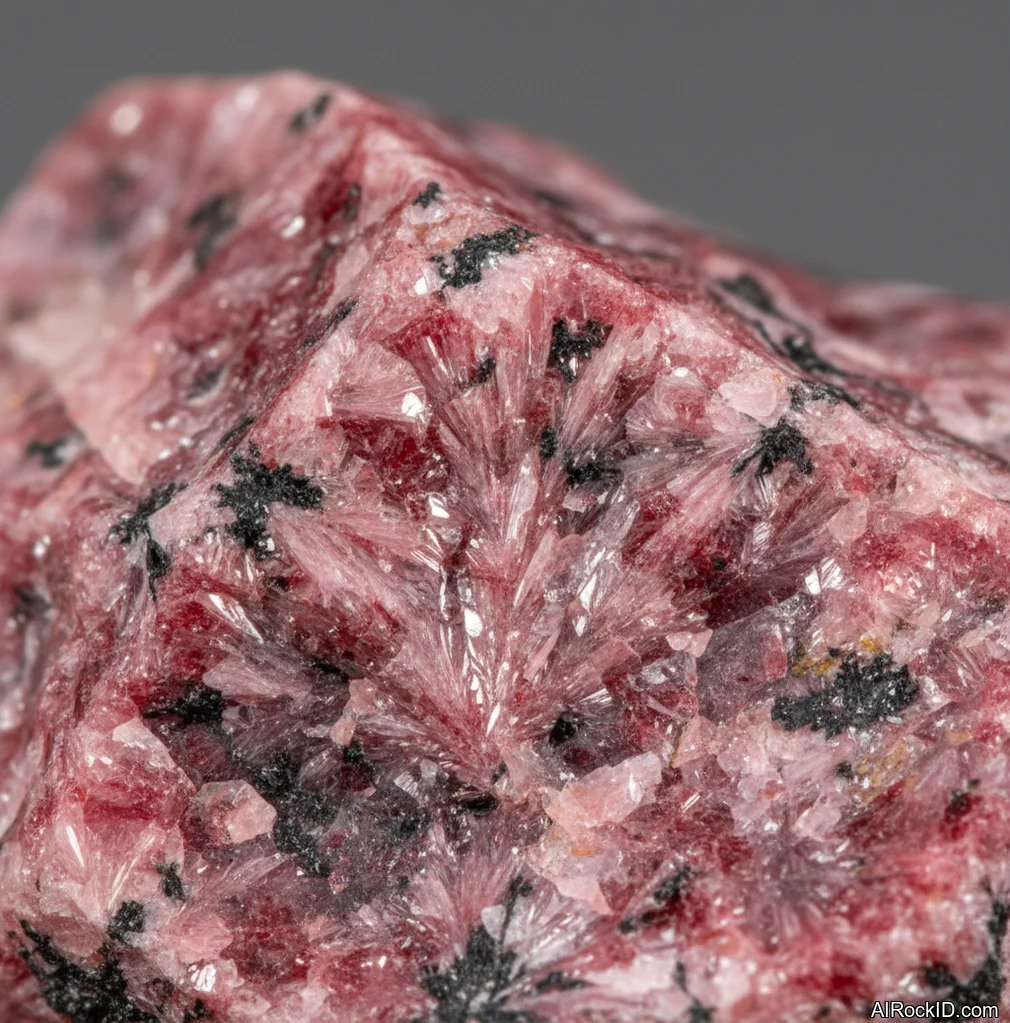
Grab a solid chunk and you’ll feel it right away. It’s heavier than it looks. That “heavy for its size” thing you get with a lot of manganese minerals, where it sort of sinks into your palm. The color can swing from a dusty rose to a deeper raspberry red, especially if you catch a fresh break and turn it so the light skims across it.
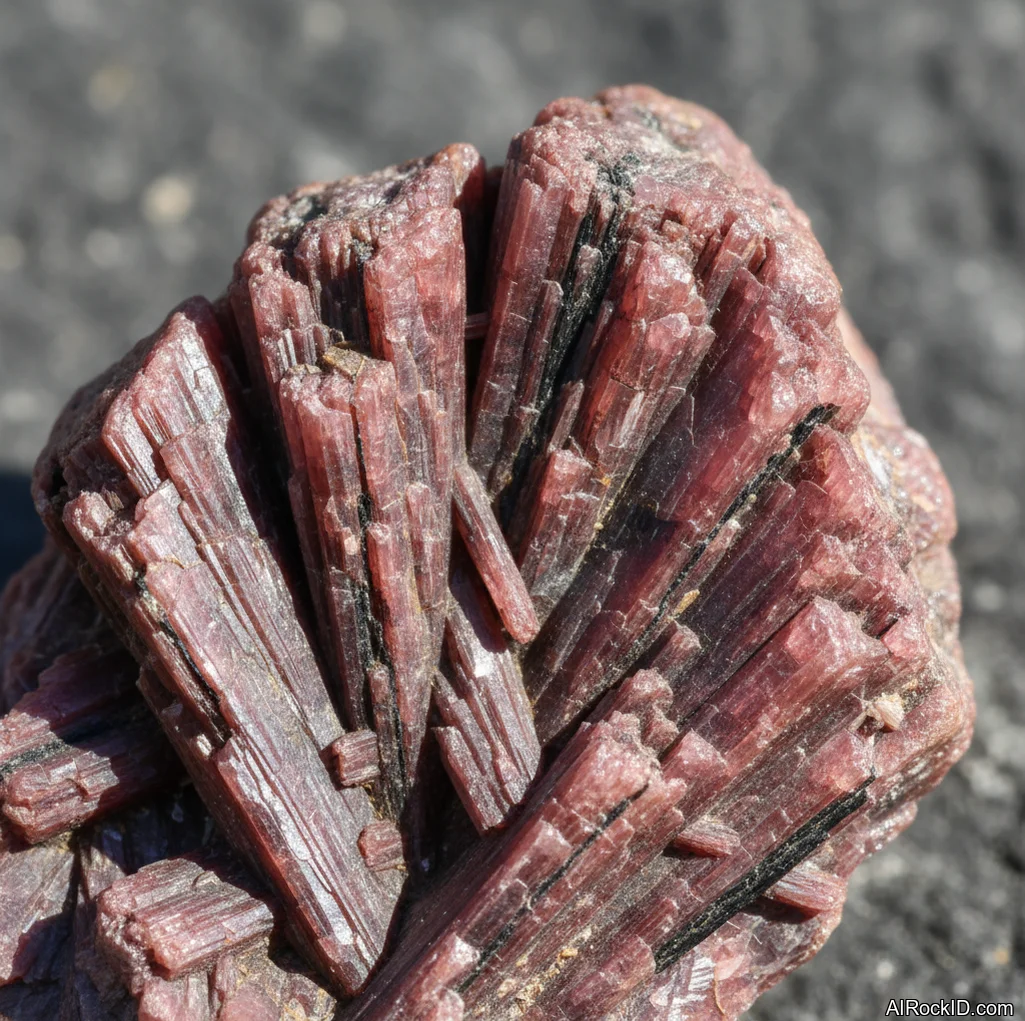
People mix it up with rhodonite constantly, and yeah, I see it too. But pyroxmangite tends to show a more fibrous or bladed habit, and the cleavage has a different sheen when you tilt it under a shop light (that quick flash versus a flatter look). And if it’s tangled up with other Mn minerals, it can get kind of chaotic-looking. Some pieces just aren’t pretty, honestly. But the good specimens? They’ve got this warm, saturated pink-red that jumps out in a display case.
Origin & History
The name’s basically Greek: “pyro” (fire) plus “manganese,” which is a pretty on-the-nose nod to its manganese-heavy chemistry and the reddish tones collectors go after.
Pyroxmangite got pinned down as its own mineral species in the early 20th century, back when mineralogists were trying to sort out manganese silicates that didn’t quite sit right in the classic pyroxene category. And yeah, older labels and dealer cards are still a mess. You’ll run into the spelling “pyroxymangite” on tags even when the specimen itself has been identified correctly.
Where Is Pyroxmangite Found?
It shows up in manganese-rich metamorphic settings and ore districts, with classic collector material coming from places like Broken Hill (Australia) and a handful of manganese deposits worldwide.
Formation
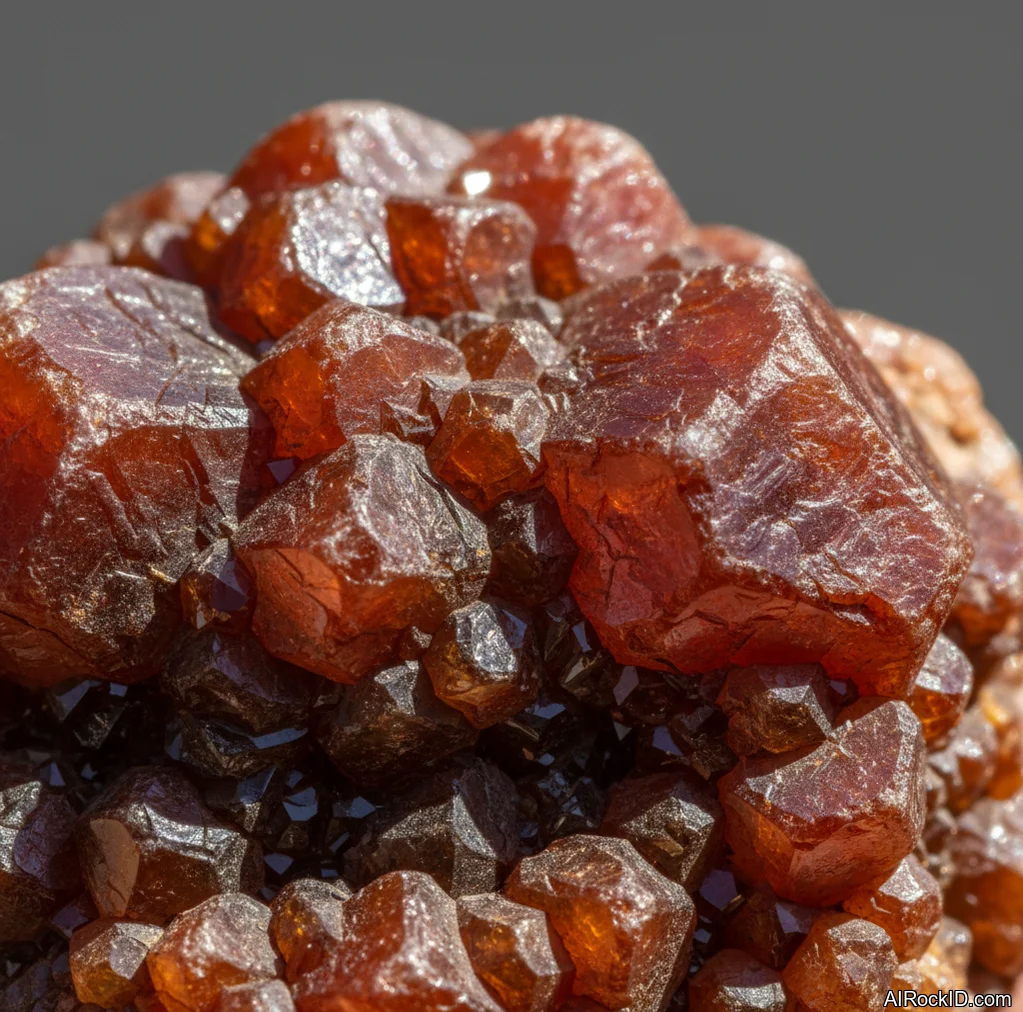
Most pyroxmangite shows up when manganese-rich sediments or chemical deposits get metamorphosed. So picture layers that started out packed with Mn, then got heated up and squeezed hard until the chemistry re-sorted itself into pyroxenoids, rhodonite, spessartine, plus a few other tag-alongs.
Compared with a clean, “one-mineral” setup, these Mn assemblages are kind of a mess. And in hand sample you’ll often find pyroxmangite tangled up with rhodonite or bustamite, with contacts that fade into each other instead of drawing a nice sharp line. That’s why field ID is tricky: color won’t save you. Two pink rocks can be totally different minerals, and pyroxmangite has a habit of disappearing into the blend.
How to Identify Pyroxmangite
Color: Usually pink, rose, red, or brownish red, sometimes with gray or black from associated manganese oxides. Fresh surfaces can look brighter than weathered ones.
Luster: Vitreous to silky on clean cleavage or fibrous surfaces.
Look closely at how the light slides across the surface. On pyroxmangite, you can get a slick, almost silky flash on bladed or fibrous areas that feels different than the waxier look many rhodonites have. If you scratch it with a steel nail, it’ll often mark, but it won’t crumble like a super soft Mn oxide. The real test is lab work if you need certainty, because rhodonite, bustamite, and pyroxmangite can be a three-way confusion on dealer tables.
Properties of Pyroxmangite
Physical Properties
| Crystal System | Triclinic |
| Hardness (Mohs) | 5.5-6 (Medium (4-6)) |
| Density | 3.65-3.75 g/cm3 |
| Luster | Vitreous |
| Diaphaneity | Translucent to opaque |
| Fracture | Uneven |
| Streak | White |
| Magnetism | Non-magnetic |
| Colors | Pink, Rose, Red, Reddish brown, Gray |
Chemical Properties
| Classification | Silicates |
| Formula | MnSiO3 |
| Elements | Mn, Si, O |
| Common Impurities | Fe, Ca, Mg |
Optical Properties
| Refractive Index | 1.73-1.76 |
| Birefringence | 0.020 |
| Pleochroism | Weak |
| Optical Character | Biaxial |
Pyroxmangite Health & Safety
Normal handling’s fine. Just treat it like any other silicate mineral. And when you’re cutting or sanding it, don’t kick up dust, and definitely don’t breathe it in.
Safety Tips
If you’re going to lap it or cut it with a saw, run water on it the whole time. Keep the area well-ventilated (crack a door or window, kick on a fan), and wear a proper respirator that’s actually rated for fine particulates. Dust gets everywhere, fast.
Pyroxmangite Value & Price
Price Range
Rough/Tumbled: $15 - $250 per specimen
Cut/Polished: $10 - $60 per carat
Price can jump all over the place depending on how saturated the color is, how clean it looks when you tilt it under a light, and whether it’s a confirmed ID. Bright red-pink, well-formed material runs higher. But if it’s mixed, kind of dull, or packed with inclusions you can spot right away, it usually stays cheap.
Durability
Moderate — Scratch resistance: Fair, Toughness: Fair
It’s stable in normal room conditions, but it can chip along weaknesses and it doesn’t love rough wear in jewelry.
How to Care for Pyroxmangite
Use & Storage
Store it wrapped or in a compartment box so harder stones don’t scuff it. If it’s a bladed piece, don’t let it rattle around in a jar.
Cleaning
1) Rinse with lukewarm water. 2) Use a soft toothbrush with a drop of mild soap to lift dirt from cracks. 3) Rinse again and pat dry; don’t use steam or ultrasonic cleaners.
Cleanse & Charge
If you do energy-style cleansing, stick to gentle stuff like smoke, sound, or leaving it on a shelf overnight. Avoid salt bowls if the specimen has delicate seams or micro-fractures.
Placement
A shaded display spot is best, where you can angle light across the surface to catch that silky sheen. Keep it away from places where it’ll get knocked over.
Caution
Don’t kid yourself and treat this like some bulletproof jewelry stone. At Mohs 5.5–6, it’s going to show wear, and you’ll see little scratches and tiny chips along the edges if it gets knocked around. So skip harsh acids, and don’t use abrasive cleaning powders (the gritty stuff that feels like sand between your fingers).
Works Well With
Pyroxmangite Meaning & Healing Properties
Most dealers who stock pyroxmangite end up bringing up rhodonite in the same sentence, and honestly that’s where a lot of the feel around it comes from. In crystal circles, people tie it to the heart, old emotional leftovers, and learning how to stop clamping down on what you’re feeling. But you’re dealing with a rarer stone that isn’t as “standardized,” so the experience can swing a bit because the material itself swings a bit.
Grab a palm-sized chunk and just sit with it for a minute. Real pyroxmangite stays cool and steady in your hand, not zingy or buzzy. Like, you can feel that calm weight against your skin, even if your hand’s already warm from holding it. I’ve noticed the folks who are into it usually go for quieter stones overall, the kind that feel grounded instead of sparkly, loud, or showy. But if you’re expecting it to look like one of those candy-pink polished rhodonite towers, you might be let down. A lot of pyroxmangite is subtler. Sometimes it’s got that softer, muted look that doesn’t scream for attention. Just sits there.
And none of this is medical. If someone’s selling it like it’ll cure anything, that’s a red flag. I treat it more like a reminder stone, the kind you keep around to check in with yourself when you’re stuck in that “I’m fine” loop, even though you’re obviously not fine. (Happens to everybody, right?)
Identify Any Crystal Instantly
Snap a photo and get properties, value, care instructions, and healing meanings in seconds.