Rose Aura Quartz
What Is Rose Aura Quartz?
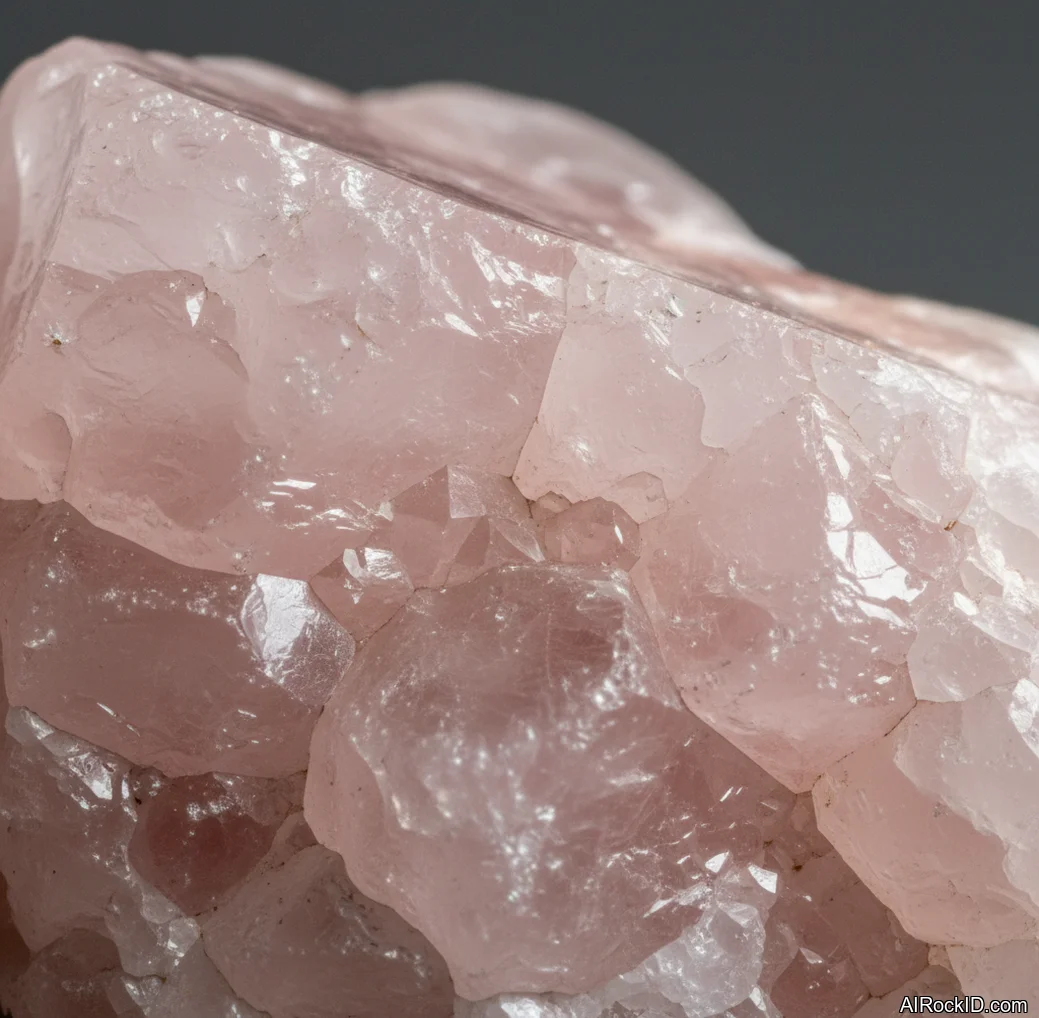
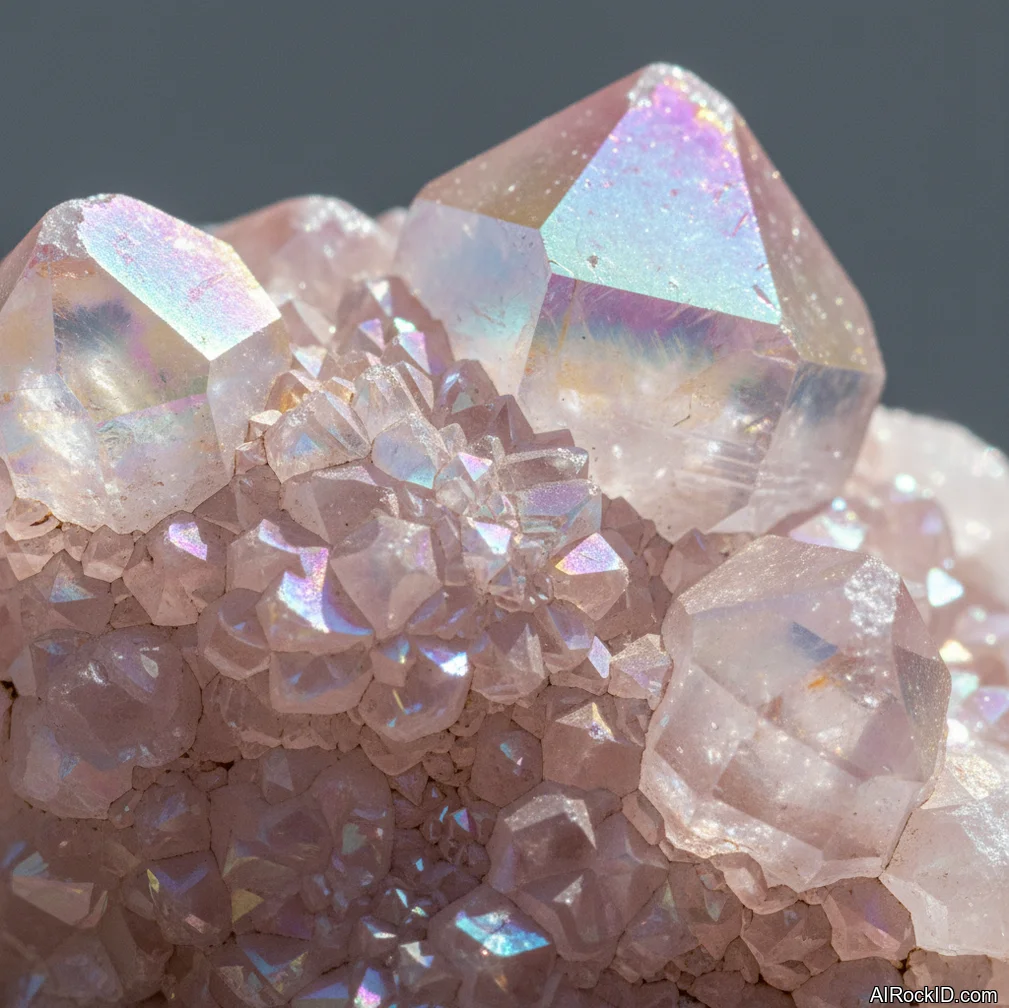
Rose Aura Quartz starts out as natural quartz, then someone adds a super-thin, manmade metallic coating so the outside turns pink and iridescent.
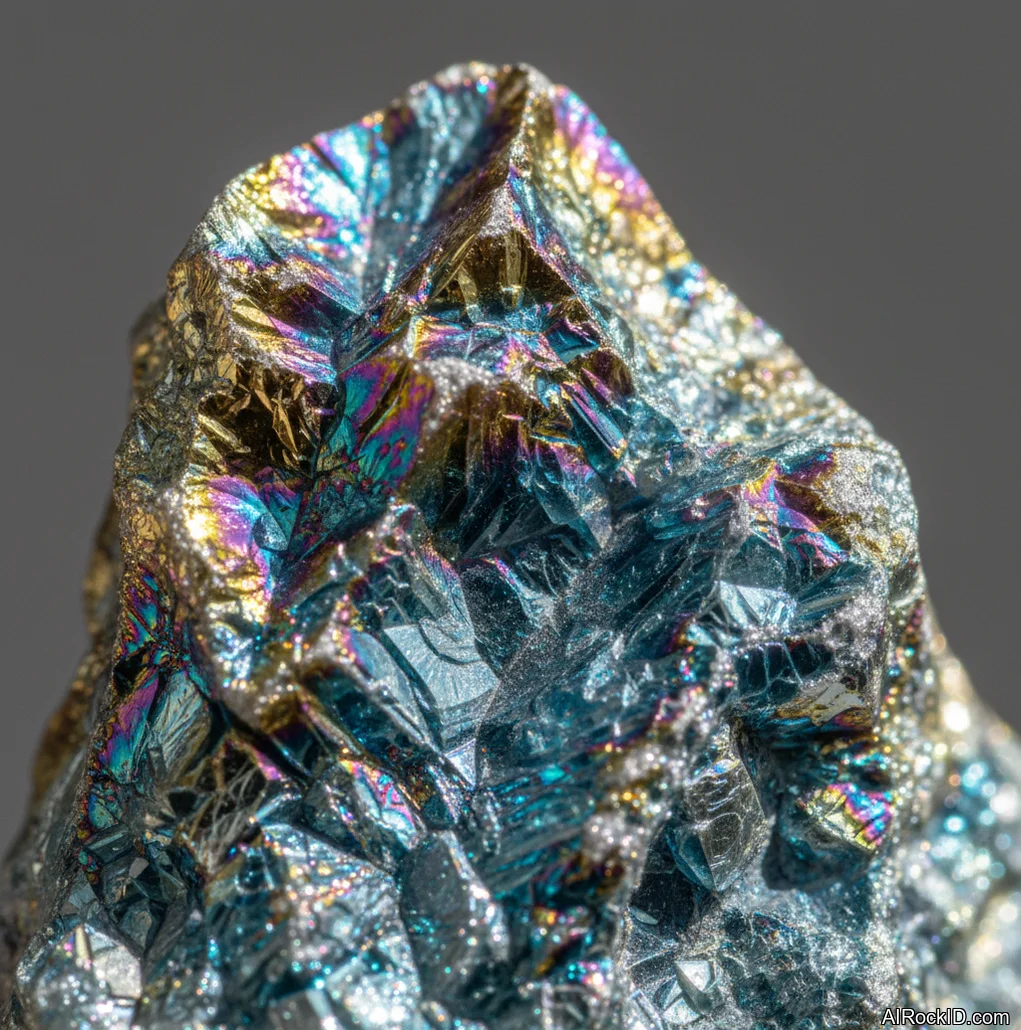
Grab a point and you feel it right away. Still that cool, glassy quartz weight in your palm. But the surface looks like it snatched a sunset and refused to give it back. Tip it under a shop light and you’ll see that slick oil-on-water flash, only it skews rose, magenta, and sometimes you catch a little copper at the edges. Most of the time the coating goes on after the crystal’s already grown, so the color isn’t “in” the quartz, it’s sitting on the outside, especially along the faces and sharp ridges where the light hits hardest (and where your thumb usually ends up).
And here’s the part collectors figure out fast. It’s not a separate mineral species. It’s a treated look. Some people are all-in for the glow, others skip it because they only want natural color. I keep a couple around anyway. They photograph ridiculously well, and that coating can make even a plain quartz point look like a display piece from across the room.
Origin & History
Aura-coated quartz isn’t some old-time mine find. It’s a modern treatment. Thing is, it really only starts showing up in the trade in the late 20th century, right around when vacuum deposition and thin-film coatings got picked up for crystals being sold at gem shows and in new age shops. The coating’s often done with titanium and other metals, and you can usually spot it from that slick, rainbowy sheen sitting on the surface (it looks like a thin “skin,” not something that grew naturally).
And the name? Pure marketing. “Aura” points at the iridescent shine, and “rose” is just the pink tone they’re aiming for. Sellers also swap labels constantly. One booth will tag the exact same batch “Rose Aura,” the next will call it “Rose Gold Aura,” and if you ask what metal they used, you’ll often get a shrug, because the coating recipe isn’t always disclosed.
Where Is Rose Aura Quartz Found?
The base crystal is quartz from classic quartz-producing regions, and the aura coating is applied later in a workshop rather than at the mine.
Formation
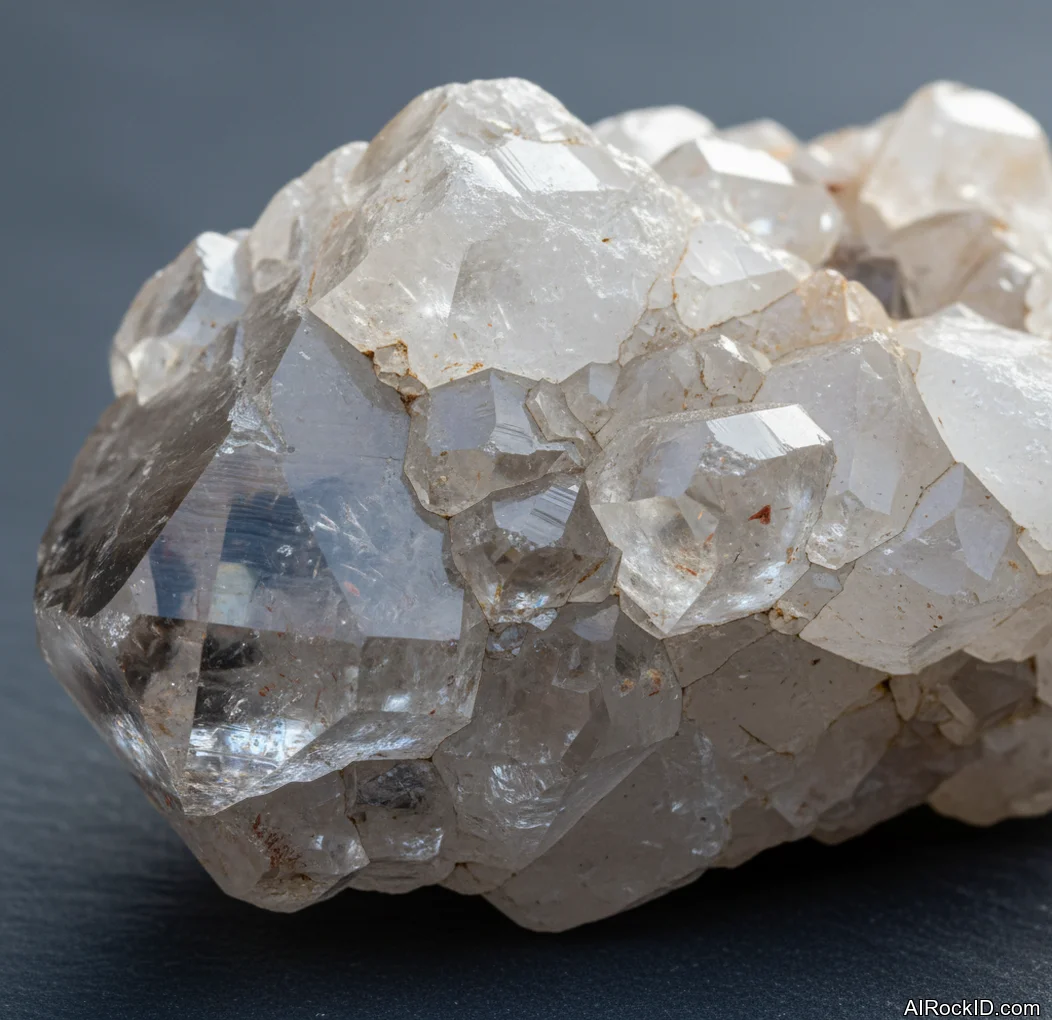
Quartz can grow a bunch of different ways, but the pointy crystals people use for aura treatments are usually hydrothermal quartz. Hot, silica-rich fluid pushes through cracks and little pockets in rock, then it cools down and leaves behind SiO2. Over time that build-up turns into those familiar trigonal prisms with the sharp terminations everyone recognizes.
The pink “rose aura” color comes later. It’s not how the quartz formed in the ground. A super-thin metallic film gets laid onto the surface, usually inside a vacuum chamber, and it’s thin enough to cause interference colors. That’s why the color flips around when you turn it in your hand.
And if you’ve handled a lot of it, you start noticing the tells. The coating often ends up a bit heavier along edges and ridges, and it can collect in tiny surface pits (you’ll see little darker spots or a slightly different sheen), especially on cheaper batches.
How to Identify Rose Aura Quartz
Color: Clear to milky quartz body with a surface pink to rosy-magenta iridescent coating that shifts with angle and lighting.
Luster: Vitreous quartz luster under a metallic, iridescent surface sheen.
Look closely at the color: it should sit on the outside, with extra flash on ridges and termination edges, while the interior stays basically quartz-clear or milky. The real test is a tiny chip or uncoated spot near the base or in a damaged area where you can see plain quartz underneath. And if you’ve got a loupe, check for a slightly speckled, thin-film look on the faces instead of natural color zoning running through the crystal.
Properties of Rose Aura Quartz
Physical Properties
| Crystal System | Trigonal |
| Hardness (Mohs) | 7 (Hard (6-7.5)) |
| Density | 2.65 g/cm3 |
| Luster | Vitreous |
| Diaphaneity | Transparent to translucent |
| Fracture | Conchoidal |
| Streak | White |
| Magnetism | Non-magnetic |
| Colors | Clear, White, Pink, Rose, Magenta, Iridescent |
Chemical Properties
| Classification | Silicates |
| Formula | SiO2 |
| Elements | Si, O |
| Common Impurities | Al, Fe, Ti |
Optical Properties
| Refractive Index | 1.544-1.553 |
| Birefringence | 0.009 |
| Pleochroism | None |
| Optical Character | Uniaxial |
Rose Aura Quartz Health & Safety
Normal handling is pretty low risk, honestly. Just treat it like you would any other quartz specimen, the kind that feels cool and a little slick in your palm and leaves that faint dusty film on your fingers after you’ve moved it around. But don’t go grinding or drilling it unless you’ve got proper dust control in place. Why invite a cloud of fine powder if you don’t have to?
Safety Tips
If you’re going to cut, grind, or polish quartz, don’t do it dry. Use wet methods, keep the surface damp (you’ll actually see that slurry instead of that light, floating dust), and wear a proper respirator so you don’t end up breathing in silica dust. Why risk it?
Rose Aura Quartz Value & Price
Price Range
Rough/Tumbled: $5 - $60 per piece
Price mostly comes down to size, how clean and sharp the quartz point actually is, and how even that coating looks up close, with no bald spots or those odd little blotches that jump out the second you tilt it under the light.
Durability
Durable — Scratch resistance: Excellent, Toughness: Good
Quartz holds up well, but the thin aura coating can scuff or wear on edges if it rubs against other stones.
How to Care for Rose Aura Quartz
Use & Storage
Store it so the coated faces don’t rub against harder edges or other points. I wrap mine or keep it in a little box because the coating shows every scuff.
Cleaning
1) Rinse briefly with lukewarm water. 2) Use a drop of mild soap and your fingers or a very soft brush for dirt in crevices. 3) Rinse and pat dry; don’t scrub the coated faces hard.
Cleanse & Charge
If you do energetic cleansing, use smoke, sound, or moonlight instead of abrasive salt. Long, gritty salt baths can dull the coating over time.
Placement
Put it where light hits at an angle, like a shelf near a lamp, so the pink flash shows. Keep it out of gritty windowsills where dust acts like sandpaper.
Caution
Skip ultrasonic cleaners, strong chemicals, and any kind of scrubbing with a stiff brush, because the coating is what’ll give up first (it’s the weak spot). And don’t just toss it loose into a pouch with other crystals; if you actually care about the finish, that’s a fast way to end up with scuffs.
Works Well With
Rose Aura Quartz Meaning & Healing Properties
At first glance, Rose Aura Quartz kind of looks like someone bottled pink mood lighting and turned it into a crystal. And yeah, that’s a big reason people buy it. In crystal circles, it gets tied to heart stuff, softness, and that emotional “reset” feeling you’re craving after a week that just wouldn’t quit. Since the base is still quartz, a lot of folks mix the usual “quartz clarity” idea with the rose tone when they want something gentler.
But look, speaking as someone who buys minerals for what they actually are, the metaphysical side is personal practice, not a lab finding. If you put two points from the same batch in my hand, one with that perfect glossy coat and one with the edges rubbed a little dull, they feel the same in the palm. Cool. Smooth. Almost glassy, like a piece of hard candy that never warms up. Still, the look matters more than people admit. Color and sparkle mess with your attention in a real way, and aura quartz definitely has both, so it can change how you show up for meditation or journaling. That’s not nothing.
Thing is, the market gets messy because some sellers blur the line and hint that it’s naturally pink quartz. It isn’t. If you like it, just like it. Use it as a visual cue for compassion, kindness, or calming down before sleep. Just don’t treat it like medical care, and don’t pay rare-mineral prices for a common coated point.
Identify Any Crystal Instantly
Snap a photo and get properties, value, care instructions, and healing meanings in seconds.