Sanidine
What Is Sanidine?
Sanidine is a high-temperature potassium feldspar mineral (KAlSi3O8). It crystallizes in volcanic rocks, and it cools fast enough to hang onto that disordered structure.
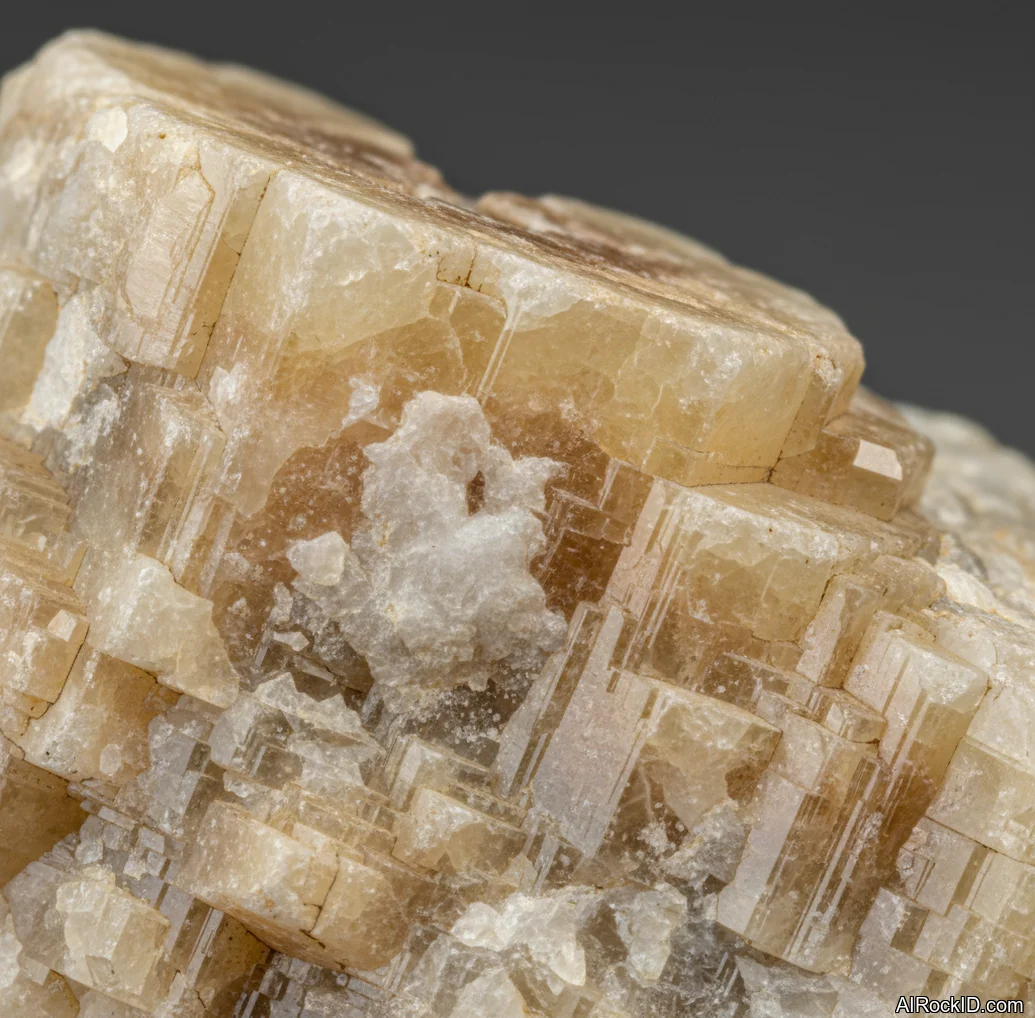
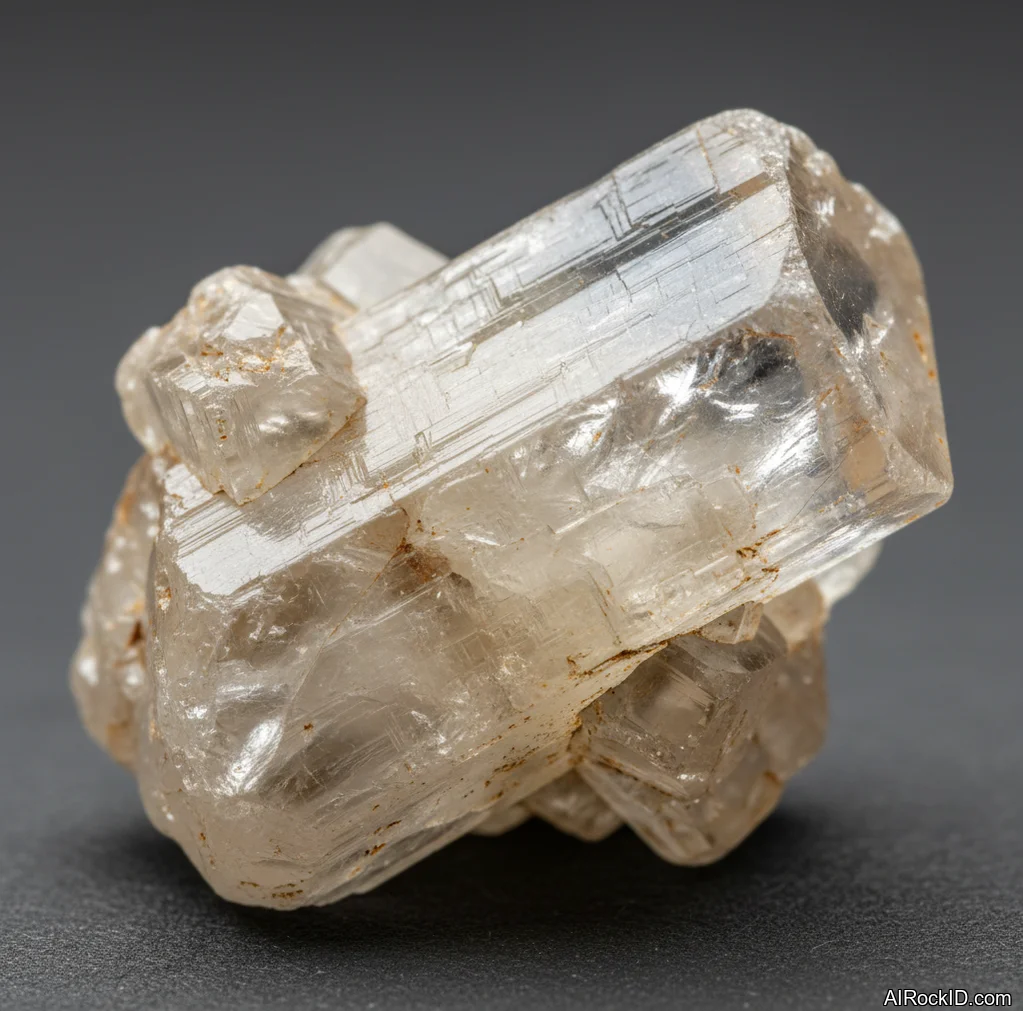
Pick up a clean crystal and, honestly, the first thing you notice is how “feldspar” it feels. Light in the hand. Crisp edges. And those flat cleavage faces that grab the shop lights like tiny mirrors when you roll it around between your fingers. Some pieces look totally blah sitting in a tray until you tip them a few degrees and, bam, one face throws a bright flash, then it goes dead again.
At first glance, people mix it up with quartz, or even calcite, when it’s colorless. But sanidine doesn’t have quartz’s greasy-hard feel, and it doesn’t do calcite’s reaction tricks. Most of what I run into out in the wild is pale gray to white, stuck in volcanic chunks. The collector stuff is different. Clear, sharp, and kind of shockingly pretty when it actually grows into decent crystals.
Origin & History
“Sanidine” gets its name from the Greek word for “tablet,” which fits once you’ve actually held a piece and watched how those tabular crystals sit there like little stacked tiles. And feldspar has that habit of splitting into flat plates, the kind that catch the light on a fresh break if you tilt it in your fingers.
Mineralogists pinned it down as its own feldspar species in the 1800s, right around the time they started sorting the high-temperature, volcanic K-feldspars from the versions that cooled more slowly.
Look, if you spend any time with older collections, you’ll run into sanidine tags paired with the classic volcanic localities. That label mattered for a simple reason. It became a handy clue: find sanidine and you’re usually looking at a high-temperature, relatively fast-cooled origin, not the slow, granite kind of story.
Where Is Sanidine Found?
Sanidine turns up in volcanic settings worldwide, especially rhyolites, trachytes, and phonolites. Classic collector material often comes out of European volcanic fields and a handful of well-known volcanic provinces elsewhere.
Formation
Hot, shallow, fast. That’s the sanidine formula.
It crystallizes out of potassium-rich, silica-bearing melts when the temperature’s high, and you usually run into it in volcanic rocks like rhyolite and trachyte, where cooling happens so quickly feldspar doesn’t get much time to reorganize.
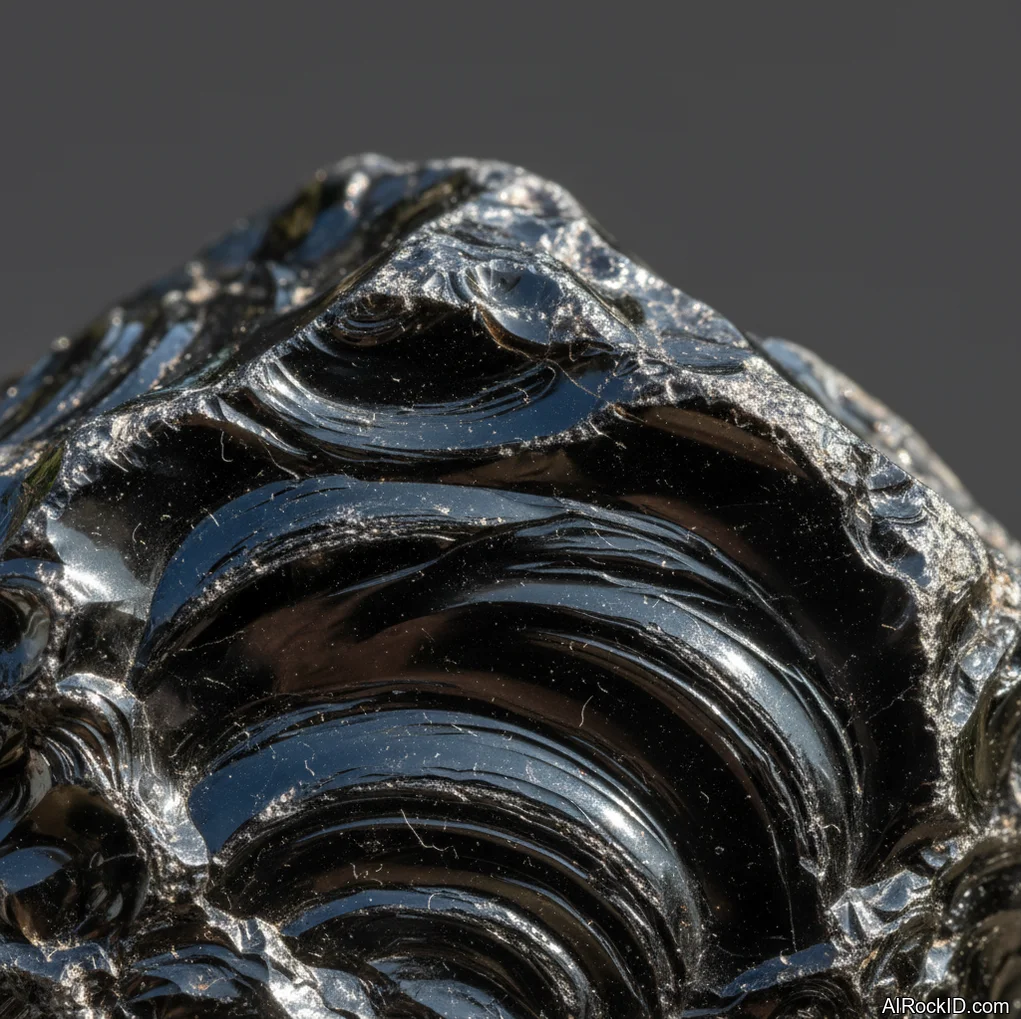
Look closely at a rhyolite hand sample and sanidine often shows up as phenocrysts, those bigger crystals kind of “floating” in a much finer groundmass. And sometimes, in glassy rocks, you’ll spot sanidine as tiny clear crystals sitting in or right next to obsidian, which is a weirdly satisfying contrast: sharp crystal faces against black glass (almost like someone sprinkled sugar on a dark countertop). But it’s not a sure thing. Plenty of flows chill so fast you end up with mostly glass, plus tiny feldspar microlites instead of those showy crystals.
How to Identify Sanidine
Color: Most sanidine is colorless, white, cream, or pale gray, sometimes with a faint yellow or smoky tint depending on inclusions and alteration. It can look “clear like quartz” in the best crystals, but it usually has a softer, milkier vibe.
Luster: Vitreous on fresh faces, sometimes leaning slightly pearly on cleavage surfaces.
Pick up the crystal and hunt for the two good cleavages that meet close to a right angle. Those flat breaks are your best friend for ID. If you scratch it with a steel nail, it usually won’t take a mark, but it also won’t feel as glass-hard as quartz when you try a careful scratch test on an inconspicuous spot. The real test is the cleavage plus context: sanidine sitting in a volcanic rock is way more believable than a random “clear crystal” in a mixed tumbles bin.
Properties of Sanidine
Physical Properties
| Crystal System | Monoclinic |
| Hardness (Mohs) | 6-6.5 (Hard (6-7.5)) |
| Density | 2.55-2.63 g/cm3 |
| Luster | Vitreous |
| Diaphaneity | Transparent to translucent |
| Fracture | Uneven |
| Streak | white |
| Magnetism | Non-magnetic |
| Colors | colorless, white, cream, pale gray, pale yellow |
Chemical Properties
| Classification | Silicates |
| Formula | KAlSi3O8 |
| Elements | K, Al, Si, O |
| Common Impurities | Na, Ca, Fe |
Optical Properties
| Refractive Index | 1.518-1.526 |
| Birefringence | 0.006-0.008 |
| Pleochroism | None |
| Optical Character | Biaxial |
Sanidine Health & Safety
Sanidine’s usually safe to pick up and keep on a shelf. The only real day-to-day issue, like with most silicates, is the dust you can kick up if you cut it or grind it, so don’t breathe that stuff in.
Safety Tips
If you’re doing lapidary work, keep water running and wear the right respirator. But for everyday collecting and storage, you really just need to not drop it on a hard floor.
Sanidine Value & Price
Price Range
Rough/Tumbled: $5 - $80 per specimen
Cut/Polished: $5 - $40 per carat
Prices bounce around based on how sharp the crystal faces are, how clean the clarity looks, the size, and whether it’s sitting on a good-looking matrix from a known volcanic locality. Thing is, most dealers tag it the way they’d tag a specialty feldspar, not like a mainstream gem.
Durability
Moderate — Scratch resistance: Good, Toughness: Fair
It holds up fine in a cabinet, but the perfect cleavage means it can chip or split if it gets knocked around.
How to Care for Sanidine
Use & Storage
Store sanidine so it can’t rattle against harder minerals. I keep mine in a perky box or on a padded shelf because cleavage chips happen fast.
Cleaning
1) Rinse with lukewarm water to remove loose grit. 2) Use a soft toothbrush with a drop of mild dish soap, especially around crystal edges. 3) Rinse well and air-dry; avoid blasting it with hot water.
Cleanse & Charge
For a simple reset, rinse briefly and let it dry in indirect light. If you like non-water methods, a few minutes of smoke or sound is gentle and won’t risk knocking edges.
Placement
A stable cabinet spot beats a desk corner where it’ll get bumped. If it’s on a volcanic matrix, support the matrix, not the crystal tips.
Caution
Don’t use an ultrasonic cleaner. And don’t soak anything that’s got crumbly volcanic matrix (the kind that turns to grit if you rub it with a fingertip) or any visible cracks. Also, skip hard knocks or drops, because sanidine can cleave cleanly and suddenly, almost like it just snaps along a line you didn’t even notice.
Works Well With
Sanidine Meaning & Healing Properties
Compared to the flashier stuff, sanidine comes off like a quiet, head-clearing feldspar when you’ve actually got one in your hand. When I’m sorting flats after a show, I’ll sometimes leave a clean sanidine crystal right on the table, kind of off to the side where I can keep seeing it, because it nudges me into a more organized mood. It’s not dramatic. It’s more like steady, practical focus that doesn’t ask for attention.
Look, if you stare at how it breaks, you can see why people tie it to mental structure. Those flat planes and the near-right-angle cleavage are pure order, almost like it wants to stack itself neatly. In a personal, non-medical sense, I link it with sorting priorities, simplifying plans, cutting through mental noise, and just getting my thoughts into a cleaner line. But if you’re dealing with real anxiety or insomnia, crystals are a comfort object at best, not a fix. That’s the honest version.
Thing is, there’s some friction here: a lot of “sanidine meaning” stuff online is just generic feldspar talk with a new label slapped on. In real life, most people won’t spot it in a tray unless it’s labeled, so the connection ends up being pretty personal and kind of niche. And if you already vibe with volcanic stones, sanidine slides right into that theme, especially if you pair it with rhyolite or obsidian from the same sort of terrain. Why force it to be louder than it is?
Identify Any Crystal Instantly
Snap a photo and get properties, value, care instructions, and healing meanings in seconds.