Turkish Amethyst
What Is Turkish Amethyst?
Turkish Amethyst is just amethyst: a purple variety of quartz (SiO2) that comes out of deposits in Turkey.
Grab a decent piece and the first thing you clock is the feel. Classic quartz weight. Cool in your palm. And those tiny sharp edges where the points butt up against the matrix will absolutely catch a fingertip if you rub it the wrong way.
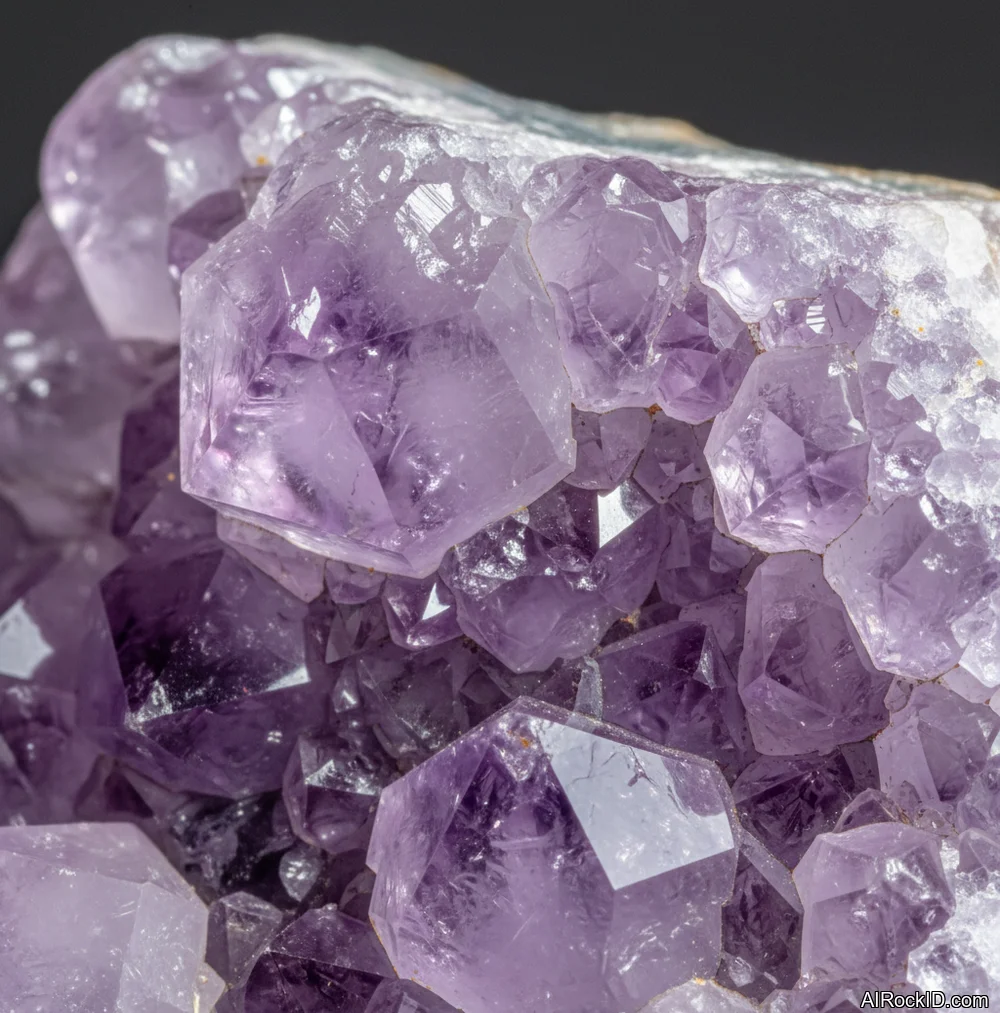
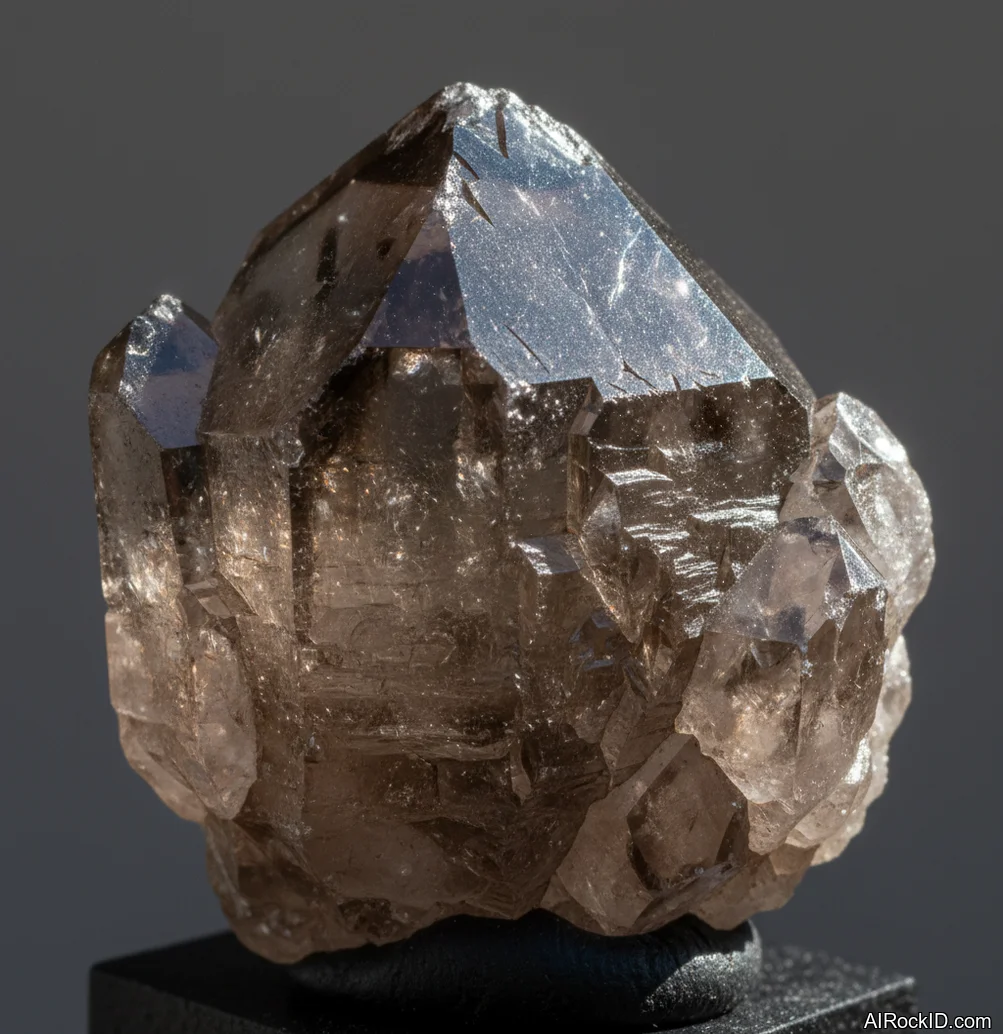
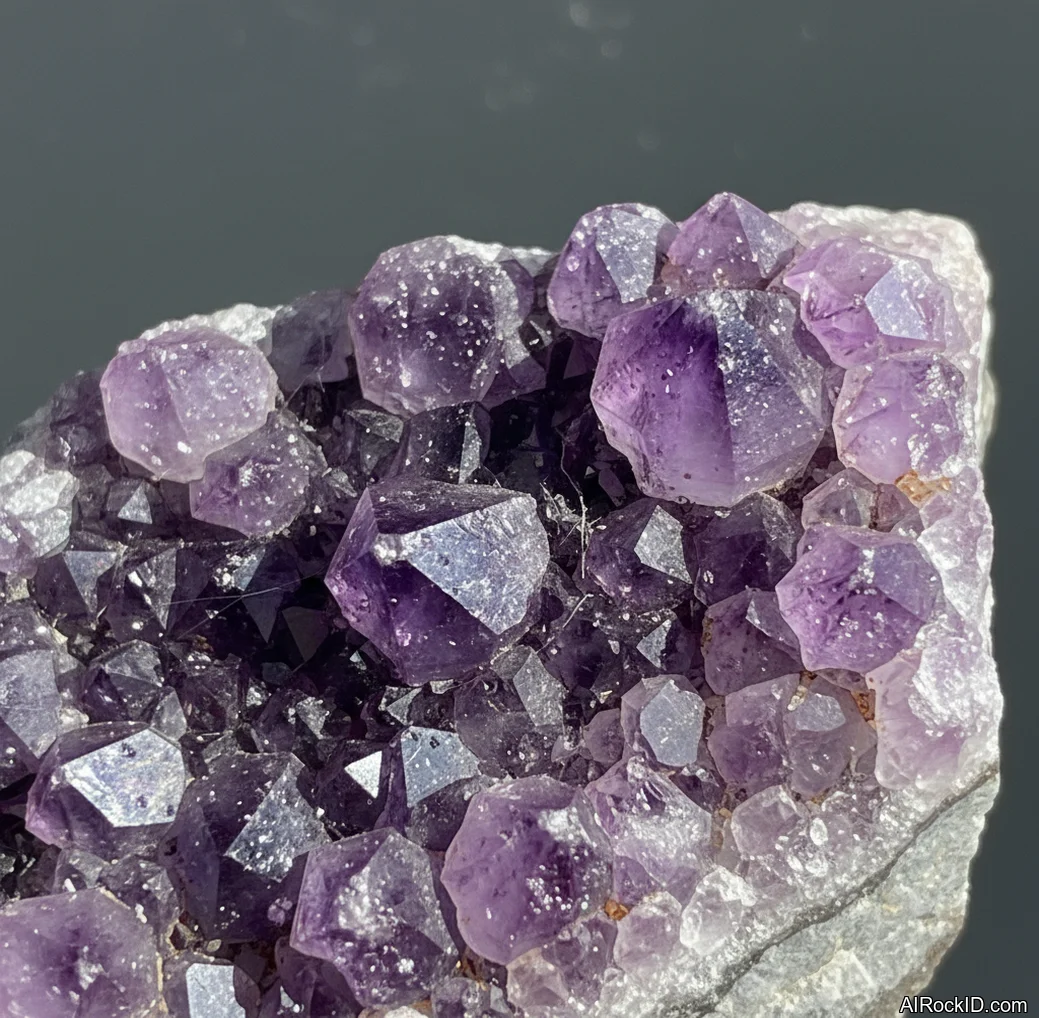
Most Turkish material I’ve handled runs more lavender to grape-purple, not that super-dark, almost inky Uruguay look. If you tilt it under a desk lamp, you’ll often see color zoning slide in and out (it’s pretty obvious once you know to look). Some pieces come with a smoky undertone or lighter tips, which sounds bad on paper, but in a tray at a show it reads more natural, kind of “alive,” like it hasn’t been overcooked to look perfect.
People sometimes hear “Turkish” and assume it’s some totally different mineral. It’s not. Same amethyst. It’s just a locality label. But that label matters, because the crystal habit and the color can come off a little different than the Brazil or Uruguay stuff most people recognize right away.
Origin & History
Amethyst as a name goes all the way back to the Greek “amethystos,” which basically means “not drunk,” and it’s tied to those old stories about the stone and sobriety. The mineral itself is quartz, and people have described and re-described it for centuries, but modern mineralogy nailed it down as SiO2, with amethyst being the purple, iron-bearing color variety.
“Turkish Amethyst” isn’t some formal species name. Most dealers use it as a trade or locality tag for amethyst coming out of Turkey, and it started popping up more consistently once export channels and specimen trading opened up more. I still remember the first time I saw it printed on a little white label at a small show (the kind with smudged ink and a bent corner). It was sitting next to Brazil clusters, and the Turkish piece looked quieter in color, but cleaner in the faces.
Where Is Turkish Amethyst Found?
Turkish amethyst comes from a handful of quartz-bearing volcanic and hydrothermal areas in western Turkey, where pockets and veins can produce crystal clusters and drusy plates.
Formation
Most amethyst shows up when silica-rich fluids seep through cracks and little pockets in rock, and quartz starts coating the walls first. Get the chemistry just right, especially tiny traces of iron, and that same quartz grows in as amethyst instead. Over a long stretch of time, natural radiation nudges the purple color along, which is why two pieces from the same general area can still end up looking surprisingly different.
Look, if you stare at a cluster long enough, you can almost see the timeline in it. The points often have subtle color zoning, like faint bands piled up toward the tips, not always even or perfectly straight. And if you’ve ever actually cracked open a geode, you know that split-second reveal: the outside is dusty and kind of blah, but inside the quartz faces look glassy and feel cold to the touch (like refrigerated glass), like they’ve just been sitting in the dark forever.
How to Identify Turkish Amethyst
Color: Typically lavender to medium purple, sometimes with smoky or grayish undertones and visible zoning from pale to deeper violet within the same crystal.
Luster: Vitreous, like broken glass on clean crystal faces.
Pick up the piece and check temperature. Real quartz stays cool longer than glass fakes in a warm room. If you scratch it with a steel knife, it shouldn’t bite easily, but it will scratch window glass without much drama. The problem with dyed quartz is the color pools in cracks and around the base, while natural amethyst usually looks more even, with zoning that follows the crystal growth instead of random blotches.
Properties of Turkish Amethyst
Physical Properties
| Crystal System | Trigonal |
| Hardness (Mohs) | 7 (Hard (6-7.5)) |
| Density | 2.65 g/cm3 |
| Luster | Vitreous |
| Diaphaneity | Transparent to translucent |
| Fracture | Conchoidal |
| Streak | White |
| Magnetism | Non-magnetic |
| Colors | Lavender, Purple, Violet, Pale lilac, Smoky purple |
Chemical Properties
| Classification | Silicates |
| Formula | SiO2 |
| Elements | Si, O |
| Common Impurities | Fe, Al, Mn |
Optical Properties
| Refractive Index | 1.544-1.553 |
| Birefringence | 0.009 |
| Pleochroism | Weak |
| Optical Character | Uniaxial |
Turkish Amethyst Health & Safety
Solid pieces are fine to pick up and rinse off. Thing is, the only real day-to-day hazard is the obvious one: raw clusters can have needle-sharp points and edges that’ll bite you if you grab them the wrong way.
Safety Tips
If you’re trimming or grinding it, handle it the same way you would any silica-bearing material. Keep the dust out of your lungs. Use water to knock it down, and wear proper respiratory protection (not just a flimsy paper mask).
Turkish Amethyst Value & Price
Price Range
Rough/Tumbled: $10 - $150 per piece
Cut/Polished: $2 - $15 per carat
Color saturation pushes the price up in a hurry, and so do terminations that are clean and not chipped or frosted over. And with Turkish material being sold as locality pieces, the value spikes again if the label gets specific and the crystal faces look sharp and crisp, not bruised from bouncing around in a box.
Durability
Durable — Scratch resistance: Excellent, Toughness: Good
It’s stable for everyday handling, but prolonged strong sunlight can fade the purple over time.
How to Care for Turkish Amethyst
Use & Storage
Store it so points don’t rub each other, especially if it’s a cluster. A little wrap or a stand saves the tips from chipping.
Cleaning
1) Rinse with lukewarm water and a drop of mild soap. 2) Use a soft toothbrush to get into druse and crevices. 3) Rinse again and air-dry; avoid long hot soaks.
Cleanse & Charge
If you’re into that side of the hobby, a quick rinse and a night on a windowsill with indirect light is plenty. Skip harsh sun if you care about keeping the color.
Placement
Keep it out of constant direct sun and away from places where it can get knocked onto tile. It looks best where side light can catch the crystal faces.
Caution
Skip ultrasonic and steam cleaners, especially if the cluster has little fractures or those included zones you can spot when you tilt it under a lamp. And don’t park it in a sunny window for months on end, unless you’re fine watching that purple fade and lose that crisp look.
Works Well With
Turkish Amethyst Meaning & Healing Properties
Compared to the flashier stones, amethyst is the one people actually stay loyal to. I’ve stood behind the counter and watched someone scoop up five different pieces, turn them over under the track lights, then drift right back to the purple quartz because it just feels steady. Simple. No drama.
Most people link amethyst with a calmer mind, better sleep, and staying clear-headed. That’s the classic use people talk about. In my own routine, I’ll set a small cluster on my nightstand when I’m winding down, not because I think it’s medicine, but because it’s a physical reminder to slow down (same idea as dimming a lamp). It’s basically my cue to stop scrolling and let the room get quiet.
But look, not every piece lands the same. I’ve handled Turkish amethyst that’s pale and pretty, but it doesn’t have that deep, velvety look people expect when they picture “real” amethyst, and yeah, that can change how connected someone feels to it. So if you’re doing intention work with crystals, grab the piece you genuinely want to hold in your hand, not the one with the fanciest label. Why fight your own instincts?
Identify Any Crystal Instantly
Snap a photo and get properties, value, care instructions, and healing meanings in seconds.