Variscite
What Is Variscite?
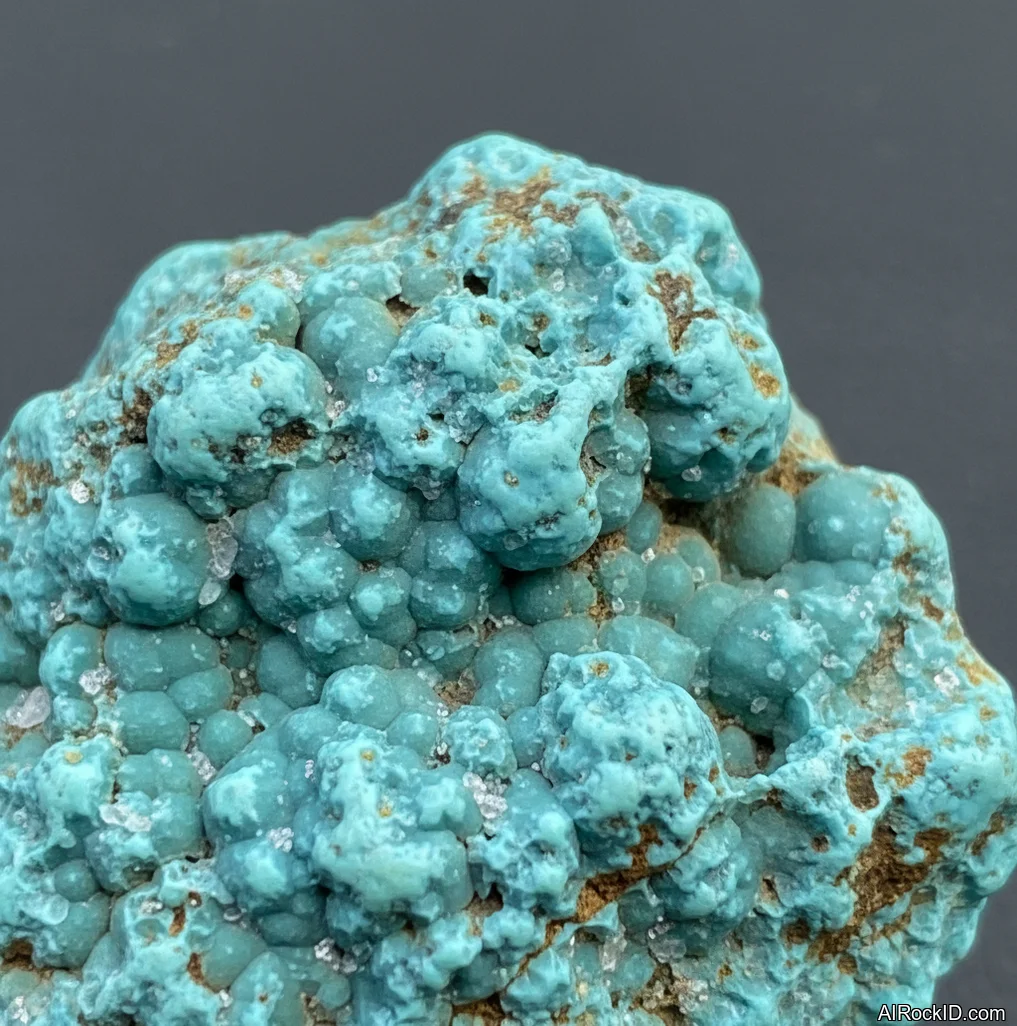
Variscite is a hydrated aluminum phosphate mineral, AlPO4·2H2O. Most people know it as a green to blue-green gem material, and it usually shows up as a solid, massive chunk instead of nice, separate crystals.
Pick up a polished piece and you notice it fast. It’s smooth, sure, but there’s also this slightly “soapy” drag under your thumb, the same kind of feel folks compare to turquoise. But it’s often a touch softer, and the surface tends to look more waxy than glassy unless someone really went to town on the buffing wheel. I’ve handled plenty of tumbled variscite that looks candy-green from across the table, then you tilt it under a lamp and there they are: cloudy patches, skinny white veins, or that brown matrix peeking through (the kind of stuff that screams it formed in a messy, real rock environment).
At first glance, people call it turquoise. That’s basically the whole situation with variscite. The colors overlap, and both get cut into cabs, beads, inlay, and other small set pieces. But variscite usually leans apple-green to mint, sometimes with a bit of blue-green mixed in. And if you tap two stones together, the sound comes off a little duller, like it’s not as “ringy” as the harder materials. And yeah, it’ll scratch easier than you’d like if you treat it like quartz jewelry.
Origin & History
In 1837, the German mineralogist August Breithaupt formally described variscite. He called it “variscite” after Variscia, the old Latin name for Germany’s Vogtland region, since that’s where the species was identified.
Thing is, collectors sometimes forget it’s a pretty modern name as minerals go, especially next to old standbys like garnet or emerald. But it got a real second act in the gem world once deposits in the western United States started supplying lapidaries. And most of the time, you’ll see it sold by its color and pattern first, with the species name coming second.
Where Is Variscite Found?
It turns up in phosphate-rich zones, especially in the western United States, plus classic European localities in Germany and a handful of Australian and Spanish occurrences.
Formation
Look at the places variscite actually grows and the “lumps and seams” thing clicks fast. It’s a secondary mineral, so it shows up when phosphate-carrying water runs into aluminum-rich rock, usually pretty close to the surface in beat-up weathered zones, along fractures, or tucked into little cavities.
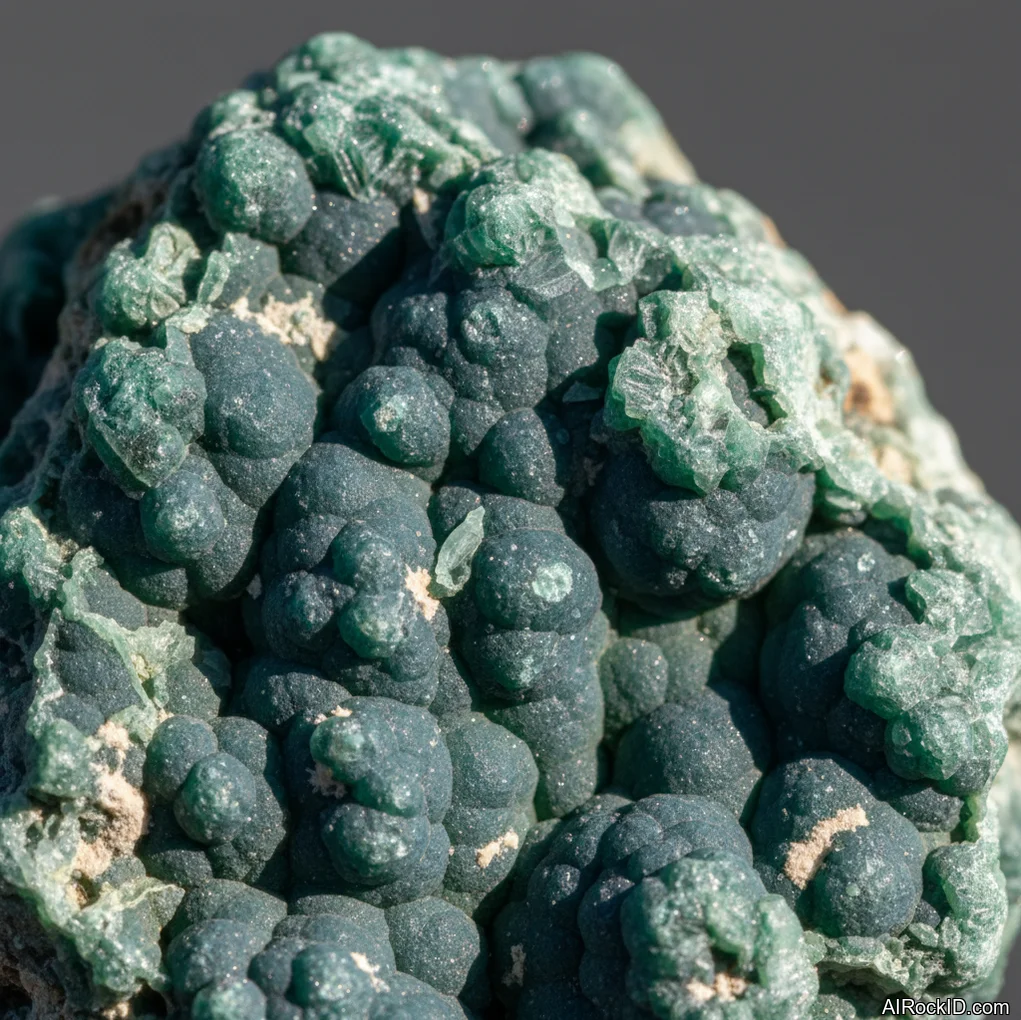
But variscite’s kind of fussy about the chemistry. You need phosphate around, you need aluminum, and you need conditions that don’t shove the whole mix straight into other phosphates. So what you end up with is these tight pockets of really good green material sitting right next to boring host rock, iron staining, plus other phosphates like strengite. I’ve split nodules where one face is that bright green and the other side turns out chalky and weak, and you can feel the difference with a fingernail, no joke.
How to Identify Variscite
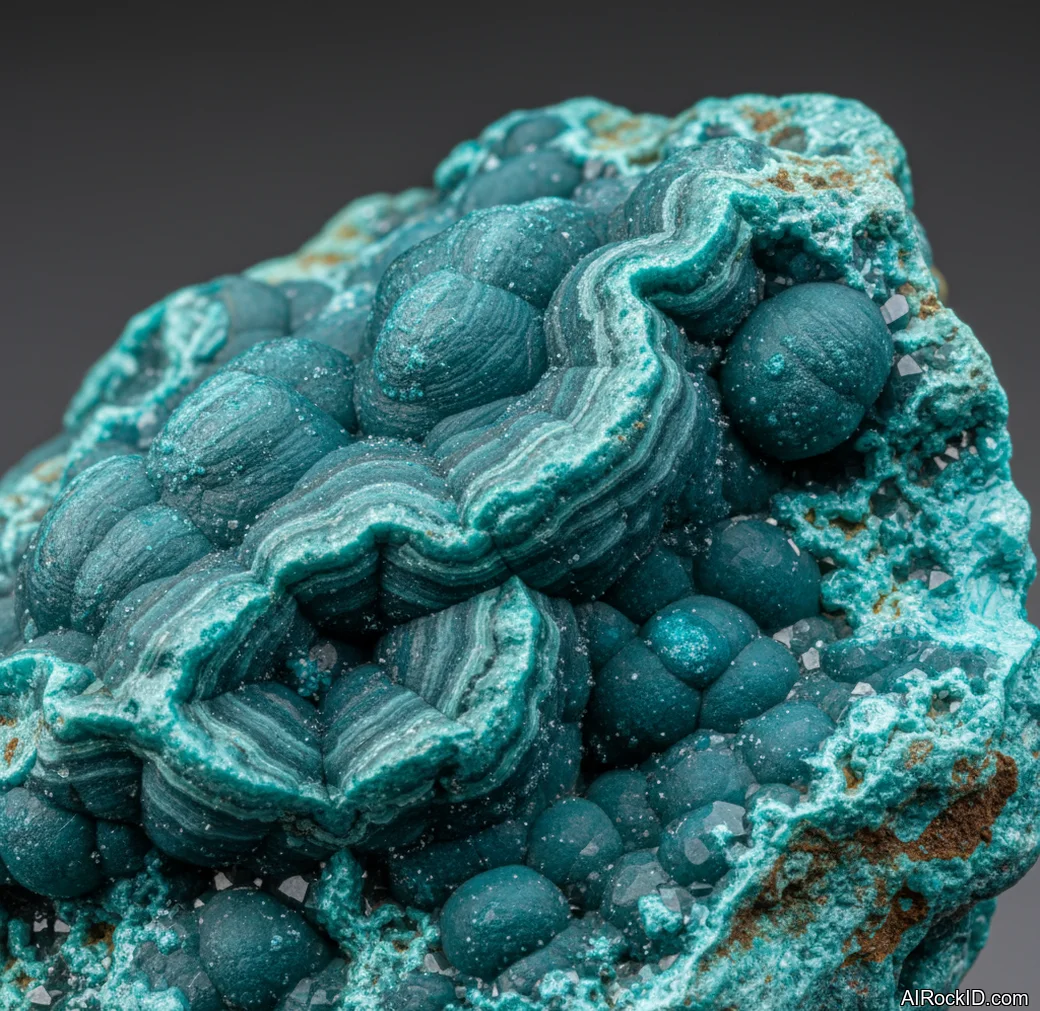
Color: Variscite ranges from pale mint to apple-green and blue-green, often with white veining, tan to brown matrix, or cloudy mottling. Some pieces show a “web” pattern that can mimic turquoise.
Luster: Luster is typically waxy to dull in rough, turning waxy to sub-vitreous when polished.
Pick up a piece and do a quick scratch reality check. A copper coin or a steel point can leave a mark on many variscites because it sits around Mohs 3.5 to 4.5, while a lot of turquoise is a bit tougher in day-to-day wear. The real test is feel plus look: variscite often has a smooth, slightly greasy drag and a softer, quieter polish compared to dyed howlite, which can look too uniform and plasticky up close.
Properties of Variscite
Physical Properties
| Crystal System | Orthorhombic |
| Hardness (Mohs) | 3.5-4.5 (Soft (2-4)) |
| Density | 2.55-2.60 |
| Luster | Waxy |
| Diaphaneity | Translucent to opaque |
| Fracture | Conchoidal |
| Streak | White |
| Magnetism | Non-magnetic |
| Colors | Green, Blue-green, Mint green, Apple green, Yellow-green, White (veins), Brown (matrix) |
Chemical Properties
| Classification | Phosphates |
| Formula | AlPO4·2H2O |
| Elements | Al, P, O, H |
| Common Impurities | Fe, Cr, V, Ca |
Optical Properties
| Refractive Index | 1.545-1.578 |
| Birefringence | 0.022 |
| Pleochroism | Weak |
| Optical Character | Biaxial |
Variscite Health & Safety
Variscite is usually safe to handle, and there isn’t any specific toxicity issue tied to it. But like any lapidary stone, you don’t want to breathe the fine dust when you’re cutting or sanding it (that powder gets everywhere, and it’s easy to miss until you feel it in your throat).
Safety Tips
Use water while you’re grinding, and don’t skip a properly fitted respirator if you’re cutting cabs or drilling beads. That wet grind keeps the dust down (you can literally see the slurry instead of that fine, floaty powder), and a respirator that actually seals to your face is the one that counts. Why risk your lungs?
Variscite Value & Price
Price Range
Rough/Tumbled: $10 - $200 per piece
Cut/Polished: $3 - $25 per carat
Color and pattern drive the price more than anything else, and clean apple-green cab material is usually what makes it jump. Hard, well-stabilized pieces and bigger crack-free slabs cost more too, mostly because breakage is so common and you’ll run into those chalky spots a lot.
Durability
Nondurable — Scratch resistance: Fair, Toughness: Fair
It’s softer than most everyday jewelry stones and can take scratches and edge chips if you wear it like quartz or agate.
How to Care for Variscite
Use & Storage
Store it like a soft stone, because that’s what it is. I keep variscite in a small pouch or a separate box slot so harder stuff like quartz doesn’t chew up the polish.
Cleaning
1) Rinse quickly with lukewarm water. 2) Use a tiny bit of mild soap and your fingers or a very soft cloth, then rinse again. 3) Pat dry and let it fully air-dry before putting it away.
Cleanse & Charge
If you do energetic cleansing, keep it simple: smoke, sound, or a short rest on dry selenite works fine. I wouldn’t soak it for hours just because the surface can have micro-fractures and softer patches.
Placement
On a desk or shelf is great, especially where you can actually see the patterns in daylight. For jewelry, a bezel setting protects the edges a lot better than prongs.
Caution
Skip ultrasonic cleaners, steam cleaners, and anything loaded with harsh chemicals. This material can be a bit porous, and the polish will go flat on you fast. And don’t just throw it loose in a pocket with keys or harder stones; it’ll get knocked up and scratched.
Works Well With
Variscite Meaning & Healing Properties
Compared to a lot of green stones, variscite just feels quieter to me. Not dull. Just steady.
When I’m sorting trays at a show and my brain’s running hot, I’ll sometimes keep a palm stone in my pocket. The surface is smooth in that specific way that almost squeaks against your skin, and it gives your fingers something to do that isn’t doom-scrolling.
If you look close, you’ll see why people tie it to emotional reset stuff. The color is often that new-leaves-after-rain green, and the patterns don’t come in sharp, jagged lines. They’re softer. More rounded. But look, here’s the honest limitation: if you want a stone you can wear every day as a ring and bang on door handles, variscite will disappoint you. It’s better as a pendant, a bead strand you treat gently (no tossing it in with your harder pieces), or a pocket stone you don’t mix with tougher rocks.
In shop conversations, I hear variscite come up for calming, heart-centered reflection, and easing the mental noise that shows up with stress. I’m fine with that framing as long as it stays in the lane of personal practice. It’s not medicine. It won’t replace therapy or sleep. Still, sitting with a cool, waxy green cab in your hand while you breathe for two minutes is a real, physical thing you can do. And that’s usually where the benefit actually lives, isn’t it?
Identify Any Crystal Instantly
Snap a photo and get properties, value, care instructions, and healing meanings in seconds.