Actinolite
What Is Actinolite?
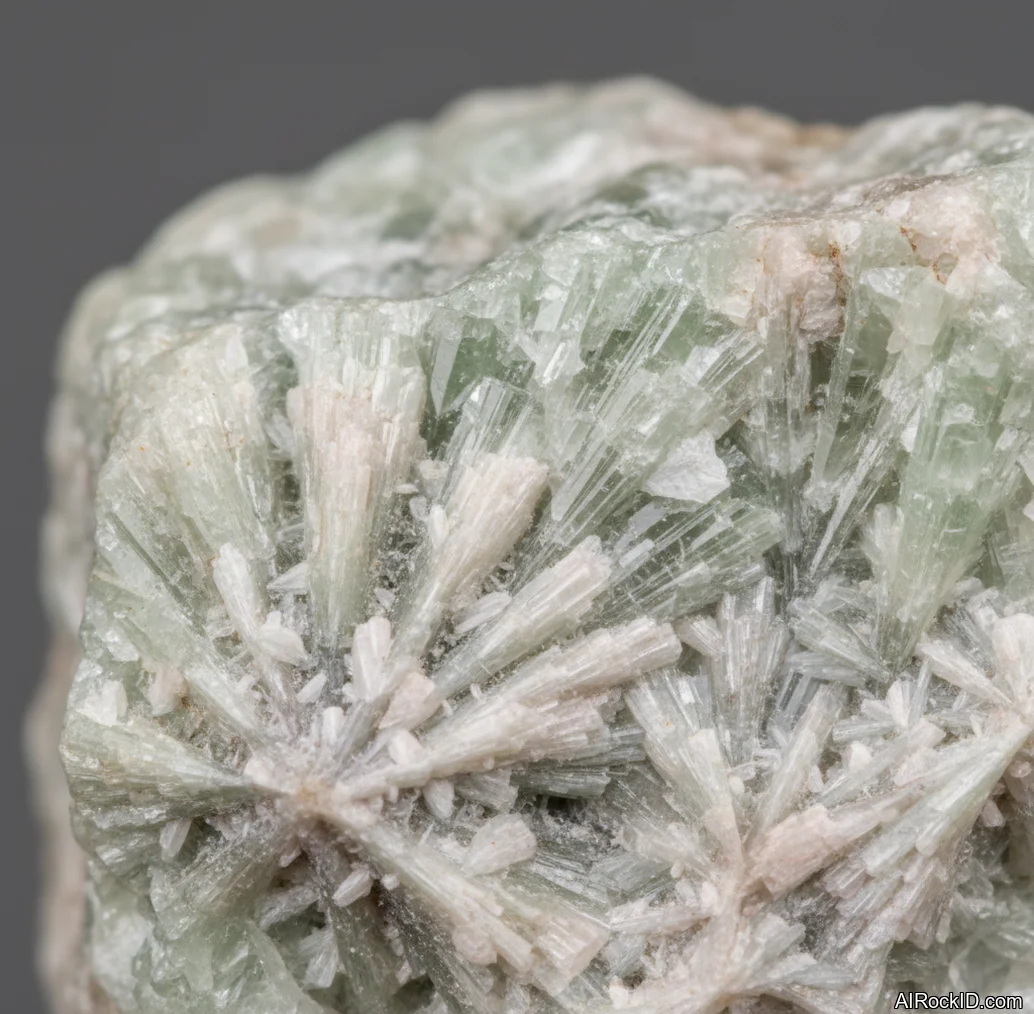
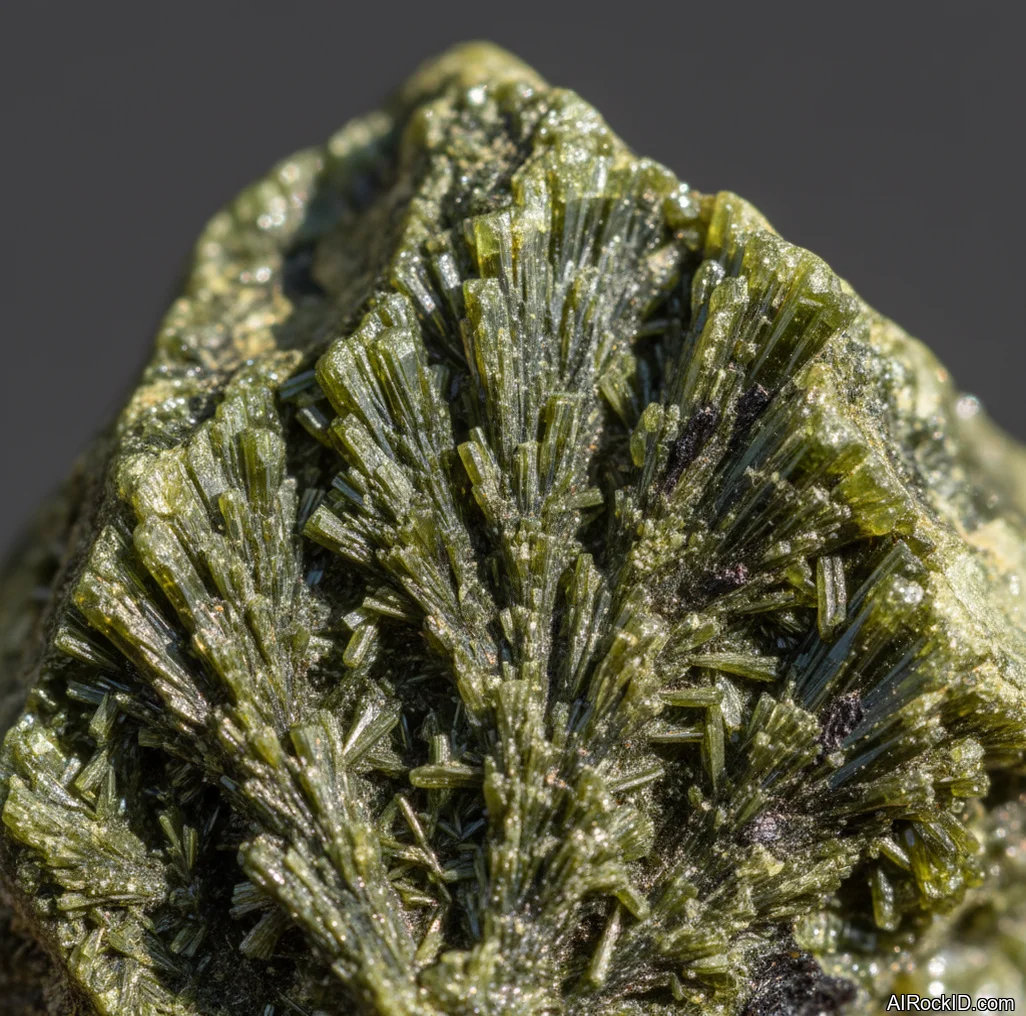
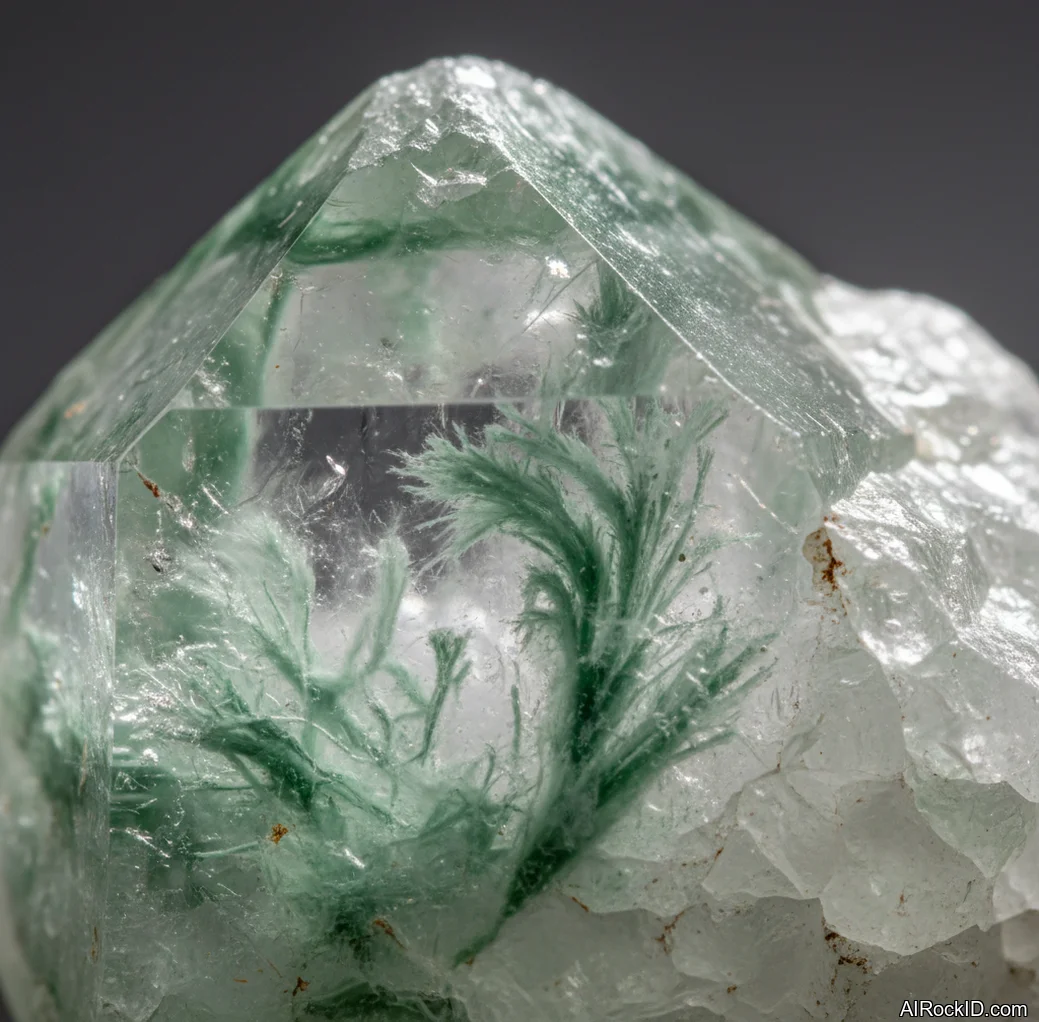
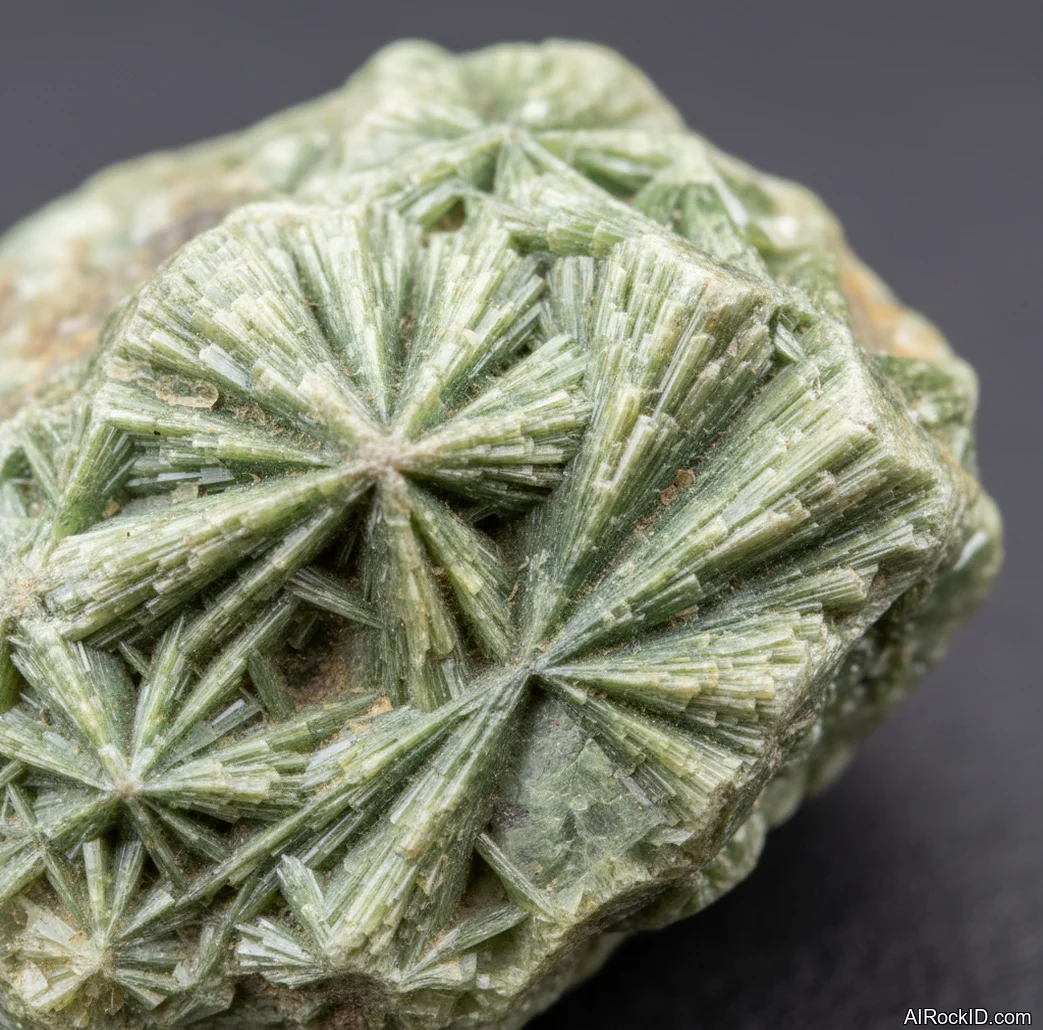
Actinolite is a green calcium-magnesium-iron amphibole mineral, part of the tremolite to actinolite series. Most pieces you’ll run into for sale show up as bladed sprays sitting in matrix, or as fibrous, silky lumps that honestly look like green hair that got stuck mid-swish and then turned to stone. Grab one and you’ll notice it isn’t weirdly light the way some fibrous minerals can be. It’s got that steady, rock-in-the-hand weight, and if you drag a fingertip across the fibers they feel a little grabby, like they want to catch your skin.
People often confuse it at a glance with epidote, or even green tourmaline. But actinolite has its own thing going on. The crystal habit gives it away fast. Those long blades and needle bundles like to line up, and when the light hits just right you get a soft sheen that collectors go after. Thing is, it’s not always a “display case” look. A lot of actinolite shows up as dark green, splintery material locked in tough metamorphic rock, and you kind of learn to respect it after you’ve handled a few and figured out what that “amphibole cleavage” actually feels like in your fingers. Sharp. A bit annoying (in a good way).
Compared to tremolite, actinolite usually trends greener because of the iron. Compared to hornblende, it often looks cleaner and more needle-like instead of chunky and blocky. And if you’ve ever had a piece snag a cotton cloth because the ends are so splintery, yeah, that’s actinolite showing its personality. Who hasn’t learned that lesson the hard way?
Origin & History
In mineral history terms, actinolite is kind of an old-school name. It got described back in the late 1700s, and the word itself comes from Greek roots meaning “ray” or “beam,” which makes sense the second you see a good specimen with those radiating sprays. And yeah, I’ve heard old-time dealers still say it with a little extra punch on the “actino” part, like it’s a character in the room.
But it matters in geology for a simple reason: it’s a classic metamorphic mineral. So if you’re looking at greenschist facies rocks, actinolite is one of those minerals that basically tells you what was going on with pressure, temperature, and fluids, without needing a whole lab report.
Where Is Actinolite Found?
You’ll run into actinolite in metamorphic belts worldwide, especially in greenschist and amphibolite terrains. Alpine localities and old metamorphosed mafic rocks are classic sources.
Formation
Grab any field guide on metamorphic rocks and actinolite pops up almost immediately. It shows up when mafic rocks and calcium-bearing sediments get cooked and squeezed, usually with water hanging around in the system. That’s why it’s so tied to greenschist and amphibolite facies. You’ll spot it hanging out with chlorite, epidote, albite, and sometimes garnet, depending on the grade.
But the whole “how it forms” question isn’t one clean recipe. Composition matters, a lot. If there’s more iron available, you drift toward actinolite instead of tremolite. And if things get hotter and the chemistry shifts, it can grade into hornblende-type amphiboles. In hand samples, that’s why you’ll sometimes see a rock where the green needles fade into darker, chunkier amphibole across a few inches. Nature doesn’t care about neat labels. Not even a little.
How to Identify Actinolite
Color: Usually medium to dark green, sometimes gray-green to nearly black; fibrous material can look lighter and more silvery green in strong light.
Luster: Vitreous on crystal faces and silky on fibrous bundles.
Look closely at the habit first: long blades or needles in sprays are common, and fibrous masses can show a silky shimmer when you tilt them under a lamp. If you scratch it with a steel nail, it may mark, but it’s tough to get a clean test on fibrous pieces because they splinter instead of giving you a neat scratch. And in the hand, those amphibole cleavage directions can make broken bits feel sharp and “splintery,” not sugary or granular like many green silicates.
Properties of Actinolite
Physical Properties
| Crystal System | Monoclinic |
| Hardness (Mohs) | 5–6 (Medium (4-6)) |
| Density | 3.0–3.3 g/cm3 |
| Luster | Vitreous |
| Diaphaneity | Transparent to translucent |
| Fracture | Splintery |
| Streak | White to grayish white |
| Magnetism | Non-magnetic |
| Colors | green, dark green, gray-green, blackish green |
Chemical Properties
| Classification | Silicates (inosilicate, amphibole) |
| Formula | Ca2(Mg,Fe)5Si8O22(OH)2 |
| Elements | Ca, Mg, Fe, Si, O, H |
| Common Impurities | Al, Mn, Ti |
Optical Properties
| Refractive Index | 1.613–1.654 |
| Birefringence | 0.020 |
| Pleochroism | Strong |
| Optical Character | Biaxial |
Actinolite Health & Safety
You can safely handle hand specimens, no problem. But don’t grind, sand, or dry-brush fibrous or asbestiform actinolite, because the real issue is the dust you can breathe in (it hangs in the air longer than you’d think). Solid, non-fibrous crystals are a lot lower risk, but the same dust precautions still apply.
Safety Tips
Don’t cut it or drill into it unless you’ve got the right controls in place. If you have to clean up fibrous stuff, keep it wet so it doesn’t puff into dust, and think about wearing a respirator that’s rated for fine particulates. Dust gets everywhere, fast.
Actinolite Value & Price
Price Range
Rough/Tumbled: $5 - $150 per specimen
Cut/Polished: $10 - $80 per carat
Price bounces around based on the stuff’s “personality” and how it shows up. Clean, radiating sprays sitting in a contrasting matrix are what get buyers reaching for their wallets. But the dark, heavy, chunky material? That usually goes for cheap. Thing is, truly transparent, nicely colored cabbing rough is rarer than most folks think. So cutters end up paying extra for pieces that stay solid under the wheel, don’t splinter on the first pass, and hold together when you start shaping them.
Durability
Moderate — Scratch resistance: Fair, Toughness: Fair
It’s generally stable in normal room conditions, but fibrous or bladed pieces chip and splinter easily if they rattle around in a box.
How to Care for Actinolite
Use & Storage
Store it in a padded box or a compartment tray so the blades don’t get dinged. I keep fibrous pieces in little plastic perky boxes because they snag on anything textured.
Cleaning
1) Rinse quickly with lukewarm water and a drop of mild soap if needed. 2) Use a very soft brush only on solid crystal faces, not on fuzzy fibers. 3) Rinse, then pat dry and let it air-dry fully before putting it away.
Cleanse & Charge
If you do energy-style care, stick to low-contact methods like smoke, sound, or setting it on a dry bed of quartz. I’d skip salt bowls for fibrous pieces just because grains get stuck and you end up picking at it.
Placement
A stable shelf is better than a pocket. Put it where it won’t get bumped, and angle it so the silky sheen shows when the room light hits from the side.
Caution
Don’t create dust from anything fibrous. That means no sanding, no grinding, and don’t hit it with compressed air to “clean” it (that blast just sends fine stuff everywhere). And if it looks like asbestiform actinolite, handle it like it’s extra touchy: move it gently, don’t mess with the fibers, and keep it well out of kids’ reach.
Works Well With
Actinolite Meaning & Healing Properties
Most dealers over in the metaphysical aisle talk about actinolite like it’s a “clean-up crew” stone, the green kind people reach for when they’re decluttering or trying to get unstuck. And yeah, I get it. Even the way it looks pushes that story. Those needle-like strands and little rays feel directional, like everything’s pointing ahead instead of just sitting there.
Pick up a fibrous piece and it’s a weird combo in your hand. Soft, but also kind of grabby. It’s got that silky feel, then it catches on your skin a bit, like tiny threads snagging just enough to make you notice. That’s basically the metaphor people lean on with actinolite work: gentle, but it won’t let you glide right past the uncomfortable stuff.
If you use crystals as a focus tool for meditation or journaling, this one pairs nicely with practical routines. Five minutes. Real notes. No big ceremony required (and honestly, that’s the point sometimes).
But look, let’s keep it grounded. None of this replaces medical care, and actinolite isn’t some magic shield. What it can do, in my experience, is serve as a physical reminder. Put it next to your notebook, and every time that green shimmer catches the light, it nudges you back to the whole idea: clear out the noise, take one step, then another.
Identify Any Crystal Instantly
Snap a photo and get properties, value, care instructions, and healing meanings in seconds.