Tremolite
What Is Tremolite?
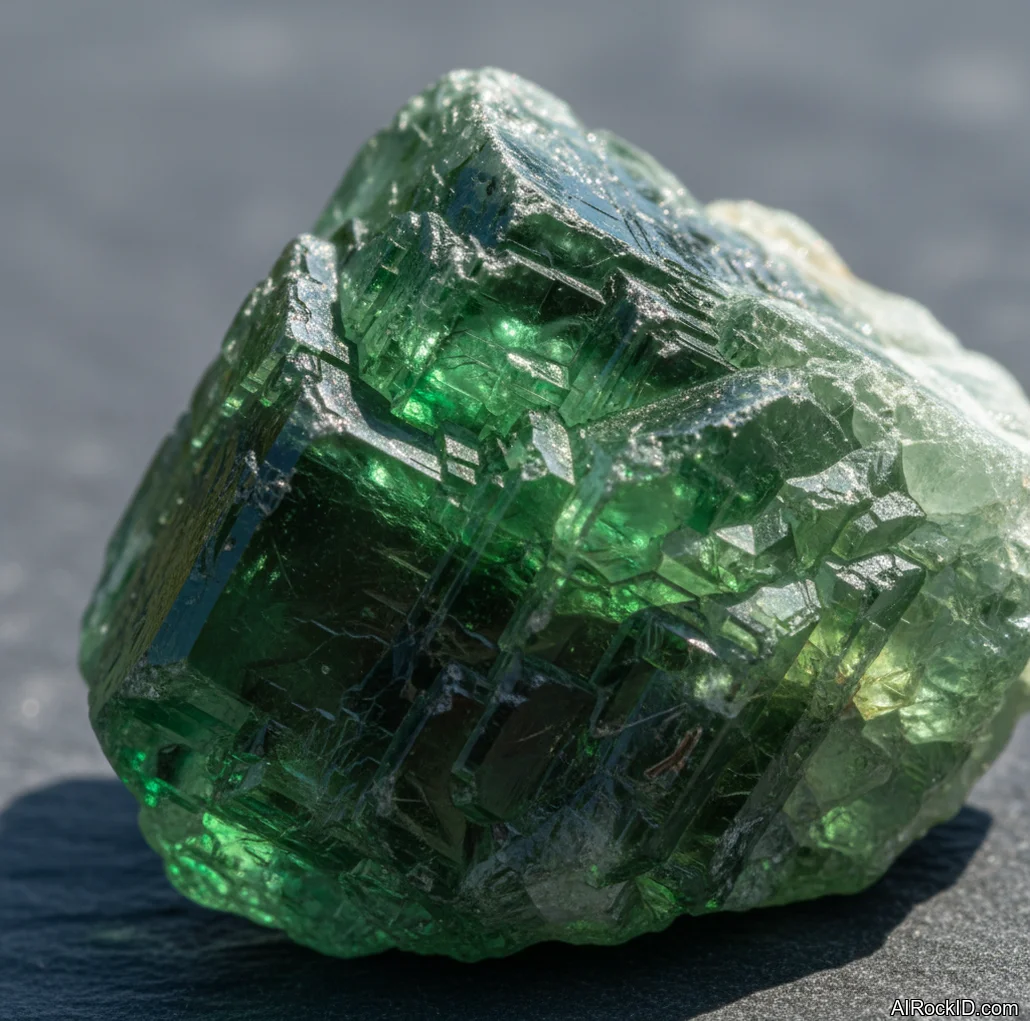
Tremolite is a calcium-magnesium amphibole silicate mineral, formula Ca2Mg5Si8O22(OH)2. Out in the field, it can be white, gray, pale green, or that soft celery green that looks kind of washed out until you tip it under a lamp and it finally wakes up.
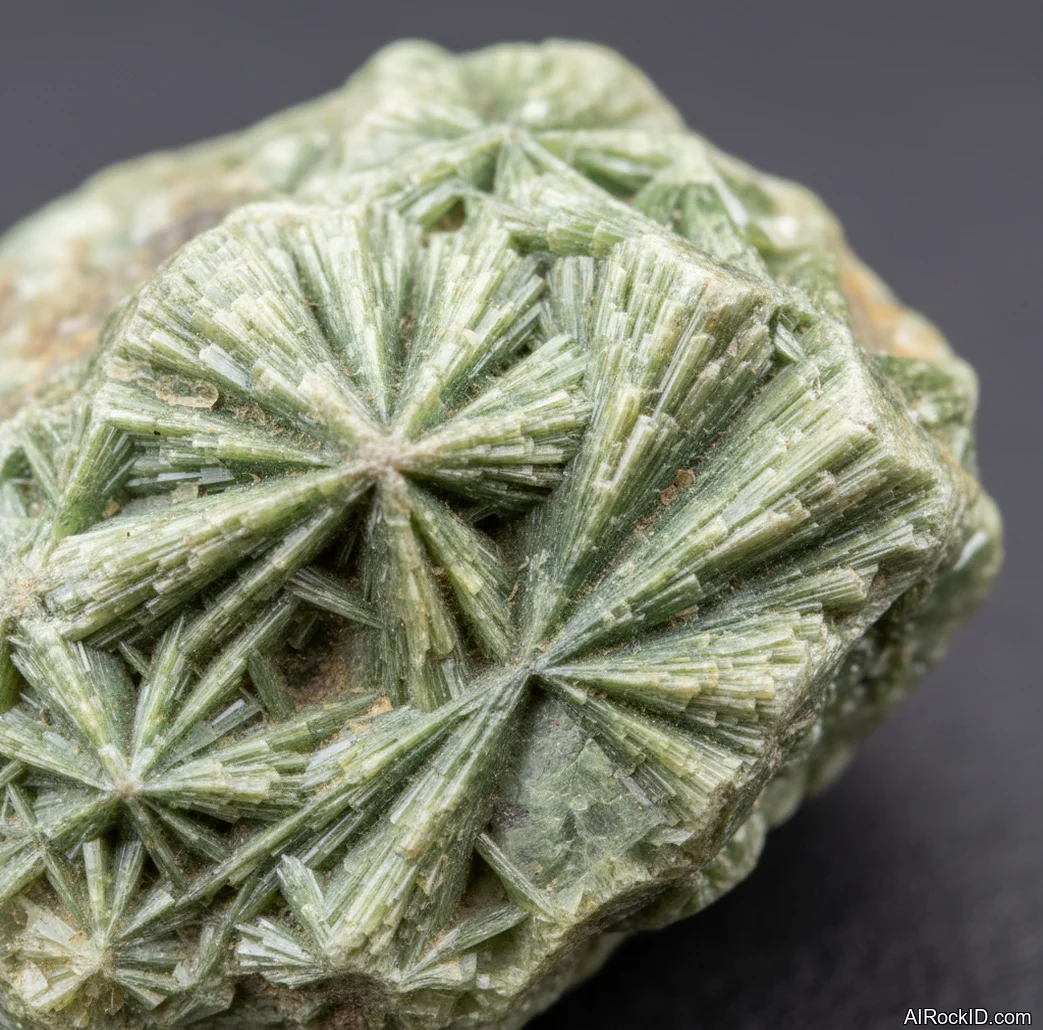
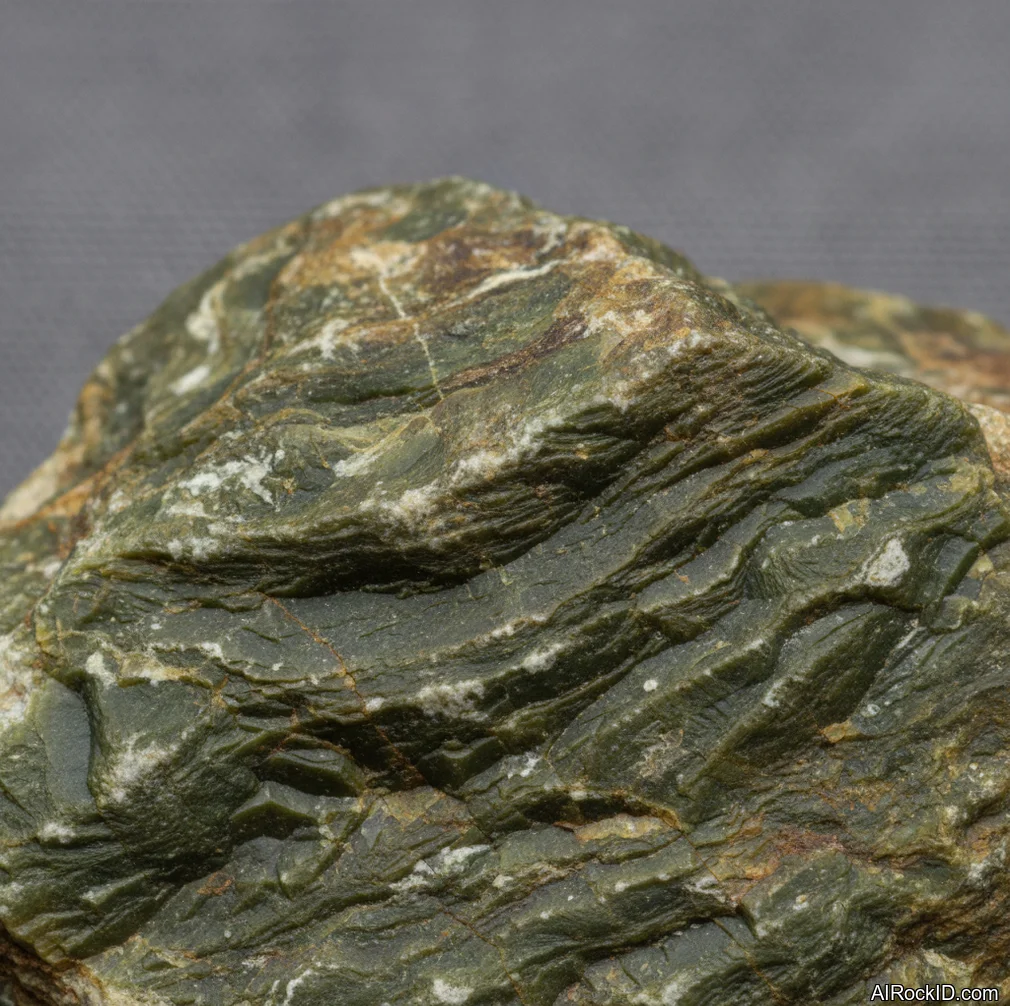
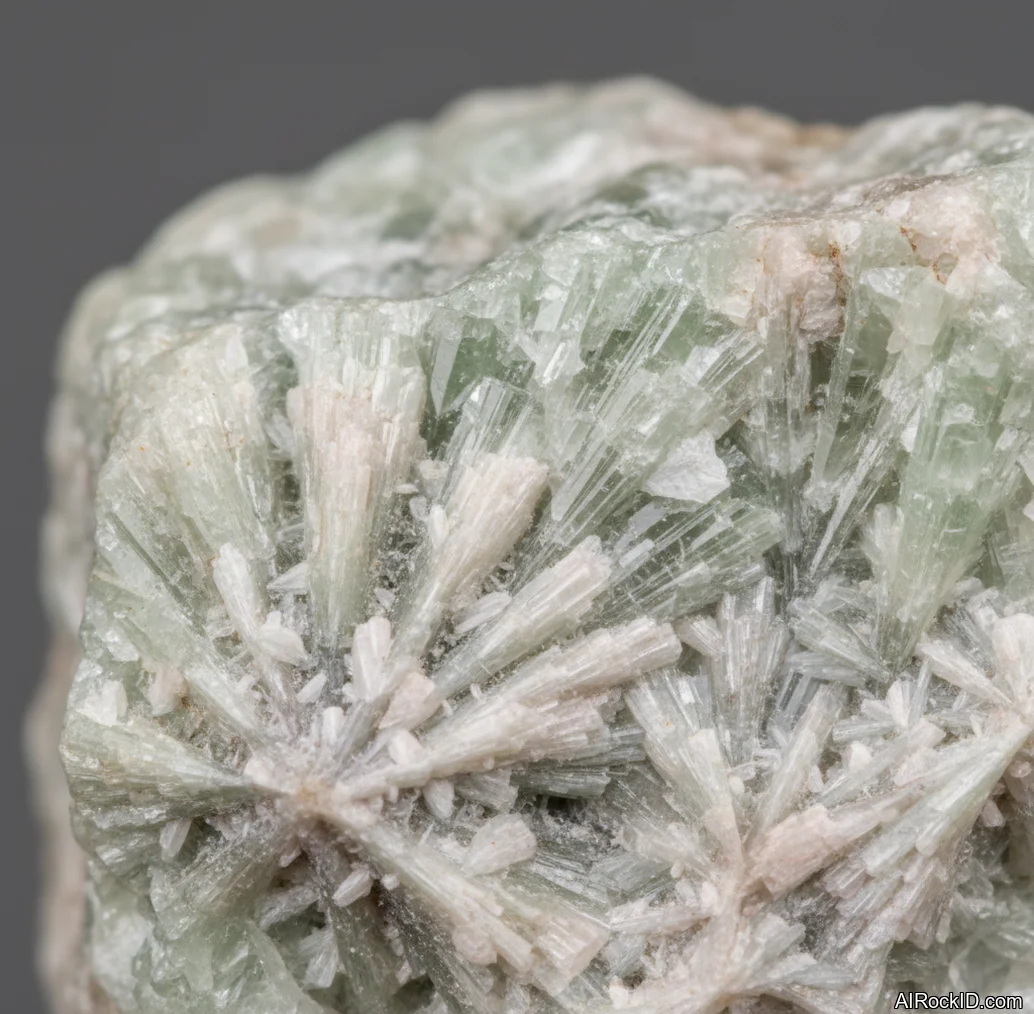
Grab a hand sample and you notice the feel immediately. The blocky tremolite just feels like, well, rock. But the fibrous material? It’s got this odd, slightly draggy sensation on your fingertips, like you’re rubbing across a bundle of super-fine threads packed tight (and it almost wants to snag on dry skin). And when tremolite sits in marble, the contrast really pops: sugary white calcite or dolomite with greenish sprays or blades slicing right through.
People confuse it with actinolite at first glance, and honestly, I get it. So the quick gut-check is color and habit. Tremolite usually runs lighter, and when it shows up as clean crystals, they’re those long amphibole prisms with that “two good cleavages” look, where corners tend to break in neat, repeating directions.
Origin & History
The name traces back to Val Tremola in the Swiss Alps, where the species was first recognized in alpine metamorphic rocks. It got described in the late 1700s, right around the time European mineralogy started getting serious about sorting out look-alikes instead of tossing anything green and fibrous into one catch-all box.
And yeah, older collections will sometimes file it under broader amphibole names, and you still run into that at estate sales. I once picked up a dusty tray literally labeled “asbestos” with that old, slightly yellowed paper tag, and it turned out to be mostly tremolite with a little actinolite mixed in. So that gives you a sense of how messy the historical naming could get, doesn’t it?
Where Is Tremolite Found?
Tremolite turns up in metamorphosed limestones and dolostones, skarns, and serpentinite contacts, with classic material coming from alpine regions and old metamorphic mining districts.
Formation
Most tremolite shows up because of metamorphism. Thing is, take magnesium-rich carbonate rocks (dolomite’s usually the culprit), cook them, then let silica-bearing fluids seep through and push the chemistry around, and amphiboles start forming. And tremolite is one of the common results.
Skarns are another textbook situation. Hot fluids off an intrusion hit carbonate rock and the mineral cast shows up fast: diopside, grossular, vesuvianite, plus tremolite now and then, sitting there as pale blades or tucked into fibrous seams. What it looks like depends on the space it has and the chemistry it’s dealing with (simple as that). Tight fractures and shear zones are basically fiber factories. But if there’s an open pocket, you can get prettier prisms, even if crisp, clean terminations are rare. Who actually sees those often?
How to Identify Tremolite
Color: Most pieces are white to gray, or pale green to medium green. The greener it gets, the more it starts flirting with actinolite territory, especially if iron is creeping in.
Luster: Vitreous on crystal faces and silky on fibrous aggregates.
If you scratch it with a copper penny, it usually won’t mark much, but a steel nail will bite. That puts you right in the Mohs 5 to 6 range in practice. Look closely at broken edges: amphibole cleavage gives you repeated flat breaks that aren’t random, and on fibrous material the break can look splintery instead of clean. And if it’s in white marble, tremolite often forms skinny blades or felted fibers that sit slightly proud of the matrix when you run a fingernail over them.
Properties of Tremolite
Physical Properties
| Crystal System | Monoclinic |
| Hardness (Mohs) | 5-6 (Medium (4-6)) |
| Density | 2.98-3.20 g/cm3 |
| Luster | Vitreous |
| Diaphaneity | Transparent to translucent |
| Fracture | Splintery |
| Streak | White |
| Magnetism | Non-magnetic |
| Colors | White, Gray, Pale green, Green, Colorless |
Chemical Properties
| Classification | Silicates |
| Formula | Ca2Mg5Si8O22(OH)2 |
| Elements | Ca, Mg, Si, O, H |
| Common Impurities | Fe, Mn, Al, Na, K |
Optical Properties
| Refractive Index | 1.599-1.628 |
| Birefringence | 0.019-0.028 |
| Pleochroism | Weak |
| Optical Character | Biaxial |
Tremolite Health & Safety
Handling solid pieces is usually fine. Just don’t sand it, snap it, or do anything that kicks up dust, especially if it’s the fibrous kind that sheds little fuzz-like strands. The real worry isn’t your hands touching it. It’s what ends up floating in the air and getting into your lungs.
Safety Tips
Don’t cut, grind, drill, or tumble fibrous tremolite. Just don’t. If it’s shedding, keep it sealed up or boxed so nothing can get loose. And if you absolutely have to work near it, treat it like the dusty stuff it is: wear proper respiratory protection, use wet methods, and clean up with damp wipes, not dry brushing (that just kicks it back into the air).
Tremolite Value & Price
Price Range
Rough/Tumbled: $10 - $200 per specimen
Cut/Polished: $5 - $40 per carat
Prices bounce all over the place depending on what people are into and where you’re buying. Those clean, alpine-style crystals sitting on bright white marble usually run higher than the more common fibrous seams (the kind that look a bit stringy up close). And anything getting sold as “chrome tremolite,” or the extra-green stuff, almost always ends up with a bigger price tag.
Durability
Moderate — Scratch resistance: Fair, Toughness: Fair
It’s stable on a shelf, but cleavage and splintery fracture mean thin blades and fibers chip if you clack specimens together in a flat.
How to Care for Tremolite
Use & Storage
Store it so it can’t rattle around. I keep tremolite prisms in a perky box with foam because a single bump can pop a cleavage chip off a nice edge.
Cleaning
1) Rinse quickly with lukewarm water if the specimen is solid and not fibrous. 2) Use a soft toothbrush around the matrix, not on fragile blades. 3) Pat dry and let it air dry fully before putting it back in a closed box.
Cleanse & Charge
If you do energy-style care, keep it simple: smoke cleanse or sound is low-contact. Skip salt bowls if the piece has carbonate matrix that can etch or crumble.
Placement
A steady shelf is better than a windowsill ledge where it can get knocked. If it’s on white marble, a dark stand makes the pale greens read better under room light.
Caution
Don’t do anything that kicks up dust around fibrous tremolite. And skip ultrasonic or steam cleaners on delicate aggregates, too. Handle thin blades like little glassy splinters, the kind that feel sharp at the edges and look like they’ll snap the second you put any pressure on them. Why risk it?
Works Well With
Tremolite Meaning & Healing Properties
Next to the show-off stones, tremolite is basically the quiet one. The bits I keep grabbing are those pale green, blade-like crystals sitting on marble. They feel cool the second they hit your palm, like they’ve been in a shaded drawer all day, and the edges can be crisp without being sharp. After a long day, that clean “mountain air” feeling is what I get from them. That’s just my read, not some guarantee.
If you use crystals as a focus thing, tremolite usually fits best with routines that are already pretty grounded. Journaling works. Breath work, too. Slow walks. Simple meditation. Nothing flashy. I’m not going to sell it as a miracle cure. But as something you can hold to keep your attention from skittering off, it does the job, especially if you’re sticking to smoother, non-fibrous pieces that won’t snag at your skin or catch on a sweater cuff.
And look, here’s the collector’s caveat that actually matters: the asbestos-form issue changes the whole conversation for some people. I treat fibrous specimens as display only, sealed up or kept in a box, and I only handle a non-fibrous crystal. Full stop. Metaphysical use isn’t medical care, and tremolite in particular is not a stone you ever want to sand, grind, or mess with in a way that makes dust. Why risk it?
Identify Any Crystal Instantly
Snap a photo and get properties, value, care instructions, and healing meanings in seconds.