Apache Tears
What Is Apache Tears?
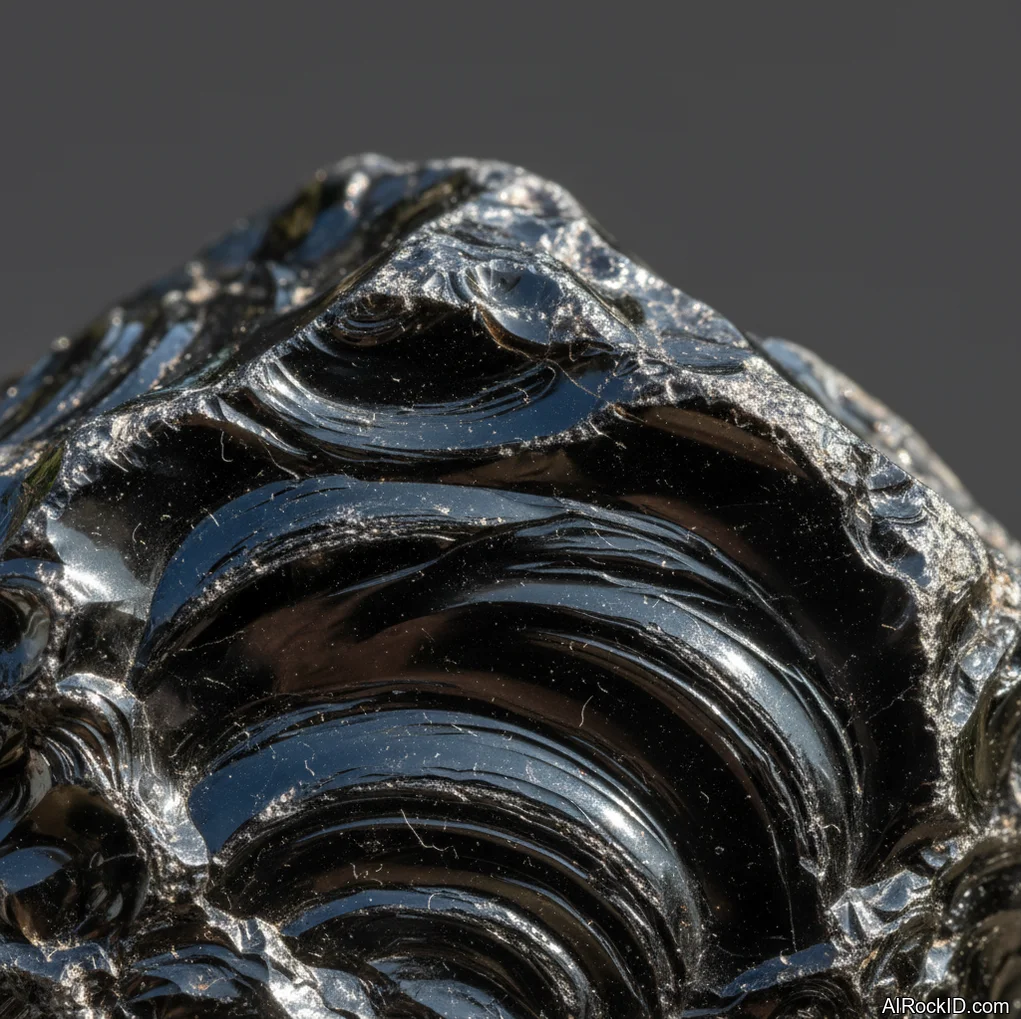
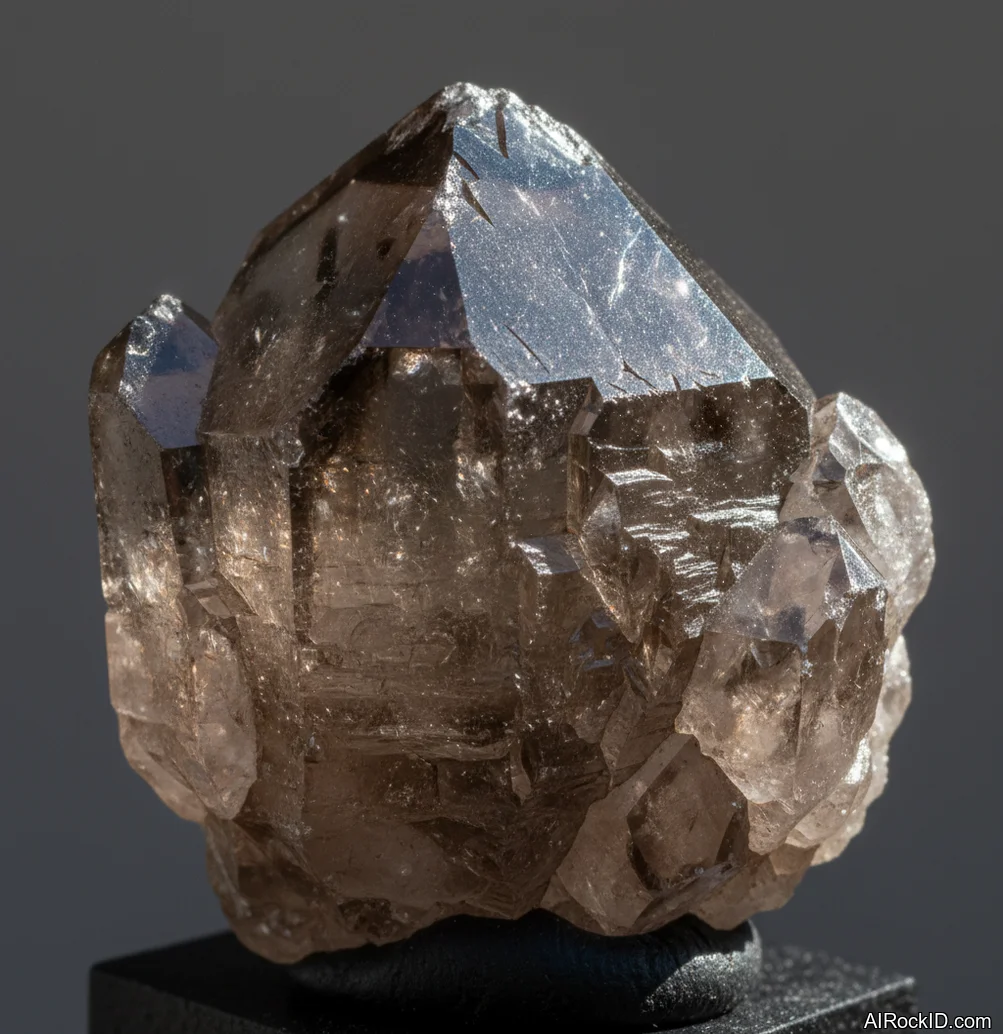
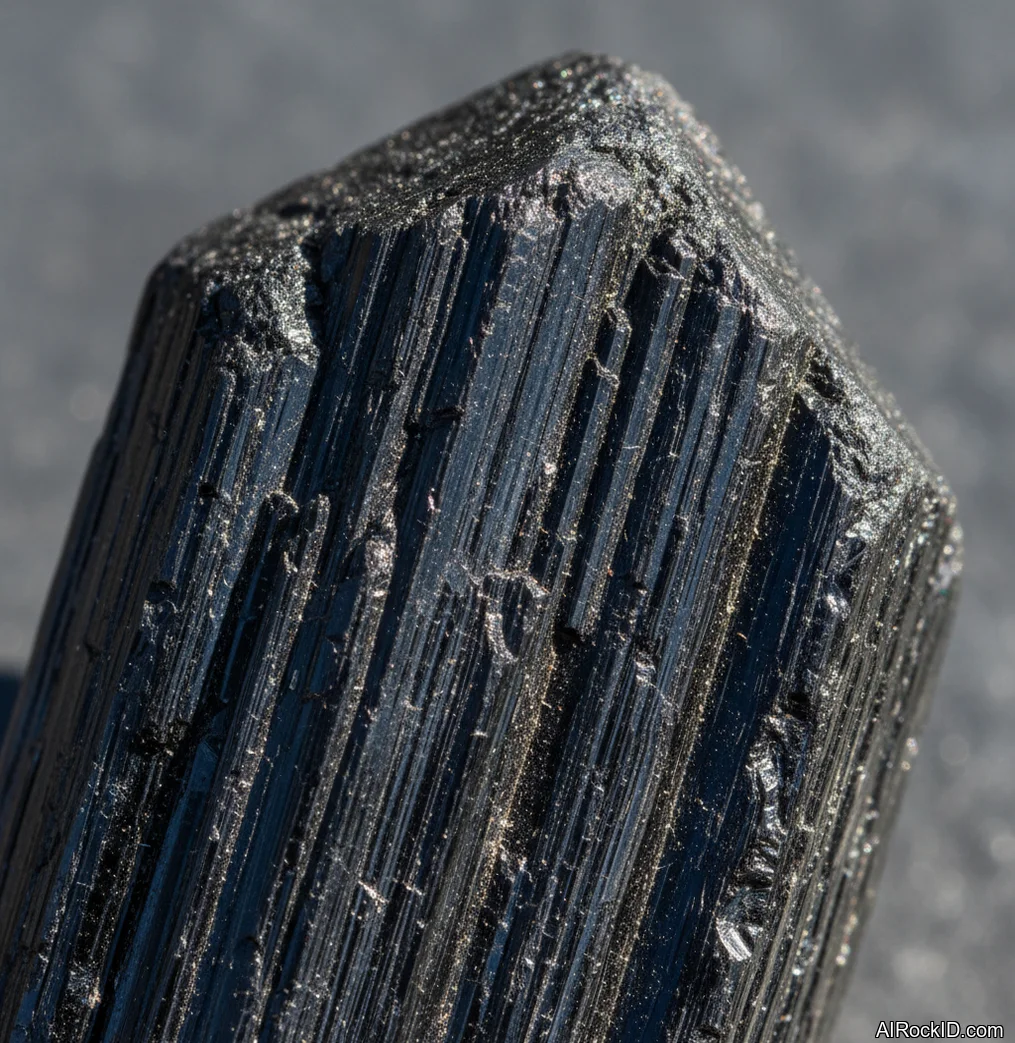
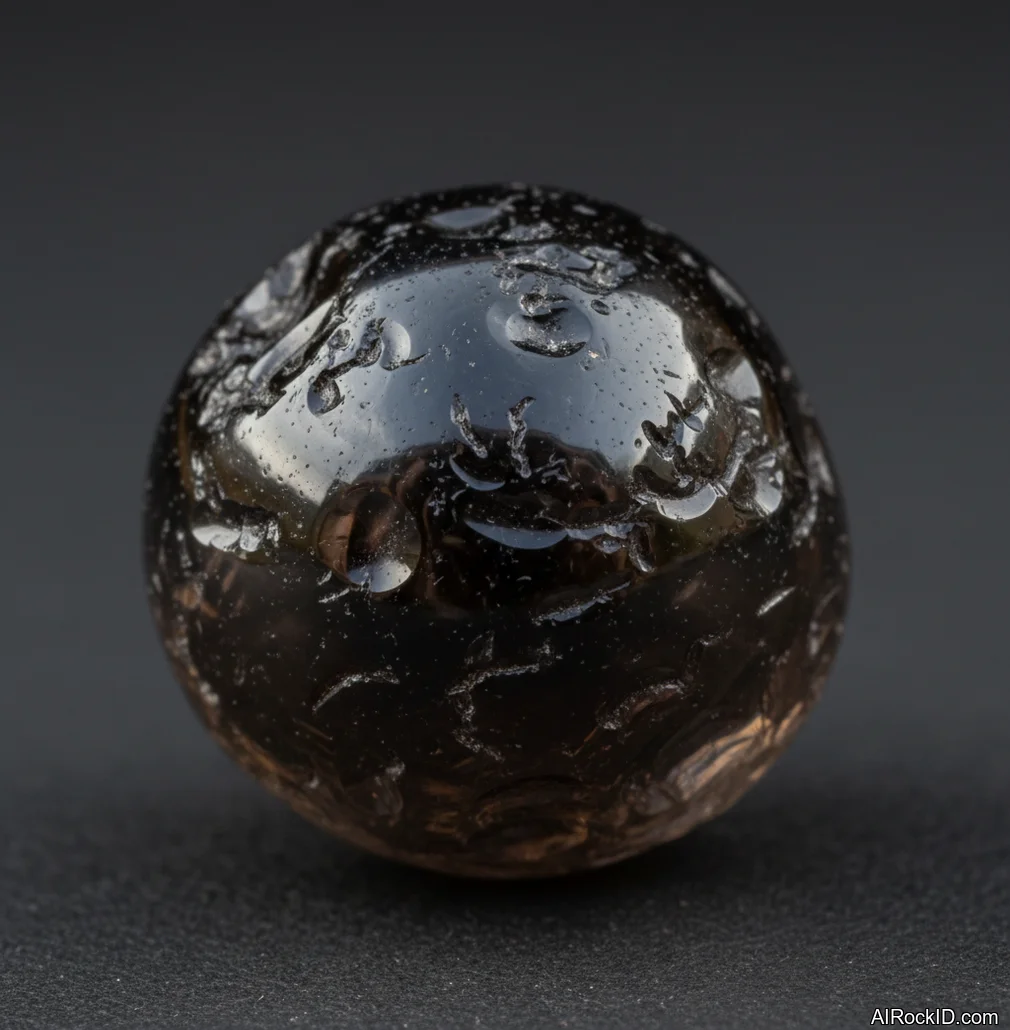
Apache Tears are small, rounded nodules of obsidian (natural volcanic glass) that read as pitch-black at first, then flip on you the moment light catches those thin edges.
Grab a handful and you notice it immediately. Smooth, glassy, heavier than you expect, like little river pebbles that somehow stayed sharper than they should. Most pieces on the market get tumbled into those bean shapes, but I like the raw nodules better because they keep that natural, pitted skin from the perlite host (it’s got that slightly dimpled, almost rind-like feel under your thumb). Hold one up to a phone flashlight and the “tear” part makes sense fast. The edge lights up smoky brown, sometimes almost root-beer colored. Weirdly pretty, right?
At first glance people assume they’re just dull stones. But they’re sneaky. The surface can look matte from tiny abrasion marks, then you tilt it and suddenly there’s that glass sheen staring back at you. And if you’ve ever dropped one on a tile floor, you don’t forget it. Obsidian can be tough, sure, but it’ll chip like a wine glass.
Origin & History
Most dealers will tell you the name comes out of a Southwestern U.S. story tied to the Apache people. In that bit of folklore, the dark little nodules are said to be tears shed after a battle. That’s the trade name you’ll see on tags at shows, and it stuck because it’s easy to remember and it fits the shape you’re holding in your hand.
On the geology side, nobody “described” them the way a brand-new mineral species gets described, because obsidian isn’t a mineral species in the first place. It’s volcanic glass. You start seeing “Apache tears” used in lapidary and rockhound circles in the 20th century, especially around Arizona and New Mexico shops selling tumbled black stones that go brown at the edges when you hold them up to the light. Pretty specific, right?
Where Is Apache Tears Found?
They’re most associated with the U.S. Southwest, especially Arizona, but similar obsidian nodules occur anywhere rhyolitic obsidian and perlite deposits form.
Formation
Raw chunks from a perlite deposit pretty much spell it out. Obsidian begins as silica-rich lava that cools so fast the atoms don’t have time to line up into crystals, so what you end up with is glass. Then, later on, water works its way in through tiny cracks and starts hydrating that glass, and whole sections turn into perlite, which breaks into those gray, onion-skin spheres.
The “tears” are just the parts that refused to change, the denser, less-hydrated obsidian sitting inside the perlite like a hard core. That’s why you’ll run into nodules where the outside feels a little rougher and looks lighter, but if you crack one open the inside is still that fresh black. And that’s also why they’re so rounded. They basically pop free like marbles when the host rock falls apart, especially on weathered outcrops where you can literally pinch them out of the gritty stuff with your fingers (ever notice how the perlite crumbs feel slightly chalky compared to the slick obsidian?).
How to Identify Apache Tears
Color: Usually jet black in hand, but thin edges transmit smoky brown to dark amber when backlit. Some pieces lean more gray-black depending on surface weathering.
Luster: Vitreous to slightly waxy when tumbled, and glassy on fresh chips.
Look closely at the edges under a strong light; real Apache Tears almost always show brown translucence instead of staying dead-opaque. If you scratch it with a steel nail, you’ll usually leave a faint line because obsidian is about Mohs 5 to 5.5. The real test is the feel: they’re cool in the hand and glass-smooth, and a fresh broken spot has that sharp conchoidal curve like a bottle chip.
Properties of Apache Tears
Physical Properties
| Crystal System | Amorphous |
| Hardness (Mohs) | 5.0-5.5 (Medium (4-6)) |
| Density | 2.35-2.60 g/cm3 |
| Luster | Vitreous |
| Diaphaneity | Opaque |
| Fracture | Conchoidal |
| Streak | white |
| Magnetism | Non-magnetic |
| Colors | black, smoky brown (in transmitted light), dark gray |
Chemical Properties
| Classification | Silicates |
| Formula | SiO2 (dominant; volcanic glass with variable minor oxides) |
| Elements | Si, O |
| Common Impurities | Al, Fe, Na, K, Ca, Mg |
Optical Properties
| Refractive Index | 1.48-1.51 |
| Birefringence | None |
| Pleochroism | None |
| Optical Character | Isotropic |
Apache Tears Health & Safety
Apache Tears are safe to handle, and a quick splash of water isn’t going to hurt anything as long as the piece is intact. But watch the edges. If it chips, it can leave little razor-sharp spots (you’ll feel them the second you run a finger along the break), and working with raw material comes with the same risk.
Safety Tips
If you’re knapping, cutting, or grinding obsidian, put on eye protection and a proper respirator. And keep the work wet the whole time. It helps keep that super-fine glass dust from getting into the air (and into your lungs).
Apache Tears Value & Price
Price Range
Rough/Tumbled: $2 - $10 per tumbled stone; $10 - $40 for larger raw or matched pairs
Cut/Polished: $1 - $6 per carat (cabochons, typical commercial quality)
Bigger nodules that have a clean, almost glassy surface and that nice brown translucence (the kind you can see when you hold one up to a lamp) usually fetch more money. And if you’ve got two that match in size for earrings, the price jumps again. But most dealers just dump them in a bowl and sell them cheap, so when someone’s pushing “rare Apache Tear,” it’s usually just upselling.
Durability
Moderate — Scratch resistance: Fair, Toughness: Fair
It’s stable as a display stone, but it can chip on corners and edges if it bangs against harder minerals in a pouch.
How to Care for Apache Tears
Use & Storage
Keep them in a soft bag or a separate compartment so they don’t get edge chips. If you carry one daily, expect tiny scuffs over time because it’s glass.
Cleaning
1) Rinse with lukewarm water and a drop of mild soap. 2) Use a soft toothbrush to get grit out of pits on raw nodules. 3) Rinse well and pat dry; don’t toss it wet into a pouch with metal keys.
Cleanse & Charge
Most people just rinse them and let them dry overnight. If you use smoke or sound, it won’t hurt the stone and it avoids banging it around in a bowl of harder crystals.
Placement
On a desk or nightstand works well because they’re small and easy to keep track of. If you put them in a pocket, keep them away from coins and knives that can scratch or chip them.
Caution
Skip ultrasonic cleaners and steam. Don’t do the whole hot then cold shock thing either, because glass really can crack from that kind of sudden swing. And if something does break, handle the pieces exactly like broken glass, because that’s what they are.
Works Well With
Apache Tears Meaning & Healing Properties
Next to that glossy, pitch-black obsidian, Apache Tears come off a little gentler, at least in the way folks talk about them. They’re usually small, round-ish nodules, and if you hold one up and tilt it just right, you can catch that warm brown light at the edges. When I pass one across the counter at the shop, people almost always start rubbing it with their thumb without even realizing they’re doing it. It’s that kind of stone. Simple. Hand-friendly.
Thing is, a lot of “healing” talk can slide into medical-claim territory fast, and I’m not doing that. In crystal circles, Apache Tears get linked to emotional processing, especially grief, and the idea of letting heavy stuff move through instead of lodging in place. And yeah, the name kind of steers people that way, doesn’t it? I’ve carried a few in my pocket during rough weeks because it feels grounding in a plain, physical sense: cool to the touch, smooth, and easy to hold when you’re fidgety (or just need something to do with your hands).
But don’t treat them like they’re indestructible little worry stones. If you clamp down on one in your pocket with keys, you can chip it, and a fresh chip can be surprisingly sharp. And I’ve seen sellers label any tumbled black glass as “Apache Tear.” Real ones usually give you that brown edge-glow, and that tiny detail matters if you’re buying for the symbolism people attach to it.
Identify Any Crystal Instantly
Snap a photo and get properties, value, care instructions, and healing meanings in seconds.