Black Shiva Lingam
What Is Black Shiva Lingam?
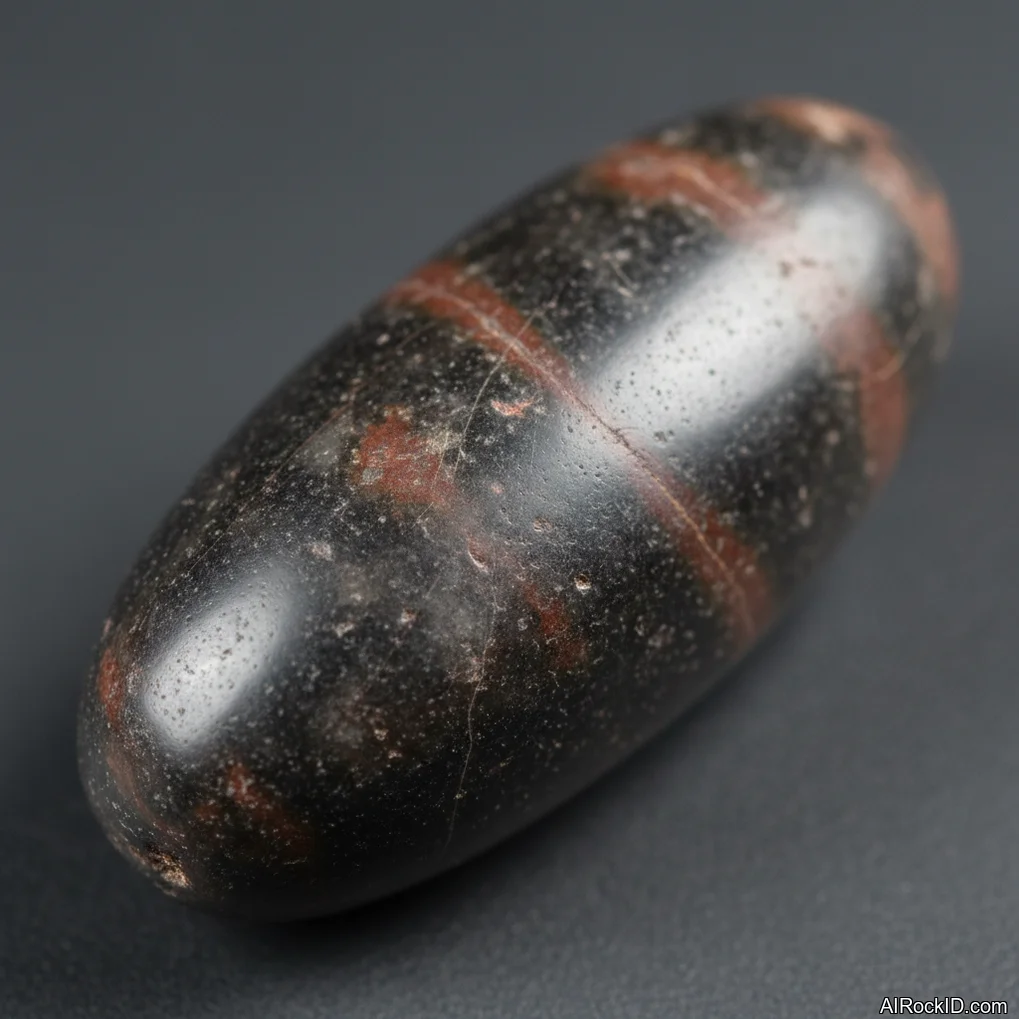
Black Shiva Lingam is basically a smooth, oval river stone pulled from the Narmada River in India. It’s made mostly of cryptocrystalline quartz (chalcedony/agate), and it has iron-rich inclusions that darken the whole thing.
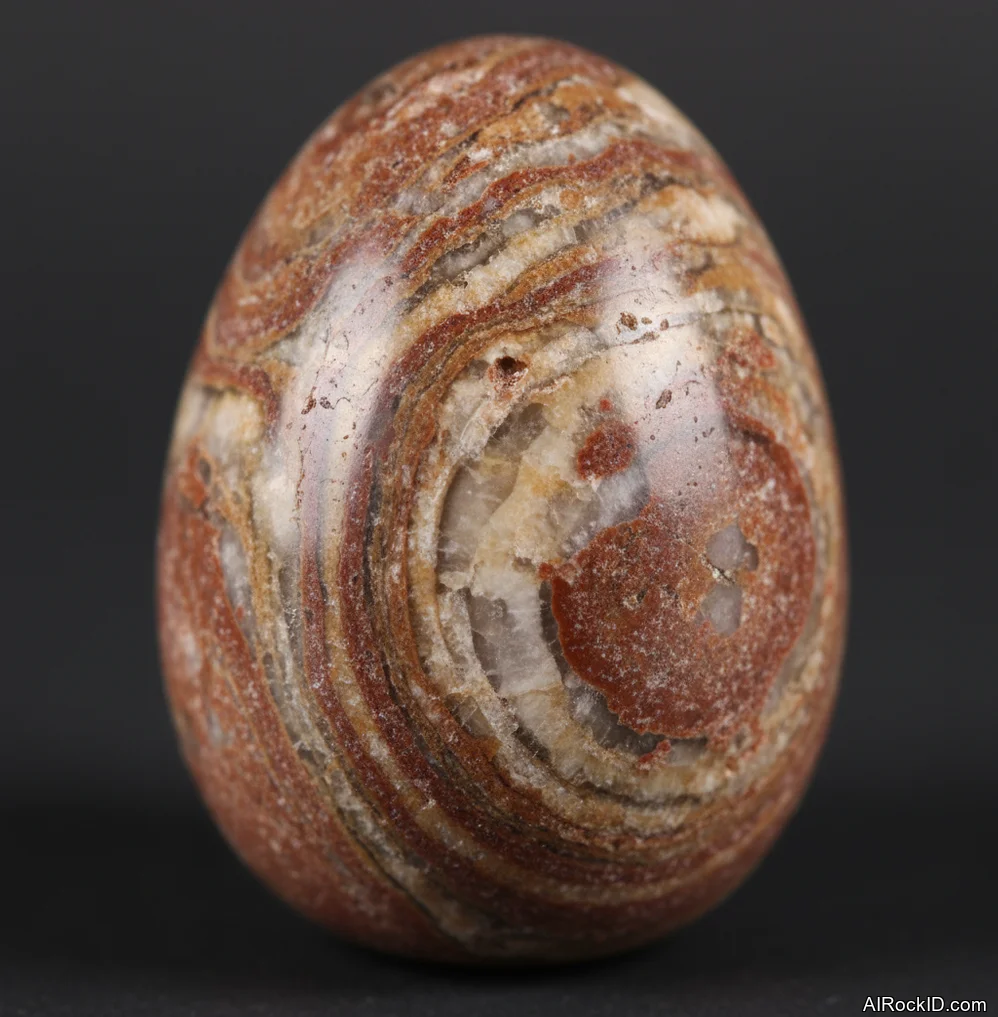
Pick up a solid one and you feel the weight before anything else. Seriously. It lands heavy in your palm for its size, and the finish feels almost like ceramic, not that slick, plasticky kind of shine. Most are egg-shaped or more like a little torpedo, and the banding is subtle. You won’t always see it straight on. But tip it under a lamp and those soft bands or cloudy gray streaks pop out for a second.
People see the name and expect a pointy “crystal,” right? But this isn’t that. It’s a river-worn rock that’s been finished after the fact, and that little detail matters when you’re shopping. Two stones can match in size and still feel totally different in hand, because one is dense chalcedony and the other is a lighter mix with more porous matrix. Funny how obvious it is once you’re holding them (and you can’t un-feel it).
Origin & History
“Shiva Lingam” comes from the lingam form linked to Shiva in Hindu tradition, and the stones themselves are connected to the Narmada River, one of the major pilgrimage rivers in India. And in the trade you’ll also hear “Narmada Shiva Lingam,” which is just the more location-specific name dealers use when they want to flag that it’s from the classic source.
As a collectible, it didn’t land in Western mineral circles the way something like “amethyst from Uruguay” did, with a formal mineral description and all that. It filtered in through religious supply lines and the metaphysical market first, then it drifted into rock shops once people noticed how reliably these come in that smooth, eggy shape with a consistent polish that works great as worry stones and palm stones. Thing is, most dealers I know buy them by the kilo in mixed sizes. Then they sit there and hand-pick the ones with the nicest banding for the display trays (you can feel the difference right away when you’re turning them in your hand).
Where Is Black Shiva Lingam Found?
Authentic Shiva Lingam stones are collected from the Narmada River system in central-west India, then sorted and polished for the market.
Formation
These river stones get going way before the river ever lays a finger on them. The stuff they’re made of is mostly chalcedony and agate, which show up when silica-rich fluids seep into little voids and cracks, then set up and harden into microcrystalline quartz. Give it time and you’ll see faint banding, cloudy patches, plus iron staining, and that’s what ends up reading as that gray-to-black color people go for.
And then the Narmada takes over. Years of rolling, clacking into other rocks, and grinding along the riverbed round them down, take off the sharp corners, and nudge them toward that familiar oval shape. But thing is, the really uniform “perfect egg” ones are usually helped along after they’re collected, with cutting and polishing. Truly raw, river-worn pieces are out there, sure, but you don’t see them as often in shops, and they won’t have that slick, glossy finish most buyers expect.
How to Identify Black Shiva Lingam
Color: Usually charcoal to near-black with smoky gray banding, lighter streaks, or patchy mottling that shows best under directional light.
Luster: Waxy to vitreous after polishing, with a soft glow rather than a mirror-metal shine.
Look closely for natural-looking banding that fades in and out, not printed-looking stripes. The real test is temperature and feel: chalcedony stays cool to the touch longer than glass or resin, and it has a slick, dense glide when you rub it with your thumb. If you scratch it with a steel blade, it shouldn’t take the scratch easily, but the blade might leave a faint metal streak that wipes off.
Properties of Black Shiva Lingam
Physical Properties
| Crystal System | Trigonal |
| Hardness (Mohs) | 6.5-7 (Hard (6-7.5)) |
| Density | 2.58-2.64 g/cm3 |
| Luster | Waxy |
| Diaphaneity | Opaque |
| Fracture | Conchoidal |
| Streak | white |
| Magnetism | Non-magnetic |
| Colors | black, charcoal, gray, smoky gray, brownish black |
Chemical Properties
| Classification | Silicates |
| Formula | SiO2 |
| Elements | Si, O |
| Common Impurities | Fe, Mn, Al |
Optical Properties
| Refractive Index | 1.530-1.540 |
| Birefringence | 0.004 |
| Pleochroism | None |
| Optical Character | Uniaxial |
Black Shiva Lingam Health & Safety
It’s generally safe to handle, and you can rinse it with water without any real worry. The bigger problem is physical: drop it on tile or concrete and it can take a hit (you’ll hear that sharp smack), and that’s where the damage usually happens.
Safety Tips
If you’re polishing or cutting any quartz-based stone, keep water running and use proper dust control, because breathing in silica dust is bad news. It’s the kind of fine, gritty powder that hangs in the air and ends up in your nose and throat before you even notice.
Black Shiva Lingam Value & Price
Price Range
Rough/Tumbled: $10 - $80 per stone
Price bounces around based on size, symmetry, and how clean the polish looks up close. Deep black stones with that faint banding and zero pits or flat spots usually get priced higher, even when the material itself isn’t rare (you can feel the difference when you run a fingernail over the surface).
Durability
Durable — Scratch resistance: Good, Toughness: Good
Chalcedony is stable in normal home conditions and holds a polish well, but a hard drop can still chip an edge.
How to Care for Black Shiva Lingam
Use & Storage
Keep it in a pouch or a divided tray if it’s stored with softer stones that can get scuffed. And don’t toss it loose in a drawer with jewelry, because it can scratch metals and softer gems.
Cleaning
1) Rinse with lukewarm water. 2) Use a drop of mild soap and your fingers or a soft cloth to wipe skin oils off the polish. 3) Rinse again and dry fully with a towel.
Cleanse & Charge
A simple water rinse and a wipe-down is usually enough for day-to-day “resetting.” If you use smoke or sound, keep it practical and don’t overthink it.
Placement
On a desk it works like a worry stone you can grab without looking. If you display it, a small ring stand keeps it from rolling off a shelf.
Caution
Skip harsh cleaners and anything acidic. And don’t do salt soaks if the stone has tiny little pits, because the grains can get stuck in there and leave crusty residue you won’t fully rinse out. Watch your countertops and floors too. Even tough chalcedony can chip if it takes a bad drop (especially onto tile or stone).
Works Well With
Black Shiva Lingam Meaning & Healing Properties
In the metaphysical corner of things, Black Shiva Lingam is used as a grounding stone, and it really does have that heavy, steady feel. I buy that, even with my rock-nerd brain turned on. When I’m slogging through inventory at the shop and my thoughts are basically mush, I’ll toss one in my pocket and it turns into a little thumb anchor. Smooth all the way around. Same egg-ish shape every time. No sharp bits. Just… simple.
But people get hung up on the idea that the “power” comes from a flawless polish or a perfect egg form. It doesn’t. The whole tactile thing is a huge part of why anyone bonds with it, and honestly a slightly imperfect one can feel better in your hand than some too-perfect, overly glossy piece that looks like it came off an assembly line. The cheap ones can be dyed black or even made from glass, and you can usually tell fast because they feel warmer and lighter than they should. Real chalcedony stays cool in your palm, and it’s got that quiet, dense heft that’s hard to fake (you notice it the second you pick it up).
Spiritually, a lot of folks tie it to balance, stability, and meditation focus, especially because of the lingam association in Hindu practice. And no, none of that is medical advice, and it won’t replace treatment for anxiety or sleep issues. But as a physical object you can hold while you breathe, slow down, and give your hands something to do, it’s tough to beat. One of the few “metaphysical” stones that also makes total sense as a plain old worry stone.
Identify Any Crystal Instantly
Snap a photo and get properties, value, care instructions, and healing meanings in seconds.