Shiva Lingam
What Is Shiva Lingam?
A Shiva Lingam is a naturally river-tumbled, quartz-rich stone (jasper/agate type) gathered from the Narmada River in India, and it’s usually polished into an egg or lingam shape.
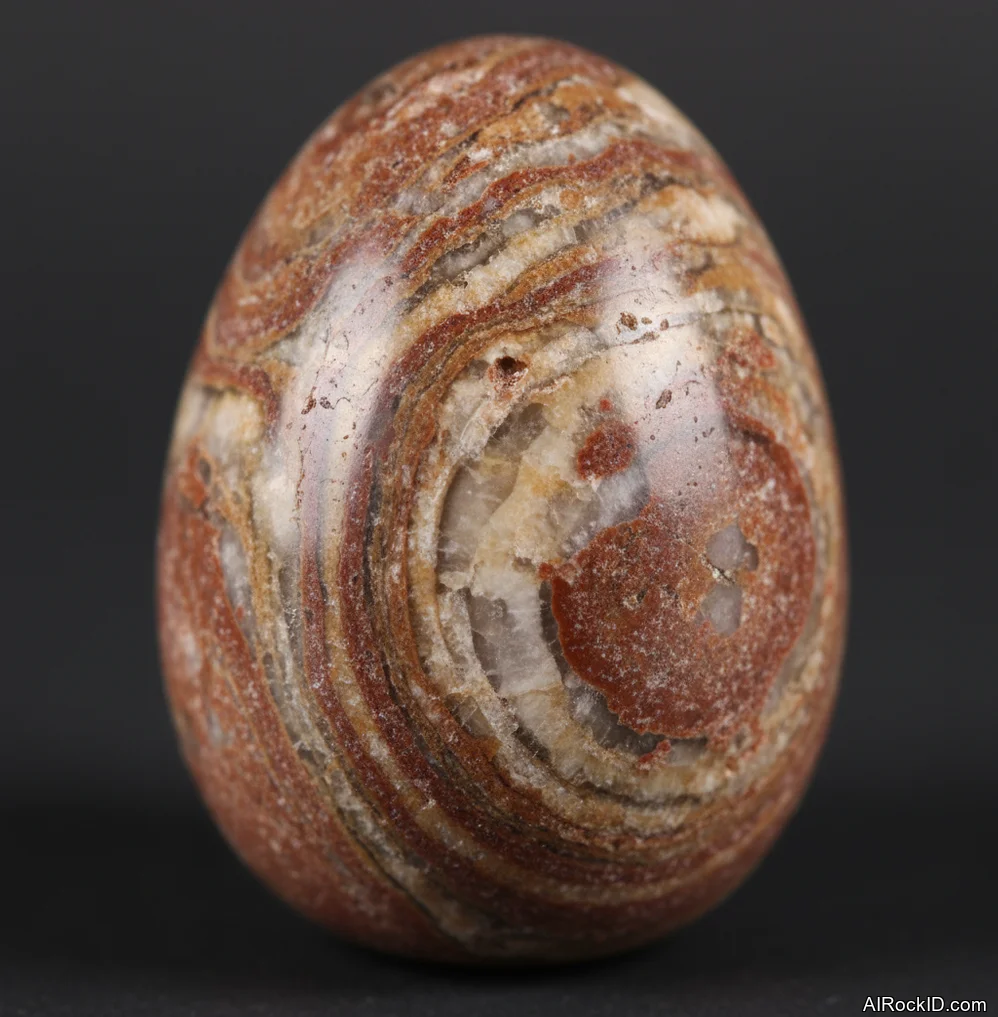
Pick one up and the first thing you clock is the weight. It sits heavy in your palm for something that size, and the surface feels slick and glassy, like microcrystalline quartz does after a proper polish (the kind where your thumb almost skates over it). The colors tend to run sandy tan with cocoa-brown streaks, and every so often there’s a smoky gray patch that looks like somebody dragged a brush across it.
A lot of people assume the shape is carved. But the river does most of the rounding long before any lapidary work happens. So what you see on the market is usually pieces that have been cleaned and polished, and the better ones still have that natural-looking taper on one end instead of reading like a perfectly machined egg.
Origin & History
Most dealers call these stones “Shiva Lingam” because that classic lingam shape is a sacred symbol tied to Shiva in Hindu practice, and the Narmada River has been treated as holy for a long time. And in the trade you’ll also hear “Narmada lingam,” which is really just people being more specific about where they came from.
There isn’t one clean “first described by” moment like you get with a newly named mineral species. Why? Because this is a river-worn rock type, not a formally defined mineral. The modern crystal-market identity basically took off once polished stones started showing up everywhere at gem shows and import booths, usually tagged by the river and region instead of a strict petrographic name.
Where Is Shiva Lingam Found?
Authentic Shiva Lingam material is collected from the Narmada River in central India, especially in Madhya Pradesh, then cleaned and often polished for sale.
Formation
It starts out as silica rich rock, basically microcrystalline quartz that’s got iron oxide staining and banding. Depending on the chunk you pick up, it can read more jaspery, or more agate like.
Then time does what time does. The rock breaks loose, gets carried downstream, and it gets knocked around over and over in the river. You can hear it in your head, right? That clack and grind as stones bump each other.
And that tumbling is the whole trick. All that constant rolling rounds the edges, pops off weak spots, and sometimes you end up with a naturally eggy cobble before anyone ever touches it with sandpaper.
But here’s what sellers don’t always say out loud: a lot of them get ground later into a more intentional lingam outline, then polished up to a high gloss. You can still spot the ones that started as naturally rounded cobbles because they keep slightly uneven curves and that “wild” banding that doesn’t line up in a neat, symmetrical way (it kind of wanders).
How to Identify Shiva Lingam
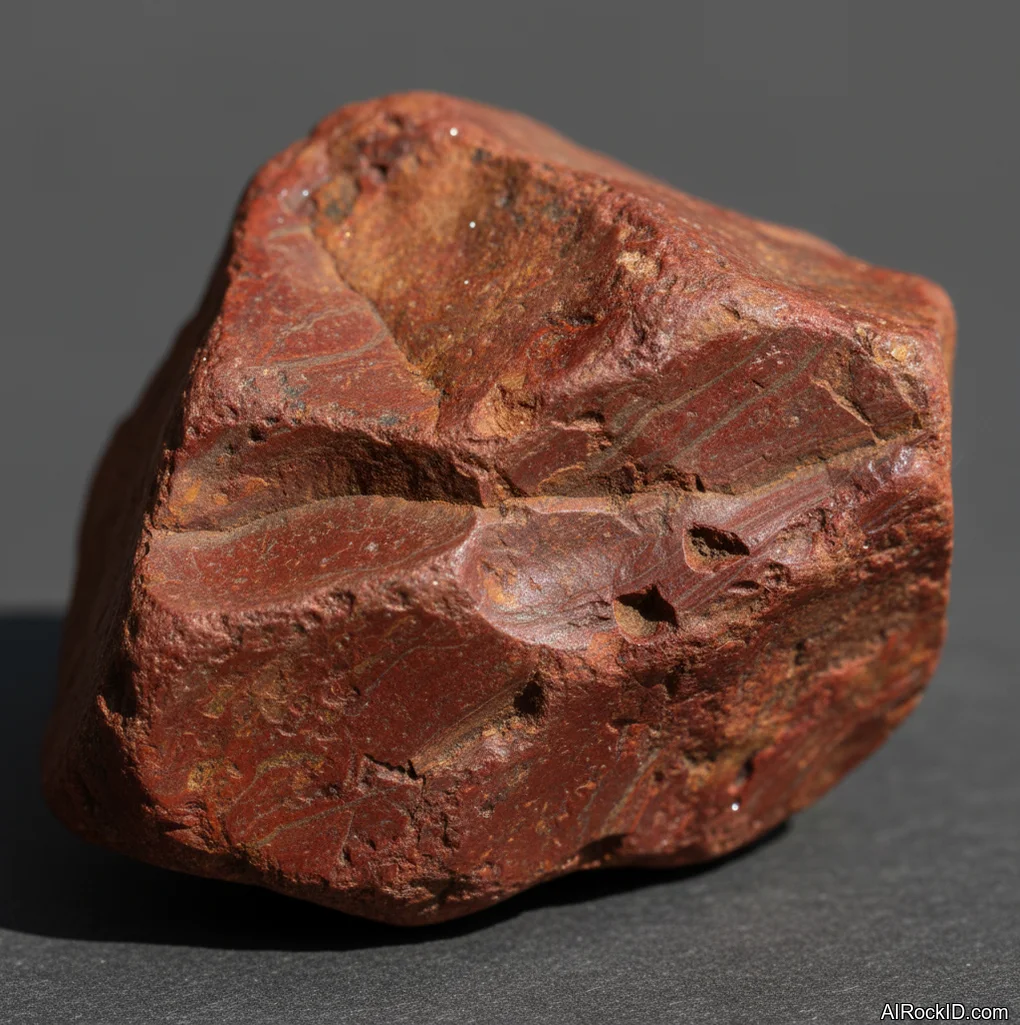
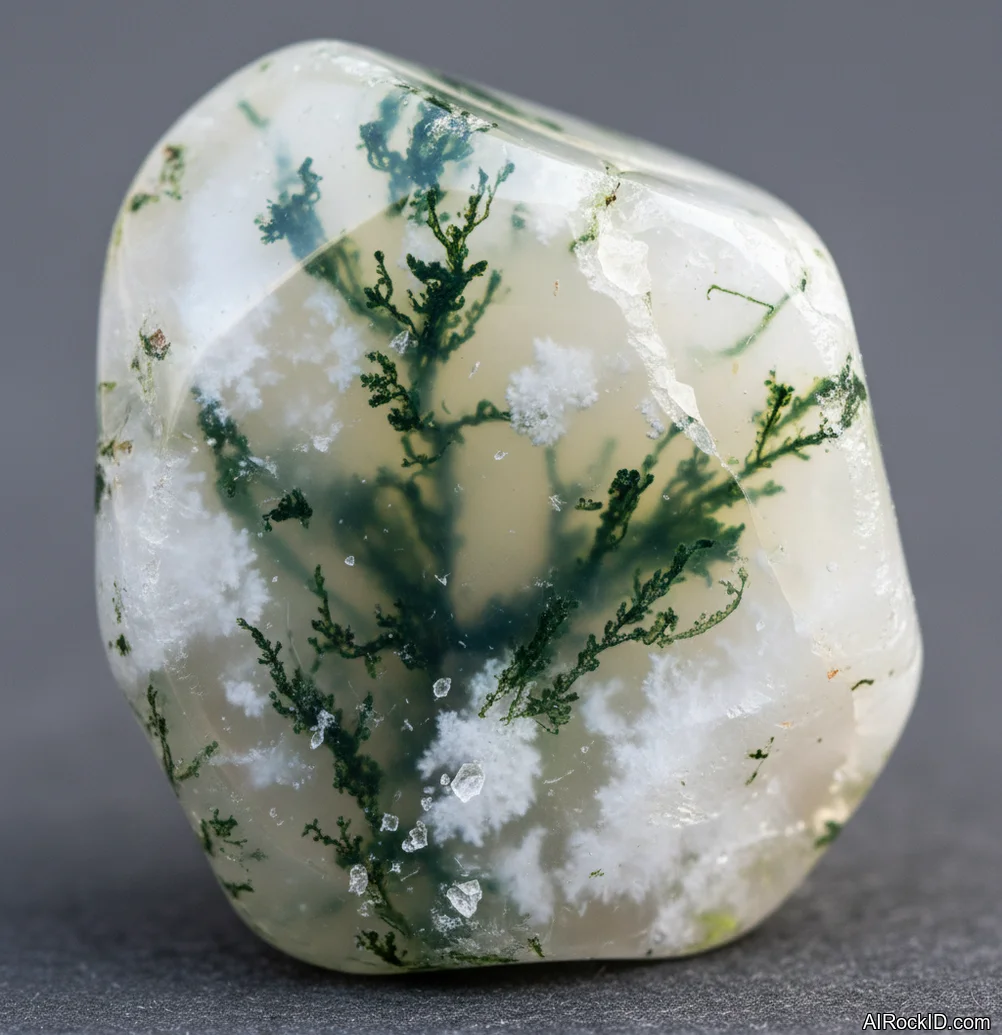
Color: Most Shiva Lingam stones are tan to beige with brown, rust, or gray banding and patches. Some show soft, blurry striping rather than crisp agate lines.
Luster: Polished pieces have a vitreous to waxy shine typical of microcrystalline quartz.
Look closely at the patterning: real ones tend to have earthy, iron-stained bands that look like they soaked into the stone rather than sitting on top. Pick up a few at a shop and compare temperature, too. Quartz-rich stones stay cool longer in your hand, while resin or composite fakes warm up fast and feel a little sticky instead of slick.
Properties of Shiva Lingam
Physical Properties
| Crystal System | Trigonal |
| Hardness (Mohs) | 6.5-7 (Hard (6-7.5)) |
| Density | 2.58-2.65 g/cm3 |
| Luster | Waxy |
| Diaphaneity | Opaque |
| Fracture | Conchoidal |
| Streak | White |
| Magnetism | Non-magnetic |
| Colors | tan, beige, brown, gray, rust |
Chemical Properties
| Classification | Silicates |
| Formula | SiO2 |
| Elements | Si, O |
| Common Impurities | Fe, Al, Mn |
Optical Properties
| Refractive Index | 1.53-1.54 |
| Birefringence | 0.009 |
| Pleochroism | None |
| Optical Character | Uniaxial |
Shiva Lingam Health & Safety
Shiva Lingam is mostly quartz (SiO2), so it’s generally safe to hold in your hands and rinse off with water. And honestly, you don’t need some complicated routine here. Basic care usually does the job for most people.
Safety Tips
If you’re going to cut or grind it, handle it like any other silica-heavy stone. Don’t breathe the dust. Wet it down with water (a steady spray keeps that fine powder from hanging in the air), and wear proper respiratory protection.
Shiva Lingam Value & Price
Price Range
Rough/Tumbled: $8 - $80 per piece
Price mostly comes down to size, how good the polish actually is, and how clean the surface looks when you turn it in the light. Stuff with nice, natural-looking banding and a good taper usually gets marked higher than the perfectly plain tan pieces. And you can see why, right? The banding just pops once it’s polished, especially when the surface doesn’t have those little hazy scuffs that show up around the edges (the kind you only notice after you’ve handled a few).
Durability
Very Durable — Scratch resistance: Excellent, Toughness: Good
It’s quartz-based, so it holds up well in day-to-day handling and doesn’t mind normal room conditions.
How to Care for Shiva Lingam
Use & Storage
Store it where it won’t get knocked onto tile or concrete, even though it’s tough. I keep polished lingams in a tray or a cloth bag so they don’t scuff other softer stones.
Cleaning
1) Rinse under lukewarm water with a drop of mild soap. 2) Use a soft cloth or a soft toothbrush to clean the polish around any small pits. 3) Rinse well and dry completely so you don’t get water spots.
Cleanse & Charge
A quick rinse and a wipe-down works fine for most folks who like a reset ritual. If you use smoke or sound, keep it simple and don’t overthink it.
Placement
On a desk it feels like a worry stone with some heft, and it won’t tip over easily. If you put it on a windowsill, it’ll be fine, but dust shows up fast on that glossy polish.
Caution
Skip harsh cleaners and don’t leave it sitting in salty water for ages, because that combo will slowly knock the shine down and leave the surface looking kind of tired. And look, don’t just trust the label online either. Not every “Shiva Lingam” you see is actually river-sourced material; plenty of them are basically generic jasper eggs being sold under the name.
Works Well With
Shiva Lingam Meaning & Healing Properties
Most folks who buy a Shiva Lingam come in for the cultural meaning just as much as the geology side of it. In my own stash, it feels steady and grounded, and honestly that’s mostly because of how it sits in your hand. Smooth. Heavy. Quiet. The tactile part counts more than people want to admit.
If you’re using one for meditation or a personal ritual, it usually works like a focus object. Your hands have something to do, and your brain settles down a notch. But it’s still a rock. If somebody’s pitching it like it can replace therapy, sleep, or medical care, that’s a hard no from me.
One practical thing from handling a bunch of them at shows: the strongest “feel” tends to come from pieces that aren’t over-shaped. When the curves look too perfect, they’re usually coming off a factory-type polish line, and you can feel it, that slick, uniform finish. And they just don’t have that river-worn character that makes the stone interesting in the first place.
Identify Any Crystal Instantly
Snap a photo and get properties, value, care instructions, and healing meanings in seconds.