Blue Halite
What Is Blue Halite?
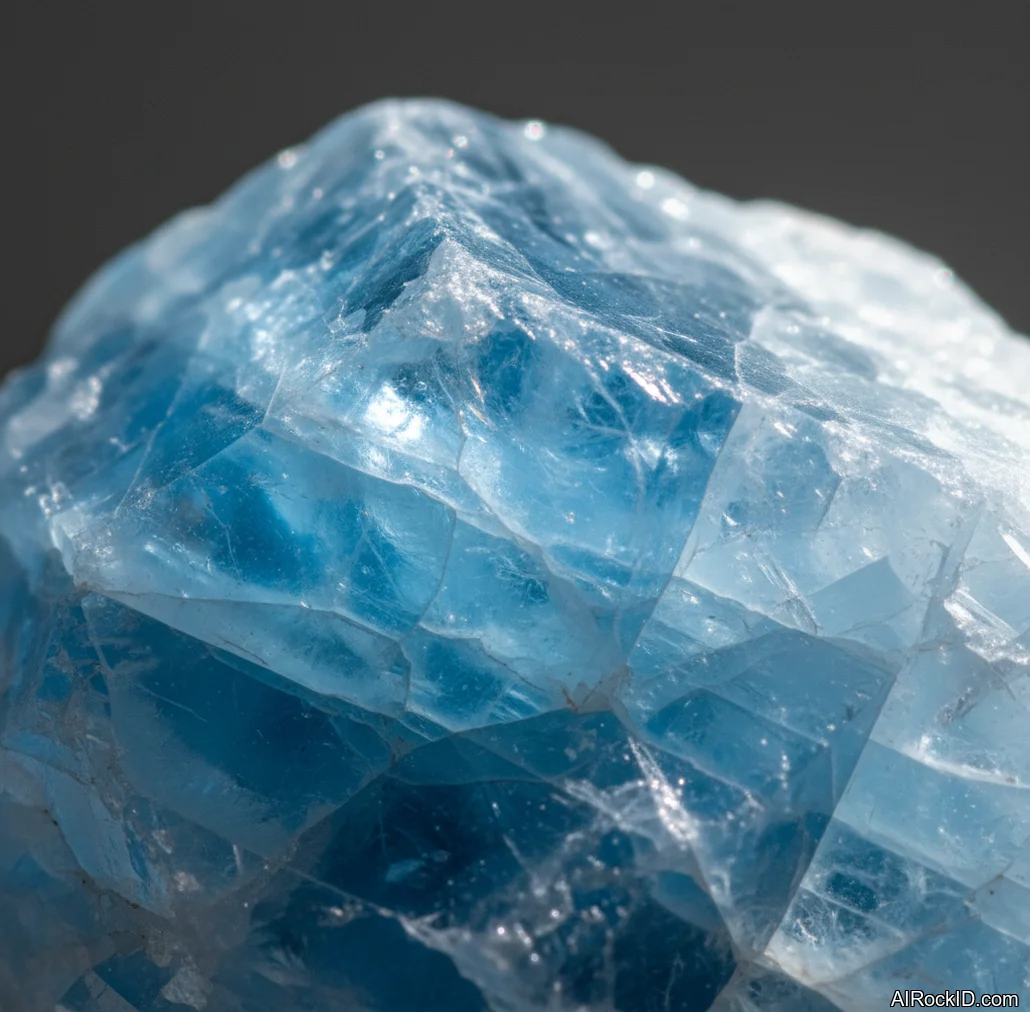
Blue Halite is a naturally blue-colored variety of halite (sodium chloride) that forms in evaporite deposits. If you’ve only ever messed with the clear or white rock salt, the first time you spot a real blue piece it honestly feels like your eyes are playing games. Tip it under a desk lamp and that icy, inky glow shows up along the cleavage steps, like the color’s trapped inside the crystal instead of painted on top.
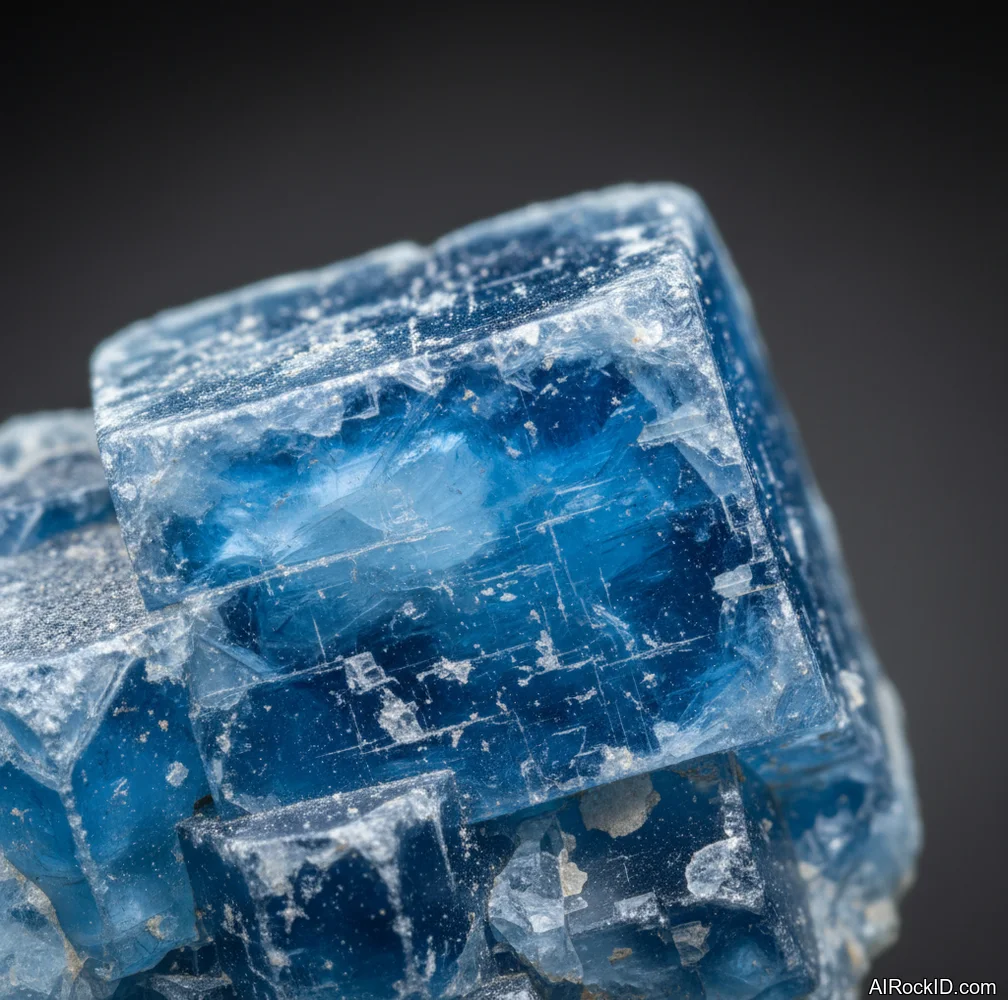
Grab a chunk and the weight throws you off right away. It’s weirdly light for its size. Not that “stone” heaviness. And the surfaces give it away fast. Halite doesn’t fracture like quartz. It kind of pops into blocky bits, and those cleavage faces can look like tiny stair steps, sharp enough to catch on a paper towel (ask me how I know). But it’s fragile, too. I’ve seen a nice blue cube get scuffed up just from rattling around in a dealer’s flat.
People’s first thought is dye, and fair enough because a lot of blue “salt” online is dyed or treated. But real blue halite still handles like halite. It stays cool to the touch, it feels a little “dry” and squeaky if you rub two faces together, and it’ll start to soften if you leave it anywhere humid.
Origin & History
Halite got described pretty early on in mineralogy, and the name’s straight from the Greek *hals* (salt) with the usual mineral suffix, *-ite*. Blue halite isn’t some separate mineral species, though. It’s just halite that happens to come out blue, and that color only turns up in a handful of evaporite districts, where little crystal defects or tiny trace impurities can push the tone into blue.
Collectors didn’t really lose their minds over it until late in the 20th century, when genuinely bright blue chunks started popping up on the specimen market, especially pieces being sold out of Central Asia and a few European salt mines. And yeah, dealers will spin a whole legend around it if you let them. But the real backstory is pretty plain: once it sank in that the blue was natural on some specimens, people stopped treating them like oddball curios and started pricing them like actual collectibles.
Where Is Blue Halite Found?
Blue halite turns up in evaporite basins and salt mines in a few scattered places, with classic collector material often linked to European and Central Asian salt deposits.
Formation
Most halite shows up the simple way: salty water sits there and evaporates. The brine gets more and more concentrated, and then sodium chloride drops out as crystals. Repeat that in a basin again and again, and you can stack up thick evaporite layers. Later, those layers get buried and squeezed, and they can even creep and flow like a super slow, super sticky solid. That’s why salt domes exist.
The blue color is the weird (and fun) part. It’s usually linked to defects in the crystal lattice, called color centers, and sometimes trace components, not some obvious “blue impurity” you could circle with a finger and call it solved. In your hand, you’ll often see the strongest blue along certain zones or right on cleavage steps, instead of spreading perfectly evenly like something that’s been dyed. But some chunks look blotchy. So what? That patchiness is pretty normal for natural material.
How to Identify Blue Halite
Color: Blue halite ranges from pale icy blue to deep cobalt patches, often with color zoning or stronger color along fractures and cleavage steps. Some pieces shift from nearly clear to blue when you change the lighting angle.
Luster: Vitreous to slightly greasy-looking vitreous on fresh cleavage faces.
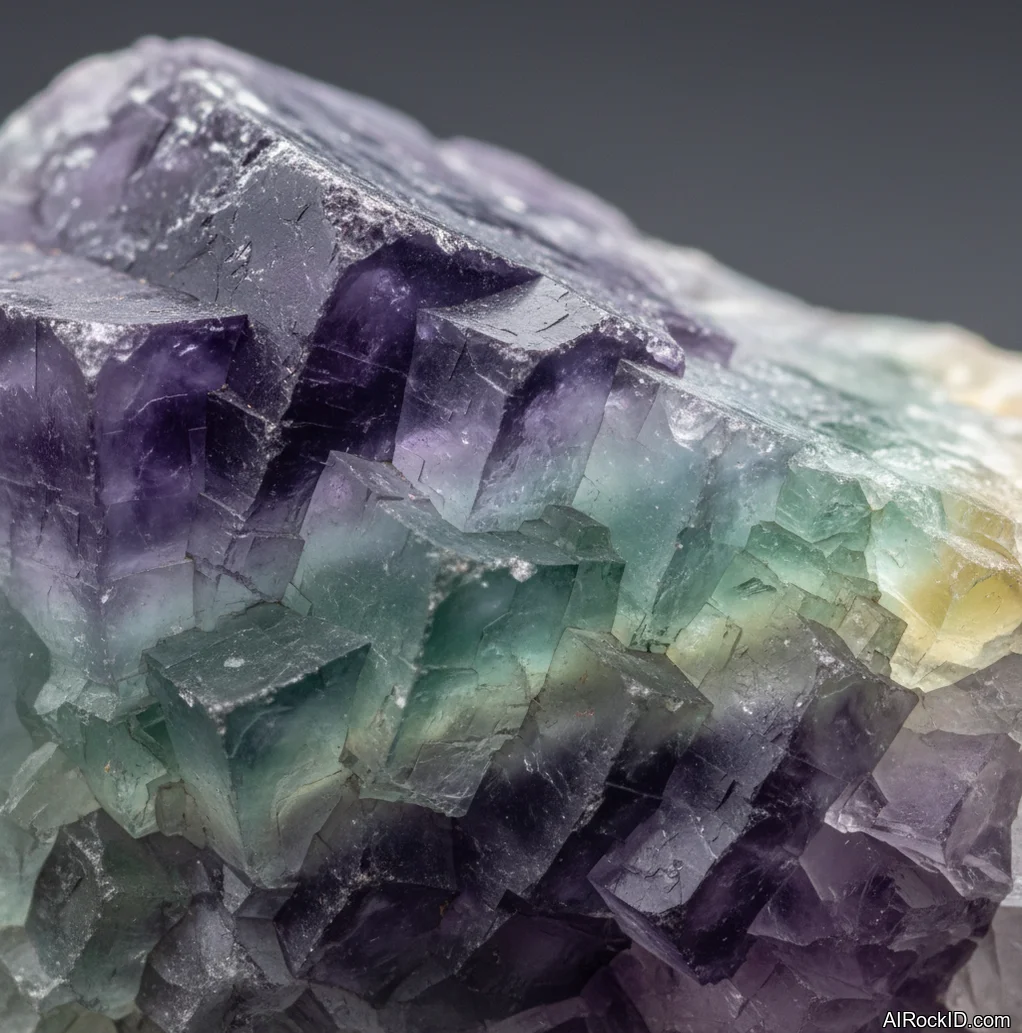
If you scratch it with a fingernail, it’ll mark easily, and that softness is hard to fake without using actual salt. Look closely for cubic cleavage and right-angle breaks, because blue calcite and blue fluorite get mislabeled as “blue halite” all the time. The real test is humidity: leave it out overnight in a damp room and a genuine piece can start to look a little wet or tacky, while fluorite won’t care.
Properties of Blue Halite
Physical Properties
| Crystal System | Cubic |
| Hardness (Mohs) | 2.0-2.5 (Very Soft (1-2)) |
| Density | 2.16-2.17 |
| Luster | Vitreous |
| Diaphaneity | Transparent to translucent |
| Fracture | Conchoidal |
| Streak | White |
| Magnetism | Non-magnetic |
| Colors | Blue, Colorless, White, Gray |
Chemical Properties
| Classification | Halides |
| Formula | NaCl |
| Elements | Na, Cl |
| Common Impurities | K, Mg, Ca, Br, SO4 |
Optical Properties
| Refractive Index | 1.544 |
| Birefringence | None |
| Pleochroism | None |
| Optical Character | Isotropic |
Blue Halite Health & Safety
Blue halite’s usually fine to pick up and hold. But it’s water-soluble, so if you get it wet, it’ll start dissolving fast (you can feel the surface go a little slick). And if you’re handling it a ton, it can bug sensitive skin and leave you a bit irritated. Thing is, the bigger concern isn’t poisoning yourself. It’s wrecking the specimen.
Safety Tips
Handle it with dry hands, and keep it somewhere it won’t pick up moisture. And if you’ve got any little cuts or hangnails, wash your hands after you touch it, because that salt finds the tender spots fast (and it stings).
Blue Halite Value & Price
Price Range
Rough/Tumbled: $15 - $250 per specimen
Prices jump fast when the blue is really saturated, the cleavage faces look clean and glassy, and the pieces are larger, intact chunks you can actually pick up without them crumbling in your fingers. But if there’s damage, cloudy patches, or that obvious moisture etching you can see as dull, frosted-looking spots, the value drops in a hurry.
Durability
Fragile — Scratch resistance: Poor, Toughness: Poor
Blue halite is very soft and water-soluble, and it can degrade in humidity, skin oils, or direct contact with water.
How to Care for Blue Halite
Use & Storage
Keep it in a closed box or display case with a small desiccant pack, especially if you live somewhere humid. I don’t leave mine on open shelves in summer because the faces start to dull.
Cleaning
1) Use a dry, soft brush or microfiber cloth to remove dust. 2) If there’s grime, wipe very lightly with a barely damp cloth and immediately dry it, but avoid soaking. 3) Let it sit in a dry container with desiccant for a day to pull out surface moisture.
Cleanse & Charge
Skip water cleansing. If you do any metaphysical “reset,” use smoke, sound, or just set it aside in a dry, dark drawer overnight.
Placement
Put it where it won’t get kitchen steam, bathroom humidity, or direct sun through a window. A sealed acrylic box works great and still lets light hit the blue zones.
Caution
Don’t soak it or rinse it in water. And skip saltwater and any cleaners too. Keep it out of humid rooms, and try not to touch it with oily hands, because the faces can get cloudy and start to pit.
Works Well With
Blue Halite Meaning & Healing Properties
A lot of sellers pitching blue halite will go on about calm and clear communication, and sure, that tracks with how people reach for pale blue stones in general. In my own pile, it’s my “quiet room” piece. Not in a spooky, magical sense. More like: when I’m buzzing and can’t sit still, I’ll grab it for a minute and those cool, slick faces kind of steal my attention in a simple way (cold like a drink glass, not icy).
But look, you’ve got to be honest about what it is. Blue halite is salt. It’s fragile. So anything you do with it should be gentle and short. Hold it. Stare at the color. Put it back.
I’ve watched people shove one under a pillow and then wake up to it looking damp and beat up, like it picked up moisture and got scuffed around in the night. If you want something to sit by your bed all night, pick a tougher stone and keep the halite for display and quick focus.
And if you’re into pairing stones, blue halite usually gets used as a “clearing” partner, especially next to selenite or clear quartz, because the whole combo looks clean and airy on a shelf. Just don’t twist that into medical claims, okay? If you’re dealing with anxiety or sleep problems, crystals are a comfort object at best, not a replacement for real care.
Identify Any Crystal Instantly
Snap a photo and get properties, value, care instructions, and healing meanings in seconds.