Blue Lace Agate
What Is Blue Lace Agate?
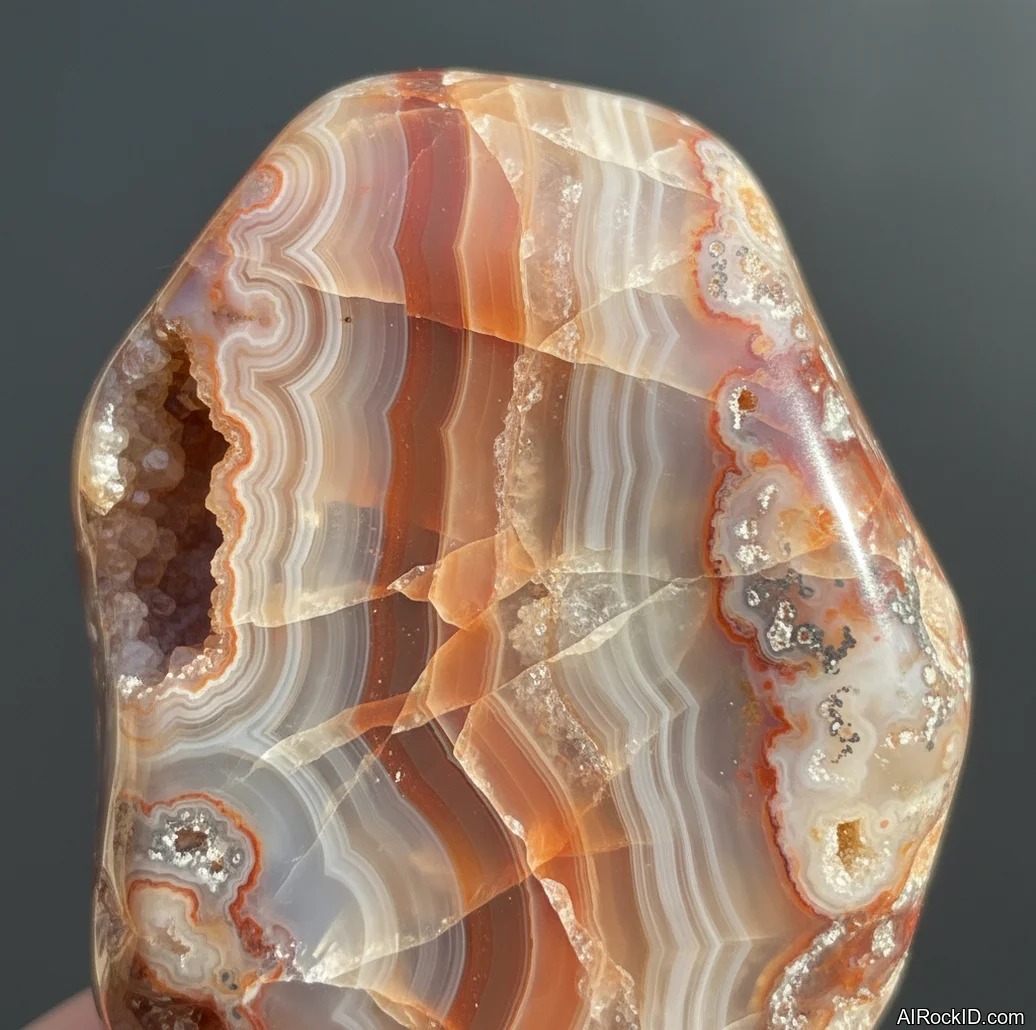
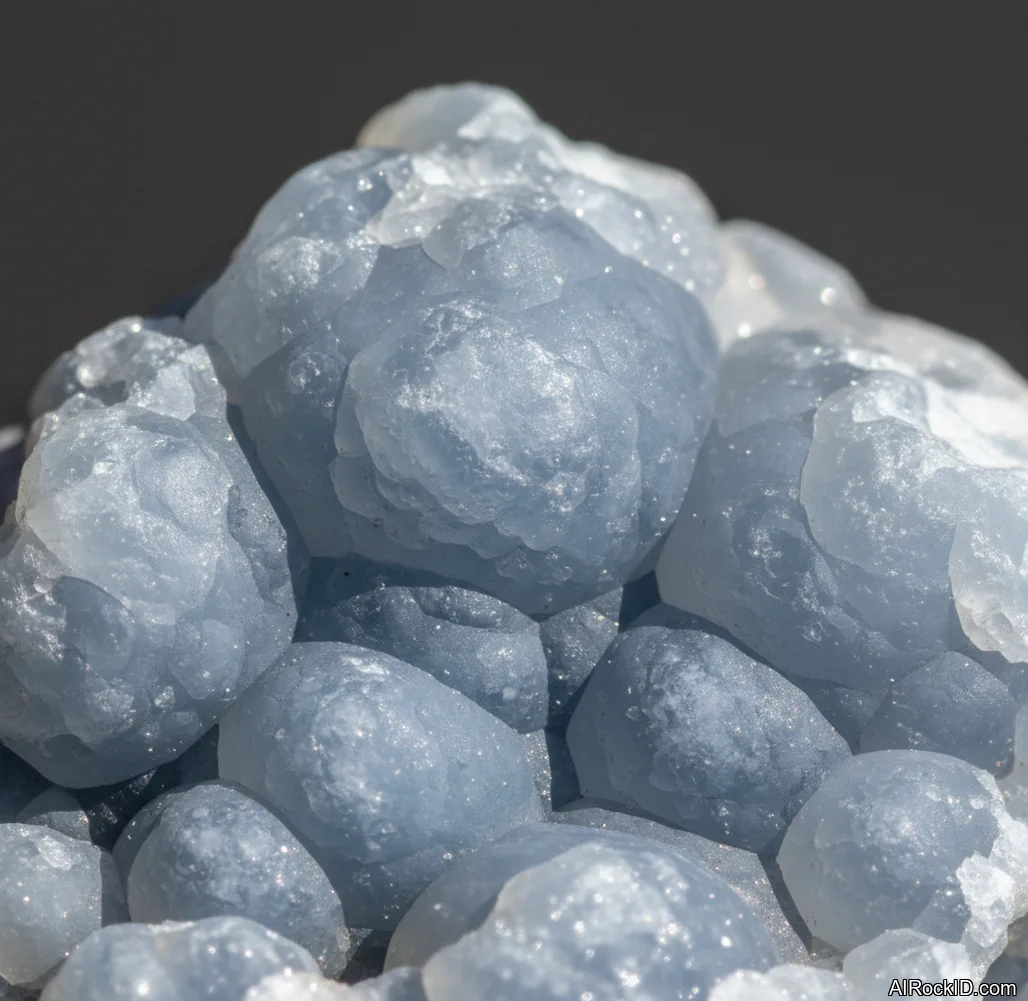
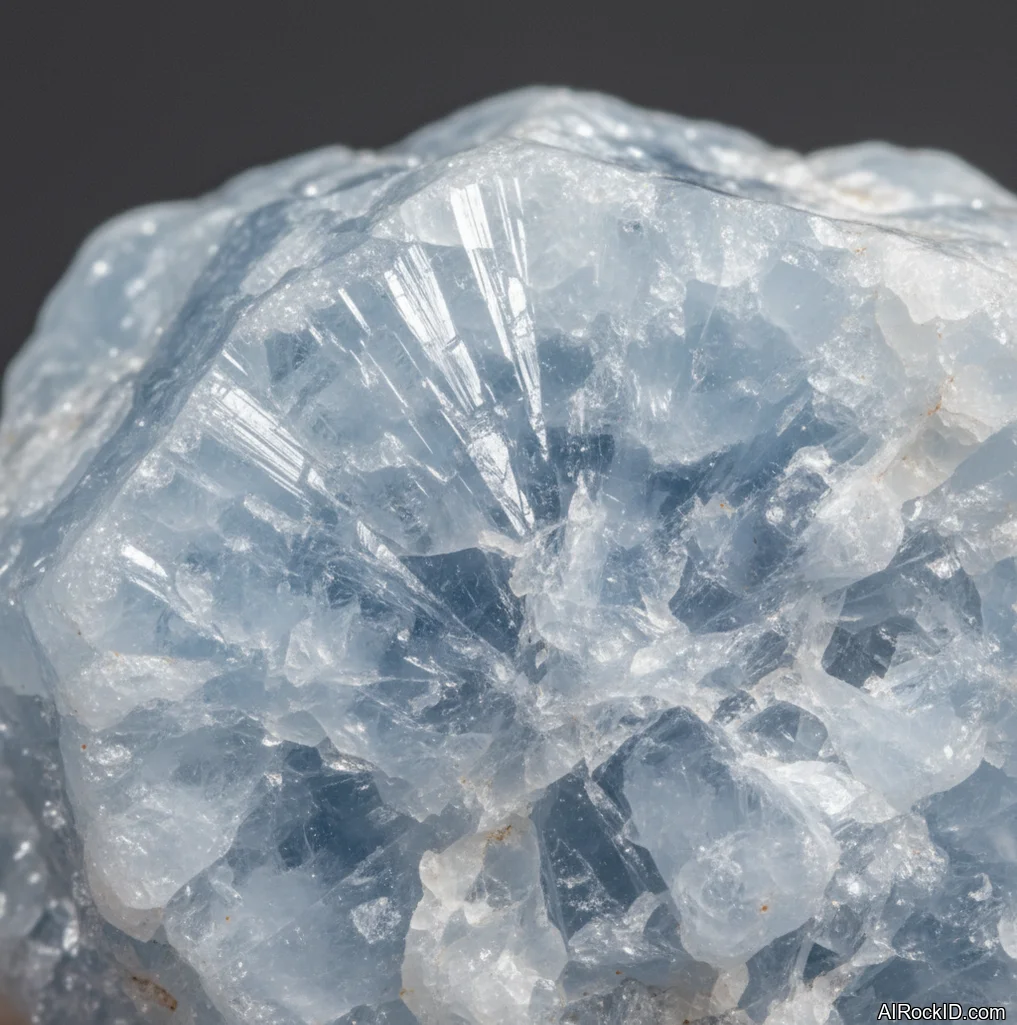
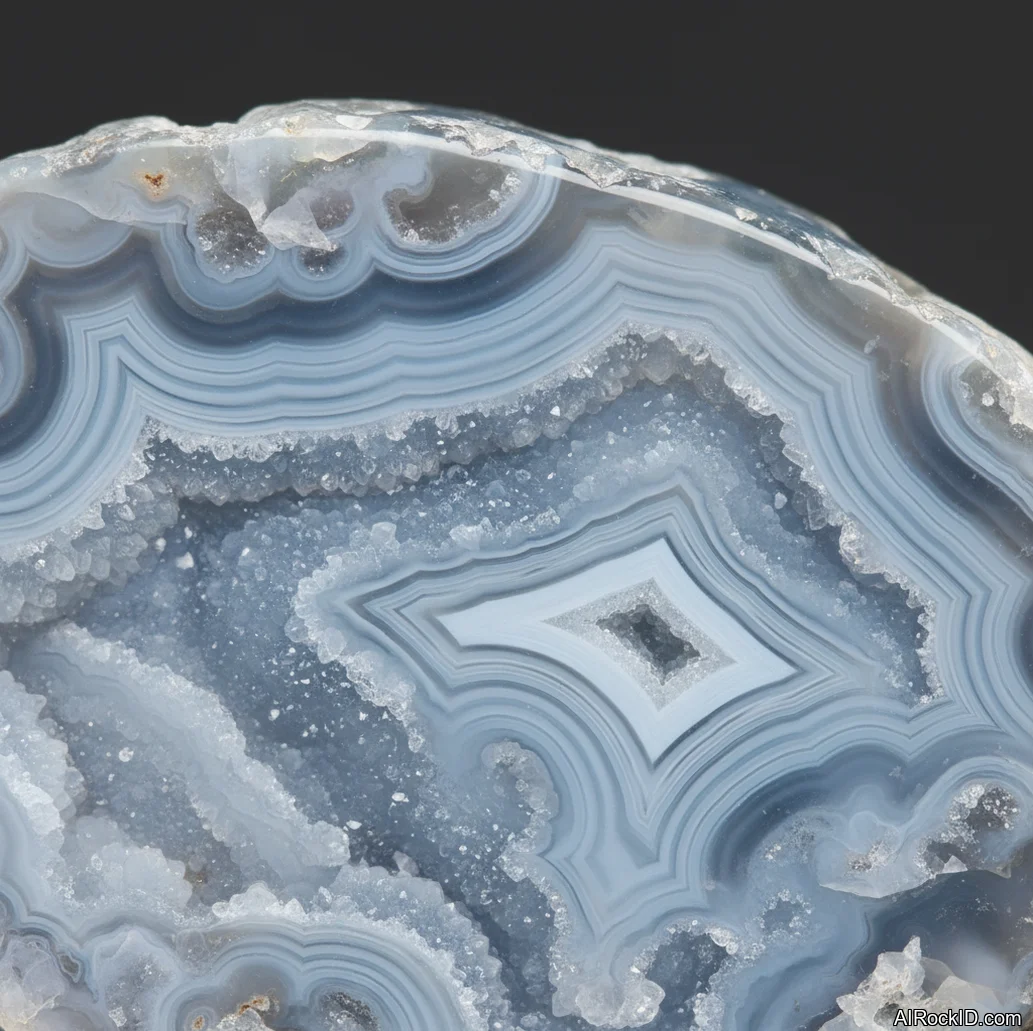
Blue Lace Agate is a pale blue, banded kind of chalcedony (microcrystalline quartz) with those fine white “lace” lines running through it.
Pick up a decent piece and you’ll feel it right away. It stays cool against your skin even if the room’s warm, like it’s been sitting in the shade. The color usually lands in that soft baby-blue zone, with milky white bands that remind me of ripples in skim milk when you swirl a glass. It’s not a loud stone. And honestly, it kind of rewards you for staring at it.
Most of what you’ll run into for sale is tumbled, cabbed, or cut into hearts and palm stones, since it polishes up without a fight and the banding really pops under a glossy dome. But here’s the catch: a lot of the rough looks pretty plain until somebody cuts it, and some batches lean more gray-blue than those pretty sky tones people expect from photos. Funny how that works, right?
Origin & History
Agate gets its name from the Achates River (today’s Dirillo) in Sicily. People have been using that label since antiquity for banded chalcedony.
“Blue lace agate” is a trade name, and it really only became common in the 20th century. It refers to pale blue chalcedony with very fine, tight banding, especially the material that flooded into the jewelry market from southern Africa.
Thing is, it’s not a separate mineral species. So there isn’t some big, cinematic “discovery day” like you get with certain rare minerals. Dealers and cutters are the ones who pushed it, mostly because the soft blue color and those crisp little bands look great once it’s polished up (you can practically feel the smooth, glassy surface after a good buff). And the name stuck for a simple reason: it matches what you see.
Where Is Blue Lace Agate Found?
Good blue lace material is strongly associated with southern Africa, especially Namibia. Blue chalcedony and banded agates also turn up in volcanic regions worldwide, but the classic “lace” look is more locality-specific.
Formation
Look at the banding and you’re basically staring at a slow-drip timeline. Blue Lace Agate forms when silica-rich fluids creep through little cavities and fractures, usually in volcanic rock, then drop microcrystalline quartz down in layer after layer. Some of those layers are insanely thin. That’s why the pattern reads more like delicate lace stacked up tight, not big, chunky stripes.
The blue color usually isn’t from one specific “blue element.” It’s more about tiny inclusions plus light scattering. In a hand sample you’ll catch spots where the blue just washes out into milky chalcedony, and yeah, that’s totally normal. And if you’ve ever picked up rough with a rind, you know the outside can be tan to brown and kind of ugly (a little waxy or chalky to the touch), but slice it open and the inside takes a polish like it’s a completely different stone.
How to Identify Blue Lace Agate
Color: Typically pale sky-blue to bluish gray with white to cream banding in fine, wavy layers. Many pieces show a soft, cloudy translucence rather than a clear “see-through” look.
Luster: Polished surfaces are vitreous to slightly waxy, like other chalcedony.
Pick up a piece and feel the temperature. Real chalcedony stays cool and glassy-cool compared to resin or plastic fakes that feel a bit warm and grabby. If you scratch it with a steel nail, it shouldn’t take a scratch easily, but it will scratch glass because it’s quartz hardness. The problem with dyed blue agate is the color often sits in fractures and along the band edges, so check for too-uniform bright blue and color pooling in tiny cracks.
Properties of Blue Lace Agate
Physical Properties
| Crystal System | Trigonal |
| Hardness (Mohs) | 6.5-7 (Hard (6-7.5)) |
| Density | 2.58-2.64 |
| Luster | Vitreous |
| Diaphaneity | Translucent |
| Fracture | Conchoidal |
| Streak | white |
| Magnetism | Non-magnetic |
| Colors | pale blue, sky blue, bluish gray, white, cream |
Chemical Properties
| Classification | Silicates |
| Formula | SiO2 |
| Elements | Si, O |
| Common Impurities | Fe, Mn, Ti, Al |
Optical Properties
| Refractive Index | 1.530-1.543 |
| Birefringence | 0.009 |
| Pleochroism | None |
| Optical Character | Uniaxial |
Blue Lace Agate Health & Safety
Blue Lace Agate isn’t toxic, so it’s fine to handle with bare hands. But like any silica-based stone, the powder you get when you cut or grind it is a lung hazard, so don’t breathe that dust in.
Safety Tips
If you’re going to shape it, keep it wet while you work and don’t skip the right respirator, the kind that’s actually rated for fine silica dust (not just a flimsy paper mask).
Blue Lace Agate Value & Price
Price Range
Rough/Tumbled: $5 - $40 per piece
Cut/Polished: $2 - $12 per carat
Tight, crisp lace banding and that clean sky-blue base color? Yeah, those bump the price up in a hurry. And if the rough is big enough to cab and doesn’t have fractures, it’ll cost more, because cutters aren’t grinding away as much stone (less gets lost).
Durability
Durable — Scratch resistance: Good, Toughness: Good
It’s stable for normal wear, but polished pieces can still chip on sharp edges if you drop them on tile.
How to Care for Blue Lace Agate
Use & Storage
Store it in a pouch or a divided box so it doesn’t get rubbed by harder stones with sharp points. I’ve seen quartz points leave little scuffs on polished agate if they ride together in a pocket.
Cleaning
1) Rinse with lukewarm water and a drop of mild soap. 2) Use a soft toothbrush to clean around pits or druzy spots. 3) Rinse well and pat dry; avoid heat-drying on a sunny windowsill.
Cleanse & Charge
Running water, a quick smoke cleanse, or leaving it on a shelf overnight all work fine for most people’s routines. Avoid prolonged direct sun if you’re picky about keeping the color looking soft and even.
Placement
On a desk or nightstand, it reads calm and tidy because the banding looks like gentle lines from a distance. I like it where side light hits it, since that’s when the layers show their depth.
Caution
Don’t hit pieces with fractures or druzy pockets with harsh cleaners, bleach, or an ultrasonic cleaner. And skip high heat too, especially if it’s in a glued-on jewelry setting, because that glue can soften and let the stone shift (or just pop right out).
Works Well With
Blue Lace Agate Meaning & Healing Properties
People grab Blue Lace Agate at first because, yeah, it looks great in photos. But once you actually use it, it turns into that stone you reach for when you want the room to feel a little quieter, especially if you’re about to talk, or your nerves are doing that annoying hum. I’ve handled a ton of palm stones at shows, and the good blue lace pieces always do the same thing: they feel slick and steady in your hand, and your thumb kind of traces the bands on autopilot. No effort. Just smooth.
Compared to louder stones like carnelian or tiger’s eye, blue lace is more “turn it down a notch.” That’s basically its whole thing. And people use it in real, everyday ways: pairing it with breathwork, journaling, sticking it in a pocket on days packed with too many meetings. But look, it’s still a rock. So if you’re dealing with real anxiety or sleep problems, treat it like a comfort object, not a stand-in for medical care. Fair?
Thing is, there’s a snag. A lot of what’s out there is dyed blue agate sold under fuzzy names, and that can throw you if you’re expecting that soft, natural look. When you get a genuine piece with that misty, layered blue, it reads gentle and clean right away (you can usually tell the moment it hits the light), and that’s why people keep coming back to it.
Identify Any Crystal Instantly
Snap a photo and get properties, value, care instructions, and healing meanings in seconds.