Angelite
What Is Angelite?
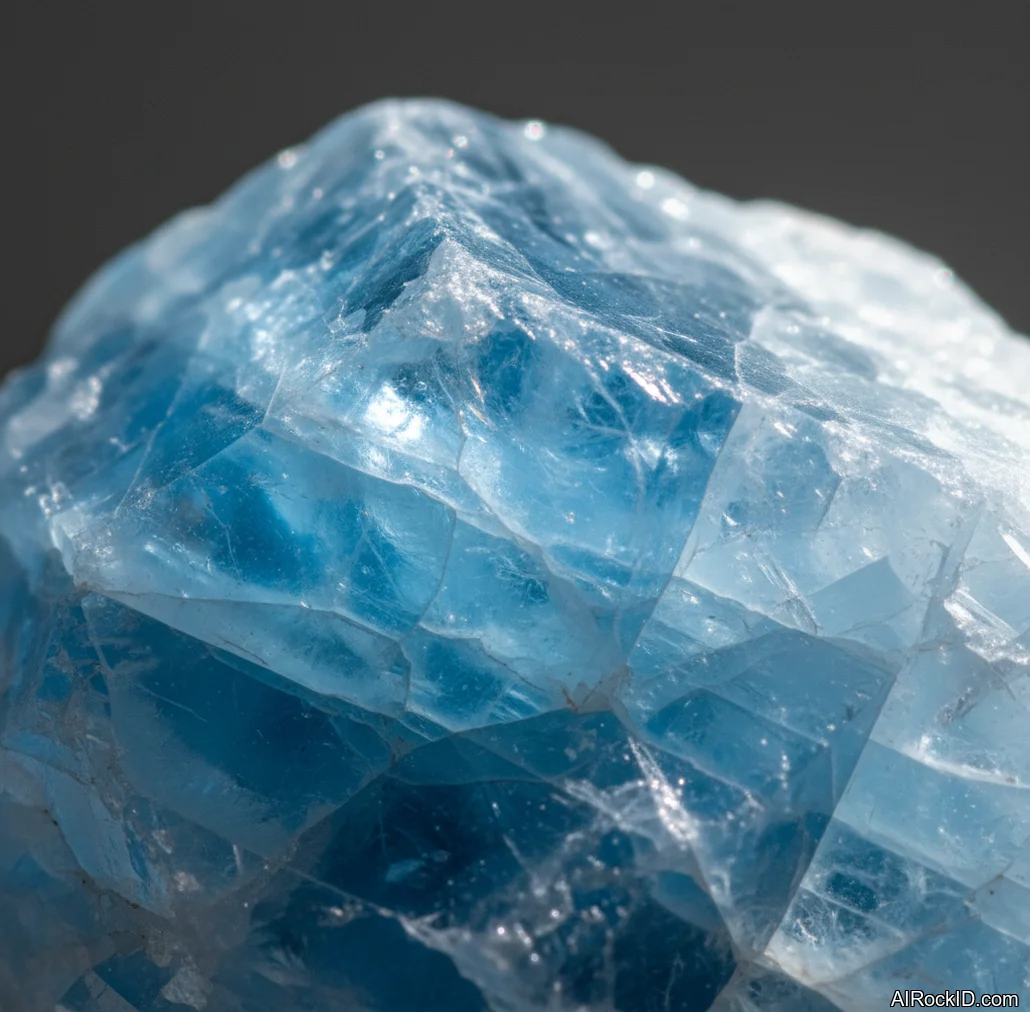
Angelite is just the shop name people use for light blue anhydrite, a calcium sulfate mineral (CaSO4). Most of the stuff you’ll see for sale comes tumbled, softly polished, and a bit cloudy, like sky-blue porcelain that got a faint dusting of flour and never quite got wiped all the way off.
Hold a piece for a second and you’ll feel it right away: it’s smoother than it looks, but it isn’t glassy. Thing is, it has this dry, almost chalky glide under your thumb, especially across the flatter faces (the edges still feel a touch softer, not sharp). And it’s lighter in the hand than people expect from that color, which always throws someone the first time. The blue can swing from pale periwinkle to a grayish baby-blue, and a lot of pieces show white veining or patchy zones where the polish catches the light a little differently.
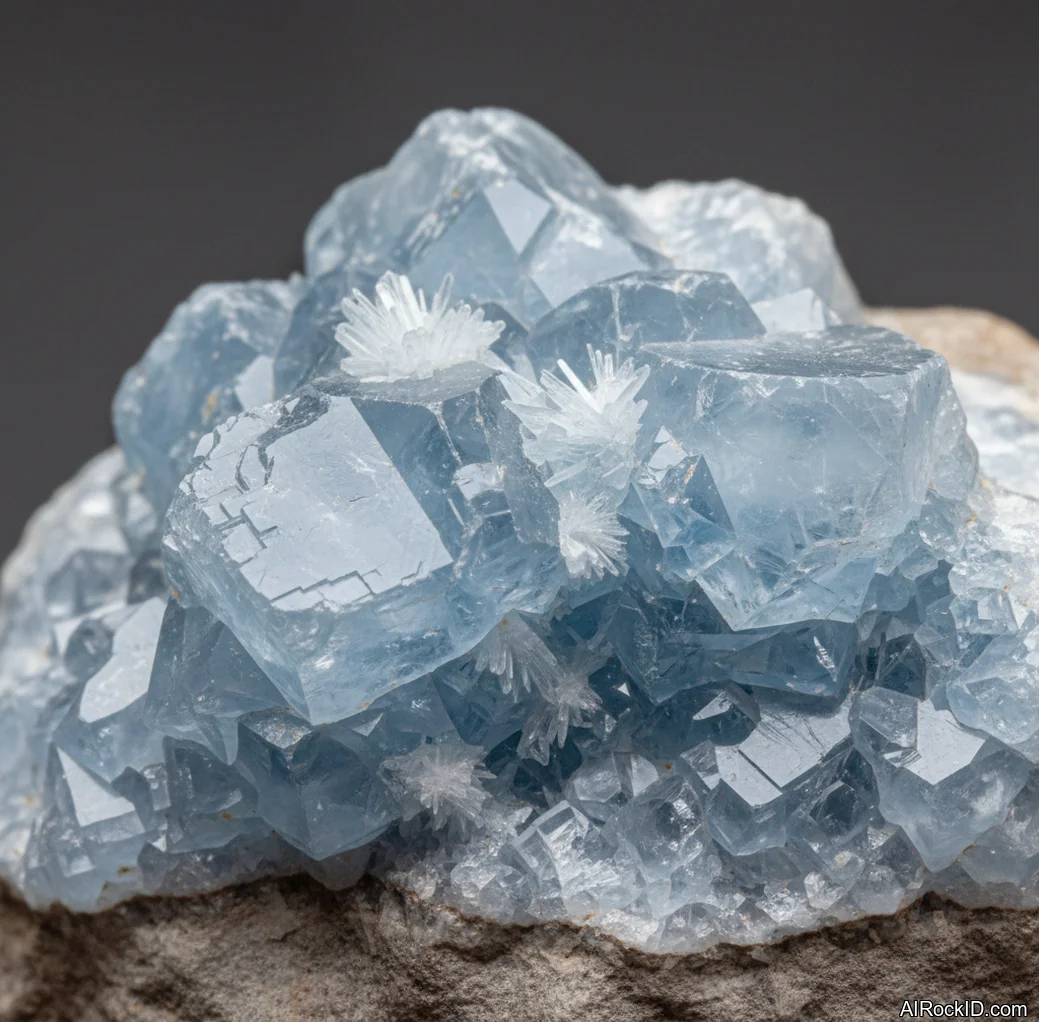
Compared to celestite, angelite doesn’t sparkle and it won’t give you that crystal-cluster vibe. It’s more of a solid, sleepy stone. But look, here’s the part collectors learn fast: angelite is anhydrite, and anhydrite hates water. Leave it soaking and it can start converting toward gypsum, so I keep mine away from sinks and humid window sills. Why risk it?
Origin & History
Angelite isn’t a separate mineral species. It’s a modern trade name you’ll run into in lapidary shops and metaphysical booths, and the stone itself is anhydrite. Mineralogists first described anhydrite in 1794, and Abraham Gottlob Werner is the one who pinned the name “anhydrite” on it because its chemistry is “waterless” compared to gypsum.
The “angelite” tag really took off in the late 20th century, once that pale blue material from Peru started popping up everywhere as tumbled stones (the kind that feel silky in your palm) and small carvings. Sellers leaned hard into the soft color and the calm, soothing angle. And if you’ve ever stood in front of a glass display case at a show, you’ve probably seen it sitting right next to blue calcite or celestite, which is exactly why people mix them up all the time.
Where Is Angelite Found?
Anhydrite occurs worldwide in evaporite deposits, and most “angelite” on the retail market is sourced from Peru. Other occurrences include parts of Europe and North America where ancient saline basins left thick sulfate layers.
Formation
Think of it as an old salt-flat deposit that got buried, then basically slow-baked. Anhydrite forms mostly in evaporite settings where seawater or brines get concentrated until sulfate minerals start dropping out, often right next to halite and gypsum. And once that stuff gets buried deeper, gypsum can dehydrate into anhydrite as temperature and pressure climb and the water gets pushed out.
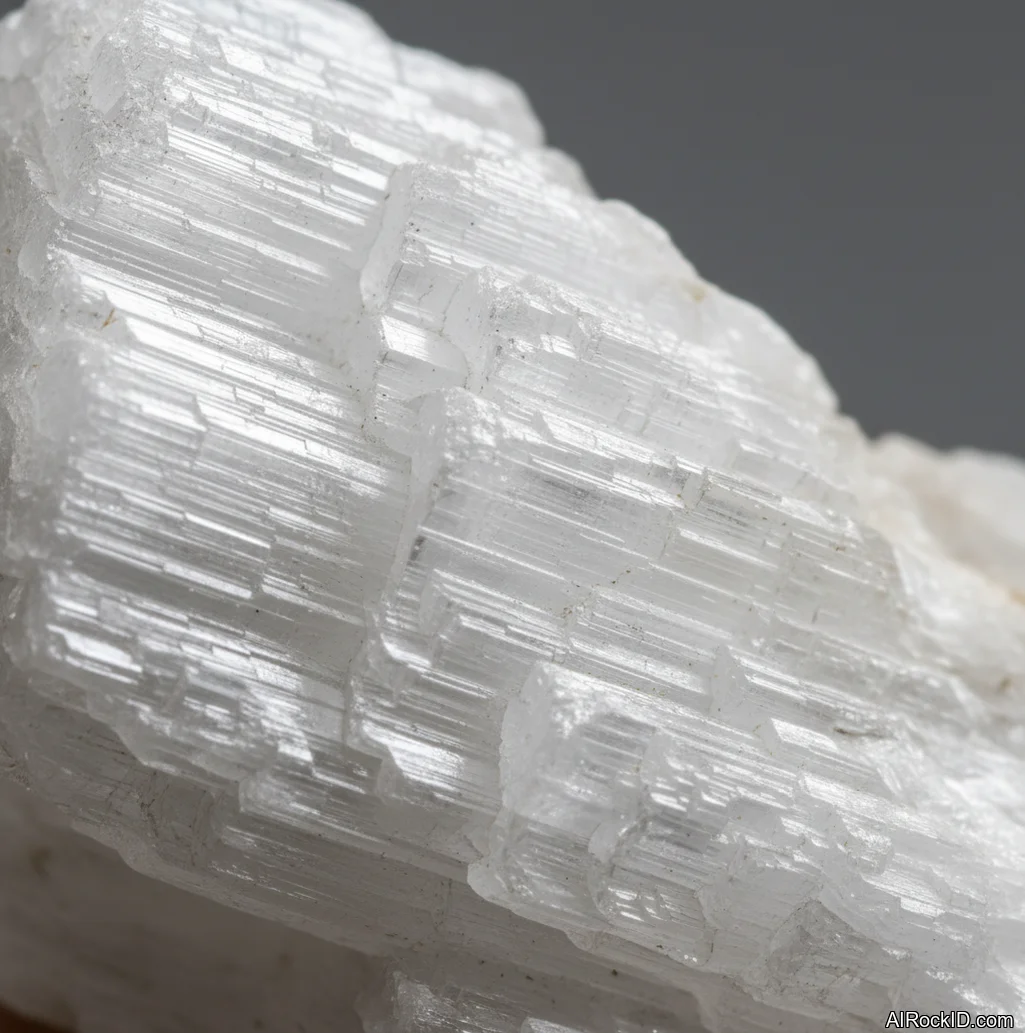
That soft blue everyone goes hunting for in angelite? It’s usually from tiny trace impurities and subtle structural effects, not one easy “blue element” you can point at. Out in the field, anhydrite usually turns up as big massive chunks or blocks that split cleanly along cleavage planes (you can feel those flat faces under your fingers when you handle a fresh piece). Clean, transparent crystals do happen, sure, but that’s not what’s sitting in a bowl of tumbled angelite at a shop.
How to Identify Angelite
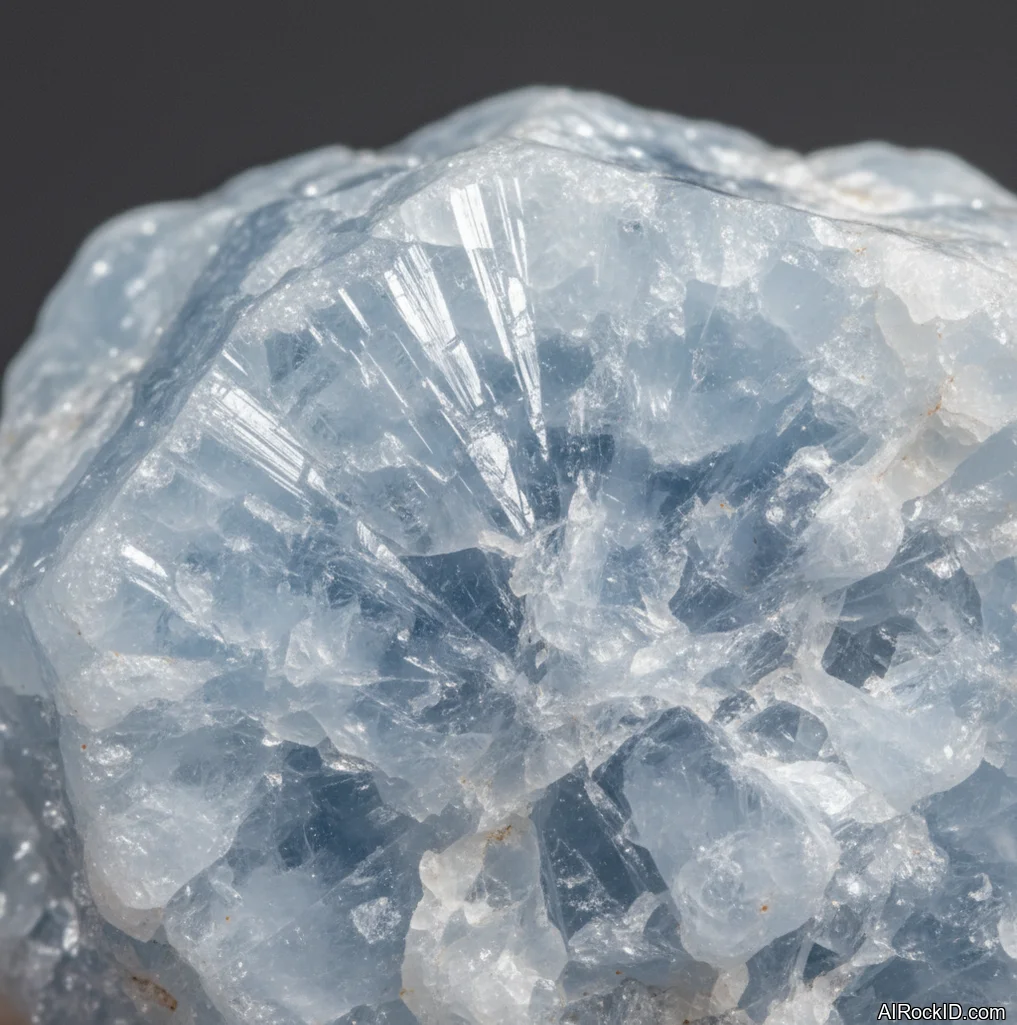
Color: Angelite is typically a pale, powdery blue to blue-gray, often with white mottling or veins. The color is usually soft and a little hazy rather than clear or saturated.
Luster: It’s usually dull to pearly on cleavage faces, and more matte-waxy after tumbling.
If you scratch it with a copper penny, it’ll mark more easily than you’d think, since it sits around Mohs 3 to 3.5. Look closely at chips and edges: you can sometimes see flat cleavage planes instead of a glassy curved break. The real test is water behavior: don’t soak it, but even high humidity over time can make surfaces look a bit rougher or more gypsum-like, while blue calcite won’t do that.
Properties of Angelite
Physical Properties
| Crystal System | Orthorhombic |
| Hardness (Mohs) | 3-3.5 (Soft (2-4)) |
| Density | 2.9-3.0 g/cm3 |
| Luster | Pearly |
| Diaphaneity | Translucent to opaque |
| Fracture | Uneven |
| Streak | White |
| Magnetism | Non-magnetic |
| Colors | Pale blue, Blue-gray, Whitish blue, White |
Chemical Properties
| Classification | Sulfates |
| Formula | CaSO4 |
| Elements | Ca, S, O |
| Common Impurities | Sr, Fe, Mg, Na |
Optical Properties
| Refractive Index | 1.571-1.613 |
| Birefringence | 0.042 |
| Pleochroism | Weak |
| Optical Character | Biaxial |
Angelite Health & Safety
Angelite’s safe to touch, and it isn’t toxic. The real issue is the stone itself: if you soak it or leave it somewhere humid for too long, it can start to break down (that slightly chalky, dull feel is usually the first hint).
Safety Tips
Skip water cleanses, and don’t keep it in the bathroom or parked right beside a humidifier where the air’s always damp. If you’re sanding or carving it, treat that powdery grit like any other mineral dust. Open a window, get some basic airflow going, and wear a mask (because breathing that stuff on purpose is a pretty bad plan, right?).
Angelite Value & Price
Price Range
Rough/Tumbled: $3 - $25 per piece
Price mostly comes down to size, color, and how clean the polish looks in your hand. The deep blue stuff with low-white areas and sharp, crisp carving lines usually runs higher, but the pale, mixed batches (the ones that look kind of washed out) tend to stay cheap.
Durability
Nondurable — Scratch resistance: Poor, Toughness: Fair
It’s soft, cleaves easily, and prolonged water exposure can alter the surface as anhydrite hydrates toward gypsum.
How to Care for Angelite
Use & Storage
Store it in a soft pouch or a divided box slot so harder stones don’t scuff it up. And keep it dry, because long wet contact can mess with the surface.
Cleaning
1) Wipe with a dry microfiber cloth to remove fingerprints and dust. 2) If you need more, use a barely damp cloth, then dry it right away. 3) Avoid soaking, ultrasonic cleaners, and steam.
Cleanse & Charge
For non-water cleansing, I use smoke, sound, or a quick rest on a dry selenite plate. If you put it in sunlight, keep it brief and watch for any chalky change.
Placement
It’s great on a desk or nightstand where it won’t get splashed. I don’t keep it in kitchens or bathrooms, because that humidity adds up.
Caution
This is a soft stone, around Mohs 3 to 3.5, so it’ll scratch pretty easily. Don’t soak it in water or saltwater, and don’t leave it outdoors either. And be careful with bumps: because of its cleavage, a knock can chip it off in a clean little flake (the kind you can feel with your fingernail).
Works Well With
Angelite Meaning & Healing Properties
Most people grab angelite when they want calm and quiet, not sparkle or drama. In my own stash, it’s the stone I’ll pass to someone who’s death-gripping a worry stone until their knuckles go white. It’s smooth. It’s cool. And that powdery blue color hits like a deep breath you didn’t realize you needed.
Pick up a tumbled piece and rub it with your thumb for a minute. You’ll notice it warms up pretty fast compared to those glassy, harder stones, and the soft, almost chalk-slick texture pulls your attention out of your skull and down into your hand. That’s not medicine. It’s just a physical cue (and a pretty effective one).
If you’re using it for meditation or a sleep routine, keep the goal practical. Slower breathing. Less screen doom-scrolling. A little reminder to unclench your jaw. Simple stuff. The kind that actually helps.
But don’t let the “angel” name fool you into thinking it’s some indestructible pocket stone. I’ve seen plenty of angelite come back in shop trade-ins looking beat up, scratched to hell from living in a pocket with keys and coins, and a few that got rough after someone rinsed them every night. If you want a blue stone you can really wash and wear hard, blue chalcedony might be a better fit, or even a tougher sodalite. Angelite’s strength is the feel and the mood, not durability.
Identify Any Crystal Instantly
Snap a photo and get properties, value, care instructions, and healing meanings in seconds.