Brazilianite
What Is Brazilianite?
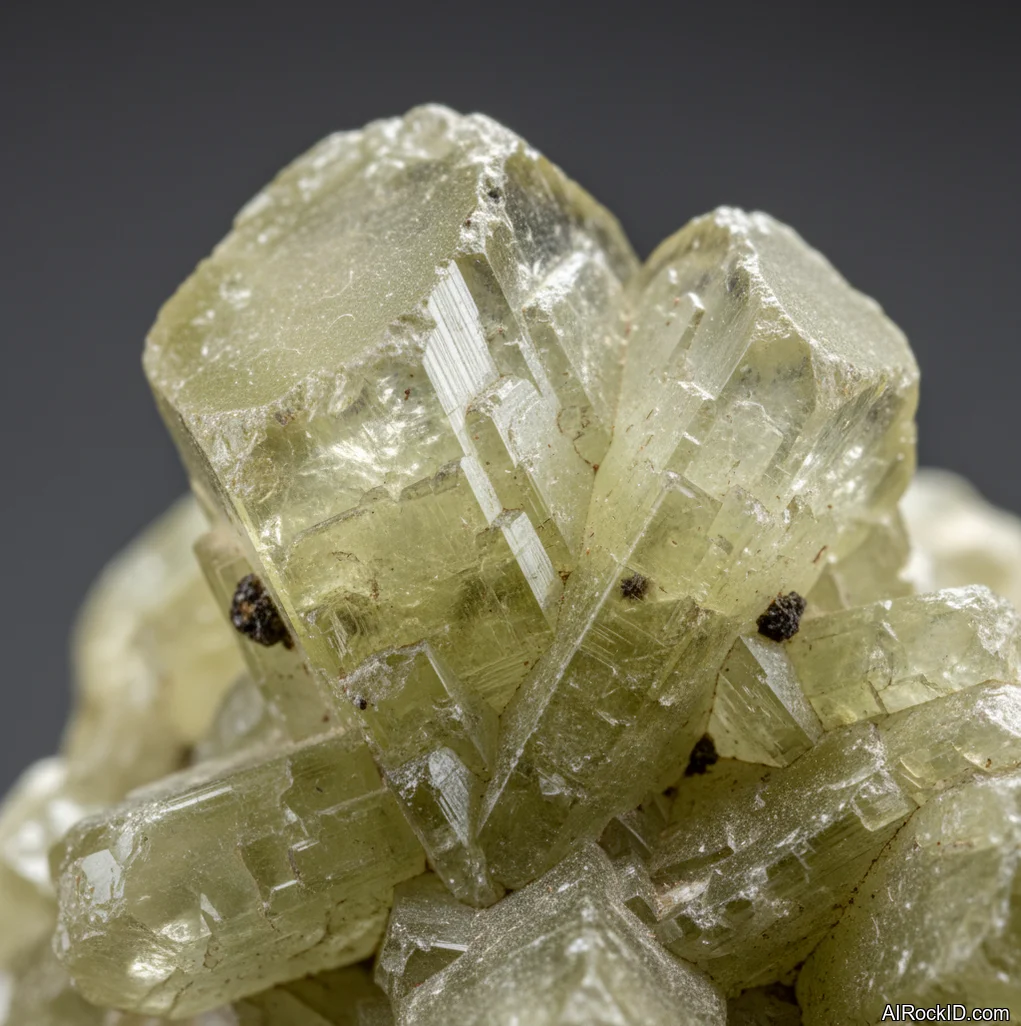
Brazilianite is a yellow to greenish-yellow phosphate mineral with the formula NaAl3(PO4)2(OH)4. The ones that really snag collectors are that sunny, almost lemon-drop yellow, with sharp, crisp faces that look like they were buffed by light.
Hold a thumbnail-sized crystal and, honestly, it feels lighter than you’d expect for something that looks so glassy. Tip it under a desk lamp and the faces snap bright for a second, then go dull the moment you lose the angle. Some pieces stay clean and transparent, so you can spot zoning or those tiny feather-like inclusions inside, and some come off more translucent and kind of sleepy, especially when they’re in tight clusters.
But it’s not a tough stone. I’ve seen a dealer set one down gently on a show table, and still pause like, please don’t chip. The edges really can bite it if you’re careless. So yeah, think “display crystal” first. Pocket stone? Don’t.
Origin & History
Brazilianite got its official write-up in 1945, based on material from Córrego Frio in Minas Gerais, Brazil, and the description was done by Pough and Henderson. The name isn’t clever at all. It’s literally “from Brazil,” and that original Minas Gerais occurrence is still what people are talking about when they say “classic brazilianite.”
Collectors jumped on it quickly because the color reads from across the room. You can spot it even in a case with glare bouncing off the glass. And the timing didn’t hurt. In the mid-20th century, pegmatite minerals were flooding into museums and private collections, so brazilianite got in early instead of staying some obscure phosphate that only micromounters bring up.
Where Is Brazilianite Found?
Most classic specimens come from pegmatites in Minas Gerais, Brazil, with other occurrences scattered through granite-pegmatite districts in a few other countries.
Formation
Out in the field, brazilianite being a pegmatite mineral tells you almost the whole plot. It shows up late in the cooling sequence, when the last leftover fluids in a granitic pegmatite get loaded with odd chemistry and start growing phosphates in pockets, seams, and those messy altered zones.
Look at a solid matrix piece up close and you’ll usually catch it hanging around albite, quartz, muscovite, plus other phosphate minerals. It might come as sharp prismatic crystals with crisp edges, or as chunky, glued-together clusters (the kind that feel a little knobby when you run a finger over them). And sometimes it’s sitting exactly where older phosphate minerals got chewed up and changed by fluids. That’s why people mention it in the same breath as apatite and montebrasite. Same neighborhood. Same late-stage pocket behavior.
How to Identify Brazilianite
Color: Brazilianite runs from lemon yellow through yellow-green to greenish-yellow, usually with a clean, bright tone rather than a muddy one. Some pieces show slight zoning, with greener tips or deeper honey areas near the base.
Luster: Vitreous luster, often very glassy on fresh cleavage or clean crystal faces.
If you scratch it with a steel nail, it’ll usually mark, because it’s only about Mohs 5.5. The real test in-hand is the cleavage: tiny chips can pop off in flat, shiny faces if the crystal catches an edge on something hard. And compared to citrine or yellow beryl, brazilianite feels a bit “softer” at the edges, like you’re always one bump away from a small ding.
Properties of Brazilianite
Physical Properties
| Crystal System | Monoclinic |
| Hardness (Mohs) | 5.5 (Medium (4-6)) |
| Density | 3.0-3.1 g/cm3 |
| Luster | Vitreous |
| Diaphaneity | Transparent to translucent |
| Fracture | Uneven |
| Streak | White |
| Magnetism | Non-magnetic |
| Colors | Lemon yellow, Yellow, Greenish-yellow, Yellow-green |
Chemical Properties
| Classification | Phosphates |
| Formula | NaAl3(PO4)2(OH)4 |
| Elements | Na, Al, P, O, H |
| Common Impurities | Fe, Mn |
Optical Properties
| Refractive Index | 1.602-1.634 |
| Birefringence | 0.032 |
| Pleochroism | Weak |
| Optical Character | Biaxial |
Brazilianite Health & Safety
Brazilianite is usually safe to pick up and handle as a specimen. The bigger worry isn’t your health, it’s the crystal itself. It can chip if you knock an edge on a hard tabletop, and those sharp little corners don’t forgive clumsy fingers.
Safety Tips
If you end up lapping or trimming it, do it wet, keep the air moving with decent ventilation, and wear a real respirator so you don’t breathe in that fine mineral dust (it hangs in the air longer than you’d think).
Brazilianite Value & Price
Price Range
Rough/Tumbled: $30 - $600 per specimen
Cut/Polished: $50 - $300 per carat
Clean, see-through crystals with crisp, sharp terminations and that punchy yellow-green color move fast, especially when they’re still sitting on matrix. But the second you start seeing chips, a cloudy core, or a break that’s been glued back together (you can usually spot it by the slightly glossy seam), the price drops fast.
Durability
Nondurable — Scratch resistance: Fair, Toughness: Poor
Brazilianite can chip along cleavage and may fade with long-term strong light exposure, so it’s best treated as a display mineral, not daily-wear jewelry.
How to Care for Brazilianite
Use & Storage
Store it in a padded box or a stable display case where it can’t roll or get bumped. I keep mine separated from harder quartz points because one little tap can leave a fresh chip.
Cleaning
1) Rinse briefly in lukewarm water if it’s dusty. 2) Use a soft brush (makeup brush works) to lift dirt from crevices. 3) Pat dry and let it air-dry fully before putting it back in a closed container.
Cleanse & Charge
For a metaphysical reset, I stick to gentle methods like smoke, sound, or resting it near quartz. Skip harsh sunbathing since long light exposure can be rough on color.
Placement
Put it somewhere it won’t get knocked, like a shelf with a lip or inside a cabinet. Under warm indoor lighting it throws that yellow flash really well.
Caution
Skip ultrasonic and steam cleaners, and don’t get rough with it. And don’t just chuck it into a bowl with harder stones where it’ll clack around and pick up little dings. Also, keep it out of direct sunlight for long stretches, unless you want to risk trouble later.
Works Well With
Brazilianite Meaning & Healing Properties
Brazilianite looks like a straight-up “sunny” stone, and yeah, that’s the box most people stick it in. When I’m stressed out and my desk is covered in receipts and random sticky notes, I like keeping a bright brazilianite crystal where I can see it. It kind of nudges me into sorting, planning, and actually finishing the one task I’ve been dodging. Simple.
If you pay attention to how people bring it into meditation, you’ll hear the same ideas over and over: mental clarity, learning, getting your thoughts organized, staying on track. I’m not treating it like medicine, and I’m not telling anyone else to, either. It’s more like a focus cue. You pick it up, feel that cool, slick surface against your fingertips (especially when the room’s warm), and your brain flips from spinning out to doing the next small step.
But here’s the thing. If you’re someone who gets a little wired when you’re trying to relax, brazilianite can feel too “up.” So I’ll pair it with something grounding like smoky quartz, or I’ll just save it for daytime work and keep calmer stones on the nightstand. Why fight your own nervous system, right?
Identify Any Crystal Instantly
Snap a photo and get properties, value, care instructions, and healing meanings in seconds.