Chiastolite
What Is Chiastolite?
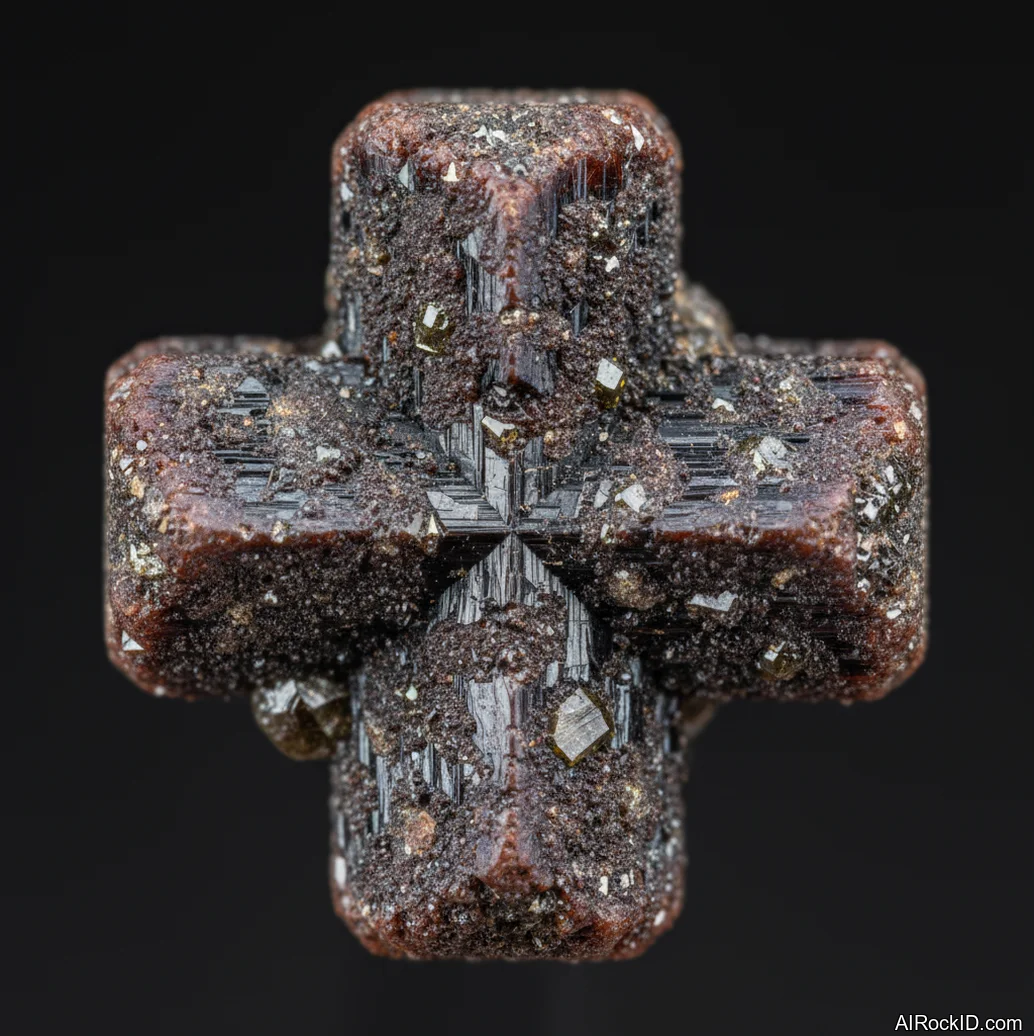
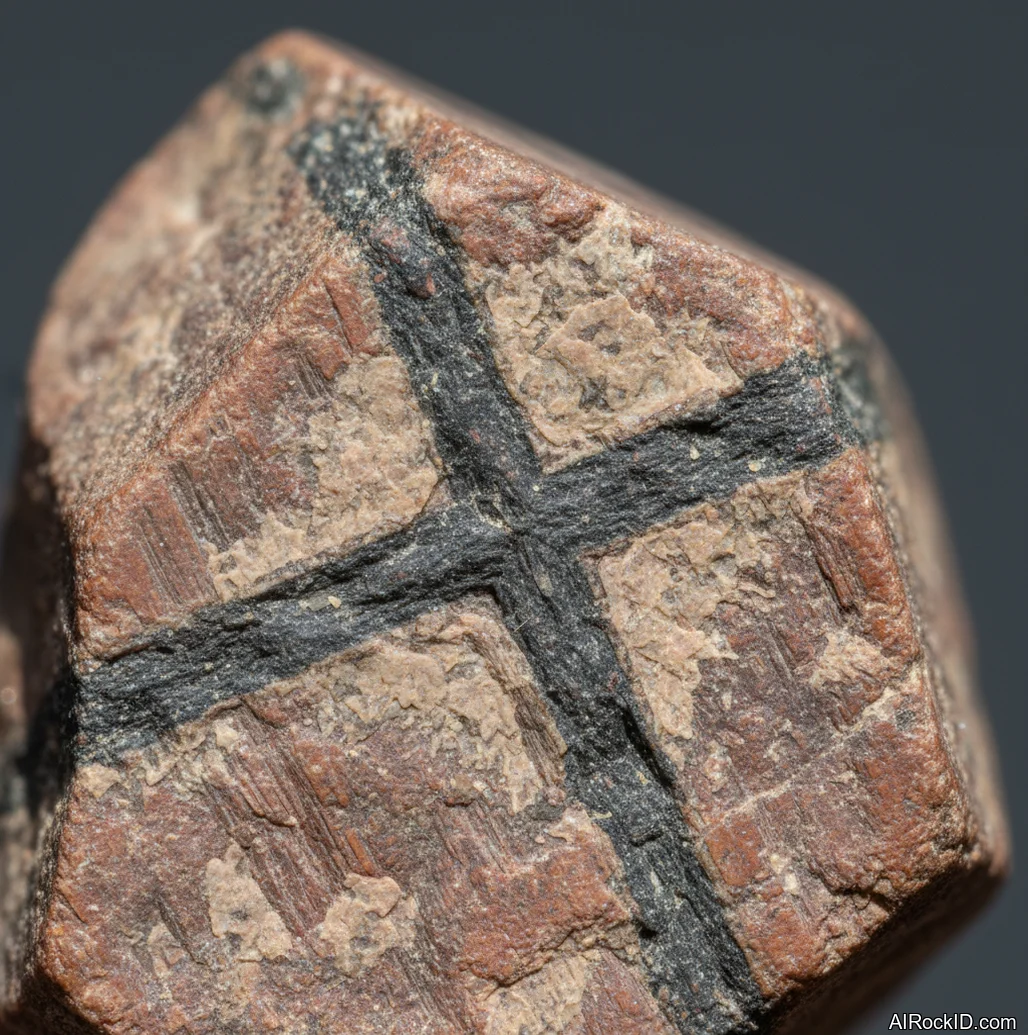
Chiastolite is a type of andalusite that, when you cut it across the grain, shows this natural cross-shaped pattern made from dark inclusions. Most folks run into it as a slice or a cabochon, usually tan to cinnamon-brown, with an inky four-armed cross sitting dead center.
Pick up a good piece and it doesn’t have that “glassy” vibe quartz has. It feels denser, kind of ceramic in the hand, and if it’s been polished the shine comes out more satiny than mirror-bright. And the cross? It’s not paint, not a trick. On real material you can literally track the darker arms down into the stone, and they stay sharp even after the surface picks up a couple tiny handling scratches from being passed around at shows.
People often assume the cross is a crack or some weird stain at first. But it’s just the way the inclusions line up as the crystal grows. Thing is, you can cut two slices from the same rough and one has a perfect, centered cross while the other’s a little crooked. Totally normal. I’ve stood over dealer trays and flipped through stacks where half the slices were “almost” crosses, and yep, the price tags reflected that.
Origin & History
Back in 1754, French mineralogist Jean-Étienne Guettard put chiastolite on the record, and the name comes from the Greek “chiastos,” which means “marked with a cross.” Folks were already picking up these so called cross stones long before anyone bothered to write them up formally, but Guettard’s description is the early scientific citation collectors still point to.
Thing is, chiastolite ended up tangled with Christian symbolism in parts of Europe because that cross shows up so sharply when you cut it into a slice. I’ve seen pieces where the face looks almost like it was stamped, with that dark cross sitting dead center against the lighter stone, especially after a quick polish that leaves it slick under your thumb. And you’ll still run into old mentions of it as a travel charm or a protective token.
These days, in mineral circles, it’s more of a “show your friends” stone. You hand someone a slice, they flip it over once, then again, and then come the questions. Every time.
Where Is Chiastolite Found?
Good chiastolite shows up in metamorphic terrains, with classic material from northern Spain and France, plus scattered finds in Russia, Brazil, and parts of the United States.
Formation
Picture contact metamorphism with heat doing its slow, stubborn job. Andalusite shows up when clay-rich sediments get baked and squeezed, usually right up against intrusive bodies, and chiastolite is the same mineral except carbonaceous or graphite-like stuff gets shoved into that cross pattern while the crystal’s still growing.
Look, if you stare at a cut slice, the “background” isn’t one flat color. It’s got faint zoning, little peppery specks, and then that cross cuts through darker and tighter. And here’s the thing you notice in hand samples: in uncut nodules or those prismatic chunks, you won’t see the cross at all until you slice across the long direction. That’s why the old-timers would split them open or run a saw through (dust everywhere) just to check, basically, “is the cross in there or not?”
How to Identify Chiastolite
Color: Most chiastolite is tan, buff, brown, or reddish-brown with a dark brown to nearly black cross. The cross can look charcoal-gray in some pieces instead of jet black.
Luster: Luster is typically vitreous to dull in rough, and vitreous to slightly waxy once polished.
Pick up a slice and tilt it under a single overhead light. Real chiastolite usually shows a cross that’s inside the stone, not sitting on the surface like ink. If you scratch it with a steel nail, it generally won’t bite easily, but a quartz point will scratch it without drama. And if the cross looks too perfect and the “tan” body is plastic-smooth and warm in your hand, you’re probably holding resin or a printed fake.
Properties of Chiastolite
Physical Properties
| Crystal System | Orthorhombic |
| Hardness (Mohs) | 6.5-7.5 (Hard (6-7.5)) |
| Density | 3.10-3.20 |
| Luster | Vitreous |
| Diaphaneity | Translucent to opaque |
| Fracture | Uneven |
| Streak | White |
| Magnetism | Non-magnetic |
| Colors | tan, buff, brown, reddish-brown, black, gray |
Chemical Properties
| Classification | Silicates |
| Formula | Al2SiO5 |
| Elements | Al, Si, O |
| Common Impurities | Fe, Mn, C |
Optical Properties
| Refractive Index | 1.629-1.650 |
| Birefringence | 0.021 |
| Pleochroism | Strong |
| Optical Character | Biaxial |
Chiastolite Health & Safety
Chiastolite’s usually fine to pick up, handle, and keep on a shelf. But if you’re cutting it or sanding it, treat it like any other lapidary stone: watch the dust, wear a mask, and don’t let the powder hang in the air (it gets on everything, including your hands).
Safety Tips
If you’re going to mess with it, keep it wet and wear a real respirator that’s rated for fine dust (not just a paper mask). And don’t dry-grind it on the bench.
Chiastolite Value & Price
Price Range
Rough/Tumbled: $10 - $80 per specimen
Cut/Polished: $5 - $25 per carat
Centered, crisp crosses and a clean polish send the price climbing in a hurry. The bigger slices are tougher to track down with a neat cross, and when that cross is off to one side, it usually gets knocked down in price.
Durability
Moderate — Scratch resistance: Good, Toughness: Fair
It’s stable in normal indoor conditions, but it can chip on edges and corners if it rattles around with harder stones.
How to Care for Chiastolite
Use & Storage
Store slices flat or in a padded box so the edges don’t get chipped. If you keep it in a pocket, keep it away from quartz points and keys.
Cleaning
1) Rinse with lukewarm water. 2) Use a soft toothbrush with a drop of mild soap to clean the cross grooves and any saw marks. 3) Rinse again and dry with a soft cloth.
Cleanse & Charge
For non-woo cleaning, running water and a quick wipe is plenty. For ritual-style cleansing, people use smoke, sound, or a night on a dry windowsill, but don’t bake it in harsh sun for days.
Placement
On a desk or shelf it reads best when the cross faces forward and catches side light. A little stand helps, since most slices are thin and like to tip over.
Caution
Skip ultrasonic cleaners, and don’t throw it into a mixed tumble bowl with harder stones. You’ll end up with that polish going cloudy (that weird hazy film), and the edges can get bruised from all the knocking around.
Works Well With
Chiastolite Meaning & Healing Properties
Most people who pick up chiastolite for metaphysical reasons are chasing that “boundary” and “protection” feel that comes with the natural cross pattern. And yeah, I get it. Sit with it for a minute, and that cross turns into a visual anchor, like your eyes finally have somewhere to land when your brain won’t stop pinging around.
Compared to the shiny, high-flash stuff, chiastolite just feels practical. It’s earthy. Thing is, when I’m standing at a show with a tray in my hands, this is one of the only stones that still looks good under those ugly fluorescent lights that make everything else look washed out. You can tilt it and it doesn’t really “spark,” but the cross stays crisp, and the surface has that matte, slightly waxy feel you notice the second it’s in your palm (especially on a cool morning).
So it makes sense that people reach for it when they want steadiness, clearer decision-making, and a way to stay calm when everything’s loud. Not glamorous. Just solid.
But I’ll say it straight. If someone’s using it for anxiety, sleep, or anything medical, it should sit next to real support, not replace it. In my own collection, I treat it like a reminder object. Pick it up. Trace the cross with your thumb. Slow your breathing. Then get on with the day.
Identify Any Crystal Instantly
Snap a photo and get properties, value, care instructions, and healing meanings in seconds.