Staurolite
What Is Staurolite?
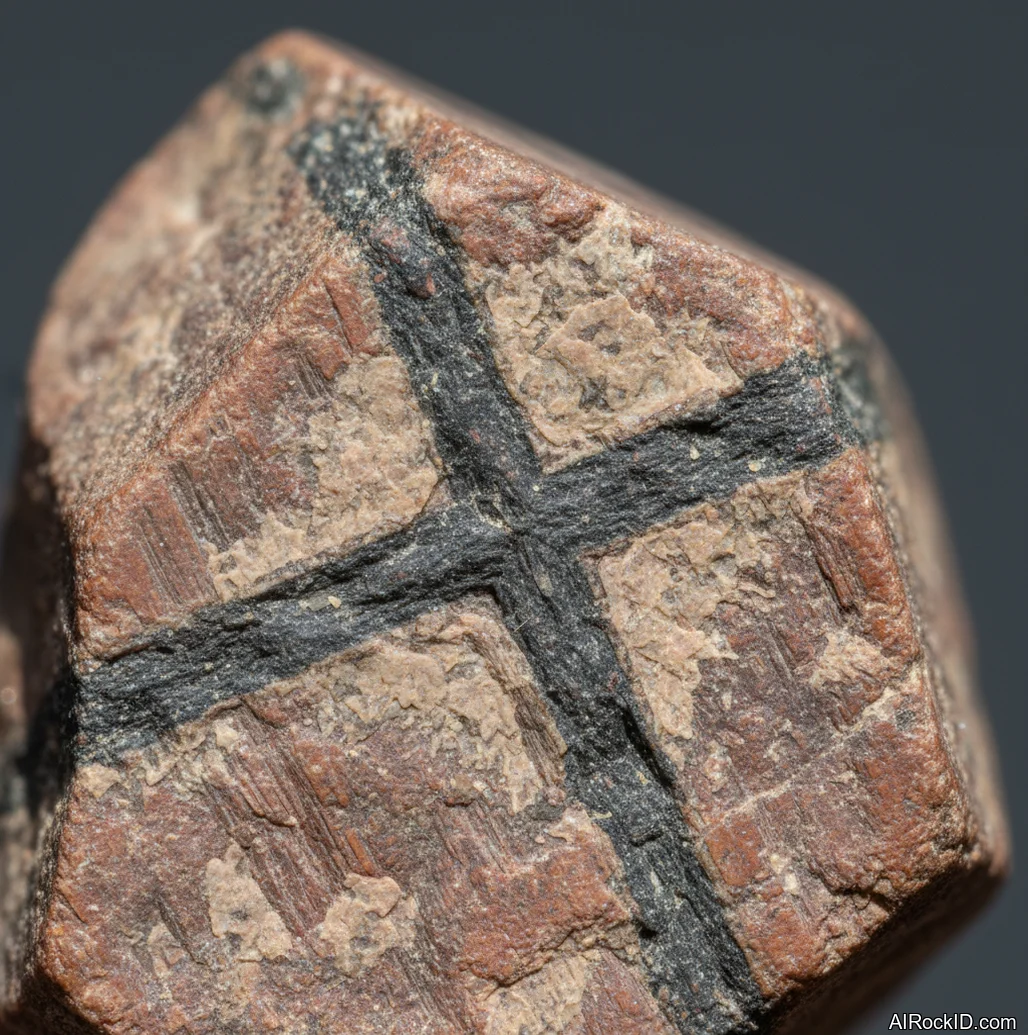
Staurolite is an iron-aluminum silicate mineral that shows up in medium-grade metamorphic rocks, and sometimes it grows as those cross-shaped twins people get excited about. Most of the pieces you actually end up handling are brown to reddish-brown, kind of blunt and blocky, with a vibe that’s more work boot than jewelry. Not flashy. Just solid.
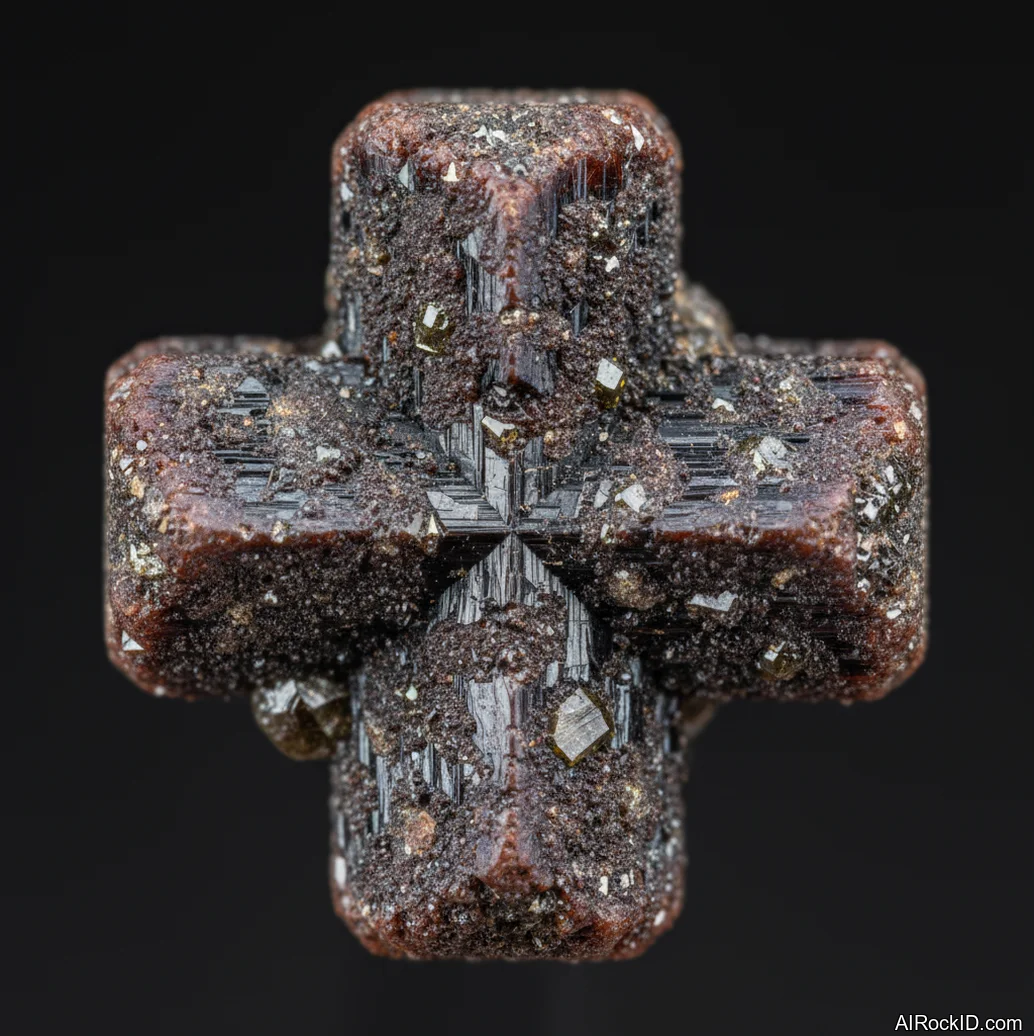
Grab a staurolite cross and the first thing that hits you is the weight. Even the small ones sit heavy in your palm, heavier than you’d expect from that plain color. And the faces usually have this faint grit to them, like super fine sandpaper, especially if it’s a natural, unpolished twin (the kind that still looks like it came straight out of the rock).
Thing is, a lot of people assume every cross is perfectly symmetrical at a glance. They’re not. You’ll run into two main twin habits: the classic 60 degree “X” and the 90 degree cross that looks like a plus sign. And real ones tend to have uneven arms, little chips, and included mica that catches the light and sparkles when you tilt it under shop lights.
Origin & History
Staurolite got its official mineral write-up in 1792, thanks to Jean-Claude Delamétherie. The name’s straight from Greek: stauros (cross) and lithos (stone), and yeah, it’s almost too obvious once you’ve held a nicely twinned crystal in your hand and felt those little arms meet at an angle.
But people were swapping these cross twins around way before anyone nailed down the chemistry. In parts of Europe and down in the American South, they went hand to hand as curios and good-luck pieces. In North Carolina and Georgia, folks still call them “fairy crosses,” and some old-timer will tell you, dead serious, that they picked theirs out of a creek gravel bar after a hard storm (still gritty with sand, if you ask them). Who’s to argue?
Where Is Staurolite Found?
Staurolite shows up in metamorphic belts worldwide, especially in schists and gneisses. Cross twins are famously collected in the southeastern USA and also occur in Alpine and Brazilian localities.
Formation
Raw chunks from schist country pretty much tell the whole story if you know what you’re looking at. Staurolite grows during regional metamorphism, when clay-rich sediments get cooked and squeezed into mica schist at medium grades, typically around the garnet to staurolite zone. You’ll usually see it hanging out with garnet, kyanite, and mica, and sometimes it’s locked in so tight you end up choosing: do you want the crystal, or do you want the matrix?
Look, when you stare at a cross twin, you’re looking at crystal twinning, not some quirky “nature carving” thing. Two staurolite crystals intergrow at a specific angle while they’re forming in the rock. And the surrounding schist can kind of cradle that twin as it develops, but it also makes the good crosses a headache to prep. Push too hard with a chisel or a trim saw and you’ll hear that little sharp snap (the worst sound), and suddenly one arm’s gone. Who hasn’t done that at least once?
How to Identify Staurolite
Color: Most staurolite is brown, reddish-brown, or dark honey-brown, sometimes nearly black in chunky crystals. In thin edges it can go a bit translucent, but crosses are usually opaque.
Luster: Luster is typically resinous to dull vitreous, and weathered surfaces can look almost matte.
If you scratch it with a steel knife, the knife won’t win. Staurolite sits around Mohs 7 to 7.5, so it’ll scratch glass pretty confidently. The real test is heft plus habit: those twinned crosses feel dense for their size, and the angles on natural twins look slightly awkward and imperfect, not machine-clean.
Properties of Staurolite
Physical Properties
| Crystal System | Monoclinic |
| Hardness (Mohs) | 7-7.5 (Hard (6-7.5)) |
| Density | 3.7-3.8 g/cm3 |
| Luster | Resinous |
| Diaphaneity | Opaque |
| Fracture | Uneven |
| Streak | white to gray |
| Magnetism | Non-magnetic |
| Colors | brown, reddish-brown, dark brown, blackish-brown, yellowish-brown |
Chemical Properties
| Classification | Silicates |
| Formula | Fe2+Al9Si4O23(OH) |
| Elements | Fe, Al, Si, O, H |
| Common Impurities | Mg, Zn, Mn, Ti |
Optical Properties
| Refractive Index | 1.739-1.747 |
| Birefringence | 0.008 |
| Pleochroism | Strong |
| Optical Character | Biaxial |
Staurolite Health & Safety
Staurolite is pretty safe to handle and keep on a shelf. But if you’re grinding or cutting it, use the usual precautions, because that fine mineral dust (the stuff that hangs in the air and settles like grit on your fingers) can irritate your lungs.
Safety Tips
If you’re going to cut it, grind it, or sand it, don’t do it dry. Use water to keep the dust down, make sure you’ve got good ventilation (a fan in a window helps), and wear a real respirator, not just a flimsy mask. But for normal collecting and basic cleaning, it’s simple: handle it, then wash your hands when you’re done.
Staurolite Value & Price
Price Range
Rough/Tumbled: $5 - $120 per piece
Cut/Polished: $10 - $60 per carat
Clean, well-formed staurolite cross twins with arms that look evenly matched are the ones that bring real money, especially when you can see there’s no glue, no repair line, nothing sneaky going on when you tilt it under a light. But transparent, facetable staurolite is out there, it’s just scarce and usually comes in small sizes, so once somebody actually cuts one, the price can shoot up fast.
Durability
Moderate — Scratch resistance: Excellent, Toughness: Fair
It’s stable in normal conditions, but cross twins chip on edges and arms if they’re rattling around in a pocket or a jar.
How to Care for Staurolite
Use & Storage
Store cross twins so the arms don’t knock together. I keep mine in a small perky box or a foam slot because the tips chip easier than you’d expect for a Mohs 7-plus mineral.
Cleaning
1) Rinse with lukewarm water to lift dust. 2) Use a soft toothbrush with a drop of mild soap to get schist flakes out of crevices. 3) Rinse again and pat dry, then air-dry fully before putting it back in a box.
Cleanse & Charge
If you do energy-style care, a quick rinse and a night on a windowsill that doesn’t get direct sun works fine. Smoke cleansing is also common and won’t hurt the mineral.
Placement
It looks best where you can pick it up and turn it in your hand, because the twin angles read better in motion than in a flat photo. Keep it off the edge of a shelf since a short fall can snap an arm.
Caution
Skip ultrasonic cleaners, and don’t just drop it in a bowl with harder, pointy pieces that’ll chip it up once everything clacks together. And if there’s that crumbly schist matrix on it, don’t let it sit in water for hours, because it’ll start to fall apart on you.
Works Well With
Staurolite Meaning & Healing Properties
Compared to shiny things like quartz points, staurolite feels grounded in a really literal, in-your-hand kind of way. When I pass one across the table at a show, people almost always do the same move: thumb over the arms, a little rub along the edges, like they’re checking it’s not plastic or glued together. It’s got that dry, slightly gritty feel too, not slick. And that steady, tactile weight is a big reason folks reach for it for protection and centering.
Most dealers will give you the folklore pitch: “fairy crosses,” travel charms, worry stones, all that. For me, it’s less a “good vibes” stone and more a boundaries stone. If you’re the type who soaks up other people’s mess without noticing (who hasn’t?), a staurolite on your desk can be a plain, physical reminder to keep your feet on the ground. But it’s not medical care. It won’t replace therapy, meds, or sleep.
But here’s the part people skip: staurolite can feel kind of heavy emotionally if you’re already stuck in a rut. I’ve had weeks where it just made everything feel serious. No lift. On those days I put it away and grab something lighter (just for a bit), then I come back to it when I actually want that sober, no-nonsense energy again.
Identify Any Crystal Instantly
Snap a photo and get properties, value, care instructions, and healing meanings in seconds.