Chrysotile Serpentine
What Is Chrysotile Serpentine?
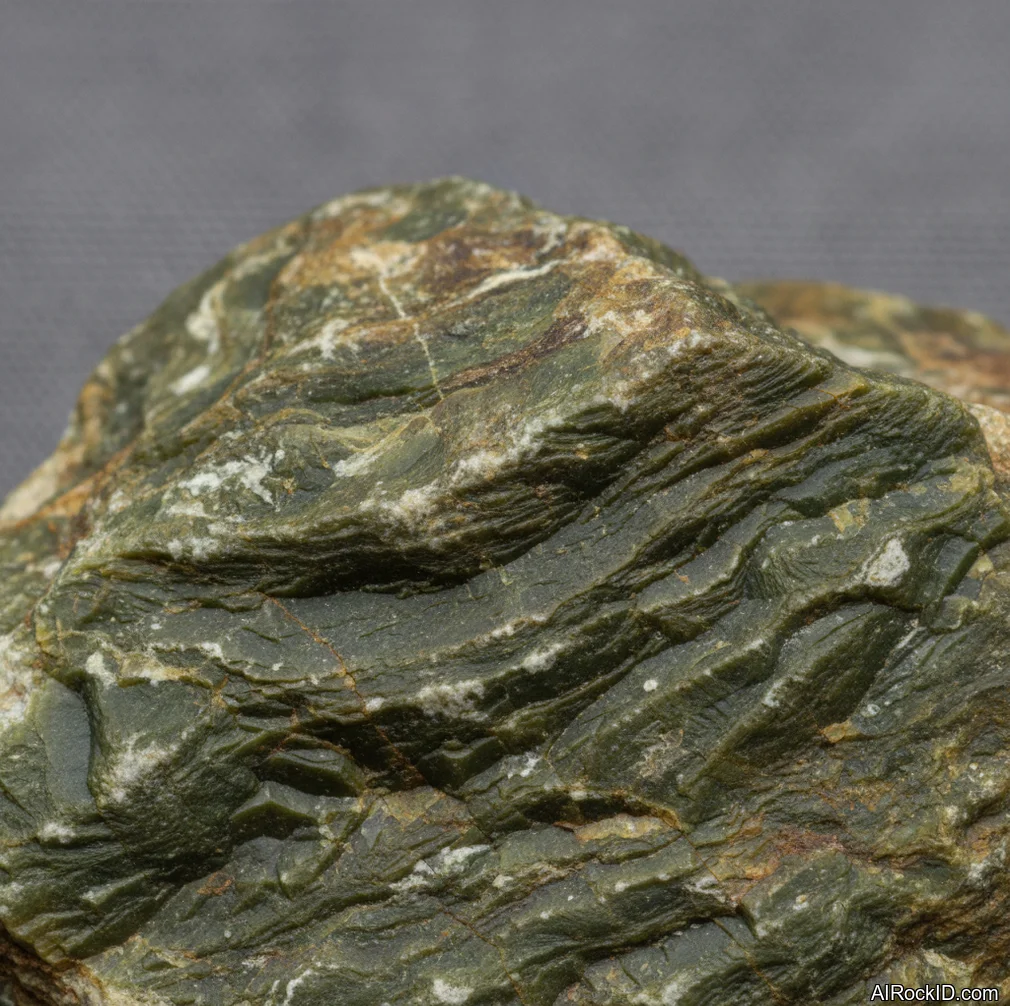
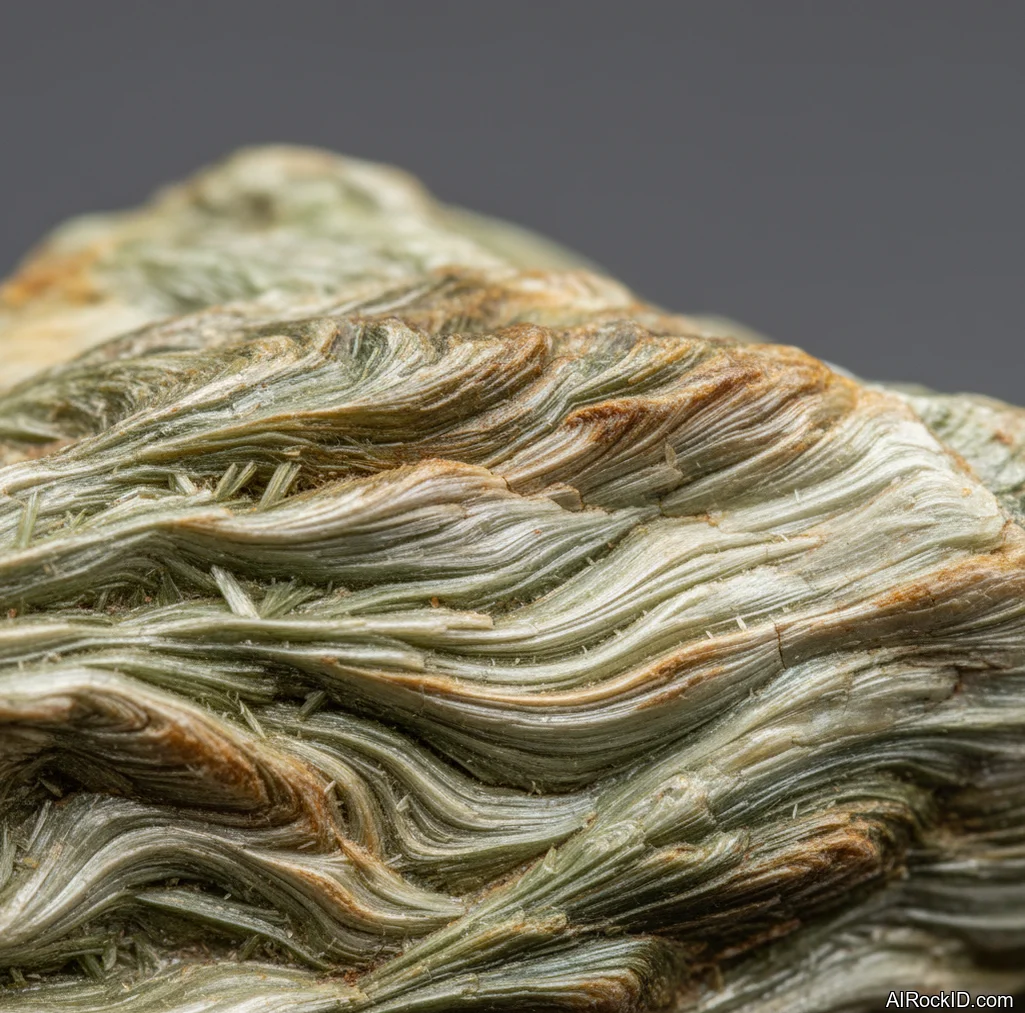
Chrysotile serpentine is the fibrous form of serpentine, a magnesium silicate mineral that grows in hairlike, silky fibers. Most chunks you’ll see are pale green to yellow-green, sometimes so washed out they’re almost white, with this satin shimmer that kind of looks lit from inside when you tip it under a lamp.
Grab a piece and it won’t feel “crystally” like quartz. Not even close. It’s lighter than you’d guess, and the surface can feel a little greasy or soapy, especially on weathered massive serpentine right beside the fibrous seams (you can feel the difference with your thumb). And those seams are the good part: thin, parallel fibers that catch the light like cheap satin ribbon. But here’s the part nobody loves saying out loud at a sales booth. Chrysotile is the same mineral type that’s been used as asbestos, so the smart move is simple: handle it without making dust. No panic. Just don’t grind it up.
Origin & History
Chrysotile got written up as its own mineral species in the 1800s, right around when mineralogy started getting more formal and people were finally arguing about names in print. The name itself comes from Greek for “gold fiber,” which makes sense the first time you actually hold a piece and see that silky, hairlike sheen flashing yellow in the light when you tilt it.
Serpentine, as a whole group, was named earlier. And that’s because a lot of the big, chunky massive material really does have that green, snake-skin look, especially on a worn surface where it feels a little waxy under your thumb (kind of slick, but not quite).
Chrysotile’s history is tied to heavy mining for industrial fiber. That’s just part of the story, like it or not. In the collector world, you’ll still run into old locality labels from classic asbestos districts, and they’re a blunt reminder that context and safety matter with this one.
Where Is Chrysotile Serpentine Found?
It shows up worldwide in serpentinite belts, especially where ultramafic rocks got altered by water. Classic material comes from old asbestos mining regions and alpine serpentinite zones.
Formation
Most chrysotile shows up when ultramafic rocks like peridotite or dunite get soaked and chemically altered. That whole hydration-and-alteration routine is called serpentinization. Water sneaks along fractures, reacts with olivine and pyroxene, and you end up with serpentine minerals, magnetite, plus a few other side-products.
Look, if you’ve got a hand sample in front of you, you can almost see the old plumbing paths. Chrysotile loves cracks, showing up as cross-fiber or slip-fiber veins, and the fibers tend to line up with the fracture direction. I’ve split open serpentinite nodules where the chrysotile seam was only a couple millimeters thick. Tiny. But it catches the light like a mirror when you tilt it (that weird flash), because the fibers are all lined up just right.
How to Identify Chrysotile Serpentine
Color: Most chrysotile serpentine is white to cream, pale yellow, or light green, sometimes with darker green massive serpentine around it. Weathering can mute it into a dusty tan on the outside.
Luster: Silky to waxy, with a satin sheen on fibrous faces.
If you scratch it with a copper coin, it’ll usually mark because it’s around Mohs 2.5–3. The real test is the look and feel together: fibrous seams with a silky shimmer, plus that slightly soapy feel on the host serpentine. Don’t do the old “fiber pull” trick people try at shows. Avoid teasing fibers loose, because you don’t want airborne dust.
Properties of Chrysotile Serpentine
Physical Properties
| Crystal System | Monoclinic |
| Hardness (Mohs) | 2.5-3 (Soft (2-4)) |
| Density | 2.5-2.6 |
| Luster | Silky |
| Diaphaneity | Translucent |
| Fracture | Splintery |
| Streak | white |
| Magnetism | Non-magnetic |
| Colors | white, cream, pale yellow, yellow-green, light green, gray-green |
Chemical Properties
| Classification | Silicates |
| Formula | Mg3Si2O5(OH)4 |
| Elements | Mg, Si, O, H |
| Common Impurities | Fe, Ni, Cr, Al |
Optical Properties
| Refractive Index | 1.550-1.560 |
| Birefringence | 0.005 |
| Pleochroism | Weak |
| Optical Character | Biaxial |
Chrysotile Serpentine Health & Safety
Most solid chunks are fine if you handle them gently. But chrysotile is a fibrous asbestos mineral, and the real danger is breathing in dust or any loose fibers. So think of it as a “look, don’t grind” specimen.
Safety Tips
Don’t sand it. Don’t drill it, tumble it, or hit it with a wire brush either. And don’t start picking at it or pulling the fibers apart. If a piece is already crumbly, just leave it sealed up in a display box. Handle it as little as possible, then go wash your hands right after. Why risk it?
Chrysotile Serpentine Value & Price
Price Range
Rough/Tumbled: $5 - $60 per specimen
Price mostly comes down to how clean those fibrous seams look in person (and how well they photograph under a phone light), plus whether the piece has a labeled, older locality. Big, bright, silky cross-fiber veins usually bring more money than dull, massive serpentinite.
Durability
Fragile — Scratch resistance: Poor, Toughness: Poor
It dents and frays easily, and abrasion can create fine dust, so it’s better as a display specimen than a pocket stone.
How to Care for Chrysotile Serpentine
Use & Storage
Store it where it won’t get knocked around, since the fibrous parts can fuzz up or chip. I keep mine in a perky box or a small acrylic case so nothing rubs the seams.
Cleaning
1) Skip dry brushing. 2) If it needs cleaning, use a gentle rinse with water and a tiny bit of mild soap. 3) Pat dry carefully and let it air-dry fully before putting it back in a closed container.
Cleanse & Charge
If you do energetic cleansing, use smoke, sound, or moonlight rather than salt scrubs or abrasive methods. Keep it low-contact and dust-free.
Placement
Best on a shelf where it won’t be handled constantly, especially away from fans or vents that could move any loose surface fuzz around. Soft light from the side makes the silky sheen show up.
Caution
Don’t cut, grind, drill, or tumble chrysotile serpentine. Seriously, don’t. You don’t want to make dust, and you definitely don’t want to breathe any of it in (that dry, floaty powder gets everywhere fast). And keep specimens well away from kids and pets, especially the ones that chew or put everything in their mouth.
Works Well With
Chrysotile Serpentine Meaning & Healing Properties
Chrysotile serpentine can come off as a “quiet” stone when you first pick it up. People usually go for it when they want calm, low-volume body energy and a gentler kind of grounding, more like an exhale than a charge-up. When I’m sorting flats at a show and my brain’s absolutely cooked, I’ll grab a smooth chunk for a minute, just to feel that cool, almost damp-in-a-good-way surface against my palm (it’s the temperature shift that gets me).
But look, I’m going to be straight with you. Because of the asbestos connection, I don’t treat chrysotile like a worry stone you rub all day. I also don’t recommend putting it in elixirs, or doing anything that could shed fibers. If someone wants a serpentine-type stone they can handle every day, I point them toward non-fibrous massive serpentine or bowenite that’s been finished well, with that slick polish that doesn’t feel grabby at all.
In crystal lore, serpentine gets tied to clearing old patterns and staying steady during change. That’s a metaphysical way of looking at it, not medical advice. So if you’re into that theme, chrysotile serpentine can sit on a desk or altar as a nudge to take the slow route, and you keep it as a display piece first. Why push it beyond that?
Identify Any Crystal Instantly
Snap a photo and get properties, value, care instructions, and healing meanings in seconds.