Collawood
What Is Collawood?
Collawood is a trade-name material made from wood and wood-derived components, not an officially recognized mineral species.
Pick up a polished piece and the first thing you notice is the feel. It doesn’t have that cold, glassy “stone” chill like quartz. It warms up fast in your hand, and the surface has this wood-ish drag to it even when it’s glossy, sort of like an old banister that’s been waxed a thousand times (you can almost feel the grain grabbing back a little).
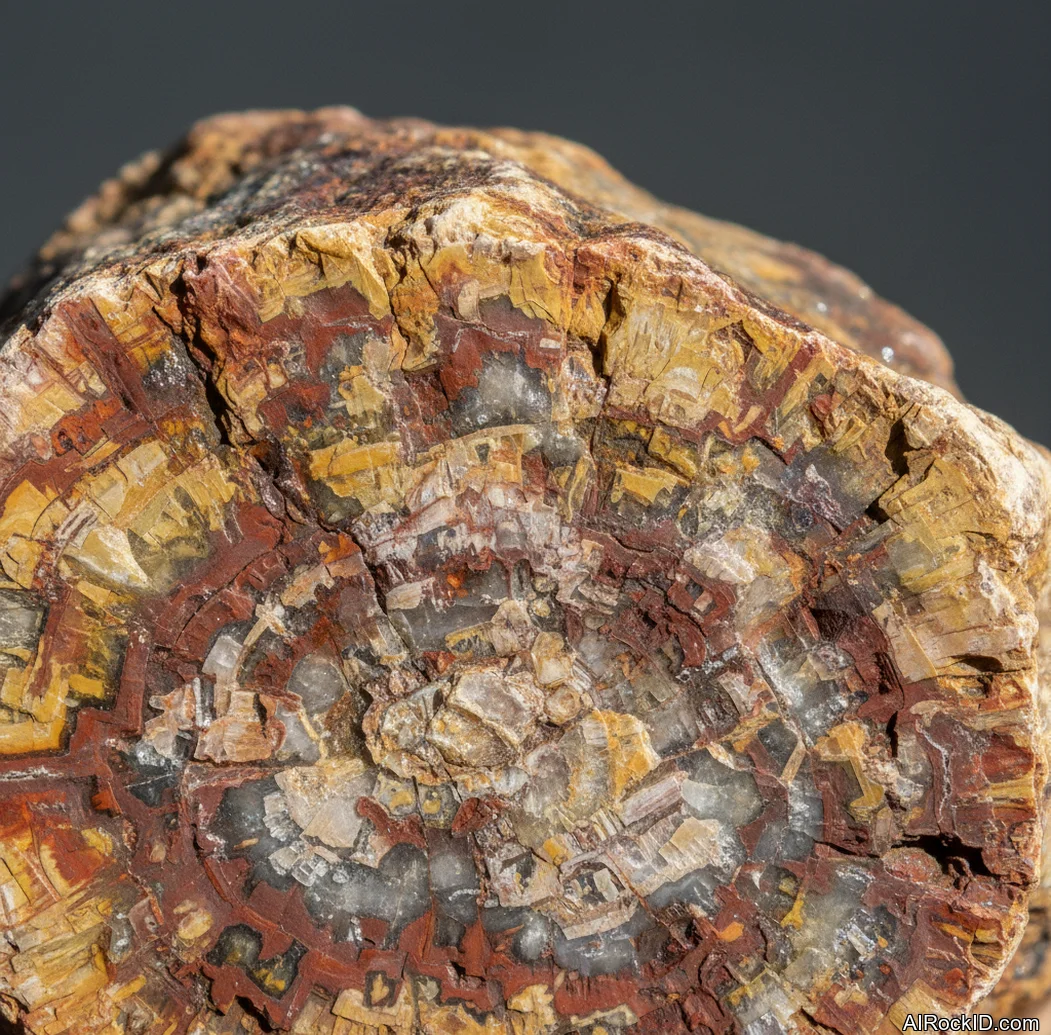
At first glance, folks expect it to act like petrified wood. Sometimes it does, at least to your eyes. But here’s the thing: in the shop I’ve seen “Collawood” slapped on a few different recipes, like stabilized wood, resin-impregnated burl, compressed wood composites, or even wood mixed with mineral grit for weight. That’s the headache with the name. You’ve gotta judge the actual piece in your hand, not whatever the bin label claims.
Origin & History
Most dealers I’ve run into treat “Collawood” like a shop label or trade name, not an official geological term, so there isn’t some neat first-description paper sitting out there like you’d see with a newly described mineral species. Thing is, it shows up the same way a lot of lapidary names do: one supplier slaps it on a certain look and finish, people repeat it at shows, and then suddenly it’s “a thing.”
On the name itself, it reads like “colla” plus “wood,” basically “glued wood.” And that tracks with what I’ve actually handled. A lot of pieces have that engineered-wood vibe in the hand, sort of dense and a little dead-feeling compared to plain wood, like it’s been stabilized so it’ll take a bright polish without fuzzing up or cracking. You know that slick, glassy surface you get after a good buff? Yeah, that.
Where Is Collawood Found?
Collawood is sold through lapidary suppliers and gem shows, usually sourced from woodworking or stabilization shops rather than a single mine. The actual origin depends on what wood or composite was used.
Formation
So if you’re sitting there thinking, “Okay, but how does it form in the ground?” that’s where Collawood gets a little weird. Most Collawood you see for sale isn’t some natural geologic formation somebody dug up. It’s made on purpose.
Here’s what happens: wood gets cut, dried, then stabilized or bonded with resin under pressure so it behaves more like a lapidary material (think tougher, less likely to crumble when you’re working it).
But then things get muddy because some sellers will loosely toss fossil-wood or partially mineralized wood into the same category, like it’s all the same stuff. Real petrified wood forms when silica-rich water replaces the organic structure over a long time, and it keeps the grain while the chemistry gets swapped out. Collawood, when it’s engineered, hangs onto that wood look for a totally different reason. Thing is, the structure is being held together by binders, not replacement minerals.
How to Identify Collawood
Color: Usually tan, caramel, honey-brown, and coffee-brown with obvious grain lines or swirled burl patterns. Some pieces show black streaks or little “pepper” specks from filler or resin tint.
Luster: Satin to glossy, often with a slightly waxy look compared to true quartz-polished stone.
Pick up a piece and check the temperature. Collawood tends to feel warmer and less “stony” than jasper or agate sitting next to it on the same table. The real test is the smell when you gently rub it hard with your thumb, or when it’s lightly warmed by friction. A lot of stabilized wood has a faint resin or woodshop scent, while petrified wood won’t. If you scratch it with a steel needle in an inconspicuous spot, many Collawood composites will mark more easily than chalcedony. Just don’t do this on a dealer’s table unless you’ve asked first.
Properties of Collawood
Physical Properties
| Crystal System | Amorphous |
| Hardness (Mohs) | Varies; commonly ~2.0-4.0 (composite/stabilized wood), up to 6.5-7.0 if the material is actually silicified petrified wood (Soft (2-4)) |
| Density | Varies; commonly ~1.1-1.6 g/cm3 (stabilized wood), higher if mineral-filled |
| Luster | Waxy |
| Diaphaneity | Opaque |
| Fracture | Uneven |
| Streak | White to none |
| Magnetism | Non-magnetic |
| Colors | tan, brown, dark brown, black, cream |
Chemical Properties
| Classification | Organic materials |
| Formula | No single fixed formula (wood cellulose/lignin with polymer resins in many commercial materials) |
| Elements | C, H, O |
| Common Impurities | Si, Fe, Al |
Optical Properties
| Refractive Index | Varies; typically ~1.50-1.56 for many cured resins and stabilized wood surfaces |
| Birefringence | None |
| Pleochroism | None |
| Optical Character | Isotropic |
Collawood Health & Safety
Handling is usually safe. But if you start sanding or cutting it, you’ll kick up that fine organic and resin dust, the kind that hangs in the air and ends up on your fingertips. So treat it the same way you’d treat any lapidary or woodworking material.
Safety Tips
Use water while you’re cutting. Wear a respirator that actually fits right (no gaps around your nose or cheeks), not one that slides around when you talk. And when you’re done, wipe up the wet slurry while it’s still wet, because once it dries it turns into dust and you’ll be breathing it in.
Collawood Value & Price
Price Range
Rough/Tumbled: $5 - $40 per palm stone or small slab
Price mostly comes down to the pattern and the finish. If the burl has those tight little swirls you can see shifting when you tilt it under a light, the polish is clean with no hazy spots, and the slab’s on the thicker side, it’ll cost more. But the flatter, one-note pieces, the ones that look kind of plain even after you wipe them down, usually end up in the cheap tray.
Durability
Moderate — Scratch resistance: Fair, Toughness: Fair
Stabilized pieces handle everyday wear fine, but heat, harsh solvents, and long sun exposure can dull the surface or dry out the binder over time.
How to Care for Collawood
Use & Storage
Store it away from high heat and direct sun, especially if it’s resin-stabilized. I keep mine in a soft pouch because the glossy surface can pick up little scuffs from harder stones.
Cleaning
1) Wipe with a soft microfiber cloth to remove oils. 2) If needed, use lukewarm water with a drop of mild soap, then rinse quickly. 3) Dry right away and don’t soak it for long periods.
Cleanse & Charge
If you do energy-style cleansing, stick to gentle options like smoke, sound, or a brief moonlight sit. Long sunbathing can fade dyed or tinted resin over time.
Placement
Looks best under warm indoor light where the grain pops. On a desk it’s a nice “fidget stone” because it warms up fast and feels friendly in the hand.
Caution
Skip acetone, alcohol wipes, and ultrasonic cleaners. Some finishes will haze up or even get a little soft, and you won’t like the way it looks after. And don’t leave it sitting on a car dashboard in summer either, where the heat bakes it.
Works Well With
Collawood Meaning & Healing Properties
Look at Collawood for a minute and yeah, a lot of people read it as straight-up “wood energy.” Steady. Practical. Slow. That fits what it’s like in your hand, too. It doesn’t have that sharp, zingy feel some folks get from clear quartz points. It’s closer to a warm paperweight, the kind that keeps you from drifting off.
But here’s the honest part. Collawood is a trade name, so two pieces with the same label can be completely different stuff. One might be stabilized burl with resin. Another might be partly fossilized wood. So if you’re using it alongside meditation or a grounding routine, treat it like something personal. Pay attention to how you react to it, not some one-size description.
And no, it’s not medicine. If you reach for it on stressy days, that’s fine. I’ve left a chunk on my workbench during busy weeks because the grain gives my eyes something simple to lock onto (especially when my brain’s sprinting), and it stays warm instead of turning icy. That’s real, physical comfort. Not a promise that life gets fixed.
Identify Any Crystal Instantly
Snap a photo and get properties, value, care instructions, and healing meanings in seconds.