Colombianite
What Is Colombianite?
Colombianite is a natural impact glass from Colombia. It’s usually dark green to black, and it’s sold as rough chunks or as tumbled pieces.
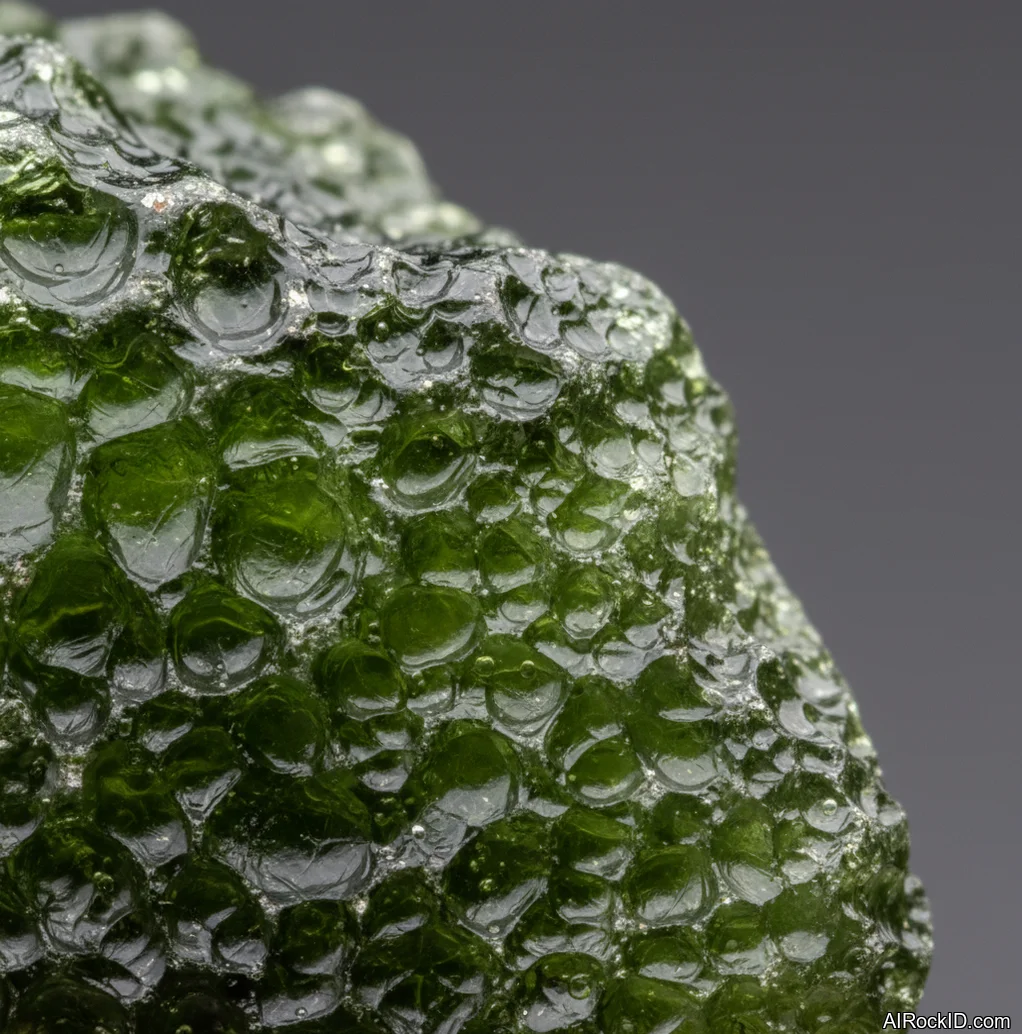
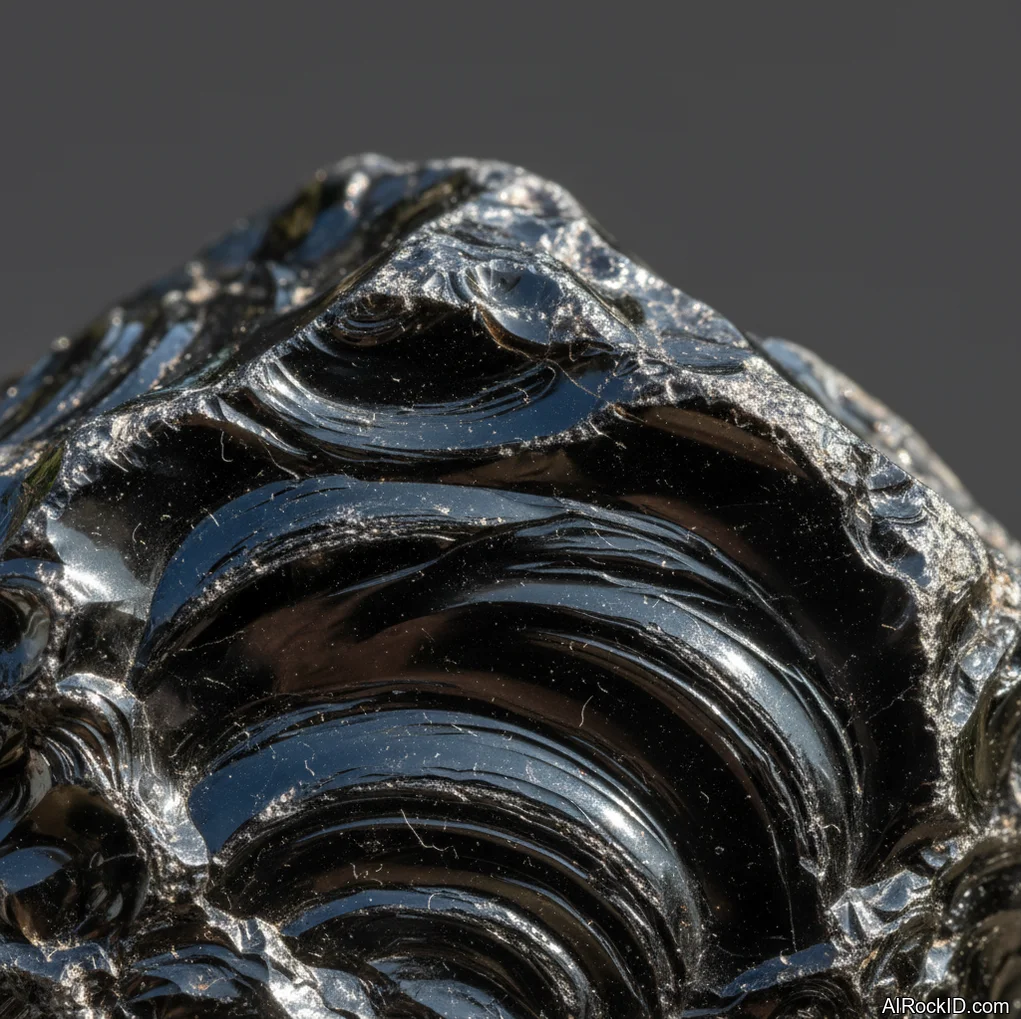
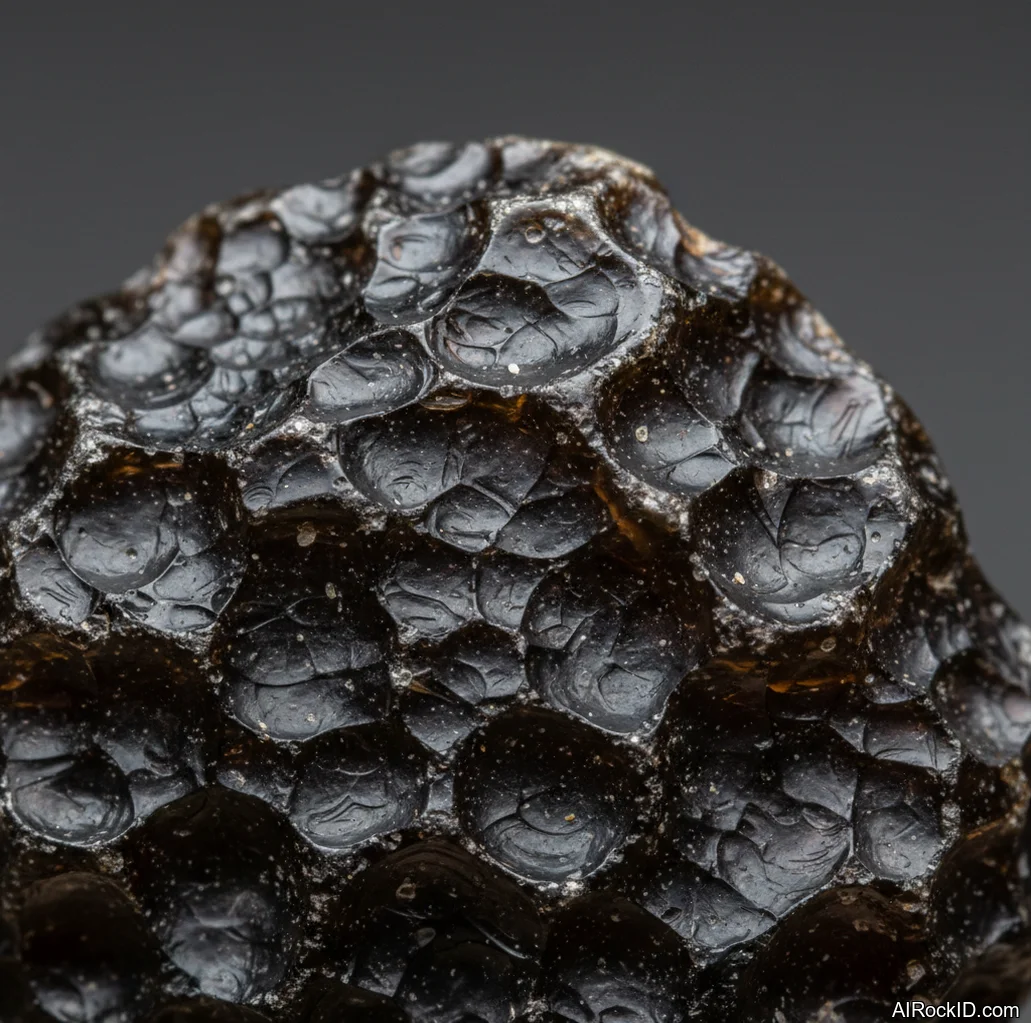
Grab a decent-sized piece and a couple things hit you fast. It stays cool in your palm. And where it’s chipped, the edges can feel straight-up razor sharp, the kind that makes you pull your finger back without thinking. A lot of it has that classic tektite vibe: tiny pits, little ripples, a surface that looks like it softened and got splashed around. But then you’ll spot spots that are smoother too, where it snapped clean like bottle glass. Shine a strong flashlight through it and, on some pieces, the thin edges throw off this olive or smoky green glow that you don’t see until you try it (kind of a neat trick, honestly).
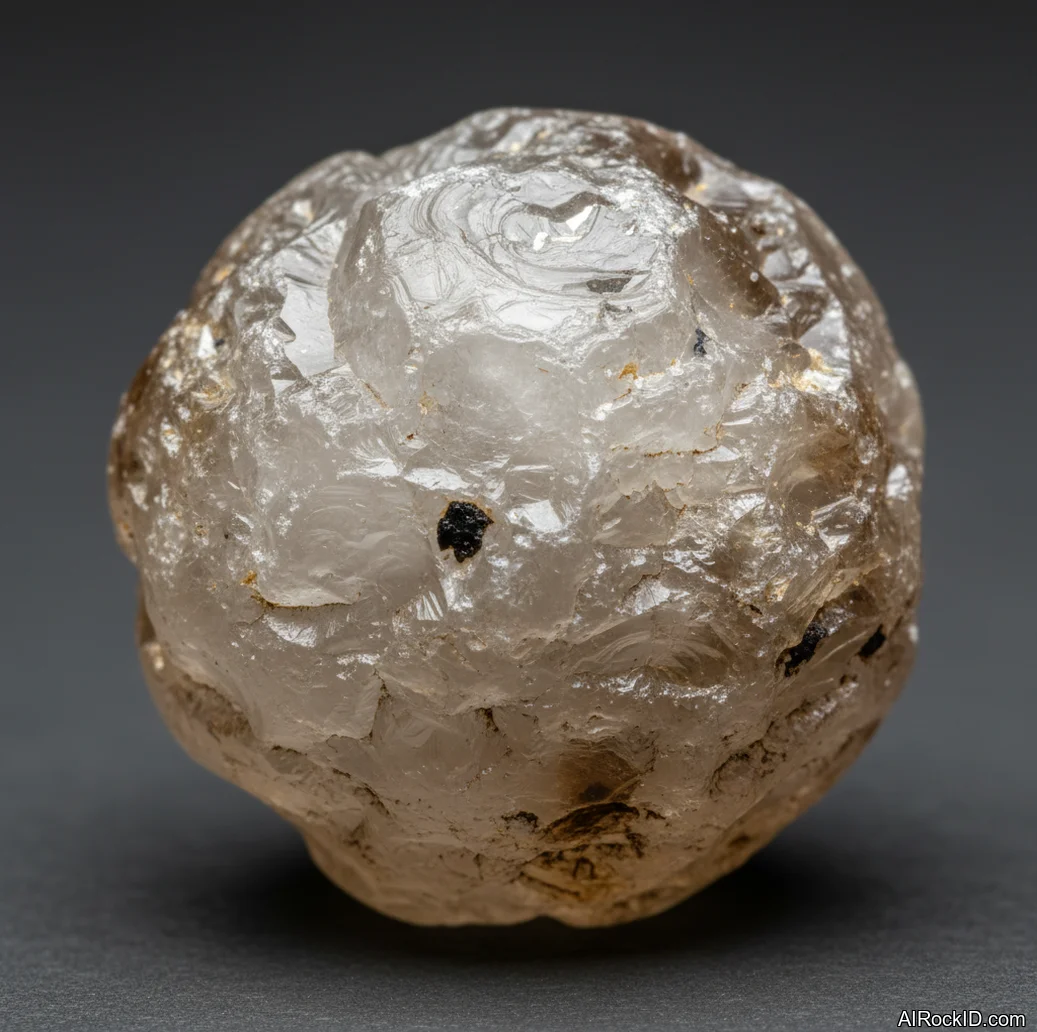
Most of the stuff you’ll see for sale has been waterworn or tumbled, so it reads as “just black” at first glance. But raw chunks can have more character, especially when you’ve got that matte, slightly sandblasted skin right next to a fresh break that looks glossy. It isn’t a crystal. No crystal faces. It’s glass, and it acts like glass.
Origin & History
“Colombianite” is basically a shop name for a dark, natural glass found in Colombia that gets marketed as a tektite-like impact glass. It’s not an officially defined mineral species, so the description changes depending on who’s trying to sell it (and how fancy they want to sound).
People started running into it a lot more in the late 20th century, when Colombian material began showing up in the metaphysical and specimen markets. The word itself is just “Colombia” with the usual “-ite” tacked on. And you might see it listed under local names like Piedra Rayo, too, but the naming is all over the place and there’s no real standard for the labels.
Where Is Colombianite Found?
Material sold as Colombianite is reported from Colombia, mainly from Andean regions where dark natural glass occurs in alluvial and hillside finds.
Formation
Think impact melt. That’s the short version. The working idea people in the trade lean on is that Colombianite formed when a meteorite impact melted silica-rich material, then hurled it out as screaming-hot glass that cooled in a hurry.
But here’s where it gets messy: not every piece of black glass for sale has the same backstory. Some sellers toss volcanic glass in the same pile because, yeah, it can look identical in a photo. In your hand, the texture can give it away, like that slick, almost greasy feel some pieces have, and the sharp little edge chips that catch a fingernail if you run it along a fracture (you’ve probably done that without thinking). Thing is, the real separation comes from lab work, chemistry, and the context of the find spot. So if you’re buying it as “impact glass,” buy from someone who can actually tell you where it came from, not just “from Colombia, trust me.”
How to Identify Colombianite
Color: Usually black to very dark green; thin edges can look olive-green or smoky green under a strong light. Some pieces read brownish-black in warm indoor lighting.
Luster: Glassy to slightly dull on weathered surfaces, with bright vitreous shine on fresh fractures.
Look closely at the break surfaces: real natural glass breaks with clean conchoidal curves and very sharp edges. Pick up a piece and rub a thumb over a weathered area, it should feel slightly pitted or orange-peel-like, not plasticky. The real test is a bright flashlight: many pieces show green transmission at thin spots, while dyed or resin fakes often glow too evenly or feel warm and tacky.
Properties of Colombianite
Physical Properties
| Crystal System | Amorphous |
| Hardness (Mohs) | 5.0-6.0 (Medium (4-6)) |
| Density | 2.30-2.50 |
| Luster | Vitreous |
| Diaphaneity | Opaque |
| Fracture | Conchoidal |
| Streak | white |
| Magnetism | Non-magnetic |
| Colors | black, dark green, olive green, brownish black |
Chemical Properties
| Classification | Oxides (silicate glass) |
| Formula | No fixed formula (silica-rich natural glass, mainly SiO2 with variable oxides) |
| Elements | Si, O |
| Common Impurities | Al, Fe, Mg, Ca, Na, K, Ti |
Optical Properties
| Refractive Index | 1.48-1.52 |
| Birefringence | None |
| Pleochroism | None |
| Optical Character | Isotropic |
Colombianite Health & Safety
Normal handling is safe. But if a piece has a fresh break, the edge can be knife-sharp and it’ll slice skin fast (it feels like a tiny razor when you run a finger too close). Water contact is fine as long as the piece is intact.
Safety Tips
If you’re knapping it, grinding it, or drilling into it, put on safety glasses and a respirator. Those little razor-sharp chips can pop off fast, and the fine silica dust gets everywhere (you’ll taste it later if you don’t).
Colombianite Value & Price
Price Range
Rough/Tumbled: $10 - $80 per piece
Cut/Polished: $3 - $15 per carat
Prices climb as the pieces get bigger, as the surface gets more interesting (pits, ripples, that “flow” texture you can feel under a fingernail), and when the provenance is actually documented and solid. The super glossy, evenly black tumbled stones tend to be on the cheaper end. But the chunky rough stuff with real texture and good light transmission? That’s what costs more.
Durability
Moderate — Scratch resistance: Fair, Toughness: Fair
It’s stable like most glass, but edges chip easily and sharp corners don’t like being tossed around with harder stones.
How to Care for Colombianite
Use & Storage
Store it like you’d store obsidian: padded box or a separate pouch so it doesn’t chip other specimens or get its own edges dinged up. If it’s a rough piece, don’t let it rattle around in a jar.
Cleaning
1) Rinse with lukewarm water to remove grit. 2) Wash with a drop of mild soap and a soft brush, then rinse. 3) Pat dry and let it air-dry fully before putting it back in a pouch.
Cleanse & Charge
If you do energetic cleansing, simple methods are safest: running water, smoke, or leaving it on a windowsill for indirect light. Skip harsh salt soaks if the piece has deep pits that trap residue.
Placement
On a shelf it looks best with a light behind it, even a phone flashlight, so the thin edges show that green. For a desk stone, a tumbled piece is less likely to bite you.
Caution
Sharp edges will slice you up fast, and glass can chip the second it hits tile or concrete (you’ll hear that nasty little “tink”). So don’t toss it in an ultrasonic cleaner if there are internal stress fractures hiding in the piece.
Works Well With
Colombianite Meaning & Healing Properties
Compared to moldavite, Colombianite hits a lot less “spiky” for most people I know, at least around my friends. It’s still impact glass, so people grab it when they want that reset feeling, like sweeping mental junk off the table and getting back to a clean baseline. When I’m holding a rough chunk, I notice the physical stuff first. Cool to the touch, heavier than it looks, and kind of sobering. That alone can snap you out of a scattered headspace.
But look, I’m not going to pretend the market is all reality-based. Some of the stories run way ahead of the science. If you want something for meditation or reflection, Colombianite can work well since it’s simple, dark, and it soaks up your attention in that quiet way. If you’re expecting fireworks, though? You might walk away disappointed. I’ve sat with pieces that felt like absolutely nothing, and honestly, that’s fine. Not every rock has to “do” something on command.
On the practical side, it’s a solid anchor for journaling or breath work because you don’t have to baby it nonstop. Just watch the edges, seriously. I’ve seen more than one person nick a finger reaching into a bowl of rough glass sitting on a shop counter (those sharp little ridges don’t mess around). And for the record, metaphysical use is personal experience and tradition, not medical care, and it shouldn’t replace real help when you need it.
Identify Any Crystal Instantly
Snap a photo and get properties, value, care instructions, and healing meanings in seconds.