Moldavite
What Is Moldavite?
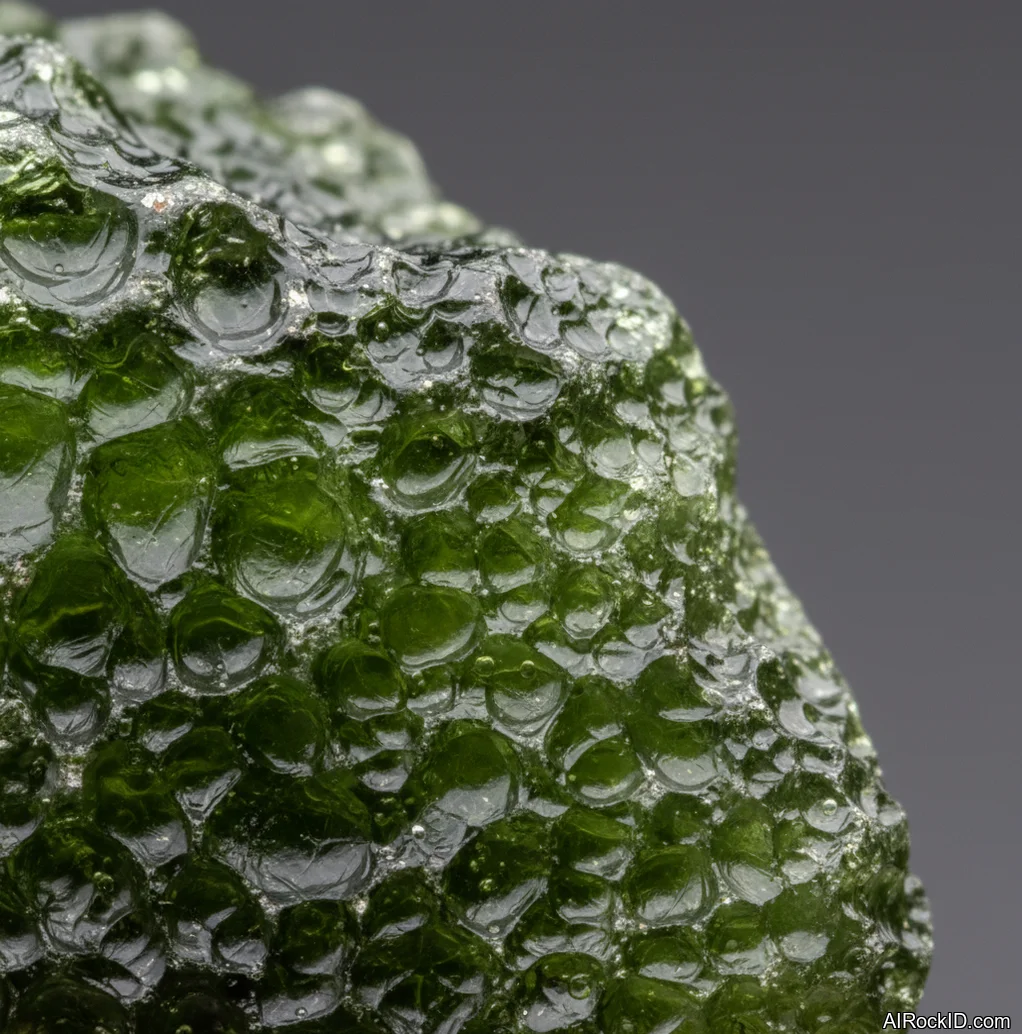
Moldavite is a natural green tektite, which is just a silica-rich glass that formed when a meteorite slammed into Earth. Most of what you’ll run into comes out of southern Bohemia, and honestly it looks like somebody dropped a blob of bottle-green glass outside and let acid rain gnaw at it for a few million years.
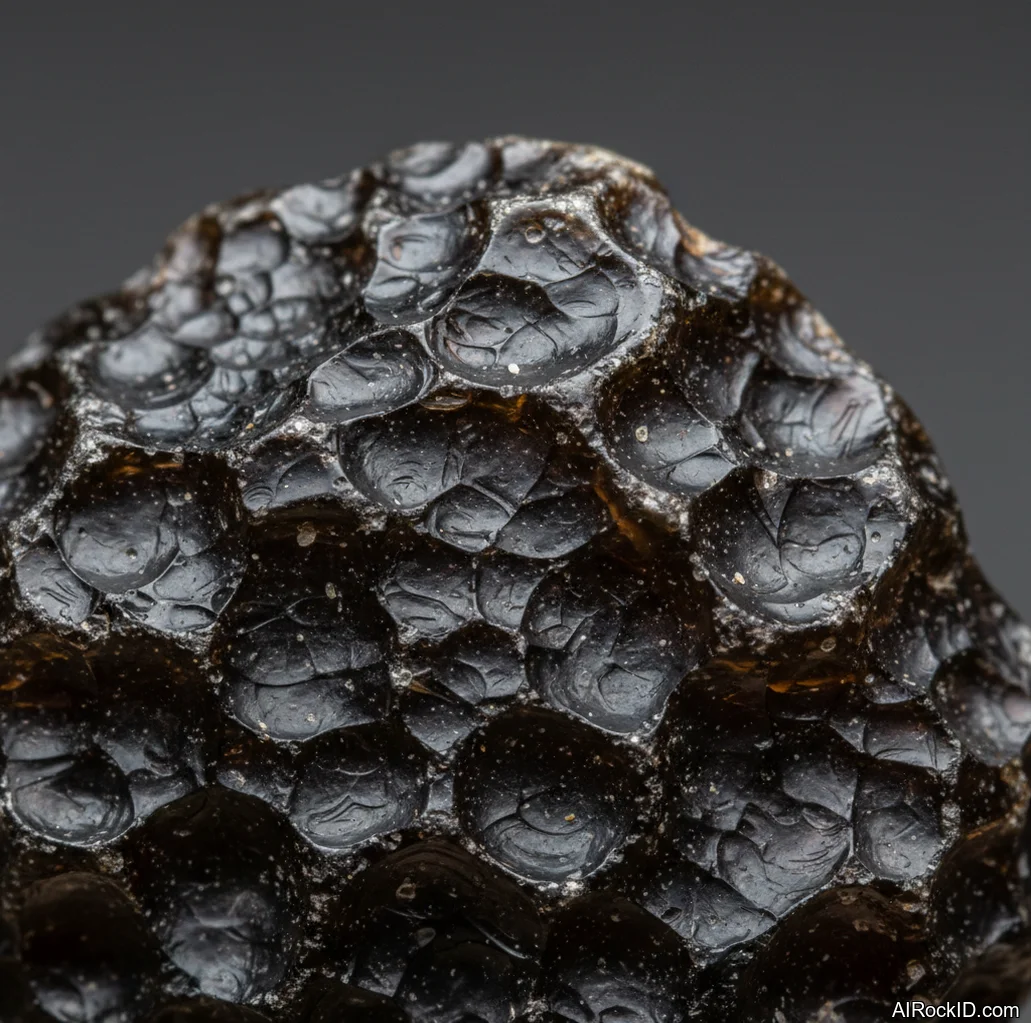
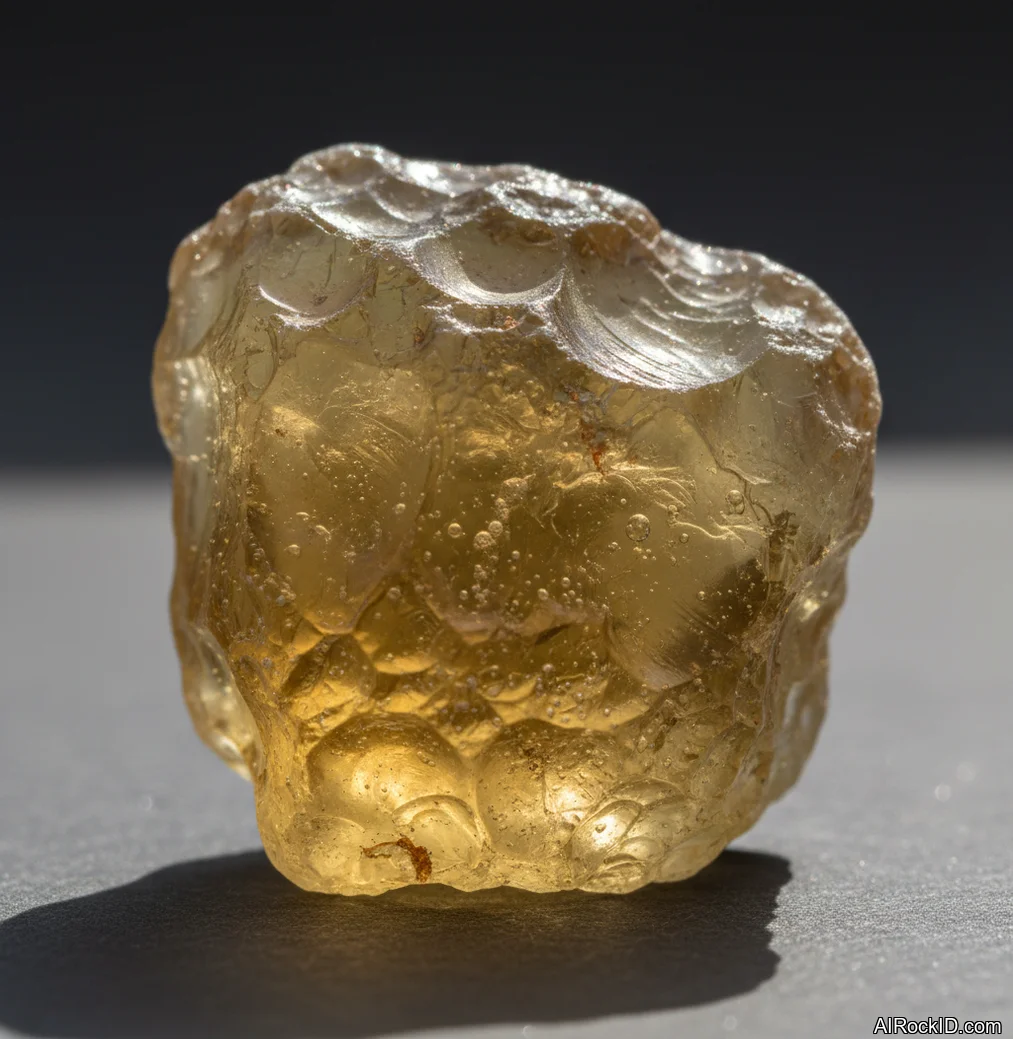
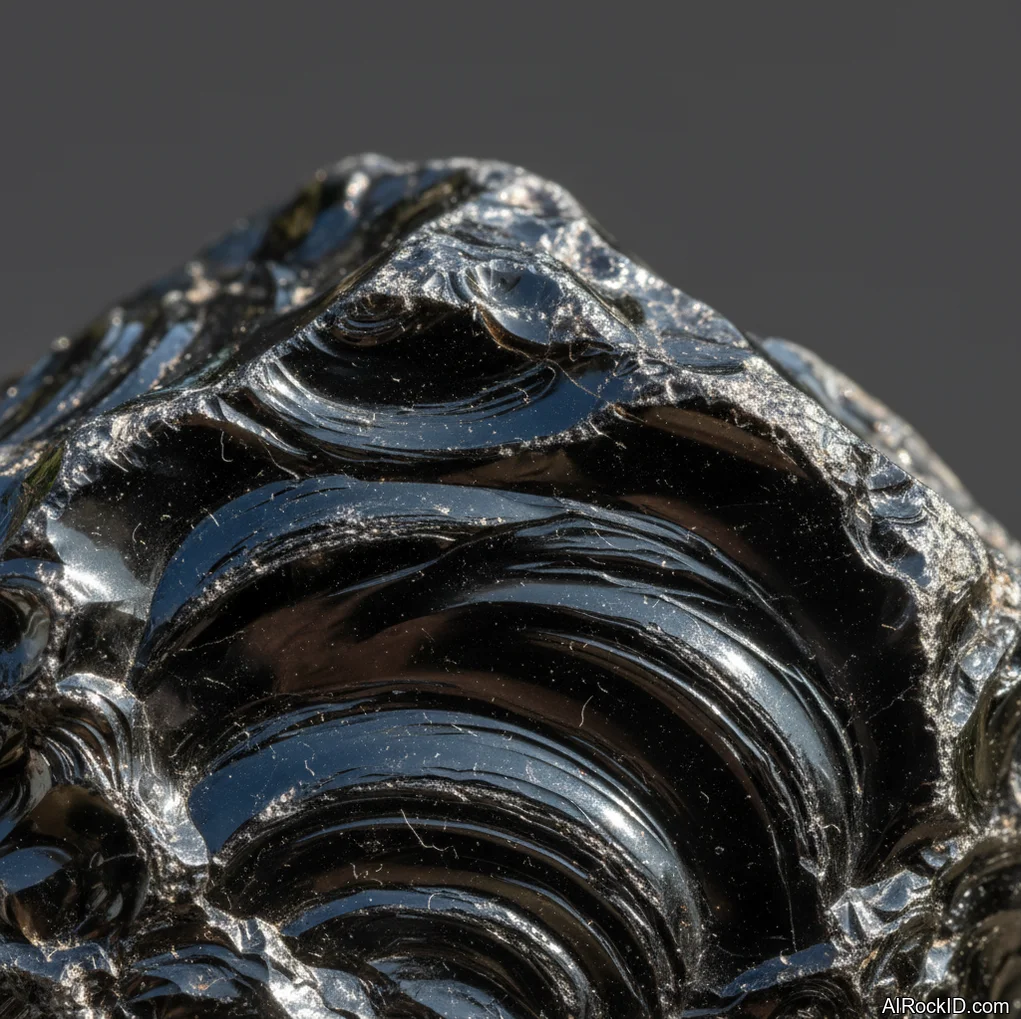
Hold a real piece and you notice the weight first. Or really, the lack of it. It’s glass, so it doesn’t have that “rock heft” your palm is bracing for, and the surface is usually sharp and wrinkly, like little frozen ripples that can actually catch on a fingertip if you rub the edge (not hard, but you’ll feel it). And when I’m sorting trays at a show under those bright overhead LEDs, I can pick out good raw moldavite pretty fast just by how the light skates across the tiny ridges.
But the market’s messy. Moldavite got famous, prices shot up, and then suddenly every other table had “moldavite” that looked like melted beer bottle or this perfectly even green candy-glass blob. The real material almost always has uneven thickness, small bubbles or flow lines, plus that etched skin that just doesn’t look machine-made. You can usually tell once you’ve handled a few.
Origin & History
“Moldavite” gets its name from the Moldau River (the Vltava) in the Czech Republic, since some of the first pieces people paid attention to were turning up in the river gravels, mixed in with the usual sand and rounded stones.
It was formally described by scientists in the 19th century, back when Central European naturalists were literally picking through sediment samples and staring at these weird glassy bits, trying to decide what they even were. Volcanic glass? Something man-made? Or… something else entirely?
By the early 1900s, the impact-origin idea started to win out once people linked moldavite to the Ries impact in Germany. And sure, collectors still bicker over the fine points at tables like it’s a sports rivalry (you can almost hear the knuckles tapping on display cases). But the headline doesn’t change: it’s impact glass, not a crystal that grew in a vein.
Where Is Moldavite Found?
Moldavite is found almost entirely in the Czech Republic, mostly as loose pieces in sediments and gravels in Bohemia and Moravia.
Formation
Picture a meteorite slamming in hard. The target rock flash-melts, gets blasted up, and ends up flung way out from the crater as droplets and thin sheets of molten glass. It’s airborne, it cools in a hurry, it stretches and folds, it traps little bubbles, and it finally hits the ground as lumpy, irregular chunks.
And then comes the slow part. Moldavite just sits there in sediments and gets etched by weathering over time, and that’s why the good pieces have that carved, sculpted surface instead of looking smooth like fresh melt. Thing is, if you’ve ever handled a freshly broken chip, you know the inside goes slick and shiny like bottle glass, but the outside hangs onto that gnarly skin collectors pay for (the part that feels a bit grabby under your thumb).
How to Identify Moldavite
Color: Typical color is bottle-green to olive green; some pieces lean brownish-green. Held up to a strong light, many show lighter green edges or uneven color zoning from thickness changes.
Luster: Vitreous luster, like broken glass, with a duller look on heavily etched surfaces.
Look closely for natural etching that has depth and randomness, not repeating “worm tracks” that look stamped. The real test is a bright flashlight: genuine moldavite often shows flow lines, stretched bubbles, and uneven thickness that makes the color shift across the piece. And if it feels warm and plasticky right away, be suspicious, because real moldavite usually feels cool like glass when you first pick it up.
Properties of Moldavite
Physical Properties
| Crystal System | Amorphous |
| Hardness (Mohs) | 5.0-5.5 (Medium (4-6)) |
| Density | 2.32-2.38 g/cm3 |
| Luster | Vitreous |
| Diaphaneity | Transparent to translucent |
| Fracture | Conchoidal |
| Streak | white |
| Magnetism | Non-magnetic |
| Colors | green, olive green, bottle green, brownish green |
Chemical Properties
| Classification | Oxides (silica-rich natural glass) |
| Formula | SiO2 (dominant) with Al2O3 and other oxides |
| Elements | Si, O, Al, Fe, Mg, Ca, Na, K |
| Common Impurities | Fe, Ti, Mg, Ca |
Optical Properties
| Refractive Index | 1.48-1.52 |
| Birefringence | None |
| Pleochroism | None |
| Optical Character | Isotropic |
Moldavite Health & Safety
Moldavite’s generally safe to handle and wear. But treat it like glass. Run a fingertip along the edges before you put it on, and keep an eye out for tiny chips or sharp spots that can snag skin.
Safety Tips
If it’s got those sharp, knife-like points, put it somewhere it can’t nick your fingers or scuff up your other stones (a little cloth pouch works, even an old sock). And don’t grind or drill it unless you’ve got eye protection on and real dust control in place. Why risk it?
Moldavite Value & Price
Price Range
Rough/Tumbled: $20 - $200 per gram
Cut/Polished: $30 - $150 per carat
Prices can swing a lot depending on how confident people are that it’s authentic, what the surface feels like under your fingers (slick vs. that slightly gritty etched bite), and where it came from. And yeah, Bohemian pieces with deep etching usually pull higher numbers. Big, clean pieces that look naturally sculpted go quick. Really quick. Supply’s finite, demand’s loud, and once you’ve held one and felt the weight and those crisp edges, it kind of makes sense, doesn’t it?
Durability
Moderate — Scratch resistance: Fair, Toughness: Fair
It’s stable glass, but it can chip on edges and it’ll show scratches if you toss it in a pocket with quartz.
How to Care for Moldavite
Use & Storage
Store it in a soft pouch or a box with foam. I don’t let raw moldavite ride loose with quartz or topaz because it’ll come out looking scuffed.
Cleaning
1) Rinse with lukewarm water. 2) Use a soft toothbrush and a drop of mild soap to lift skin oils from the etches. 3) Rinse again and pat dry; skip ultrasonic and steam cleaners.
Cleanse & Charge
If you do energetic cleansing, keep it simple: smoke, sound, or a quick rinse and dry works fine. Long sunbaths aren’t necessary and can make display pieces look tired over time.
Placement
On a shelf, it looks best with side lighting so the texture throws tiny shadows. If you’re wearing it, a bezel setting protects the edges way better than prongs.
Caution
Skip hard knocks, and don’t stash it where it’s rubbing up against tougher stones like quartz, sapphire, or diamond. The thin edges chip fast since it fractures like glass, and once a little corner goes, you’ll feel that sharp, fresh edge right away when you pick it up.
Works Well With
Moldavite Meaning & Healing Properties
In the metaphysical world, moldavite gets talked about like a fast-forward button. People tie it to sudden change, dumping old habits, and that itchy, can’t-sit-still feeling you get when you know you’re stalling out. I’ve had customers hold a piece for maybe thirty seconds, set it back on the tray, and say it feels “too loud.” You can almost see their shoulders tense up. That reaction is part of its reputation, for better or worse.
My take, after years of handling the stuff, is simpler: it’s a strong symbol stone. It’s literally impact glass, born from an event that rearranged a landscape in an instant, and once you learn that story it kind of hooks into your brain. When I wear a small pendant, I notice I make decisions quicker, but that could just be me buying into the narrative and staying more alert (placebo is still a real experience, right?).
But none of that is medical care. If someone’s dealing with anxiety or sleep issues, I’m not sending them home with moldavite like it’s a fix. I usually point them toward grounding stones and tell them to treat moldavite like caffeine: maybe useful, maybe overstimulating, and you get to choose the dose.
Identify Any Crystal Instantly
Snap a photo and get properties, value, care instructions, and healing meanings in seconds.