Conichalcite
What Is Conichalcite?
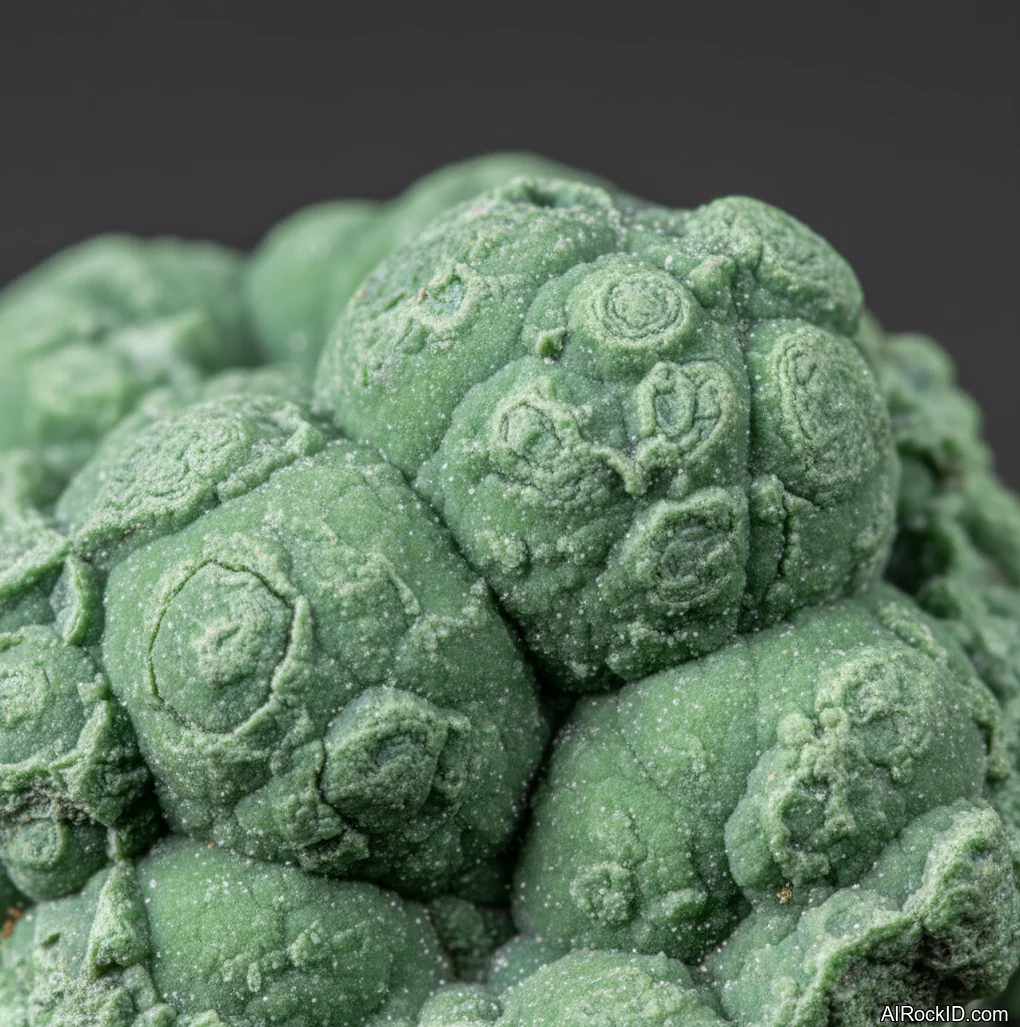
Conichalcite is a copper calcium arsenate mineral, CaCu(AsO4)(OH), and it usually shows up as green crusts, drusy coatings, or botryoidal surfaces in the oxidized zones of copper deposits.
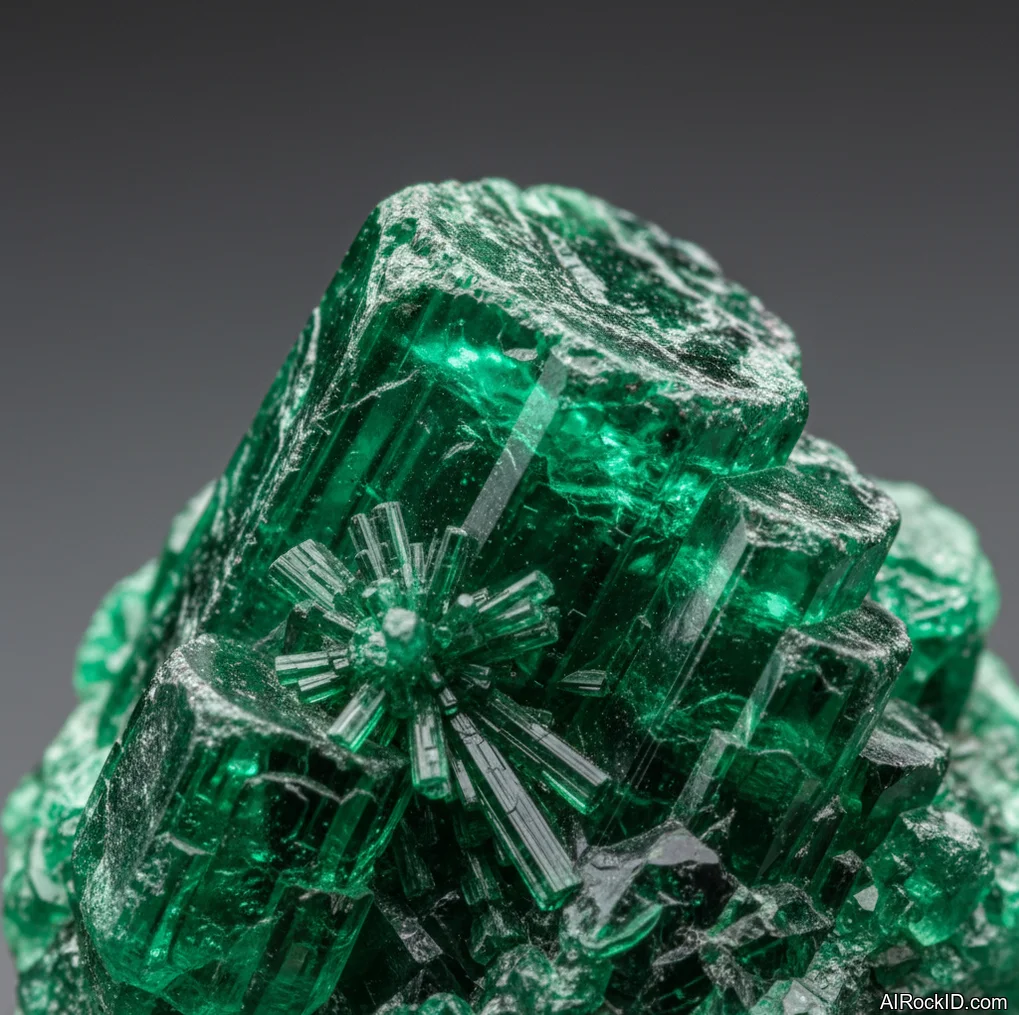
Grab a solid cabinet specimen and you’ll notice the feel before you notice any “crystals.” That’s the thing. Most conichalcite just isn’t the kind of mineral that gives you big, sharp crystal faces. It’s more like a fine, sugary green rind on the host rock, and sometimes it puffs up into those little rounded bumps that look like someone misted the surface and it froze in place. Move it under a desk lamp and the druse will spark for a second, then flatten out and go dull as you change the angle. Weirdly satisfying.
Next to malachite, conichalcite’s green usually skews a bit more yellow, that apple-ish tone, and if the surface is really microcrystalline it can read as kind of dusty up close (not dirty, just soft-looking). But when it’s fresh and clean, it gets that wet sparkle that makes you keep rolling it around in your fingers. Don’t count on it being tough, though. A lot of pieces have crumbly, fragile edges where the coating thins out, and sometimes a fingernail test tells you everything you didn’t want confirmed.
Origin & History
Back in 1849, the Austrian mineralogist Wilhelm Karl von Haidinger was the one who described conichalcite. The name’s straight out of Greek: “konis” means dust, and “chalkos” means copper. And that “dusty copper” idea really tracks, since a lot of pieces show up as fine-grained coatings instead of big, chunky crystals you can pick out with your fingers.
It’s historically tied to copper mining districts, especially where arsenic is running through the system. It’s not some famous crown-jewel mineral. But collectors and micromounters have been after it for ages because the color can look unreal when it grows as a tight, even druse over limonite or quartz. Who doesn’t stop and stare at that when it’s done right?
Where Is Conichalcite Found?
It turns up in oxidized copper zones worldwide, especially classic localities like Bisbee (Arizona), Ojuela (Mexico), Tsumeb (Namibia), and parts of Morocco.
Formation
Look at where it turns up and the pattern’s pretty obvious: conichalcite is an oxidized-zone mineral. It forms when copper-bearing fluids push through rock that already has arsenic hanging around, usually because arsenopyrite or other As minerals are breaking down. Then you need calcium, coming out of the host rock or riding in with groundwater, and conichalcite can drop out as a thin coating along fractures, vugs, and that rusty, porous limonitic gossan.
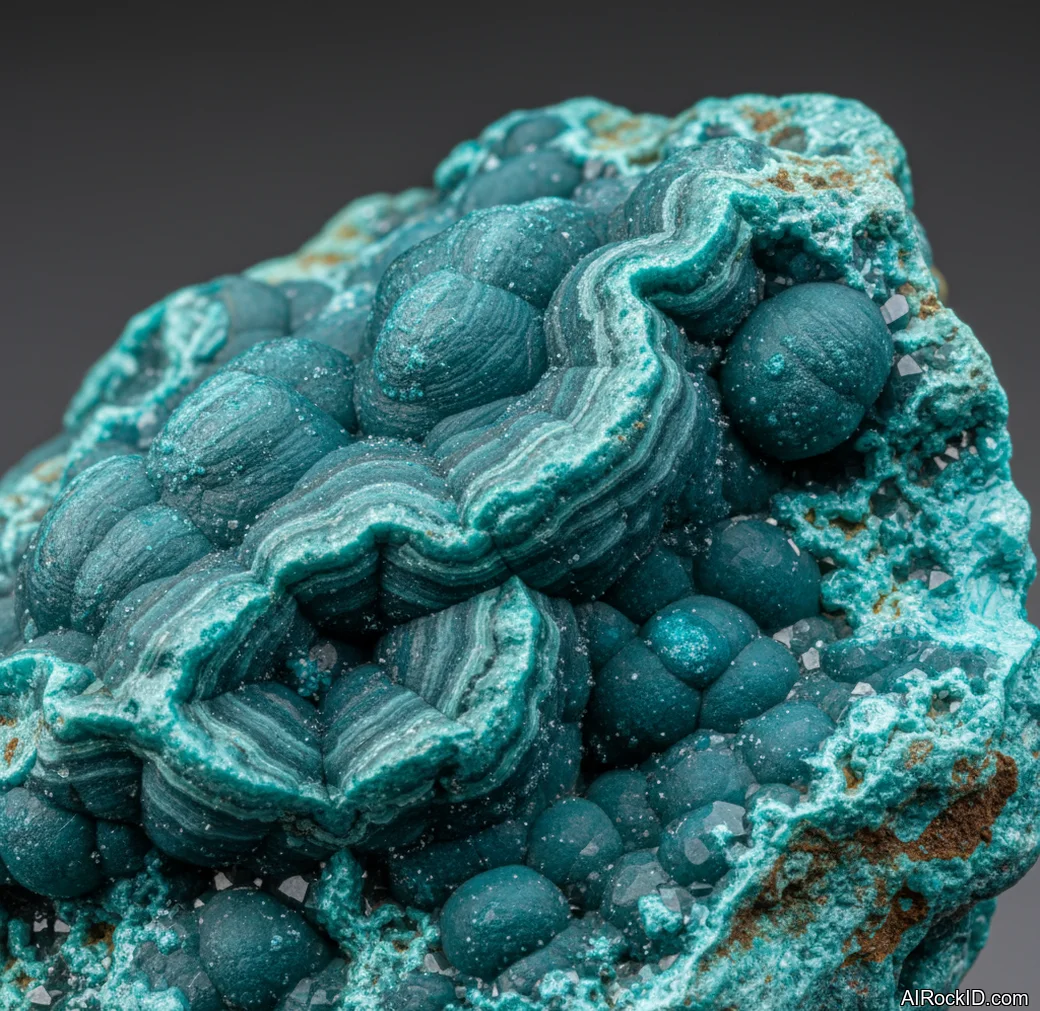
Dealers love to just call it a “secondary mineral” and move on. But if you’ve actually stared at it in place, it makes sense fast. Water seeps through. Metals get carried. And the green stuff ends up staining the walls of cracks and little cavities where the chemistry lines up. You’ll often find it alongside other oxidized copper minerals, kind of clinging to quartz, pressed up against malachite, or smeared together with blue-green chrysocolla. But conichalcite feels different. Tighter. Finer. And when the grains are really small and even, it can catch the light with this slightly sparkly look you don’t always get from the others.
How to Identify Conichalcite
Color: Usually bright green to yellow-green, sometimes with brownish or darker green areas where it’s mixed with iron oxides or other copper minerals. The best pieces have an even, “apple-green” coating with drusy sparkle.
Luster: Vitreous to resinous on clean druse; duller and more earthy when massive or weathered.
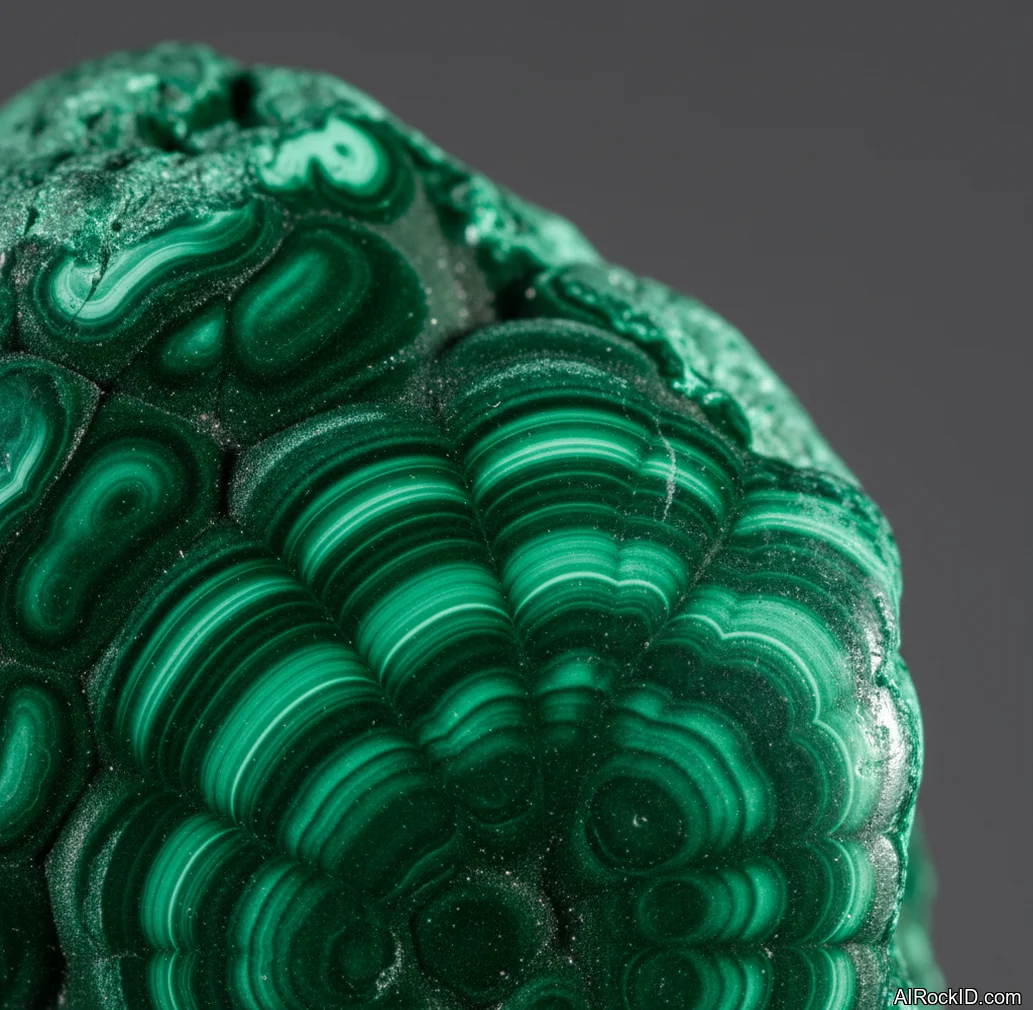
Pick up a specimen and use a loupe. Conichalcite commonly looks like a fine sugar crust or tiny rounded botryoids, while malachite tends to show fibrous banding or velvety tufts. If you scratch it with a copper coin or a steel pin in an inconspicuous spot, it’ll mark pretty easily, which surprises people who assume all green copper minerals are tough. The real test is context: conichalcite loves limonite gossan and oxidized copper pockets, and it often rides in with other arsenates like mimetite or olivenite.
Properties of Conichalcite
Physical Properties
| Crystal System | Orthorhombic |
| Hardness (Mohs) | 4-4.5 (Soft (2-4)) |
| Density | 4.10-4.35 g/cm3 |
| Luster | Resinous |
| Diaphaneity | Translucent to opaque |
| Fracture | Uneven |
| Streak | pale green |
| Magnetism | Non-magnetic |
| Colors | yellow-green, green, olive-green, brownish green |
Chemical Properties
| Classification | Arsenates |
| Formula | CaCu(AsO4)(OH) |
| Elements | Ca, Cu, As, O, H |
| Common Impurities | Fe, Zn, P |
Optical Properties
| Refractive Index | 1.788-1.835 |
| Birefringence | 0.047 |
| Pleochroism | Weak |
| Optical Character | Biaxial |
Conichalcite Health & Safety
Treat it like any mineral that carries arsenic: don’t grind it up or do anything that kicks up dust, and wash your hands well after you’ve handled it (especially under your nails). And don’t use it for elixirs, either. Also, don’t leave it soaking in water.
Safety Tips
Store it somewhere it won’t get scuffed up, and if you need to deal with loose crumbs, just use a damp wipe (or a quick rinse), then toss the residue carefully.
Conichalcite Value & Price
Price Range
Rough/Tumbled: $15 - $400 per specimen
Prices jump when the color’s even, the drusy sparkle is tight (that fine, sugar-grain glitter you see when you tilt it under a lamp), and the botryoidal coverage looks clean and continuous on a stable matrix. But if it’s just a thin, crumbly coating that wants to dust off at the edges, or it’s mixed material like malachite, limonite, or those chalky areas, the value drops fast.
Durability
Nondurable — Scratch resistance: Fair, Toughness: Poor
It can chip and shed grains from the drusy surface if it’s bumped or rubbed, so it’s better as a display mineral than something you handle daily.
How to Care for Conichalcite
Use & Storage
Keep it in a perky box or a display case where it won’t get knocked around. I like padding the base so the specimen doesn’t skate when you move the shelf.
Cleaning
1) Start with a soft, dry brush or a bulb blower to remove dust. 2) If it needs more, use a barely damp cotton swab on the matrix only and avoid scrubbing the green crust. 3) Let it air-dry fully before putting it back in a closed box.
Cleanse & Charge
Skip salt water and long soaks. If you do energy-style cleansing, use smoke, sound, or a short, dry rest on a clean shelf.
Placement
Put it somewhere stable, away from humid bathrooms and out of direct sun. A little LED spotlight makes drusy conichalcite look way better than overhead room light.
Caution
This is an arsenate mineral, so don’t ingest it. Don’t drop it into crystal water, either. And skip any cleaning method that kicks up dust or leaves a slurry you could end up touching later (that gritty residue gets everywhere, even under your nails).
Works Well With
Conichalcite Meaning & Healing Properties
At first glance, people lump conichalcite in with “just another green copper stone.” But it doesn’t feel that way when you’ve actually had it in your hands. When I’m sorting flats at a show, conichalcite is one of the few that makes me pause with my fingers still on the piece, because the tiny surface sparkle only really shows up when you tilt it and let the light rake across it. It rewards patience. Metaphysically, that’s the exact vibe I get from it too: not a pep-talk stone, more like an honest inventory. Quiet. Clear. A little blunt, maybe.
But look, there’s a real limitation that matters here. Conichalcite is an arsenate, and that changes how you treat it if you’re the kind of person who handles stones all day, or drops crystals in water, or does the whole “carry it in my pocket 24/7” thing. I don’t. I keep mine as a look-only piece. Set it near your workspace, glance at it when your brain starts skittering in six directions, and leave it alone. No “pocket stone” routine.
And if you’re into chakra language, I find it lands most naturally in heart and throat themes. Saying what you mean, but without winding yourself up into a dramatic speech. Thing is, it’s absolutely not medical care. It’s a mineral on a shelf. Still, I’ve watched people pick up a bright green drusy specimen and their shoulders drop right away, like the color itself gives them permission to breathe for a second. Who hasn’t needed that?
Identify Any Crystal Instantly
Snap a photo and get properties, value, care instructions, and healing meanings in seconds.