Coquimbite
What Is Coquimbite?
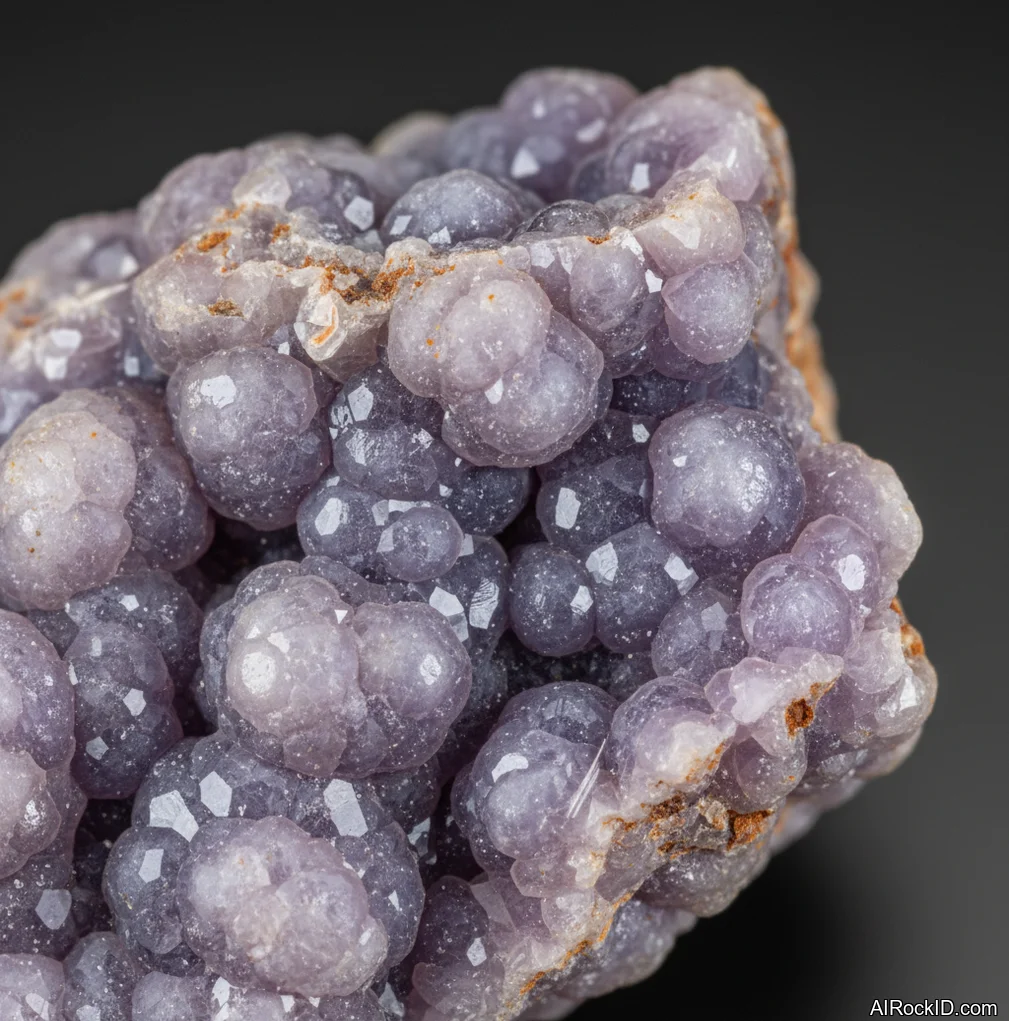
Coquimbite is a hydrated iron(III) sulfate mineral, Fe2(SO4)3·9H2O. Most of the time it turns up as crusty coatings or those drusy, sparkly crystal mats in purple, red-violet, or pinkish shades, and honestly the color can look almost fake until you tip it under a lamp and watch it catch the light. It’s real.
Grab a piece and it doesn’t have that “rock solid” heft quartz has. It feels lighter. And the edges can come off a little chalky, with the crystal crust ready to shed if you rub it with your thumb (ask me how I know). I’ve handled specimens where the strongest color was just a thin, sugary skin sitting on top of dull brown gossan, and that sharp contrast is half the fun.
Most collection pieces are cabinet specimens, not something you toss in your pocket. It’s soft, it doesn’t like humidity swings, and if you treat it like a tough carry-around stone you’ll end up with purple dust in the bag. Why risk it?
Origin & History
Chile’s right there in the name. Coquimbite got its first proper description in 1841 from August Breithaupt, and the species name points straight to the Coquimbo region in northern Chile, where people first recognized the material.
Thing is, collectors still toss “coquimbite” around pretty loosely out in the field, mostly because it shows up with other hydrated iron sulfates that can look almost identical at a glance. But the basic story is still mine, still oxidized-zone chemistry: iron sulfides break down, sulfate-rich water works its way through the rock, and these hydrated sulfates grow in place as conditions swing back and forth between wet spells and dry-outs.
Where Is Coquimbite Found?
It turns up in arid to semi-arid oxidized mine settings and volcanic fumarolic areas where sulfate-rich fluids evaporate and rehydrate repeatedly.
Formation
At first glance, coquimbite looks like something cooked up in a lab. But it’s actually a pretty natural setup: iron, sulfate, and a whole lot of water locked into the structure. It forms as a secondary mineral in the oxidation zones of sulfide deposits, especially where pyrite and other iron sulfides weather, and the runoff turns acidic and loaded with sulfate.
Look at where it hangs out and it starts to make sense. This stuff lives the “salt mineral” life. You’ll see it crystallizing out of evaporating solutions on mine walls, tucked into fractures, or sitting as a druse on gossan. And it’ll swap hydration states when humidity shifts, which is why a specimen can look crisp and sparkly one day, then a season later it’s a bit tired and powdery (like it’s been left too close to damp air). The thing with these hydrated sulfates is they don’t pretend. They show you exactly what the environment’s doing.
How to Identify Coquimbite
Color: Usually purple to red-violet, sometimes pinkish or lilac; paler material can look almost whitish with a purple cast. Color is often strongest in drusy coatings and fades toward the matrix.
Luster: Vitreous to pearly on fresh crystals, turning dull as it powders or dehydrates.
If you scratch it with a copper penny, it’ll usually mark because it’s soft. The real test is the feel: real coquimbite stays cool like a mineral, but the surface can feel slightly sugary and fragile, like a thin crust that doesn’t want to be handled. And don’t lick it or taste it like old-timers did with “salts”. It’s a sulfate and you don’t need that in your life.
Properties of Coquimbite
Physical Properties
| Crystal System | Trigonal |
| Hardness (Mohs) | 2.5 (Soft (2-4)) |
| Density | 2.10-2.20 g/cm3 |
| Luster | Vitreous |
| Diaphaneity | Transparent to translucent |
| Fracture | Uneven |
| Streak | White |
| Magnetism | Non-magnetic |
| Colors | Purple, Red-violet, Pink, Lilac, Colorless, White |
Chemical Properties
| Classification | Sulfates |
| Formula | Fe2(SO4)3·9H2O |
| Elements | Fe, S, O, H |
| Common Impurities | Al, Mg, Mn |
Optical Properties
| Refractive Index | 1.52-1.55 |
| Birefringence | 0.020 |
| Pleochroism | Weak |
| Optical Character | Uniaxial |
Coquimbite Health & Safety
Handle it gently, and try not to kick up any dust. And don’t drop it into drinking water or use it in elixirs, because it can dissolve and make the water more acidic.
Safety Tips
Wash your hands after you handle it. Keep it where kids and pets can’t get to it. And don’t brush or scrape the surface, since even a “gentle” brush can grind little bits in; if you need to clear off debris, use a soft air puffer (the kind that gives a light puff of air) instead of a stiff brush.
Coquimbite Value & Price
Price Range
Rough/Tumbled: $20 - $250 per specimen
Price follows color and how “fresh” the piece still looks. A bright purple druse with sharp, clean trigonal crystals (the kind that catch light on those flat little faces when you tilt it in your hand) and a stable storage history will sell for more than crumbly coatings or material that’s brown-stained and patchy.
Durability
Fragile — Scratch resistance: Poor, Toughness: Poor
It can dehydrate or break down in dry heat, and it can soften or shed in high humidity, so stability depends a lot on storage.
How to Care for Coquimbite
Use & Storage
Store it in a specimen box with padding so it can’t rattle. I keep mine in a cabinet away from sunny windows because heat and dry air can roughen the crystal crust over time.
Cleaning
1) Skip water and chemicals. 2) Use a bulb air blower to remove loose dust. 3) If grit is stuck, nudge it with a very soft artist brush while supporting the matrix so the crust doesn’t flake.
Cleanse & Charge
For a metaphysical reset, use smoke, sound, or a dry selenite plate nearby rather than rinsing. Keep sessions short if you’re using any heat-producing light source.
Placement
Best as a shelf or cabinet specimen where nobody’s going to touch it every day. If you display it, keep it away from bathrooms and kitchen steam.
Caution
Don’t soak it. If you do, it can partly dissolve and you’ll end up with crystals shedding off. And keep it away from big humidity swings. Don’t tumble it, and don’t try to polish it either.
Works Well With
Coquimbite Meaning & Healing Properties
Compared to the “everyday” stones people toss in a pocket, coquimbite feels like something you handle gently, and not for long. When I’ve parked a piece on my desk during those paperwork-heavy weeks, I end up linking it to sorting my head out and finally knocking out the tiny annoying tasks I keep sidestepping. It’s not cozy. It’s more like a crisp little nudge.
But look, the limits are real: it’s a fragile sulfate, and the practical side matters just as much as any spiritual angle. If you’re someone who likes to hold a stone while you meditate, coquimbite might let you down because the surface can start to feel gritty, and the prettiest crystals can literally rub off. I’ve seen a gorgeous purple druse go patchy after somebody kept picking it up over and over to “feel the energy.” (It hurt to watch, honestly.)
So if you still want to use it metaphysically, treat it like a visual anchor. Put it somewhere you’ll actually see it, set an intention, then don’t fuss with it. And if you’re dealing with anxiety, sleep problems, or anything medical, use the normal tools first: a professional, a plan, plus the boring basics like hydration and sleep. Minerals are companions, not prescriptions. Who wants to learn that the hard way?
Identify Any Crystal Instantly
Snap a photo and get properties, value, care instructions, and healing meanings in seconds.