Crazy Lace Amethyst
What Is Crazy Lace Amethyst?
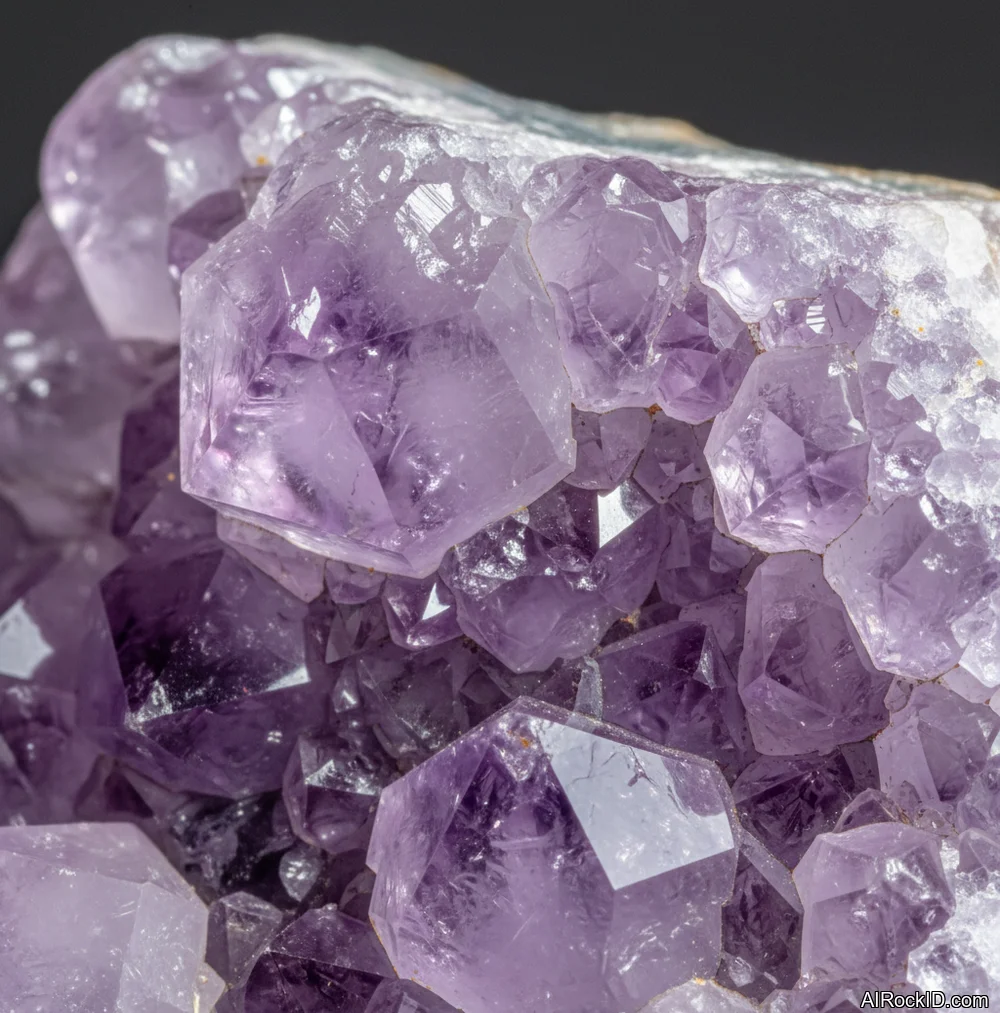
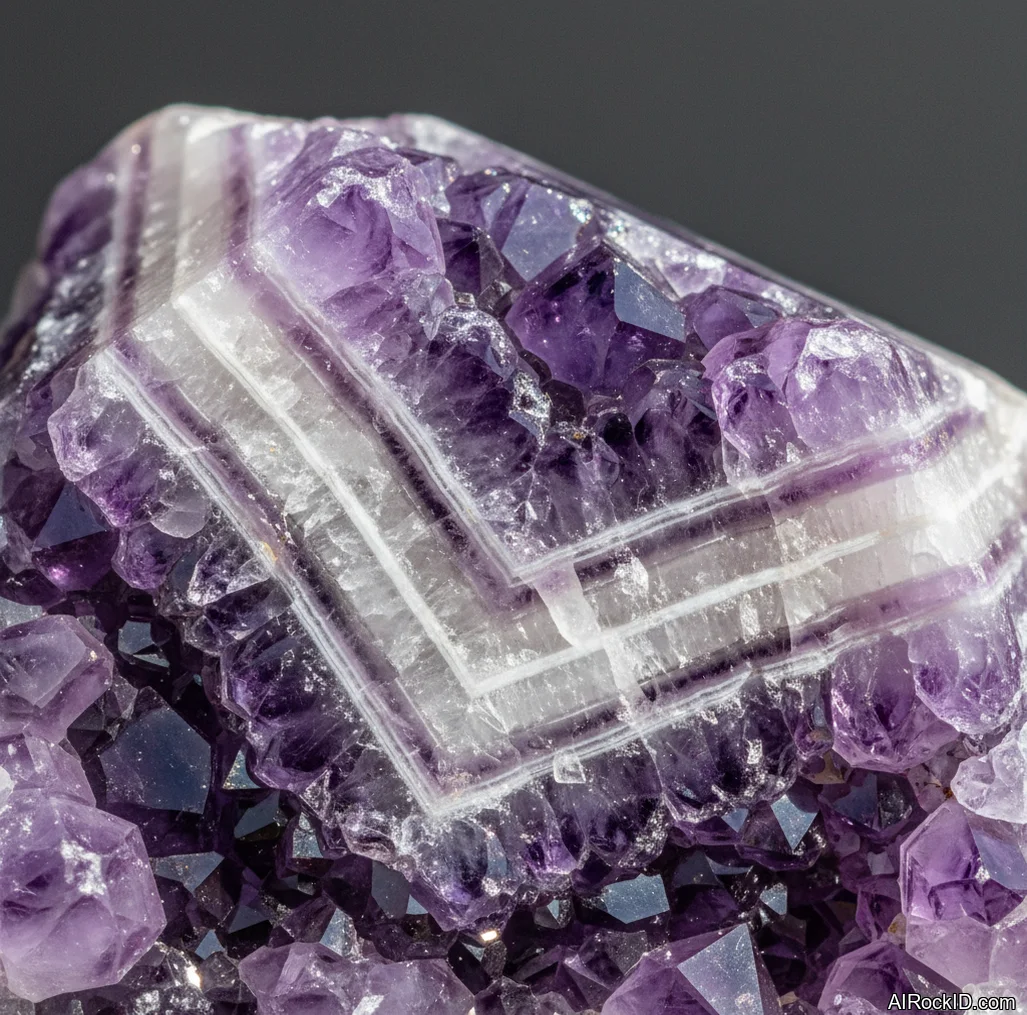
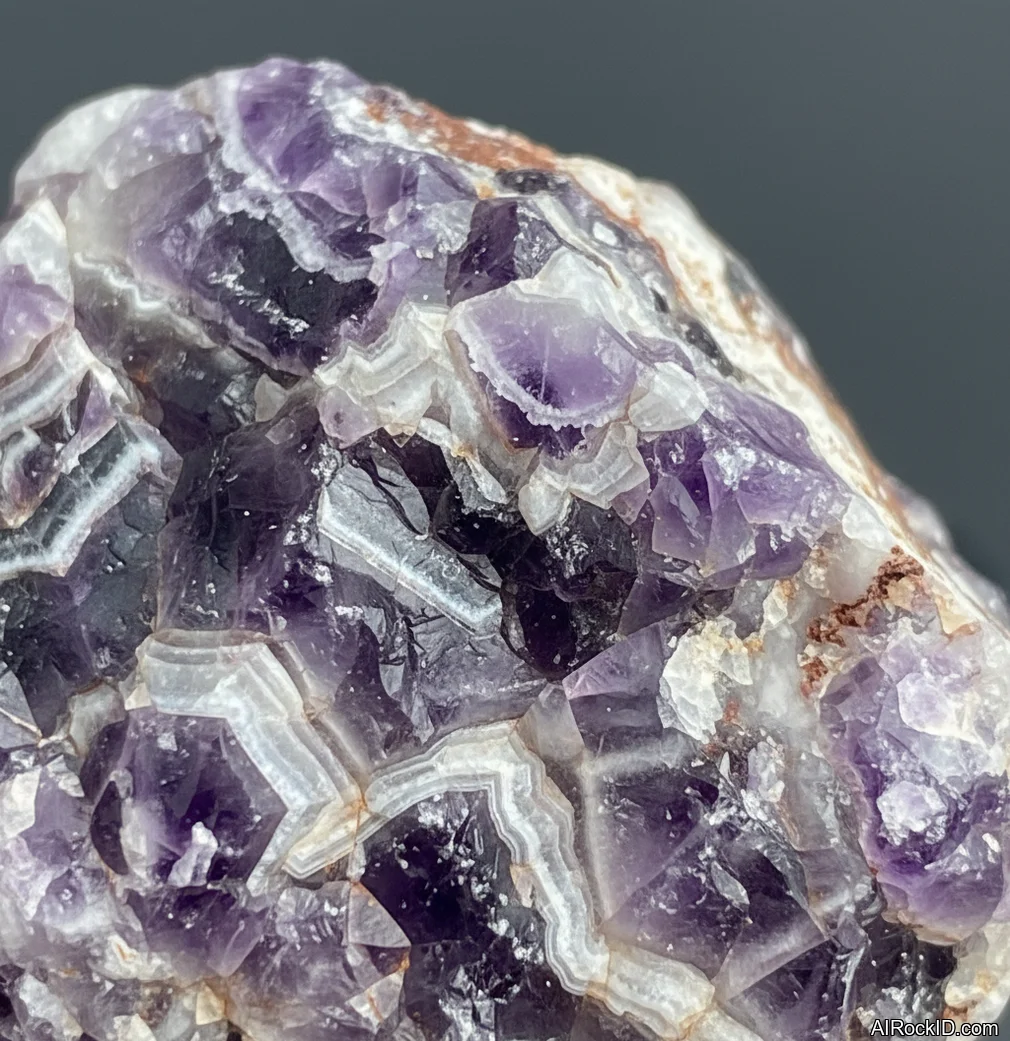
Crazy Lace Amethyst is a banded variety of quartz, with amethyst-purple zones mixed in with white, gray, and sometimes clear quartz, all flowing in wavy, lace-like patterns.
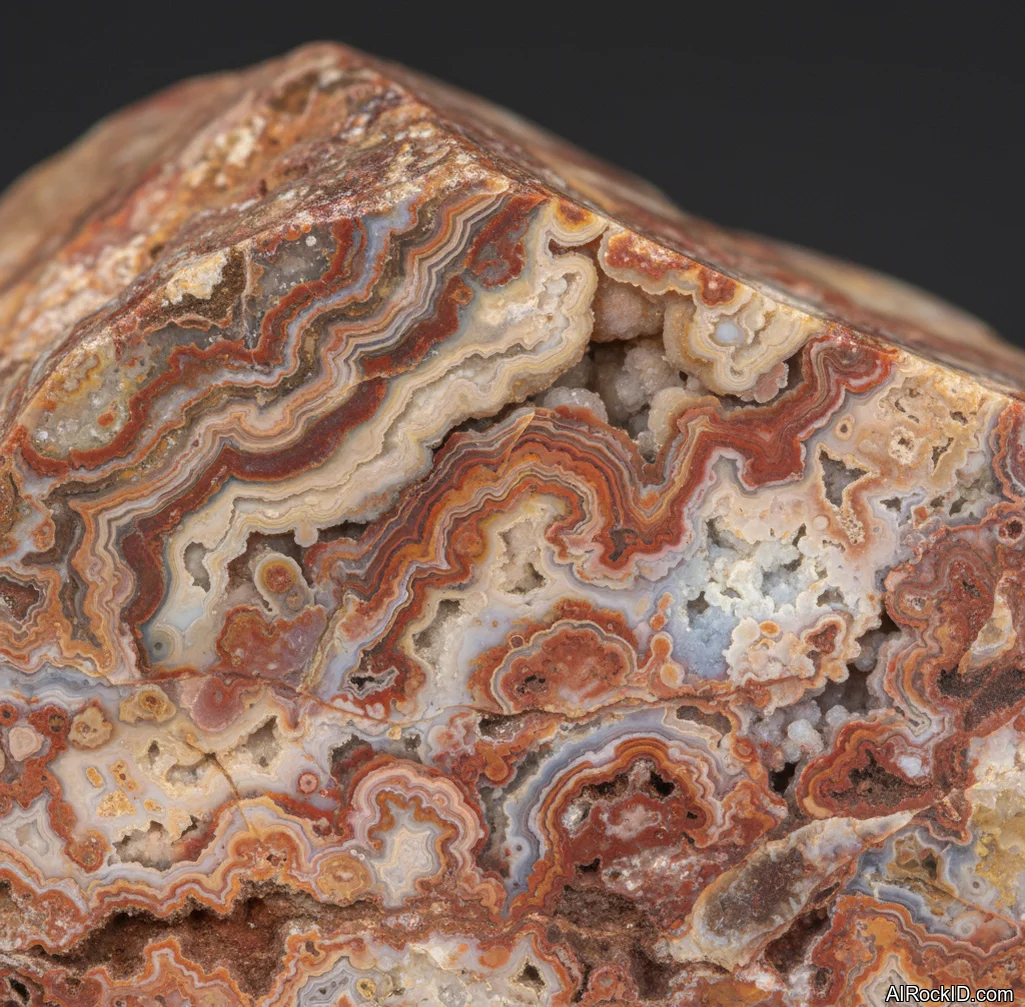
Pick up a good piece and you notice the familiar quartz heft immediately. It’s not heavy like hematite, but it’s got that solid, satisfying weight. And the patterns are the whole reason people buy it. Some stones honestly look like tiny topographic maps, with tight purple curls pressed right up against milky bands that turn a little translucent at the edges when you hold them up to a lamp.
Most of what you’ll see for sale has been cut and polished into slabs, hearts, towers, or palm stones. Raw material exists, but it usually doesn’t show up as those pretty terminated crystals people expect. Thing is, the name gets sloppy fast. Sellers will throw “crazy lace” on anything that’s banded and purple, but real material has that agate-style flow banding, not just straight chevrons.
Origin & History
“Amethyst” comes straight out of the Greek *amethystos*, meaning “not intoxicated,” and people have been using it for purple quartz since classical times. “Crazy lace” is the newer bit. It’s basically a trade nickname that showed up in lapidary circles and rock shops for banded agate patterns that look like tangled ribbons (the kind you notice most when the stone’s been cut and polished smooth).
Nobody “discovered” Crazy Lace Amethyst as some separate mineral, because it isn’t one. It’s quartz, full stop, and quartz has been described and re-described for centuries. But the wording in the marketplace shifted. Dealers wanted a fast label for that purple-and-white lace banding that moves well in polished shapes, so the name stuck, even though different sources don’t all use it in exactly the same way.
Where Is Crazy Lace Amethyst Found?
Most “crazy lace” style banding is strongly associated with Mexican agates, while banded amethyst and amethyst-with-chalcedony material also comes out of Brazil and Uruguay in smaller amounts.
Formation
Look closely at the banding and you’re basically staring at a diary of silica-rich fluids showing up, disappearing, then showing up again. Quartz and chalcedony form when silica drops out of solution, usually in little cavities and fractures. The lace pattern comes from repeated pulses plus tiny chemistry shifts, so one layer grows, then another, then another. Kind of like rings, just wavier and more chaotic.
The purple bits are amethyst color centers tied to iron in the quartz lattice, with natural radiation doing its slow work over geologic time. But it’s not like every layer gets the same dose. That’s why you’ll get a solid purple ribbon that fades into smoky gray, then snaps back to lavender like nothing happened. And if you’ve ever actually cut a slab (hands dusty, the saw leaving that wet stone smell), the weird part is how much the pattern changes from one face to the next. A tower can look wild on one side and kind of plain on the other. Why? Because you’re slicing through a 3D story, not a flat picture.
How to Identify Crazy Lace Amethyst
Color: Purple to lavender banding mixed with white to gray quartz or chalcedony; some pieces show clear bands or a little smoky tone. The pattern is wavy and “lacy,” not just straight V-shaped stripes.
Luster: Vitreous on polished quartz surfaces, with a slightly waxy look where chalcedony dominates.
Pick up a piece and check the temperature. Real quartz stays cool in your hand longer than glass or resin. If you scratch it with a steel nail, it shouldn’t take a mark, but it will scratch window glass easily. And watch for dyed material: if the purple looks too uniform and sits mostly in cracks or along the edges, that’s a red flag.
Properties of Crazy Lace Amethyst
Physical Properties
| Crystal System | Trigonal |
| Hardness (Mohs) | 7 (Hard (6-7.5)) |
| Density | 2.58-2.65 g/cm3 |
| Luster | Vitreous |
| Diaphaneity | Translucent to opaque |
| Fracture | Conchoidal |
| Streak | White |
| Magnetism | Non-magnetic |
| Colors | Purple, Lavender, White, Gray, Clear, Smoky brown |
Chemical Properties
| Classification | Silicates |
| Formula | SiO2 |
| Elements | Si, O |
| Common Impurities | Fe, Mn, Al, Ti |
Optical Properties
| Refractive Index | 1.544-1.553 |
| Birefringence | 0.009 |
| Pleochroism | Weak |
| Optical Character | Uniaxial |
Crazy Lace Amethyst Health & Safety
Solid Crazy Lace Amethyst is fine to pick up and handle, and it’s also okay if it gets briefly wet. The real issue only comes up when you’re cutting or grinding it, because that’s when you can kick up silica dust, and that stuff can be rough on your lungs.
Safety Tips
If you’re going to do lapidary work on it, keep the saw wet and wear proper respiratory protection. But for regular collecting and display? Just handle it like any other quartz.
Crazy Lace Amethyst Value & Price
Price Range
Rough/Tumbled: $8 - $70 per piece
Cut/Polished: $1 - $8 per carat
Tight, high-contrast lace banding with a clean polish will jack the price up fast. Bigger towers do cost more, sure. But I’ve seen a smaller slab with a crisp pattern outshine (and outprice) a big, bland one in a heartbeat.
Durability
Durable — Scratch resistance: Excellent, Toughness: Good
It’s stable in normal home conditions, but strong sun over time can fade the purple in some pieces, especially lighter lavender material.
How to Care for Crazy Lace Amethyst
Use & Storage
Store it so it won’t bang against harder stones like corundum or topaz, because chips happen at edges. I keep polished towers on a shelf with a little space between them so they don’t clack when the door closes.
Cleaning
1) Rinse with lukewarm water and a drop of mild soap. 2) Use a soft toothbrush to get polish compound out of grooves and band seams. 3) Rinse well and dry with a microfiber cloth.
Cleanse & Charge
If you do energetic cleansing, smoke, sound, or a quick rinse works fine. Skip long sunbaths if you want to protect the purple from fading.
Placement
It looks best where side light can rake across the bands, like near a lamp or a window that doesn’t get harsh midday sun. On a desk, I like it angled so the pattern isn’t just flat-on.
Caution
Keep it out of direct sun for long stretches. And if a piece has fractures, skip anything harsh, and definitely don’t toss it in an ultrasonic cleaner, since the vibration can work its way into those tiny crack lines. If it’s a glued or assembled carving (you can usually spot a seam if you tilt it under a lamp), don’t soak it. Water will creep in and soften the glue.
Works Well With
Crazy Lace Amethyst Meaning & Healing Properties
At first glance, most people file it under “amethyst, but with stripes,” and honestly, that’s pretty much how it gets used in a lot of crystal spaces. Folks link it to calming your thoughts and getting your sleep routine back on track, basically the same lane as regular amethyst. And I get why. After a garbage day, grabbing a cool quartz palm stone, feeling that smooth polish against your thumb, and letting your eyes follow those looping bands can slow your breathing down without you even noticing.
But look, banded trade names get messy fast. Two pieces can act like they’re not even related, because the mix can swing a lot. Some are mostly chalcedony with just a faint purple haze, and some have thick amethyst zones that look like they were pulled straight from a geode. If you’re using it for meditation, just pick the one that visually “locks” your attention. That’s what does it for a lot of people, not some hard rule that applies to everyone.
Keep it in the metaphysical bucket, not the medical one. I’ve sold amethyst to customers who swear it takes the edge off their stress, and I’ve also met people who feel absolutely nothing (so, what can you do?). Either way, Crazy Lace Amethyst works well for grounding a space because it’s quartz, it’s durable, it won’t demand babying the way softer stones do.
Identify Any Crystal Instantly
Snap a photo and get properties, value, care instructions, and healing meanings in seconds.